
# How Chinese Manufacturers Can Set Up a Factory in Malaysia: Property and Approval Checklist | 中国制造企业如何在马来西亚设厂:选址、厂房与审批清单
A practical bilingual roadmap for aligning the manufacturing plan, Malaysian business structure, industrial property, utilities and regulatory approvals before committing capital.
一份面向中国制造商的实用双语路线图:在投入资金前,把生产计划、马来西亚公司架构、工业地产、公用设施与审批要求对齐。
## Answer first | 先说结论
A Chinese manufacturer planning to set up in Malaysia should not begin by choosing the cheapest factory. Begin by defining the exact production process, capacity, machinery, workforce, power, water, emissions, effluent, waste, storage and logistics requirements. Then establish the appropriate Malaysian business presence, identify the applicable manufacturing and environmental approvals, and shortlist only industrial properties whose title, zoning, planning permission, approved building plans, CCC, fire provisions and infrastructure can support that operation.中国制造企业到马来西亚设厂,不应先从“哪一间厂房租金最便宜”开始。企业应先明确产品、生产流程、产能、机器设备、员工人数、用电、用水、废气、工业废水、废弃物、仓储和物流需求;再确定马来西亚公司架构、制造执照及其他审批路线;最后,只筛选在地契、规划用途、规划许可、核准建筑图、CCC、消防系统和基础设施方面能够支持该生产活动的工业地产。
The safest sequence is: 比较稳妥的顺序是:
1. define the manufacturing project;
2. choose the business and investment structure;
3. map the federal, state and local approvals;
4. screen locations and industrial properties;
5. verify utilities and logistics;
6. conduct legal, planning, building, environmental and technical due diligence; and
7. make the transaction conditional on critical matters that remain unresolved.
1. 明确制造项目;
2. 确定公司与投资架构;
3. 规划联邦、州及地方政府审批;
4. 筛选地区、工业地与厂房;
5. 核实电力、用水与物流;
6. 完成法律、规划、建筑、环境及技术尽调;以及
7. 对尚未解决的重要事项,在合约中设置先决条件。
Property selection and regulatory planning should run together. A factory can be attractive in price and location yet remain unsuitable because the approved use, building, power, water, drainage, fire systems or environmental controls do not match the incoming production process.
选址与审批规划必须同步进行。一间厂房即使价格和地点很好,如果核准用途、建筑、电力、用水、排水、消防或环境控制系统不符合新企业的生产流程,仍可能无法如期投产。
> *Important:* This guide provides general industrial-property information. Requirements differ by sector, product, activity, scale, state, local authority and site. Obtain current written confirmation from the relevant Malaysian authorities and advice from qualified legal, tax, planning, engineering and environmental professionals.
> *重要说明:* 本文仅提供一般工业地产资讯。具体要求会因行业、产品、生产活动、规模、州属、地方政府及地块而异。企业应向相关马来西亚政府部门取得最新书面确认,并咨询合格的法律、税务、城市规划、工程和环境专业人士。
## The eight-stage Malaysia factory setup roadmap | 马来西亚设厂的八个阶段
| Stage | Decision to make | Evidence to obtain before proceeding |
| 阶段 | 企业需要作出的决定 | 进入下一阶段前应取得的资料 |
| 1. Project definition | What will be manufactured, at what capacity and by which process? | Process flow, machinery list, floor layout, workforce, raw materials, utility loads, emissions, effluent, waste and logistics profile |
| 2. Business presence | Local company, registered foreign company or another permitted structure? | SSM incorporation or registration documents, tax and corporate advice, authorised signatories and governance plan |
| 3. Investment and licensing | Does the project require a Manufacturing Licence or other sector approvals? | MIDA/MITI assessment, licence application or exemption confirmation where applicable, sector-specific approvals |
| 4. Location strategy | Which state and industrial cluster best fit the supply chain and workforce? | Port and highway access, customer and supplier map, labour catchment, flood screening and utility availability |
| 5. Property screening | Buy land, buy a completed factory, or lease? | Current title search, zoning confirmation, KM, approved building plans, CCC/CF, fire and occupancy records |
| 6. Technical capacity | Can the property support the planned operation? | Written power and water feasibility, floor loading, clear height, access, drainage, sewerage, gas and telecom checks |
| 7. Environmental and safety fit | Can the process operate lawfully at this site? | EIA screening, DOE records, emissions and effluent review, scheduled-waste plan, BOMBA/fire review |
| 8. Protected commitment | What must be satisfied before the deal becomes unconditional? | Due-diligence conditions, authority confirmations, approval responsibility, cost allocation, refund and exit provisions |
| 1. 项目定义 | 生产什么、产能多少、采用什么流程? | 工艺流程、机器清单、平面布局、员工、原料、公用设施负荷、废气、废水、废弃物及物流资料
|
| 2. 公司架构 | 成立本地公司、注册外国公司,还是采用其他合规架构? | SSM注册文件、税务与公司意见、签署权限及治理安排 |
| 3. 投资与执照 | 是否需要制造执照或其他行业批准? | MIDA/MITI评估、制造执照申请或适用的豁免确认、行业专项许可 |
| 4. 地区策略 | 哪个州属及工业区最符合供应链与人力需求? | 港口与高速公路、客户与供应商、劳动力、洪水风险及基础设施资料 |
| 5. 物业筛选 | 买工业地、买现成厂房,还是租赁? | 最新地契查册、规划用途、KM、核准建筑图、CCC/CF及消防资料 |
| 6. 技术能力 | 物业能否支持计划中的生产? | 电力与供水可行性、地面承重、净高、通道、排水、排污、燃气及通讯 |
| 7. 环境与安全 | 该生产流程能否在此地点合规运作? | EIA筛查、DOE资料、废气与废水评估、Scheduled Waste计划、BOMBA/消防审查 |
| 8. 受保护的承诺 | 哪些事项必须满足后交易才正式生效? | 尽调条件、政府确认、责任与费用分配、退款和退出机制 |
## 1. Define the manufacturing operation before searching for property | 找厂房以前,先定义生产需求
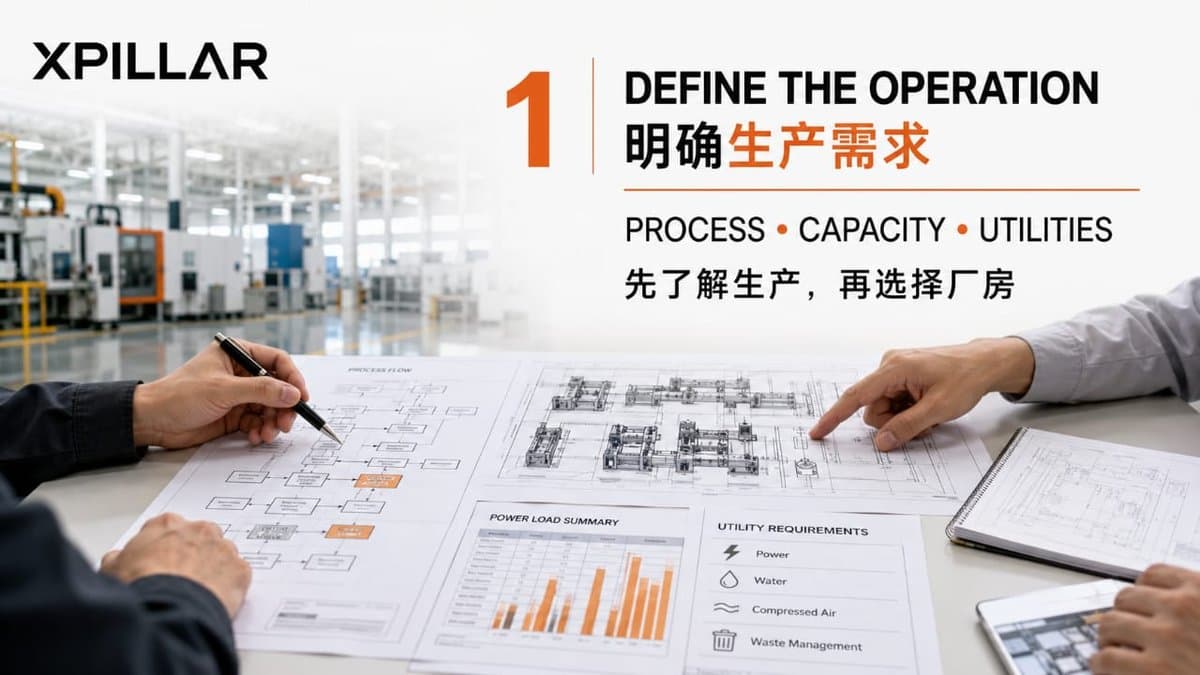
An industrial-property adviser, engineer or authority cannot assess suitability from the description “we need a factory.” The project team should first document: - products and annual production capacity;
- manufacturing process and process flow;
- machinery dimensions, weight, vibration and foundation requirements;
- electrical maximum demand, voltage, redundancy and power-quality needs;
- daily and peak water demand;
- boilers, furnaces, ovens, compressors, chillers and gas requirements;
- air emissions and pollution-control equipment;
- industrial effluent volume, characteristics and treatment requirements;
- chemicals, hazardous materials and scheduled-waste codes;
- warehouse volume, racking height and floor loading;
- container, trailer and heavy-vehicle movements;
- workforce, shifts, parking and worker-transport needs;
- cleanroom, temperature, humidity or food-grade requirements; and
- expansion space and future capacity.
如果企业只说“我们需要一间厂房”,地产顾问、工程师和政府部门都无法准确判断适用性。项目团队应先整理:
- 产品与年产能;
- 生产工艺及流程;
- 机器尺寸、重量、震动及地基要求;
- 最大用电需求、电压、供电稳定性及电能质量;
- 每日和高峰用水量;
- 锅炉、熔炉、烘箱、空压机、冷却设备及燃气需求;
- 废气来源与污染控制系统;
- 工业废水水量、水质及处理需求;
- 化学品、危险物质及Scheduled Waste类别;
- 仓储量、货架高度与地面承重;
- 集装箱、拖车及重型车辆流量;
This operating brief becomes the basis for property search, authority discussions, utility applications, fit-out design and capital budgeting.
这份生产需求说明,将成为选址、申请审批、公用设施、装修设计与资本预算的基础。
### Why this step saves money | 为什么这一步能够节省成本
Without an operating brief, a company may sign a factory and later discover that it needs a new substation, an Industrial Effluent Treatment System, a larger fire-water tank, floor strengthening, additional access, a change of use or a lengthy approval process. These items can change both the occupation date and the total project cost.
如果没有清楚的生产需求,企业签约后才可能发现需要新建变电设施、工业废水处理系统、加大消防水池、加固地面、改善通道、申请用途变更或经历较长的审批流程。这些问题会直接影响投产时间和项目总成本。
## 2. Establish the appropriate Malaysian business presence | 确定马来西亚公司架构
The Companies Commission of Malaysia (SSM) provides routes for incorporating a Malaysian company and registering a foreign company. SSM’s current guidance states that a private company requires at least one director who ordinarily resides in Malaysia and at least one promoter.马来西亚公司委员会(SSM)提供成立马来西亚公司及注册外国公司的途径。SSM目前的说明指出,私人有限公司至少需要一名通常居住在马来西亚的董事,以及至少一名发起人。
For many foreign manufacturing investments, the project team considers a Malaysian-incorporated private company. The appropriate structure, ownership, capitalisation and tax treatment should nevertheless be decided with Malaysian corporate, legal and tax advisers—not by copying another investor’s arrangement.
许多外国制造项目会考虑成立马来西亚私人有限公司,但具体架构、股权、资本及税务安排,应由马来西亚公司、法律和税务顾问根据项目设计,而不是直接复制其他投资者的做法。
Before signing a property document, confirm:
- the entity that will buy or lease the property;
- whether that entity has been incorporated and authorised;
- who may sign the letter of offer, tenancy or sale agreement;
- whether board or shareholder approvals are required;
- how project equity and financing will be funded;
- whether foreign-exchange, tax or transfer-pricing advice is needed; and
- whether a foreign-property acquisition or State Authority consent analysis is required.
签署物业文件前,应确认:
- 哪一个主体购买或租赁物业;
- 该主体是否已经成立并获得授权;
- 谁可以签署要约、租约或买卖协议;
- 是否需要董事会或股东批准;
- 项目股本和融资如何安排;
- 是否需要外汇、税务或转让定价意见;以及
- 是否涉及外国利益取得房地产或州政府批准。
Malaysia’s federal guidelines on property acquisition by foreign interests do not replace state land rules. The applicable minimum value, consent, title restriction and registration requirements must be verified for the particular transaction and state.
马来西亚联邦层面的外国利益取得房地产指南,并不能取代各州土地规定。具体最低价、批准、地契限制及登记要求,必须按照交易所在州属和物业个案核实。
## 3. Check the Manufacturing License route early | 尽早确认制造执照路线
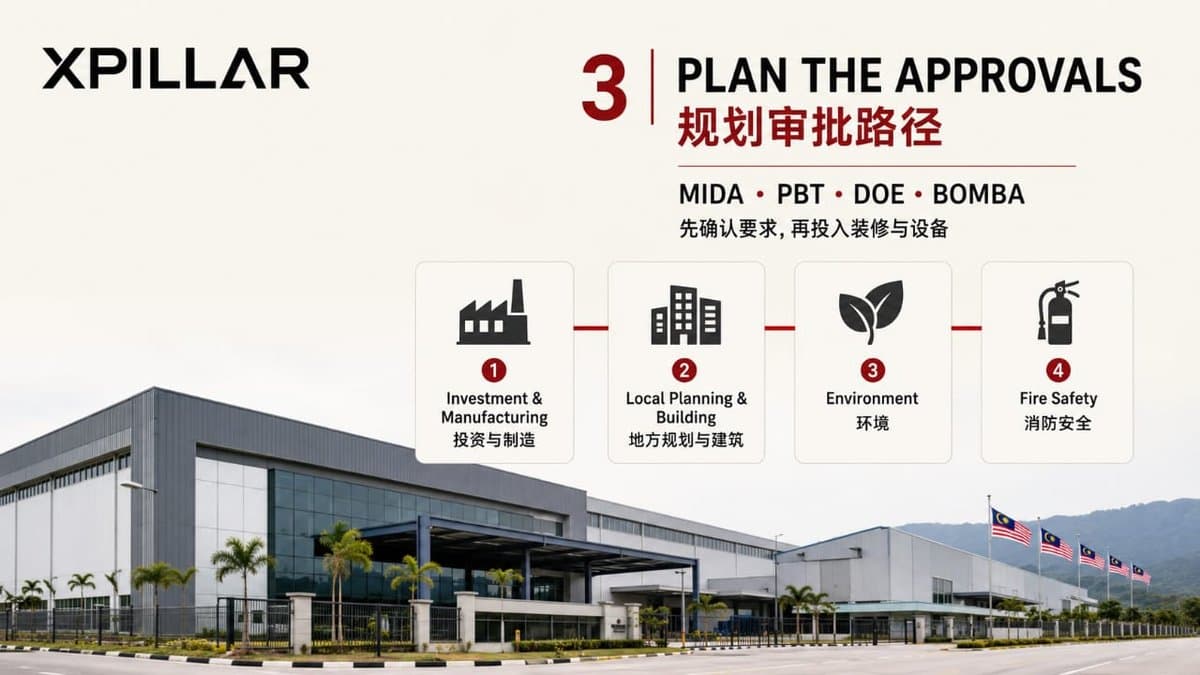
Under Malaysia’s Industrial Co-ordination Act framework, MIDA states that a manufacturing company with:
- shareholders’ funds of *RM2.5 million or more; **or*
- *75 or more full-time paid employees* 根据马来西亚《工业协调法》的制度,MIDA说明,制造企业符合以下任何一项条件,就需要申请由投资、贸易及工业部(MITI)批准的制造执照:
- 股东资金达到或超过 *RM2.5 million*;或
- 雇用 *75名或以上全职受薪员工*。
is required to apply for a Manufacturing License for approval by the Ministry of Investment, Trade and Industry (MITI). Applications are made through MIDA’s Invest Malaysia portal.
有关申请通过MIDA的InvestMalaysia平台提交。
Companies below the threshold should not simply assume that no documentation is useful. MIDA’s portal also provides an application route for a confirmation letter for a company exempted from the Manufacturing License, commonly referred to as ICA10.
低于门槛的企业也不应完全忽略相关文件。MIDA平台同时提供申请制造执照豁免确认函的途径,通常称为ICA10。
The licensing assessment should be made against the actual project, product, activity, capacity, ownership and employment plan. Other approvals may apply to regulated sectors, products, machinery, petroleum activities, food, medical devices, chemicals or hazardous
materials.
企业应根据实际项目、产品、生产活动、产能、股权及员工计划判断适用要求。部分受监管行业、产品、机器、石油活动、食品、医疗器材、化学品或危险物质,可能还需要其他专项批准。
### Practical property implication | 对物业选择的影响
The Manufacturing License does not prove that a particular factory is suitable. Conversely, an industrial title or existing CCC does not prove that the incoming company’s manufacturing activity is approved. The company approval and the property approval are separate workstreams that must align.
制造执照并不代表某一间厂房一定适用;工业地契或现有CCC也不代表新企业的生产活动已经获批。企业审批与物业审批是两条不同的工作线,最终必须互相对得上。
## 4. Choose the location by supply chain—not headline rental alone | 以供应链选择地点,而不是只比较租金
The lowest rental per square foot may not produce the lowest operating cost. Compare shortlisted industrial areas using:
- distance and travel time to port, airport, highway and customers;
- availability of suppliers, subcontractors and maintenance support;
- access to technical workers and shift labour;
- utility capacity and connection lead time;
- flood, drainage, soil and platform-level risk;
- approved industrial use and environmental compatibility;
- container access, road geometry and congestion;
- worker transport, accommodation and amenities;
- expansion land or neighbouring units; and
- state incentives or facilitation, where applicable.
每平方尺租金最低的厂房,不一定带来最低的营运成本。企业应比较:
- 与港口、机场、高速公路及客户的距离和运输时间;
- 供应商、外包厂及维修服务;
- 技术人员和轮班员工来源;
- 公用设施容量及接驳时间;
- 水灾、排水、土质与地台高度风险;
- 工业用途及环境兼容性;
- 集装箱通行、道路几何和交通拥堵;
- 员工交通、住宿和生活设施;
- 扩充用地或相邻单位;以及
- 适用的州属投资便利或奖励。
For a port-dependent manufacturer, an additional hour of truck travel can outweigh a small rental saving. For a high-power user, a cheaper building without feasible supply may be commercially unusable. For a water-intensive process, pipe size and system capacity matter more than a general statement that “water is available.”
对于依赖港口的企业,货车每天多行驶一小时的成本,可能远高于租金差额;对于高耗电企业,没有可行供电方案的便宜厂房,商业上可能完全无法使用。
## 5. Verify the industrial property before signing | 签约前核实工业地产
For every shortlisted factory or industrial land parcel, conduct a document review and physical inspection.每一项候选物业都需要文件审查与现场检查。
### Land and planning | 土地与规划
Verify:
- current registered proprietor and title particulars;
- tenure and remaining lease term;
- land-use category, express conditions and restrictions in interest;
- caveats, charges, easements and reservations;
- gazetted local-plan zoning and permitted use;
- valid planning permission, or *Kebenaran Merancang (KM)*;
- approved access, layout, setbacks and infrastructure conditions; and
- whether conversion, title amendment or State Authority consent is required.
应核实:
- 注册业主及地契资料;
- 地契年限和剩余租期;
- 土地用途类别、明文条件及利益限制;
- 私人禁令、抵押、地役权和保留地;
- 已宪报地方规划用途及允许用途;
- 有效的规划许可,即 Kebenaran Merancang(KM);
- 获批通道、布局、退界及基础设施条件;以及
- 是否需要转换用途、修改地契条件或州政府批准。
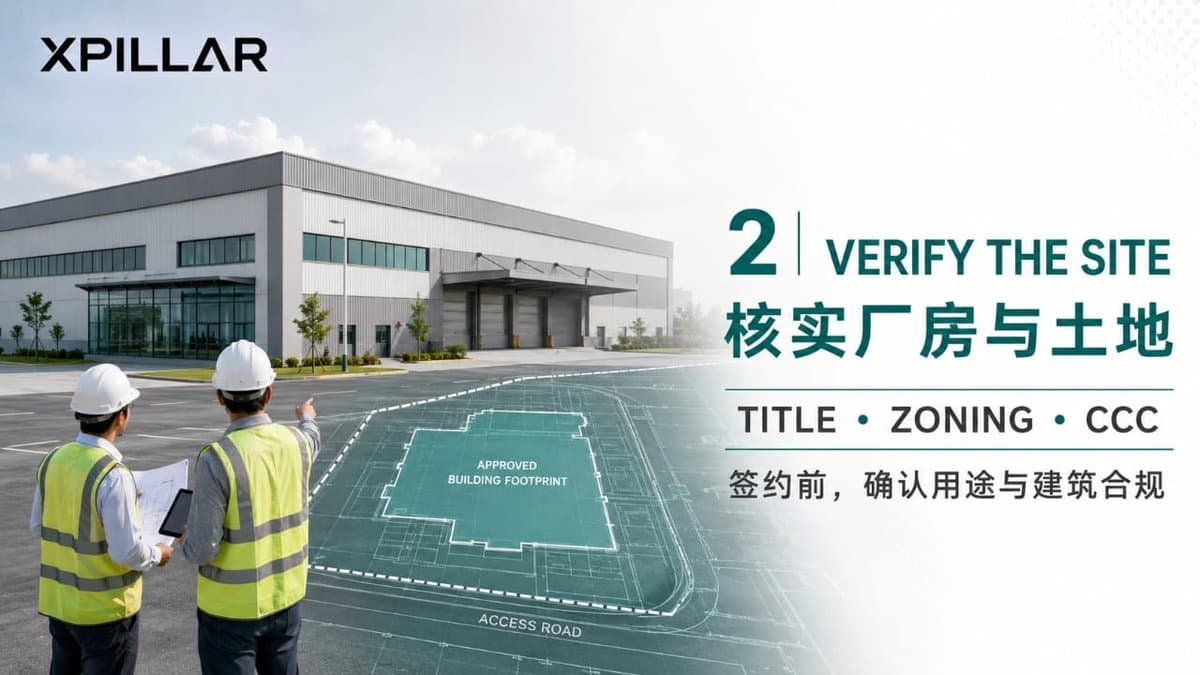
An “industrial” title is not universal permission for every manufacturing process. The proposed operation must also align with the local plan, KM, building approvals, environmental requirements and activity-specific licenses.
“工业”地契并不是所有制造流程的通用许可。拟议生产活动还必须符合地方规划、KM、建筑批准、环境要求及行业执照
### Building and occupation | 建筑与使用
Request:
- approved architectural, structural and engineering plans;
- Certificate of Completion and Compliance (CCC) or earlier CF records;
- approved mezzanine floors, extensions and ancillary structures;
- floor-loading design information;
- fire-system drawings, testing and maintenance records;
- loading-bay, dock-leveller, canopy and racking approvals where relevant; and
- evidence that the actual building matches the approved plans.
应索取:
- 核准建筑、结构及工程图;
- 建筑完工及合规证书(CCC)或早期CF资料;
- 已获批准的夹层、扩建及附属结构;
- 地面承重设计资料;
- 消防图、测试及保养记录;
- 相关装卸台、升降平台、雨棚及货架批准;以及
- 现场建筑与核准图一致的证据。
Unapproved alterations can affect safety, insurance, financing, occupation and the fit-out programme.
未经批准的改建可能影响安全、保险、融资、使用及装修进度。
## 6. Obtain written utility feasibility | 取得书面公用设施可行性
Do not rely only on an existing meter size or a broker’s verbal description. 不要只依赖现有电表或口头说明。
### Electricity | 电力
Prepare a realistic load schedule covering production machinery, HVAC, compressors, process heating, pumps, offices and future expansion. Confirm with the relevant electrical professionals and utility provider:
- existing and available supply;
- maximum demand and voltage level;
- whether a new substation, switch room or network reinforcement is required;
- application, design, land and access requirements;
- contribution or infrastructure cost;
- energisation lead time; and
- whether the existing installation can be lawfully reused.
企业应准备真实的负荷表,涵盖生产机器、空调、空压机、加热设备、水泵、办公室和未来扩充,并与相关电气专业人士及电力公司核实:
- 现有及可提供的供电;
- 最大需求与电压;
- 是否需要新变电设施、开关房或电网强化;
- 申请、设计、土地及通道要求;
- 接驳或基础设施费用;
- 送电所需时间;以及
- 现有设备能否合法继续使用。
TNB’s Electricity Supply Application Handbook distinguishes application and connection requirements, including loads above 100A. High-load projects require early technical engagement.
TNB的供电申请手册区分不同负荷的申请和接驳要求,包括超过100A的申请。高耗电项目必须尽早进行技术沟通
### Water and other infrastructure | 用水与其他设施
Quantify domestic and process-water demand separately. Verify the tapping source, pressure, pipe size, storage and connection works. Air Selangor’s developer guidance, for example, identifies the water tapping source, pressure, pipe size and technical considerations as part of water-supply planning.
生活用水与生产用水必须分开计算。应核实接驳水源、水压、水管尺寸、储水和接驳工程。以Air Selangor为例,其发展项目指南明确把接驳水源、水压、水管尺寸及其他技术事项列为供水规划内容。
Also inspect:
- foul sewer and industrial-effluent routes;
- stormwater drains and detention systems;
- natural gas or LPG arrangements;
- fibre and telecommunications;
- access roads, turning radius and bridge limits; and
- backup power, water storage and business-continuity needs.
同时检查:
- 生活污水和工业废水路线;
- 雨水排水及滞洪系统;
- 天然气或LPG安排;
- 光纤及通讯;
- 道路、转弯半径和桥梁限制;以及
- 备用电源、储水与业务连续性
## 7. Map environmental, fire and local approvals | 规划环境、消防与地方政府审批
### Environmental review | 环境
The Department of Environment (DOE) states that an Environmental Impact Assessment is required when the proposed project falls within the Environmental Quality (Prescribed Activities) (Environmental Impact Assessment) Order 2015. Not every factory requires an EIA; the activity, scale and location must be screened.马来西亚环境局(DOE)说明,如果项目属于《2015年环境质量(指定活动)(环境影响评估)令》所列活动,就需要进行环境影响评估(EIA)。并非所有厂房都需要EIA,必须根据生产活动、规模和地点进行筛查。
Depending on the process, the company may also need to address:
- air-emission notifications and pollution-control systems;
- industrial effluent and an Industrial Effluent Treatment System;
- scheduled-waste notification, storage and eSWIS records;
- chemicals and hazardous substances;
- noise, vibration or odour;
- contaminated-land risk; and
- environmental approval conditions or monitoring.
视生产流程而定,企业也可能需要处理:
- 废气通知与污染控制系统;
- 工业废水及工业废水处理系统;
- Scheduled Waste通知、储存及eSWIS记录;
- 化学品与危险物质;
- 噪音、震动或气味;
- 土地污染风险;以及
- 环境批准条件或监测。
Review the incoming process, not only the previous occupier’s records. A system designed for one manufacturer may be inadequate for another.
审查重点应放在新企业的生产流程,而不是只看上一任使用者的记录。为某一家企业设计的系统,不一定适合另一种生产活动。
### Fire and building safety | 消防与建筑安全
Check whether the proposed use, storage, machinery, high-piled racking, hazardous materials or fit-out changes the fire strategy. Malaysia’s Fire and Rescue Department states that designated premises must have a Fire Certificate. Even where a Fire Certificate category is not triggered, building and fire-safety requirements can still apply.
应判断拟议用途、储存、机器、高位货架、危险物质或装修是否会改变消防策略。马来西亚消防及拯救局说明,属于指定场所的物业必须持有消防证书。即使不属于消防证书类别,建筑和消防安全要求仍可能适用。
Coordinate the architect, fire engineer or other relevant professional with BOMBA and the local authority before finalising expensive fit-out work.
企业应在投入大额装修前,让建筑师、消防工程师或其他相关专业人士与BOMBA及地方政府协调。
### Local authority | 地方政府
Applications for planning, building, infrastructure, renovation, permits and local business operations are handled through the relevant local authority and technical agencies. KPKT’s OSC 3.0 Plus platform supports development-plan submissions across participating local authorities in Peninsular Malaysia.
规划、建筑、基础设施、装修、准证及地方营业相关申请,由所在地地方政府及技术部门处理。KPKT的OSC 3.0 Plus系统支持马来西亚半岛参与系统的地方政府处理发展图则申请。
The precise approval path depends on whether the company is:
- occupying an approved factory without material changes;
- renovating or adding machinery foundations;
- changing the use or manufacturing activity;
- adding mezzanine floors, extensions, tanks or utility structures; or
- developing vacant industrial land.
具体审批路线取决于企业是:
- 直接使用一间已经获批、且没有重大改动的厂房;
- 进行装修或增加机器基础;
- 改变用途或生产活动;
- 增建夹层、扩建、储罐或公用设施;还是
- 在空置工业地上进行新发展。
## 8. Protect the property commitment | 在合约中保护投资
When material matters remain unresolved, ask a Malaysian lawyer to structure appropriate conditions in the letter of offer, sale agreement or tenancy agreement. Depending on the transaction, protections may address:
- satisfactory title, planning, building and environmental due diligence;
- written confirmation that the proposed use is permissible;
- Manufacturing Licence or other critical approvals;
- foreign-acquisition or State Authority consent;
- utility capacity and connection feasibility;
- access for surveys, inspection and authority submissions;
- landlord or seller rectification works;
- fit-out period and authority delays;
- responsibility for premiums, contributions and upgrading costs;
- refund or termination rights if a critical condition fails; and
- responsibility for existing waste, contamination or non-compliant structures.
如果重要事项仍未解决,应由马来西亚律师在要约、买卖协议或租赁协议中设计适当的先决条件。视交易而定,可包括:
- 满意的地契、规划、建筑及环境尽调;
- 拟议用途获得书面确认;
- 制造执照或其他关键批准;
- 外国利益取得房地产或州政府批准;
- 公用设施容量及接驳可行性;
- 进入现场进行测量、检查及政府申请;
- 业主或卖方负责的整改工程;
- 装修免租期及政府审批延误;
- 土地溢价、基础设施贡献和升级费用;
- 关键条件失败时的退款或终止权;以及
- 现有废弃物、土地污染或违规建筑的责任。
Do not describe a critical approval as “in progress” without identifying the applicant, submission reference, scope, conditions, expected decision-maker and contractual consequence if it is not obtained.
不要只接受“审批中”这种笼统说法。应明确申请人、申请编号、申请范围、审批单位,以及无法获批时的合约后果。
## Red flags for China-based decision-makers | 中国决策者应注意的风险信号
Pause and investigate if:
- the property is marketed as industrial but the title, zoning or KM is not provided;
- the actual factory is materially different from the approved plans;
- a mezzanine, extension, canopy or warehouse conversion has no approval record;
- the landlord cannot confirm the incoming manufacturing activity is permitted;
- power is quoted only in amperes without a load or supply-feasibility study;
- water is “available” but process demand, pressure and pipe size have not been checked;
- process effluent appears to enter a stormwater drain;
- scheduled waste, tanks, chemicals or staining remain on site;
- container access depends on an unverified road or neighbouring land;
- the transaction entity and approval applicant are not aligned; or
- a deposit becomes non-refundable before critical due diligence is complete.
发现以下情况时,应暂停并进一步调查:
- 物业声称是工业用途,却无法提供地契、规划用途或KM;
- 现场建筑与核准图明显不一致;
- 夹层、扩建、雨棚或仓库改生产用途没有批准记录;
- 业主无法确认新企业的生产活动是否允许;
- 电力只用安培数字宣传,却没有负荷或供电可行性;
- 只说“有水”,却没有核实生产用水量、水压和水管尺寸;
- 工业废水疑似流入雨水沟;
- 现场仍有Scheduled Waste、储罐、化学品或污染痕迹;
- 集装箱通道依赖未经核实的道路或邻地;
- 签约主体与申请审批的公司不一致;或
- 关键尽调完成前,订金已经不能退还。
## A practical document request list | 实用文件清单
### From the Chinese investor
- product and manufacturing-process description;
- machinery and equipment list;
- production capacity and shift plan;
- utility-load schedule;
- emissions, effluent, chemicals and waste profile;
- staff and logistics forecast;
- corporate and ownership structure; and
- implementation timetable and budget.
### 中国投资者应准备
- 产品与生产流程说明;
- 机器与设备清单;
- 产能及轮班计划;
- 公用设施负荷表;
- 废气、废水、化学品和废弃物资料;
- 员工与物流预测;
- 公司及股权架构;以及
- 实施时间表与预算。
### From the owner or landlord
- title and current official search;
- KM and approved layout;
- approved building and engineering plans;
- CCC/CF and renovation approvals;
- utility bills, meter and substation information;
- fire-system and Fire Certificate records where applicable;
- environmental records relevant to the premises;
- tenancy, easement and access information; and
- records of notices, breaches or unresolved authority matters.
### 应向业主或房东索取
- 地契及最新正式查册;
- KM及核准布局;
- 核准建筑及工程图;
- CCC/CF与装修批准;
- 水电账单、电表及变电设施资料;
- 消防系统及适用的消防证书;
- 与物业有关的环境资料;
- 租约、地役权及通道资料;以及
- 政府通知、违规或未解决事项。
Frequently asked questions | 常见问题
### Can a Chinese-owned company set up manufacturing operations in Malaysia? 中国股东拥有的公司可以在马来西亚从事制造业吗?
Yes, subject to the applicable Malaysian company, investment, manufacturing, property, tax, immigration, planning, building, environmental, safety and sector-specific requirements. The correct structure and approvals depend on the project.可以,但必须遵守适用的马来西亚公司、投资、制造、房地产、税务、移民、规划、建筑、环境、安全及行业专项要求。具体架构和批准取决于项目。
### Does every manufacturing company need a Manufacturing License? 每一家制造企业都需要制造执照吗?
MIDA states that a manufacturing company with shareholders’ funds of RM2.5 million or more, or 75 or more full-time paid employees, must apply for a Manufacturing License. Companies below the threshold may apply for confirmation of exemption through the relevant MIDA route. Always verify the current requirements for the specific project.
MIDA说明,股东资金达到或超过RM2.5 million,或雇用75名或以上全职受薪员工的制造企业,必须申请制造执照。低于门槛的企业可以通过相关MIDA途径申请豁免确认函。具体项目仍应核实最新要求。
### Should the company secure a factory before applying to MIDA? 企业应该先找厂房,还是先向MIDA申请?
Project planning and property screening should proceed together. MIDA and other applications may require project and location information, while a property should not become an unconditional commitment before critical activity, approval and utility issues are understood. 项目规划与物业筛选应同步进行。MIDA及其他申请可能需要项目和地点资料,而企业也不应在尚未了解关键生产活动、审批和公用设施问题前,就让物业承诺变成无条件。
### Is an industrial title enough for manufacturing? 工业地契是否足以证明可以生产?
No. Buyers and tenants should also verify local-plan zoning, KM, approved building plans, CCC/CF, actual building condition, business and activity approvals, utilities, environmental requirements and fire safety. 不足。买家和租户还应核实地方规划用途、KM、核准建筑图、CCC/CF、现场建筑、营业及活动批准、公用设施、环境与消防。
### Is an existing factory’s power supply automatically available to the new tenant? 旧租户的电力一定可以留给新租户使用吗?
No. The existing connection, capacity and installation must be verified against the incoming machinery and maximum demand. Upgrading may require technical studies, infrastructure, cost and time.
不一定。必须把现有接驳、容量和设备与新企业的机器和最大需求进行比较。升级可能需要技术研究、基础设施、费用和时间。
### Can the previous occupier’s DOE records be reused? 上一任使用者的DOE记录可以直接沿用吗?
They are useful evidence, but the incoming company’s activity, capacity, raw materials, emissions, effluent and waste may be different. Obtain a project-specific environmental assessment.
这些记录是重要资料,但新企业的活动、产能、原料、废气、废水和废弃物可能不同,因此仍需要针对新项目进行环境评估。
### Should a Chinese investor buy or lease the first factory? 中国投资者第一间厂房应该买还是租?
The decision depends on capital strategy, speed, approval risk, required modifications, expansion plans and foreign-property rules. Leasing may reduce initial capital but can restrict alteration and long-term control; purchasing may provide control but requires deeper title, consent, financing and exit analysis. 这取决于资本安排、投产速度、审批风险、改造需求、扩充计划及外国利益取得房地产规定。租赁可减少初期资本,但可能限制改建及长期控制;购买可提高控制权,但需要更深入的地契、批准、融资和退出分析。
Final takeaway | 最后总结
The right Malaysian factory is not simply the property with the best price, size or location. It is the property where five things align:
1. the Chinese investor’s actual manufacturing process;
2. the Malaysian company and licensing route;
3. the land, planning and building approvals;
4. the utilities, logistics, environment and fire systems; and
5. a contract that protects the investor while unresolved matters are verified.
适合中国制造企业的马来西亚厂房,不只是价格、面积和地点漂亮,而是以下五项能够对齐:
1. 企业真实的生产流程;
2. 马来西亚公司与制造执照路线;
3. 土地、规划及建筑批准;
4. 公用设施、物流、环境及消防系统;以及
5. 在未决事项核实期间能够保护投资者的合约。
Define the operation first, verify the property second, and commit capital only after the approval and infrastructure pathway is commercially understood.
先明确生产,再核实物业;只有在审批和基础设施路径具备商业可行性以后,才正式投入资本。
Explore industrial properties for
sale and rent in Malaysia on Xpillar and request the documents needed to evaluate each shortlisted factory independently.
欢迎浏览XPillar的马来西亚工业地产出售与出租房源,并针对每一项候选厂房索取完整文件进行独立核实。
## Official references | | 官方参考资料
1. MIDA — Approval and Licensing
2. MIDA InvestMalaysia — Manufacturing Licence information
3. MIDA InvestMalaysia — User Guide and ICA10 route
5. SSM — Guidelines for Registration of Foreign Companies in Malaysia
6. Ministry of Economy — Guidelines on Acquisition of Properties by Foreign Interests
8. DOE — Frequently Asked Questions: EIA
9. DOE — Environmental Quality (Prescribed Activities) (EIA) Order 2015
11. TNB — Electricity Supply Application Handbook
12. Air Selangor — Water Supply Application Process for Developers