
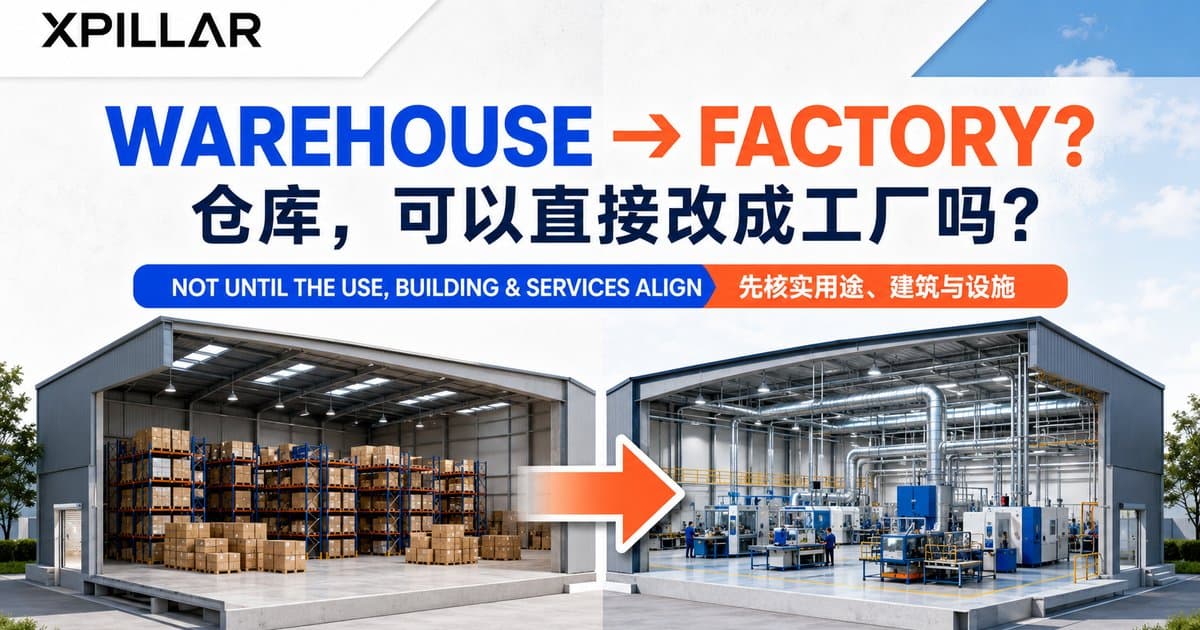
Can a Warehouse Be Converted into a Factory in Malaysia? Approvals and Hidden Costs
马来西亚仓库可以改成生产厂房吗?审批与隐藏成本
A practical due-diligence guide to approved use, planning permission, building upgrades, utilities and operating approvals before a warehouse becomes a production facility.签约前核实批准用途、规划许可、建筑改造、公用设施和营运审批的实用尽调指南
The answer first/ 先说结论
Yes, some warehouses can be converted into factories in Malaysia—but not simply because they are located in an industrial area. The proposed manufacturing process must align with the land title conditions, local planning zoning, approved use or Kebenaran Merancang (KM), approved building plans and Certificate of Completion and Compliance (CCC). The building must also be technically suitable for the machinery, floor loads, power demand, ventilation, fire strategy, effluent and material storage involved.可以,马来西亚部分仓库可以改作生产厂房,但绝不能只因为物业位于工业区就直接投产。 拟进行的生产活动必须同时符合土地地契条件、地方规划分区、现有规划许可(Kebenaran Merancang,KM)、核准建筑图和完工及合规证书(CCC)所批准的用途。建筑本身也必须能够承受机器、地面荷载、电力需求、通风、消防、工业废水和物料储存等要求。
The operator may then need separate approvals or licences involving the local authority, Malaysian Investment Development Authority (MIDA), Department of Environment (DOE), Fire and Rescue Department of Malaysia (BOMBA), utility providers and other sector regulators. The correct route depends on the actual production activity, scale, materials, emissions, building alterations and location—not the property agent's description alone.
营运企业随后还可能需要向地方政府、马来西亚投资发展局(MIDA)、环境局(DOE)、马来西亚消防与拯救局(BOMBA)、公用事业单位及行业监管机构申请不同的批准或执照。正确路径取决于真实生产工序、规模、物料、排放、建筑改动和地点,而不是房源广告如何称呼该物业。
For a factory buyer or warehouse tenant, the safest sequence is:
1. define the intended manufacturing process;
2. verify the property's legal and approved use;
3. measure the gap between the existing building and the required operation;
4. map every approval, responsible party, cost and lead time; and
5. protect the transaction with conditions precedent before signing unconditionally.
对厂房买家或仓库租户而言,较稳妥的顺序是:
1. 先定义准备进行的制造工序;
2. 核实物业的合法及批准用途;
3. 计算现有建筑与生产需求之间的差距;
4. 列明每项审批、责任人、费用和所需时间;
5. 在无条件签约前,把关键审批设为先决条件。
A warehouse and a factory are not the same operating use/ 仓库和生产厂房不是同一种营运用途
A warehouse is generally designed around receiving, storing, picking and dispatching goods. Manufacturing introduces a different risk and infrastructure profile: machinery, process loads, heat, fumes, noise, chemicals, wastewater, production waste, additional workers and sometimes hazardous materials.
仓库通常围绕收货、储存、拣货和出货设计。制造活动则会带来另一套建筑与合规要求,例如机器设备、生产荷载、热量、废气、噪音、化学品、工业废水、生产废物、更多员工,以及某些情况下的危险物料。
MIDA describes “manufacturing activity” as making, altering, blending, ornamenting, finishing or otherwise treating or adapting an article or substance for its use, sale, transport, delivery or disposal; the published definition also includes assembly of parts. This means a business calling itself a “warehouse with light assembly” should examine what actually happens on site; the label used in a tenancy agreement does not settle the regulatory classification. See MIDA's current Approvals and Licensing guidance.
MIDA对制造活动的说明涵盖对物品或物质进行制造、改变、混合、装饰、加工、处理或调整,使其用于销售、运输、交付或处置;已公布的定义也包括零部件组装。因此,即使企业称业务为“仓储加轻度组装”,仍应按照现场真正进行的工序判断。租约使用的名称并不能决定监管分类。请参阅MIDA最新的审批与执照说明。
Start with a one-page manufacturing brief/ 先准备一页生产需求说明
Before asking whether a particular warehouse is suitable, give the owner, industrial-property adviser and appointed consultants a clear operating brief. At minimum, record:
- product and manufacturing steps;
- annual and daily production capacity;
- machine list, dimensions, weight and foundation requirements;
- electrical maximum demand and voltage needs;
- water consumption and discharge characteristics;
- compressed air, steam, gas or other utility requirements;
- heat, fumes, dust, odour, noise and vibration;
- raw materials, chemicals and maximum storage quantities;
- industrial effluent, scheduled waste and general waste streams;
- workforce, shifts, worker amenities and parking;
- container, lorry and loading-bay movements; and
- expansion requirements over the intended lease or ownership period.
在判断某个仓库是否合适前,应向业主、工业地产顾问和受委任的专业顾问提供清楚的营运说明,至少包括:
- 产品及完整生产步骤;
- 每年和每日产能;
- 机器清单、尺寸、重量及基础要求;
- 最大电力需求及电压;
- 用水量和排放特性;
- 压缩空气、蒸汽、燃气及其他公用设施;
- 热量、废气、粉尘、气味、噪音及震动;
- 原材料、化学品及最高储存量;
- 工业废水、受管制废物和一般废物;
- 员工人数、轮班、员工设施及停车位;
- 货柜车、罗里和装卸区动线;
- 在租赁或持有期内的扩充计划。
Without this brief, “suitable for manufacturing” is only a guess.
没有这份说明,“适合生产”就只是猜测。
The seven checks that must align必须同时对齐的七个层面
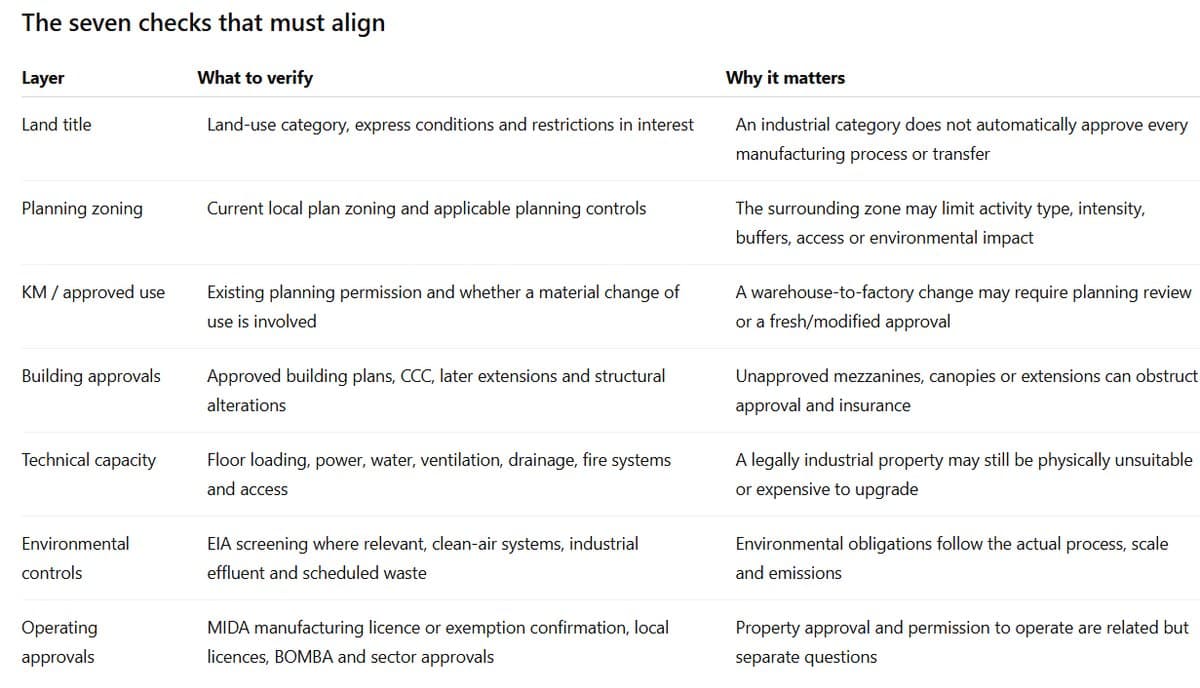
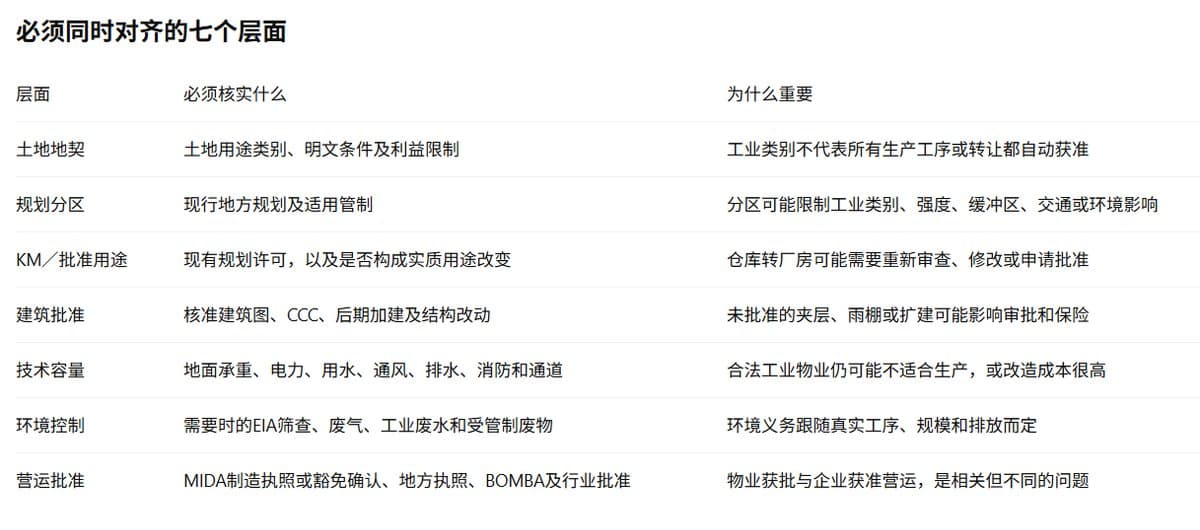
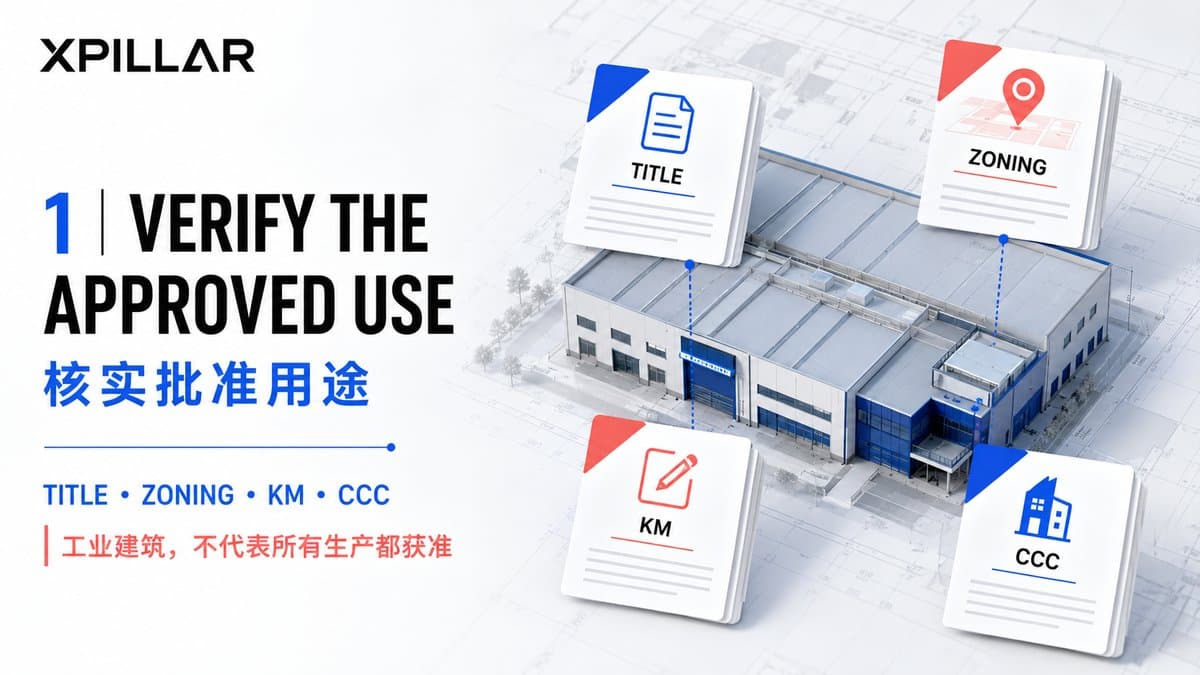
1. Verify the approved property use—not just the title | 核实批准用途,不要只看地契
For projects governed by the Town and Country Planning Act 1976 (Act 172), using land or a building contrary to the local plan is restricted, and development generally requires planning permission. The Act's definition of development includes a material change in the use of land or a building. The official consolidated Town and Country Planning Act 1976 should be read together with current state and local-authority requirements.对于受《1976年城乡规划法令》(Act 172)管辖的项目,土地或建筑用途不得违反地方规划,而发展活动一般需要规划许可。法令对“发展”的定义也包括土地或建筑物用途的实质改变。应把PLANMalaysia发布的官方《1976年城乡规划法令》整合版本与所在州及地方政府的现行要求一起审查。
The due-diligence team should therefore compare four items:
1. the registered title and its express conditions;
2. the current gazetted local plan or zoning information;
3. the approved KM and its conditions; and
4. the approved building plans and CCC use.
尽调团队应对照四项资料:
1. 注册地契及明文条件;
2. 现行已宪报地方规划或分区资料;
3. 已批准KM及其条件;
4. 核准建筑图和CCC所列用途。
Do not assume that “industrial title”, “detached factory”, “warehouse” and “light industrial” are interchangeable. Ask the relevant local authority and a qualified submitting person to confirm whether the proposed activity fits the existing approvals or requires a change of use, amended planning permission or new building submissions. Application requirements differ by local authority; Malaysia's OSC 3 Plus portal publishes local submission routes and checklists.
不要假设“工业地契”“独立式厂房”“仓库”和“轻工业”可以互换。应由相关地方政府和合资格呈交人士确认拟进行的活动是否符合现有批准,还是需要用途转换、修改规划许可或重新呈交建筑图。各地方政府的申请清单可能不同,可通过马来西亚OSC 3 Plus平台查询地方呈交流程。
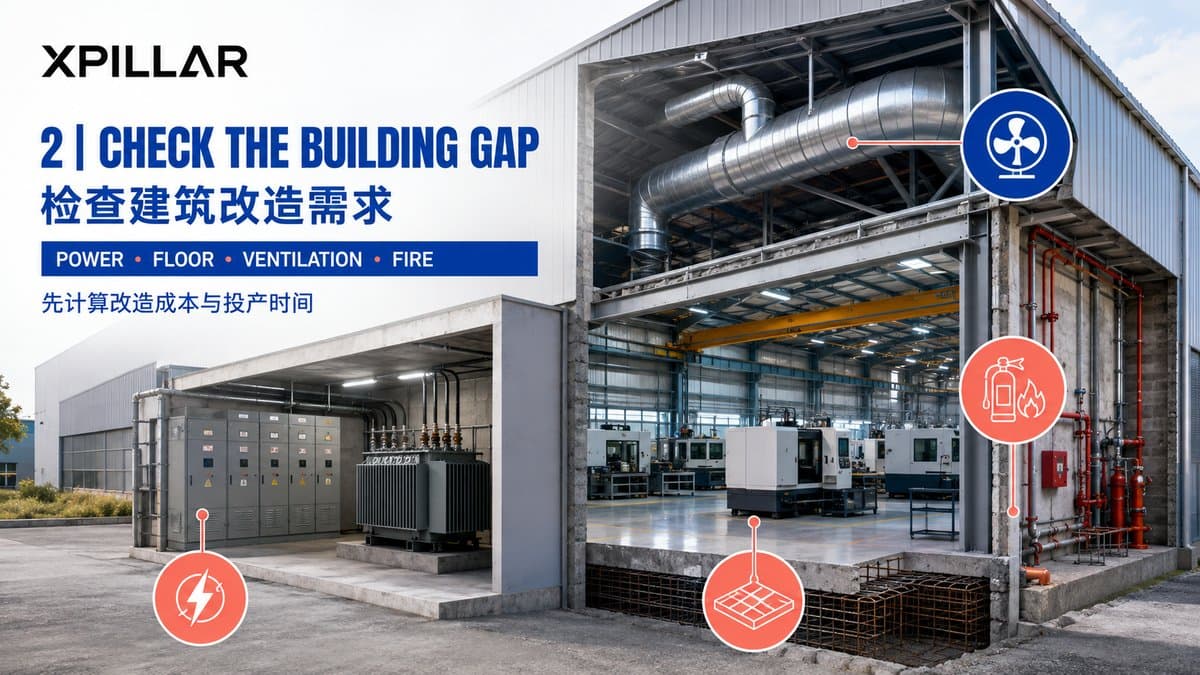
2. Measure the building-conversion gap | 计算建筑改造差距
The second question is not “Can machinery fit through the door?” It is “Can the building safely and compliantly support the complete operation?”第二个问题不是“机器能不能搬进门”,而是“整栋建筑能不能安全、合规地支持完整生产”.
Structure and floor/ 结构和地面
Confirm the slab design, uniform and concentrated loads, machine point loads, vibration, anchor locations and any new pits or foundations. High-bay racking, presses, injection-moulding machines and densely stacked materials can create very different load cases. Request approved structural drawings and calculations; where the information is incomplete, appoint a professional engineer to assess the existing structure.
核实地坪设计、均布及集中荷载、机器点荷载、震动、地脚螺栓位置,以及是否需要地坑或新基础。高位货架、冲压机、注塑机和高密度堆货的受力方式并不相同。应索取获批结构图和计算书;资料不足时,由专业工程师评估现有结构。
Electrical supply/电力供应
Record the existing supply, verified available capacity, maximum-demand requirement, substation arrangement, transformer ownership, internal distribution, harmonics and backup-power needs. A landlord's statement that “three-phase power is available” does not establish that the required load can be delivered. TNB's current Electricity Supply Application Handbook sets out application information and technical processes; large-load projects need early engineering and utility engagement.
记录现有供电、经确认的可用容量、最大需量、变电站安排、变压器所有权、内部配电、谐波和备用电源需求。业主说“有三相电”不代表现场能够提供所需容量。TNB现行的电力供应申请手册列出申请资料和技术流程;大负荷项目应尽早让工程顾问与电力公司进行可行性确认。
Ventilation and process exhaust/ 通风和工艺排气Production may require general ventilation, local exhaust, scrubbers, dust collection, stack design, make-up air or air-conditioning beyond the original warehouse specification. These systems may affect the roof, façade, structure, fire compartmentation and environmental submissions.生产可能需要一般通风、局部抽风、洗涤塔、除尘、烟囱、补风或比原仓库规格更高的空调。这些系统可能影响屋顶、外墙、结构、消防分区和环境呈交。
Water, drainage and effluent/ 用水、排水和工业废水
Verify water quantity and pressure, storage tanks, floor drains, sanitary discharge and whether industrial effluent treatment is required. Industrial process discharge must not simply be connected to a stormwater drain. DOE's Environmental Quality (Industrial Effluent) Regulations 2009 regulate industrial effluent sources and discharges.
核实用水量、水压、储水槽、地面排水、生活污水排放,以及是否需要工业废水处理系统。生产废水不能直接接入雨水沟。DOE发布的《2009年环境质量(工业废水)条例》对工业废水来源和排放作出规定。
Fire and life safety/ 消防和生命安全
Changes in use, layout, hazard, storage height, occupant load or physical conditions may affect fire-system requirements and the local-authority/BOMBA review. Check fire access, compartmentation, escape distances, detection, alarms, hose reels, sprinklers, water storage and hazardous-material arrangements. Designated premises must maintain a Fire Certificate; BOMBA's Fire Certificate guidance explains the framework and designated-premises categories. BOMBA also notes in its business-license support process that a change of building use or physical condition can require inspection.
用途、平面布局、危险类别、储存高度、人员数量或建筑实体条件的变化,都可能影响消防系统和地方政府/BOMBA审查。应检查消防车通道、防火分区、逃生距离、探测、警报、消防喉辘、自动喷淋、消防水源和危险物料安排。指定场所须维持消防证书;BOMBA的消防证书说明列出相关框架和场所类别。BOMBA在商业执照支持流程中也说明,建筑用途或实体状况改变可能需要检查。
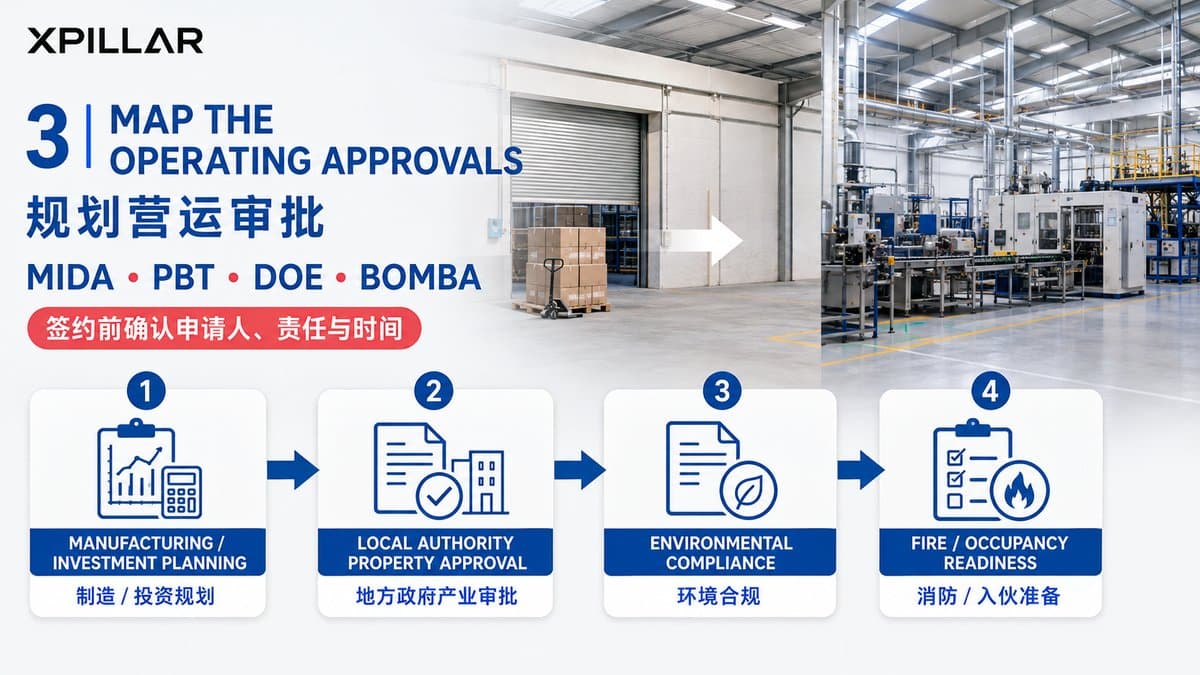
3. Map the operating approvals | 规划营运审批路径
Property approval does not replace approval to operate a manufacturing business.
物业获批,并不等于企业已经获准从事制造活动。
MIDA manufacturing license/ MIDA制造执照
Under MIDA's published criteria, a manufacturing company with shareholders' funds of RM2.5 million and above, or 75 or more full-time paid employees, must apply for a Manufacturing Licence under the Industrial Co-ordination Act 1975. A manufacturer below both thresholds may apply for a confirmation letter exempting it from the license requirement, commonly called ICA10. Check the latest MIDA approvals and licensing page and Manufacturing License guideline before submission.
根据MIDA目前公布的条件,制造企业如果股东资金达到或超过RM2.5 million,或拥有75名或以上全职受薪员工,须按照《1975年工业协调法令》申请制造执照。若企业同时低于两项门槛,可申请确认豁免制造执照的信函,通常称为ICA10。呈交前应查阅最新的MIDA审批与执照页面及制造执照指南。
These thresholds answer only whether a Manufacturing Licence is required. They do not waive planning, building, environmental, fire, utility, local-business or sector-specific requirements.
这些门槛只回答是否需要制造执照,并不会豁免规划、建筑、环境、消防、公用设施、地方商业执照或行业专项批准。
DOE environmental requirements/ DOE环境要求
Environmental obligations depend on the activity, capacity, process and site. Screen the project against the Environmental Quality (Prescribed Activities) (Environmental Impact Assessment) Order 2015 using DOE's official EIA prescribed-activities page. Even when an EIA is not prescribed, separate requirements may apply to air emissions, industrial effluent, sewage, scheduled waste, noise or written notifications and approvals. For air-emission projects, review DOE's Environmental Quality (Clean Air) Regulations 2014.
环境义务取决于活动、产能、工序和地点。应根据DOE官方的EIA指定活动页面核对《2015年环境质量(指定活动)(环境影响评估)法令》。即使项目不属于必须进行EIA的指定活动,废气、工业废水、污水、受管制废物、噪音或书面通知/批准仍可能适用。涉及废气排放时,也应审查DOE的《2014年环境质量(清洁空气)条例》。
Local and sector licenses/ 地方和行业执照
The local authority may require premises and business licences after the property and building position is regularised. Food, pharmaceutical, medical-device, chemical, petroleum, logistics and other regulated activities may need additional agency approvals. Build a project-specific approval register instead of relying on a generic “factory license” checklist.
在物业及建筑用途完成合规处理后,地方政府可能还会要求场所及商业执照。食品、药品、医疗器械、化学品、石油、物流等受监管活动也可能需要其他机构批准。企业应建立针对实际项目的审批清单,而不是只套用一份通用“工厂执照”列表。
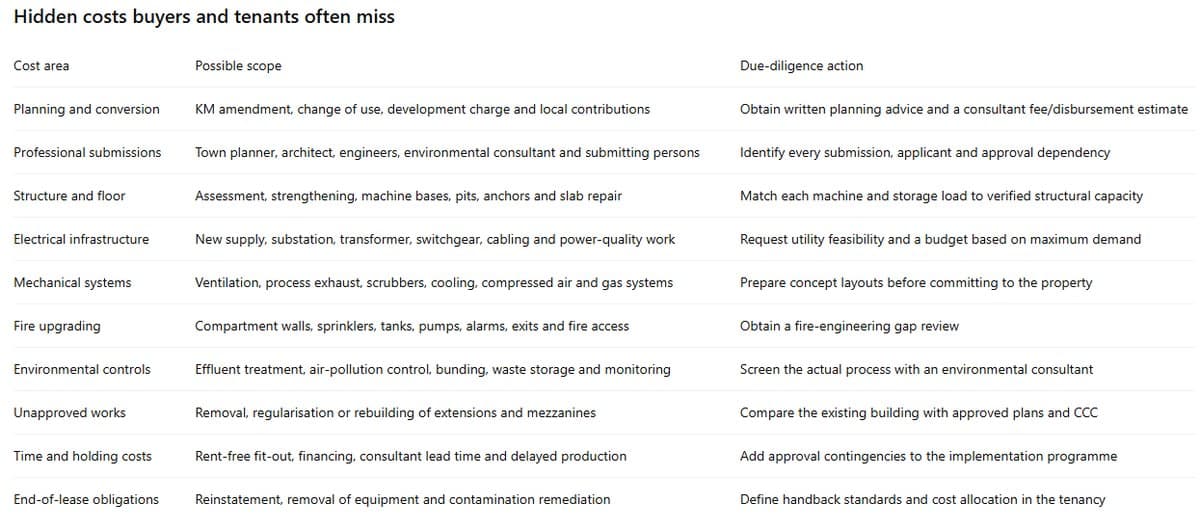
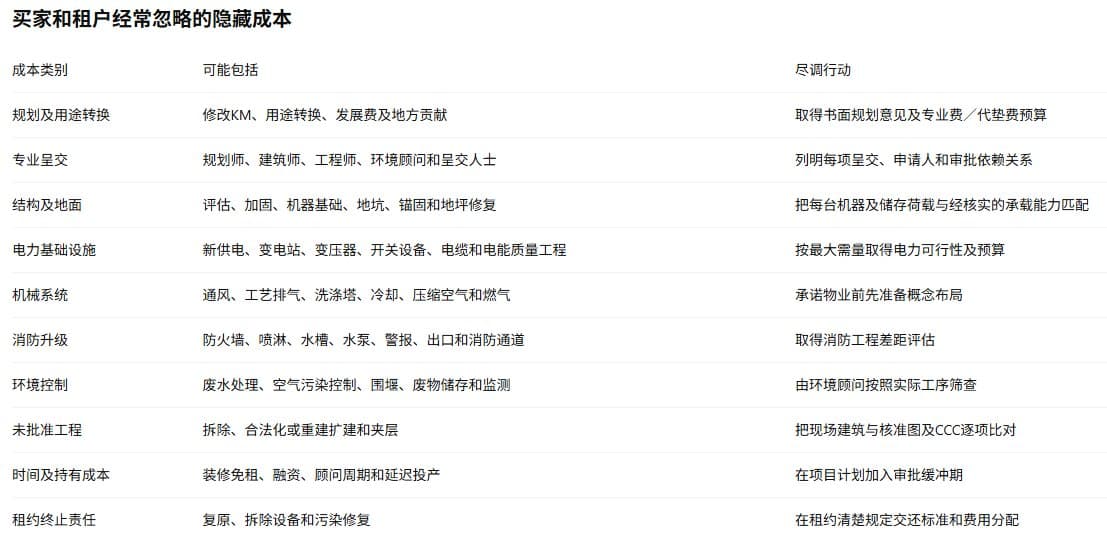
The cheapest asking rent can become the most expensive option if the property needs a new substation, structural strengthening, an effluent-treatment system or extensive fire upgrading.
如果物业需要新变电站、结构加固、工业废水处理系统或大型消防升级,表面上最便宜的租金,最终可能是成本最高的选择。
Documents to request before signing- current land title search and any relevant consent conditions;
- approved KM and planning conditions;
- approved architectural, structural and M&E plans;
- CCC and earlier CF documents where applicable;
- records of approved additions or alterations;
- existing fire approvals and Fire Certificate where applicable;
- verified electricity bills, supply details and maximum-demand records;
- water and sewerage information;
- prior DOE submissions or licences relevant to the premises;
- machinery layout, racking layout and load schedule for the proposed use;
- local-authority correspondence on use conversion;
- building-condition and structural assessments;
- proposed approval responsibility matrix; and
- itemised conversion budget and implementation programme.
签约前应索取的资料- 最新土地查册及相关同意条件;
- 已批准KM及规划条件;
- 核准建筑、结构及机电图;
- CCC,以及适用时早期的CF文件;
- 已获批准的加建或改建记录;
- 现有消防批准及适用时的消防证书;
- 经核实的电费单、供电资料及最大需量记录;
- 供水及排污资料;
- 与该场所有关的早期DOE呈交或执照;
- 拟进行用途的机器布局、货架布局及荷载表;
- 地方政府对用途转换的书面回复;
- 建筑状况及结构评估;
- 拟定审批责任矩阵;
- 分项改造预算及实施时间表。
Existing approvals held by a previous operator should be reviewed carefully. They may relate to a different company, process, capacity, layout or licence holder and may not transfer automatically.
前营运者持有的批准必须逐项审查,因为它们可能对应不同公司、工序、产能、布局或执照持有人,不一定能自动转移给新租户或买家
Protect the offer, sale agreement or tenancy | 在要约、买卖协议或租约中保护企业
Before paying a non-refundable deposit, discuss appropriate protections with the appointed lawyer and consultants. Depending on the transaction, these may include:
- a due-diligence period with access to title and approval records;
- conditions precedent for planning, landlord, lender or regulatory approval;
- an express description of the permitted use that matches the real process;
- landlord cooperation with submissions and utility upgrades;
- clear ownership of drawings, approvals and installed infrastructure;
- cost allocation for structural, fire, power and environmental works;
- a fit-out or rent-free period linked to approval milestones;
- rights to terminate or recover deposits if a critical approval is refused;
- warranties about unauthorised building works; and
- clear reinstatement and contamination obligations.
支付不可退还订金前,应与受委任律师及顾问讨论适当保护条款。视交易情况,可包括:
- 允许查阅地契和审批文件的尽调期;
- 以规划、业主、银行或监管批准为先决条件;
- 与真实生产工序一致的许可用途描述;
- 业主配合呈交及公用设施升级的义务;
- 图纸、批准和已安装基础设施的所有权;
- 结构、消防、电力和环境工程的费用分配;
- 与审批里程碑挂钩的装修或免租期;
- 关键批准被拒时终止交易或取回订金的权利;
- 对未批准建筑工程的保证;
- 清楚的复原和污染责任。
Do not use a vague clause such as “subject to authority approval” without identifying the critical approvals, applicant, deadline and outcome if approval is not obtained.
不要只写一句含糊的“以政府批准为准”。条款应列明关键批准、申请人、期限,以及无法取得批准时的处理方式。
Warning signs during a site inspection | 实地考察时的警示信号
- the agent or owner cannot produce approved plans or CCC;
- current use differs from the approved plan description;
- mezzanines, canopies or extensions do not appear on drawings;
- heavy machinery is proposed on a slab with no verified capacity;
- the available electrical capacity is quoted without utility evidence;
- floor drains lead toward stormwater channels;
- no space is reserved for exhaust, waste storage, fire tanks or treatment systems;
- chemical or scheduled-waste areas have no bunding or controlled drainage;
- container circulation conflicts with fire-engine access; or
- the budget assumes approvals can be obtained after production starts.
- 中介或业主无法提供核准图或CCC;
- 当前用途与获批图纸说明不一致;
- 夹层、雨棚或扩建没有出现在图纸上;
- 计划放置重型机器,但地坪承载力未经核实;
- 电力容量只有口头数字,没有电力公司依据;
- 地面排水流向雨水沟;
- 没有为排气、废物储存、消防水槽或处理系统预留空间;
- 化学品或受管制废物区域没有围堰和受控排水;
- 货柜车动线阻碍消防车通道;
- 预算假设可先投产、后补审批。
Final decision rule/ 最终判断原则
A warehouse is a viable factory candidate only when the proposed process, approved property use, building capacity, infrastructure, operating approvals, conversion budget and contract all align. If one of these remains uncertain, price the risk and make the commitment conditional—do not treat it as an issue to solve after handover.
只有当生产工序、物业批准用途、建筑能力、基础设施、营运审批、改造预算和合同安排全部对齐时,一个仓库才是可行的生产厂房候选。如果其中一项仍不确定,就应把风险计入价格,并把承诺设为有条件,而不是留到交付后再处理。
Xpillar helps manufacturers, investors and logistics operators compare real industrial properties in Malaysia and assemble the right questions before committing. Explore industrial properties on Xpillar.
XPillar协助制造商、投资者和物流企业比较马来西亚真实工业物业,并在承诺前提出正确问题。浏览XPillar工业地产房源。
Frequently asked questions | 常见问题
Q: Can every industrial warehouse be used as a factory in Malaysia?马来西亚所有工业仓库都可以改作厂房吗?
A: No. An industrial location or title does not automatically approve manufacturing. The proposed process must fit the planning, building, environmental, fire, infrastructure and operating requirements applicable to the site.不可以。工业地点或工业地契并不会自动批准制造活动。拟进行的工序仍须符合该地点的规划、建筑、环境、消防、基础设施和营运要求。
Q: Does an industrial title eliminate the need for a change of use?
有工业地契就不需要转换用途吗?A: No. The title is only one layer. Check the local-plan zoning, KM conditions, approved building use and CCC, then obtain local-authority/professional confirmation for the proposed activity.
不是。地契只是其中一层。仍须核实地方规划、KM条件、核准建筑用途和CCC,并由地方政府/专业顾问确认拟进行活动是否需要用途转换。
Q; Is a new CCC always required when converting a warehouse?
仓库改厂房一定要重新申请CCC吗?A: Not always. The answer depends on the approved use, extent of alteration and applicable local-authority/building requirements. A qualified submitting person should compare the existing approvals with the proposed works and use.
不一定。答案取决于原批准用途、改造范围及适用的地方政府和建筑要求。合资格呈交人士应把现有批准与拟建工程及用途进行比较
Q: Does a manufacturer need a MIDA Manufacturing License?
制造企业是否需要MIDA制造执照?A: Under MIDA's published criteria, a manufacturing company with shareholders' funds of RM2.5 million and above, or at least 75 full-time paid employees, must apply. Companies below both thresholds may apply for exemption confirmation, but other approvals still apply.
根据MIDA公布的条件,股东资金达到RM2.5 million或以上,或拥有至少75名全职受薪员工的制造企业须申请。若两项均低于门槛,可申请豁免确认,但其他批准仍然适用。
Q: Is DOE approval required for every factory?
每一家厂都需要DOE批准吗?A; Not every factory requires an EIA, but environmental laws may still regulate air emissions, industrial effluent, scheduled waste and other impacts. Screening must be based on the actual activity, scale and location.
不是每家厂都必须进行EIA,但废气、工业废水、受管制废物等仍可能受环境法规监管。必须按照真实活动、规模和地点进行筛查。
Q: Can a new tenant rely on the previous factory operator's approvals?
新租户可以直接沿用上一家工厂的批准吗?A: Not automatically. An approval may be tied to the former company, process, capacity, layout or license holder. Each approval should be checked for validity, conditions and transferability.
不一定。批准可能与原公司、工序、产能、布局或执照持有人绑定。应逐项核实有效期、条件和能否转移。
Q: Who should pay for warehouse-to-factory conversion works?
仓库改厂房的费用应由谁承担?A; This is a commercial and contractual issue. The offer or tenancy should clearly allocate costs, ownership, approvals, maintenance, reinstatement and consequences if a critical approval is refused.
这是商业和合同问题。要约或租约应清楚分配费用、所有权、审批、维护、复原责任,以及关键批准被拒时的处理方式。
Official primary sources used1. PLANMalaysia — Town and Country Planning Act 1976 (Act 172), consolidated as at 1 June 2021
2. KPKT — OSC 3 Plus Online
3. MIDA — Approvals and Licensing
4. MIDA — Guideline on Application for Manufacturing Licence
5. DOE — Environmental Quality (Prescribed Activities) (Environmental Impact Assessment) Order 2015
6. DOE — Environmental Quality (Industrial Effluent) Regulations 2009
7. DOE — Environmental Quality (Clean Air) Regulations 2014
8. BOMBA — Fire Certificate
9. BOMBA — Business Licence Support Process
10. TNB — Electricity Supply Application Handbook
Editorial note: Requirements vary by activity, site, state and local authority. This article is a general due-diligence guide, not legal, engineering or regulatory advice. Confirm the current project-specific position with the relevant authorities and qualified professionals before committing.