
Malaysia Industrial Property Outlook 2026: Where Are Factories and Warehouses in Demand?
2026
马来西亚工业地产展望:哪些地区的厂房与仓库需求正在增长
Malaysia’s industrial property market enters the second half of 2026 with strong investment signals—but the opportunity is not a simple nationwide boom. Demand is concentrating in locations that can provide the right combination of infrastructure, utilities, labour, approvals, supplier ecosystems and access to ports, airports or major consumer markets.
马来西亚工业地产市场进入2026年下半年时,仍展现强劲的投资信号;但这并不代表全国所有地区、所有厂房都会同步上涨。真正的需求正在集中到能够同时提供完善基础设施、公用设施、劳动力、审批条件、供应链生态,以及港口、机场或主要消费市场连接的地区。
For buyers, tenants and landowners, the central question is therefore not only, “Which state is hot?” It is: which industrial corridor fits the intended operation, and does the specific property have the legal, technical and infrastructure capacity to support it?
因此,对买家、租户与地主而言,关键问题不只是“哪一个州最热门”,而是:哪一条工业走廊真正适合企业的营运需求?该物业在法律、技术与基础设施方面,是否真的能够支持拟进行的业务?
> **Important:** Approved investment figures indicate future economic and industrial activity, but they do not equal immediate factory or warehouse take-up. A project may still be selecting a site, obtaining approvals, constructing a facility or installing machinery. Market demand must therefore be assessed together with actual transactions, occupier enquiries, infrastructure readiness and project implementation.
> **重要说明:** 获批投资额反映未来的经济与工业活动,但不等同于厂房或仓库已经即时被吸纳。项目可能仍处于选址、审批、建厂或安装机器阶段。因此,判断市场需求时,必须同时观察实际成交、企业询盘、基础设施准备程度及项目落实进度。
Answer first | 先说结论
The strongest and most diversified industrial-property demand in 2026 is concentrated in five broad corridors:
2026年需求最强、类型最多元的工业地产,主要集中在以下五大走廊:
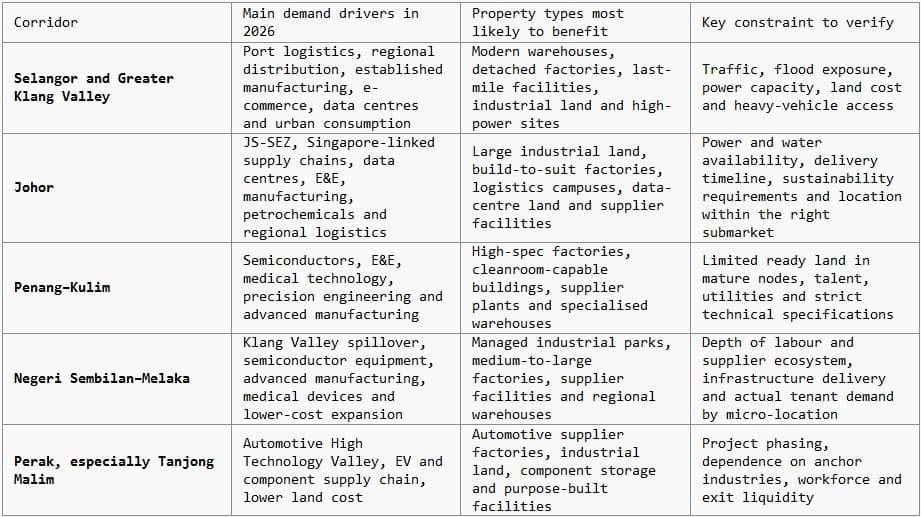
The first three corridors—Selangor, Johor and Penang–Kulim—currently offer the broadest depth of occupier demand. Negeri Sembilan–Melaka and Tanjong Malim provide selective growth opportunities, especially where a property is tied to a real cluster, anchor project or proven logistics route.
前三大走廊——雪兰莪、柔佛与槟城—居林——目前拥有最广泛的企业需求基础。森美兰—马六甲及丹绒马林则属于选择性增长市场;物业若能连接真实产业集群、龙头项目或成熟物流路线,机会会更明显。
What the latest data says | 最新数据说明什么?
Malaysia recorded RM426.7 billion in approved investments in 2025, an 11% year-on-year increase and a new national high. Manufacturing accounted for RM131.3 billion, led by electrical and electronics, chemicals, transport equipment, and machinery and equipment. According to MIDA, Johor, Selangor, Kuala Lumpur, Penang and Kedah together captured 74.5% of total approved investments. MIDA: Malaysia’s 2025 approved investments
马来西亚2025年获批投资总额达到 RM426.7 billion,同比增长11%,创下新高。其中制造业占 RM131.3 billion,主要由电子电气、化学、交通设备及机械设备推动。根据MIDA资料,柔佛、雪兰莪、吉隆坡、槟城及吉打合计吸纳全国74.5%的获批投资。
The industrial property sub-sector also stood out in the 2025 property market. NAPIC reported that industrial transaction volume increased by about 1.4%, while transaction value rose much faster—by 21.3%. This difference suggests that larger or higher-value industrial assets played an important role in market activity. [NAPIC: Property Market Report 2025]工业地产也是2025年房地产市场表现突出的板块。NAPIC数据显示,工业地产成交宗数约增长 1.4%,但成交总值却上升 21.3%。两者之间的差距说明,大型或高价值工业资产在市场活动中扮演了重要角色。
Momentum continued into 2026. In the first quarter, Malaysia approved RM92.8 billion across 1,249 projects. Selangor ranked first with RM33.5 billion, followed by Johor and Kuala Lumpur at RM16.9 billion each, Penang at RM6.2 billion and Sarawak at RM4.0 billion. Manufacturing approvals totalled RM24.1 billion. Data centres and cloud computing alone accounted for RM34.6 billion across 33 projects, although these are classified within services rather than manufacturing. MIDA: Q1 2026 investment performance
这一趋势延续到2026年。第一季度,马来西亚共有1,249个项目获批,总投资额 RM92.8 billion。雪兰莪以RM33.5 billion排名第一,其次是柔佛与吉隆坡,各RM16.9 billion;槟城RM6.2 billion,砂拉越RM4.0 billion。制造业获批投资为RM24.1 billion。数据中心与云计算则在33个项目中贡献RM34.6 billion,不过这类投资在统计上属于服务业,而不是制造业。
The data supports a positive industrial outlook, but it also points to a more selective market: capital is concentrating in high-value projects, digital infrastructure and established clusters. Generic factories without suitable power, access, approvals or building specifications will not automatically benefit.
这些数据支持正面的工业地产展望,但也显示市场越来越有选择性:资金正集中在高价值项目、数字基础设施与成熟产业集群。缺乏足够电力、通行条件、批准文件或建筑规格的普通厂房,并不会自动受惠。
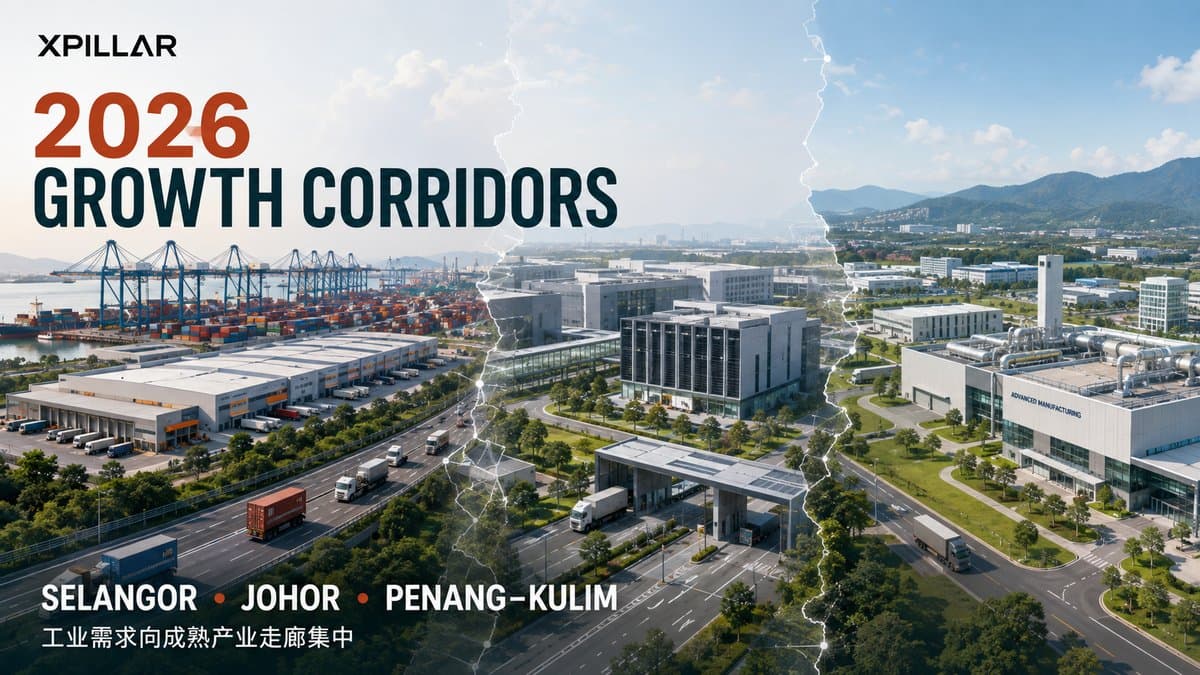
1. Selangor and Greater Klang Valley: the broadest occupier base | 雪兰莪与大巴生谷:需求基础最广
Selangor remains Malaysia’s most diversified industrial market. Its advantage comes from the combination of Port Klang, Kuala Lumpur International Airport, a large labour and consumer catchment, mature highways, established supplier networks and a wide range of industrial property formats.
雪兰莪仍是马来西亚最多元化的工业市场。其优势来自巴生港、吉隆坡国际机场、庞大的劳动力与消费人口、成熟高速公路、完整供应商网络,以及多种类型的工业地产供应。
Where demand is strongest
- Klang, Port Klang, Bandar Sultan Suleiman and Telok Gong: port-related manufacturing, container logistics, forwarding, engineering, heavy industry and storage.
- Bukit Raja, Setia Alam and Meru: modern warehousing, distribution, light-to-medium manufacturing and regional fulfilment.
- Shah Alam, Subang and Glenmarie: mature manufacturing, engineering, aerospace-related activities, urban logistics and corporate industrial users.
- Pulau Indah and the wider Port Klang corridor: large logistics facilities, port-centric distribution and land-intensive projects.
- Cyberjaya and selected southern Selangor nodes: data centres, digital infrastructure and high-technology projects, subject to utility capacity.
需求较强的地区
- 巴生、巴生港、Bandar Sultan Suleiman与Telok Gong: 港口相关制造、货柜物流、货运代理、工程、重工业及仓储。
- Bukit Raja、Setia Alam与Meru: 现代仓库、区域配送、轻中型制造与履约中心。
Shah Alam、Subang与Glenmarie: 成熟制造业、工程、航空相关产业、城市物流与企业自用厂房。
- Pulau Indah及更广泛的巴生港走廊: 大型物流设施、港口配送及需要较大土地的项目。
- Cyberjaya及雪兰莪南部部分节点: 数据中心、数字基础设施与高科技项目,但必须确认公用设施容量。
Selangor recorded RM18.14 billion across 410 approved manufacturing projects in 2025, the highest project count among all states. In Q1 2026, it also led overall approved investments at RM33.5 billion. MIDA: Manufacturing projects approved by state, 2025
雪兰莪2025年共有410个制造业项目获批,投资额RM18.14 billion,是全国项目数量最多的州属。2026年第一季度,雪兰莪也以RM33.5 billion的整体获批投资位居全国第一。
2026 outlook: demand should remain resilient for operationally efficient assets—especially warehouses with proper container circulation, factories with verified power and approved use, and properties close to proven highway and port routes. Older buildings may still attract users if their location and land efficiency compensate for refurbishment needs.
2026年展望: 营运效率高的物业需求预计保持韧性,尤其是拥有良好货柜车动线的仓库、电力与批准用途清楚的厂房,以及靠近成熟高速公路与港口路线的物业。旧厂房若地段与土地使用效率良好,即使需要翻新,仍可能吸引企业。
Main risk: Selangor is not one uniform market. A property can be close to Port Klang on a map yet still suffer from poor last-mile roads, flood exposure, traffic bottlenecks, limited yard depth or insufficient power.
主要风险: 雪兰莪并不是一个完全相同的市场。某物业在地图上可能靠近巴生港,却仍可能面对最后一段道路不佳、水灾风险、交通拥堵、场地不足或电力不够等问题。
2. Johor: the fastest-changing large-scale industrial story | 柔佛:变化最快的大型工业市场
Johor’s industrial market is being reshaped by three forces: the Johor–Singapore Special Economic Zone (JS-SEZ), rapid data-centre development and the expansion of manufacturing and logistics supply chains linked to Singapore and regional trade.
柔佛工业地产正受到三股力量重塑:柔佛—新加坡经济特区(JS-SEZ)、数据中心快速发展,以及连接新加坡与区域贸易的制造与物流供应链扩张。
The JS-SEZ agreement was signed on 7 January 2025 to improve connectivity, movement of people and the regional business ecosystem. Its targeted activities include manufacturing, logistics, digital economy, advanced industries and business services. Official JS-SEZ overview Singapore EDB: JS-SEZ agreement
JS-SEZ协议于2025年1月7日签署,目标包括加强跨境连接、人员流动及区域商业生态。其重点活动涵盖制造、物流、数字经济、先进产业与商业服务。
Where demand is strongest
- Kulai and Sedenak: data centres, large industrial campuses, advanced manufacturing and supporting suppliers.
- Senai: airport-linked logistics, E&E, light manufacturing, regional distribution and supplier operations.
- Johor Bahru, Tebrau and Tampoi: established manufacturing, urban distribution, E&E and small-to-medium industrial occupiers.
- Pasir Gudang and Tanjung Langsat: port-related heavy industry, chemicals, petrochemicals, engineering, storage and export manufacturing.
- Gelang Patah, Nusajaya and the western corridor: Singapore-linked businesses, logistics, technology and projects connected to the JS-SEZ ecosystem.
- Pengerang: specialised oil, gas, petrochemical and downstream industrial requirements.
需求较强的地区
- 古来与Sedenak: 数据中心、大型工业园、高端制造及配套供应商。
- 士乃: 机场物流、电子电气、轻型制造、区域配送与供应链企业。
- 新山、Tebrau与Tampoi: 成熟制造、城市配送、电子电气及中小型工业用户。
- 巴西古当与Tanjung Langsat: 港口重工业、化学、石化、工程、仓储及出口制造。
- Gelang Patah、Nusajaya及西部走廊: 与新加坡连接的企业、物流、科技及JS-SEZ生态项目。
- 边佳兰: 油气、石化及下游工业的专业需求。
Johor recorded RM24.58 billion in approved manufacturing investments in 2025, almost double its 2024 level, across 323 projects. MIDA also reported that Johor attracted RM126.9 billion in overall approved investments between 2025 and Q1 2026. MIDA: Manufacturing projects by state MIDA: China–Malaysia collaboration through JS-SEZ
柔佛2025年共有323个制造业项目获批,投资额RM24.58 billion,接近2024年的两倍。MIDA也表示,柔佛从2025年至2026年第一季度的整体获批投资达到RM126.9 billion。
2026 outlook: Johor has the strongest case for large-scale, build-to-suit and digital-infrastructure-related land demand. It can also attract manufacturers that want a Malaysian production base while maintaining commercial or financial links with Singapore.
2026年展望: 柔佛在大型项目、定制厂房及数字基础设施用地方面拥有最强增长潜力,也适合希望在马来西亚设立生产基地,同时保留新加坡商业或金融联系的企业。
Main risk: headline demand does not make every industrial plot data-centre-ready or factory-ready. Investors must obtain written confirmation of electricity, water, fibre, drainage, planning parameters and delivery dates. Sustainability and resource-efficiency requirements are becoming more important for data-centre approvals.
主要风险: 市场热度不代表每一块工业地都适合数据中心或厂房。投资者必须书面确认电力、水源、光纤、排水、规划参数及交付时间。数据中心审批也越来越重视能源效率与可持续性。
3. Penang–Kulim: high-specification demand, not generic space | 槟城—居林:高规格需求,而不是普通空间
Penang and neighbouring Kulim form Malaysia’s most established northern E&E and semiconductor corridor. Demand here is driven not only by multinational manufacturers, but also by equipment makers, automation companies, precision-engineering suppliers, cleanroom operators, medical-technology businesses and specialised logistics providers.
槟城与邻近的居林组成马来西亚最成熟的北部电子电气与半导体走廊。当地需求不仅来自跨国制造企业,也来自设备制造商、自动化公司、精密工程供应商、无尘室营运商、医疗科技企业与专业物流公司。
Where demand is strongest
- Bayan Lepas and Batu Kawan: advanced manufacturing, semiconductor assembly and testing, equipment, medical technology and high-value supplier operations.
- Perai, Bukit Minyak and Bukit Tengah: established factories, engineering suppliers, warehousing and mainland logistics.
- Kulim Hi-Tech Park and the Kulim corridor: wafer fabrication, advanced electronics, high-technology manufacturing and supporting vendors.
需求较强的地区
- Bayan Lepas与Batu Kawan: 先进制造、半导体封装测试、设备、医疗科技及高价值供应商业务。
- Perai、Bukit Minyak与Bukit Tengah: 成熟厂房、工程供应商、仓储及北马物流。
- Kulim Hi-Tech Park与居林走廊: 晶圆制造、先进电子、高科技制造及配套供应商。
Penang recorded RM22.38 billion across 232 approved manufacturing projects in 2025. Kedah recorded RM24.62 billion, the highest manufacturing investment value among the states that year, driven heavily by foreign investment. MIDA identifies Penang and Kulim as major Malaysian E&E clusters, while InvestPenang highlights the concentration of semiconductor assembly, testing and packaging activities. MIDA: E&E industry InvestPenang: Electrical and electronics
槟城2025年共有232个制造业项目获批,投资额RM22.38 billion。吉打则达到RM24.62 billion,是当年制造业获批投资额最高的州属,而且主要由外资推动。MIDA将槟城与居林列为马来西亚主要电子电气产业集群;InvestPenang也强调当地在半导体封装、测试与相关供应链方面的集中度。
2026 outlook: continued demand is likely for technically compliant buildings and sites near the established ecosystem. The best-performing properties will often be those that can support high power quality, cleanroom conversion, vibration control, reliable utilities, security and skilled-labour access—not simply the cheapest industrial space.
2026年展望: 靠近成熟产业生态、技术条件合格的厂房与工业地,预计继续受到关注。较有竞争力的物业通常能够支持高质量电力、无尘室改造、震动控制、稳定公用设施、安全管理及技术人才通勤,而不只是租金最便宜。
Main risk: mature nodes have limited land and can be expensive. A lower-cost site farther away may lose its advantage if it weakens access to engineers, suppliers, airports or just-in-time logistics.
主要风险: 成熟节点土地有限,价格也可能较高。较远地区虽然地价便宜,但如果降低工程师、供应商、机场或即时物流的可达性,其成本优势可能被抵消。
4. Negeri Sembilan–Melaka: selective expansion south of Klang Valley | 森美兰—马六甲:大巴生谷以南的选择性扩张
Negeri Sembilan and Melaka are gaining attention from companies seeking more affordable land, managed industrial parks and access to the central and southern regions without paying core Klang Valley prices.
森美兰与马六甲正吸引希望取得较低成本土地、管理型工业园,同时连接中部与南部市场的企业,而无需承担大巴生谷核心区价格。
Relevant nodes include Nilai, Bandar Enstek, Sendayan, Seremban and Senawang in Negeri Sembilan, and Batu Berendam, Ayer Keroh and selected established industrial estates in Melaka. Demand is linked to advanced manufacturing, semiconductor equipment, medical devices, aerospace-related supply chains, food production and regional distribution.
森美兰值得关注的节点包括 Nilai、Bandar Enstek、Sendayan、Seremban与Senawang;马六甲则包括 Batu Berendam、Ayer Keroh及部分成熟工业区。需求与先进制造、半导体设备、医疗器材、航空相关供应链、食品生产及区域配送有关。
Recent examples include the expansion of a semiconductor-equipment manufacturer in Senawang and Melaka’s efforts to develop a longer-term semiconductor and advanced-manufacturing ecosystem. MIDA: Exis Tech expansion in Negeri Sembilan MIDA: 2026 media releases
近期例子包括一家半导体设备制造商在Senawang扩产,以及马六甲推动更长期的半导体与先进制造生态。
2026 outlook: these markets can capture spillover and supplier expansion, particularly in well-managed parks with credible utilities, highway access and clear development delivery. Modern factories with room for expansion may appeal to owner-occupiers that find mature Klang Valley stock too expensive or constrained.
2026年展望: 这些地区可承接外溢需求与供应商扩张,尤其是公用设施可靠、高速公路连接良好、开发交付明确的管理型工业园。拥有扩建空间的现代厂房,也可能吸引认为大巴生谷成熟厂房过于昂贵或受限制的自用企业。
Main risk: demand can vary sharply between neighbouring projects. Buyers should verify actual completed infrastructure, nearby occupiers, workforce catchment and take-up—not rely only on a future masterplan.
主要风险: 即使相邻项目,真实需求也可能差异很大。买家应核实已经完成的基础设施、周边企业、劳动力来源与实际吸纳情况,而不是只依赖未来总体规划。
5. Perak and Tanjong Malim: an automotive-led opportunity | 霹雳与丹绒马林:汽车产业带动的机会
Perak recorded RM9.39 billion in approved manufacturing investments in 2025, up strongly from RM3.73 billion in 2024. A central driver is the Automotive High Technology Valley (AHTV) in Tanjong Malim, including investment in new-energy vehicles and their components.
霹雳2025年制造业获批投资达到RM9.39 billion,相比2024年的RM3.73 billion明显增长。主要推动力之一是丹绒马林汽车高科技谷(AHTV),包括新能源汽车及零部件投资。
MIDA reported six Tanjong Malim automotive-cluster projects worth RM3.6 billion in 2025, while PROTON’s expansion includes capabilities for new-energy vehicles, components, transmissions, casting and metal stamping. MIDA: 2025 investment performance MIDA: PROTON Tanjong Malim expansion
MIDA指出,丹绒马林汽车产业集群在2025年共有6个项目,总值RM3.6 billion。PROTON扩建项目则包括新能源汽车、零部件、变速系统、铸造及金属冲压产能。
2026 outlook: Tanjong Malim can generate demand for component factories, vendor parks, parts storage, transport yards and purpose-built facilities. The opportunity is strongest for businesses connected to the automotive and EV supply chain rather than generic warehousing.
2026年展望: 丹绒马林可带动零部件厂、供应商园区、配件仓储、运输场地及定制设施需求。机会最适合与汽车及电动车供应链直接相关的企业,而不是没有明确客户基础的普通仓储。
Main risk: this is a more cluster-dependent market. Investors should test whether demand comes from committed occupiers and actual supply-chain contracts, and consider resale or reletting options if an anchor project changes its schedule.
主要风险: 这是较依赖产业集群的市场。投资者应确认需求是否来自已经落实的企业及供应链合约,并考虑若龙头项目进度改变,物业未来是否容易转售或重新出租。
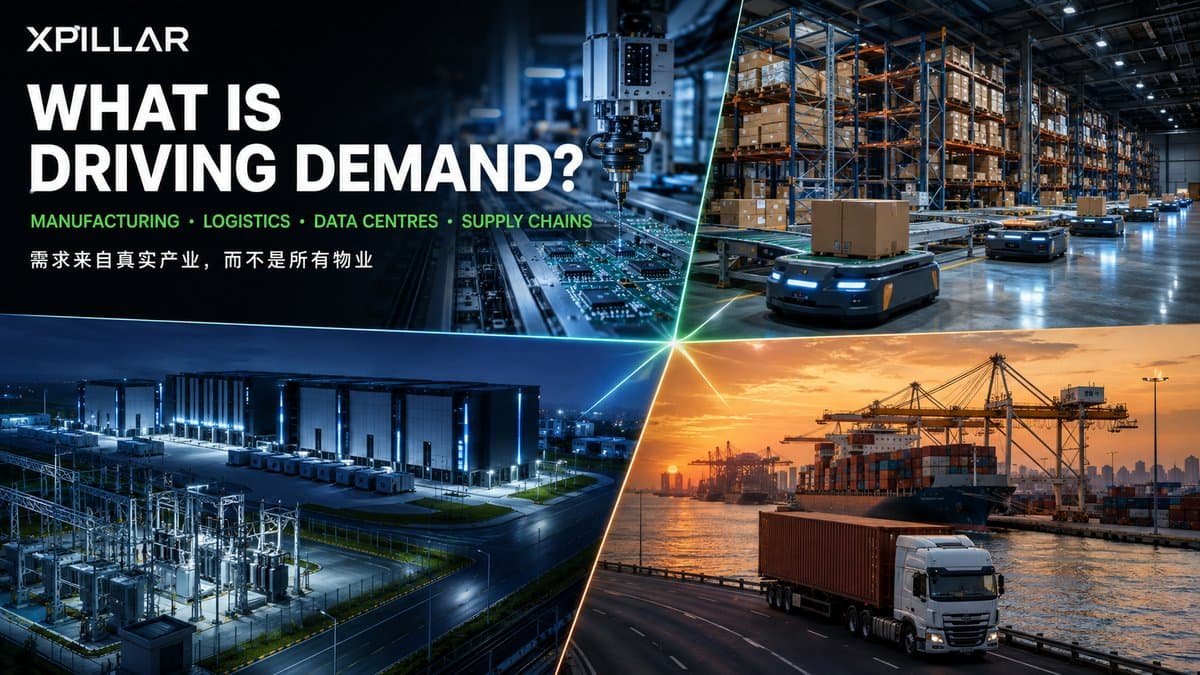
Other selective opportunities | 其他选择性机会
Not every opportunity sits within the five main corridors. Sarawak has attracted semiconductor and energy-intensive investment, while Sabah, Pahang and Terengganu recorded notable manufacturing approvals in 2025. However, these markets are generally more sector-specific. Demand may be linked to resources, energy, petrochemicals, ports, food processing or a particular anchor project rather than a broad base of factory and warehouse occupiers.
并非所有机会都集中在以上五大走廊。砂拉越吸引了半导体及高耗能投资;沙巴、彭亨与登嘉楼在2025年也录得一定规模的制造业获批投资。不过,这些市场通常更具行业针对性,需求可能来自资源、能源、石化、港口、食品加工或特定龙头项目,而不是广泛的厂房与仓库用户。
For this reason, investors entering an emerging location should identify the exact occupier pool before buying land or developing speculative industrial space.
因此,投资者进入新兴地区前,应先明确真实租户或买家群体,再决定是否购买工业地或投机建设厂房。
Which property types are seeing the best demand? | 哪些工业地产类型需求较好?
1. Modern logistics warehouses | 现代物流仓库
Demand favours warehouses with sufficient clear height, floor loading, loading docks, yard depth, fire systems and 40-foot-container circulation. A large building with poor truck movement may be less useful than a smaller, more efficient facility.
市场较青睐拥有足够净高、地面承重、装卸平台、场地深度、消防系统及40尺货柜车动线的仓库。面积很大但货车无法顺畅运作的建筑,可能不如面积较小但效率高的仓库。
2. Detached factories with verified utilities | 公用设施已核实的独立式厂房
Owner-occupiers value control, privacy, expansion space and the ability to install machinery. Verified power, water, gas, effluent and telecommunication capacity can materially increase a property’s practical attractiveness.
自用企业重视控制权、隐私、扩建空间及安装机器的能力。已经核实的电力、水源、天然气、工业废水及通讯容量,会明显提高物业的实际吸引力。
3. High-specification and cleanroom-capable facilities | 高规格及可改造无尘室的设施
Semiconductor, medical-technology, precision-engineering and electronics users require more than ordinary industrial space. Power quality, vibration, temperature and humidity control, floor flatness, security and technical services may determine whether a building is viable.
半导体、医疗科技、精密工程与电子企业所需的不只是普通厂房。电力质量、震动、温湿度控制、地面平整度、安全与技术服务,可能直接决定建筑是否可用。
4. Build-to-suit industrial land | 定制开发工业地
Large manufacturers, logistics operators and data-centre developers often need sites designed around their operation. Suitable land must align zoning, title conditions, planning parameters, utilities, access, drainage, environmental requirements and development timing.
大型制造商、物流企业与数据中心开发商经常需要按照营运要求定制项目。合适土地必须同时满足规划用途、地契条件、规划参数、公用设施、道路、排水、环境要求与开发时间。
5. Smaller factories in established ecosystems | 成熟工业区内的中小型厂房
Terraced and semi-detached factories can remain liquid when they serve SMEs, suppliers, engineering companies and light manufacturers. Their performance depends heavily on legal use, access, parking, building condition and the depth of the local business ecosystem.
排屋式与半独立式厂房若能服务中小企业、供应商、工程公司及轻型制造商,仍可保持流通性。其表现高度取决于合法用途、交通、停车、建筑状况及当地商业生态深度。
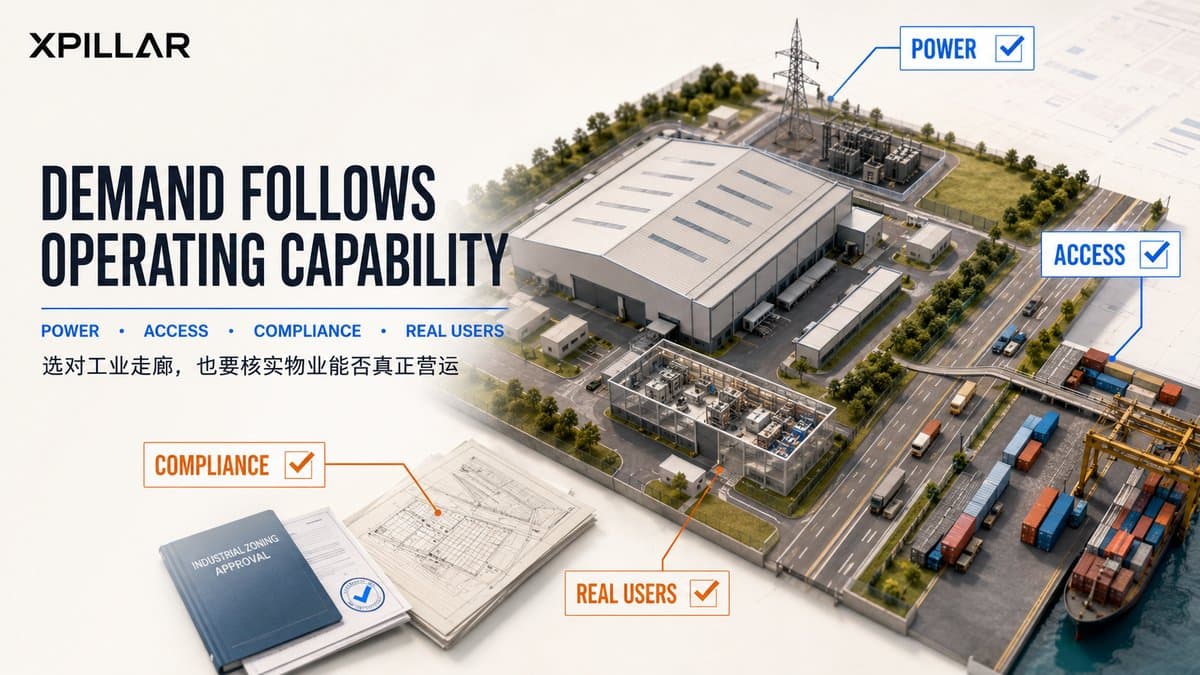
What buyers and tenants must verify before committing | 买家与租户签约前必须核实什么?
A strong market cannot rescue the wrong property. Before signing a sale and purchase agreement, tenancy agreement, letter of offer or option, verify at least the following:
市场再强,也无法弥补选错物业的损失。在签署买卖协议、租赁协议、要约书或选择权文件前,至少应核实:
1. Title and land conditions: Is the registered category and express condition compatible with the intended use?
地契与土地条件: 注册土地类别与明示条件是否允许拟定用途?
2. Planning and zoning: Does the gazetted local plan and planning permission support the actual operation?
规划与分区: 宪报地方规划及规划许可是否支持实际业务?
3. Building approval and CCC: Do approved plans match the existing building and extensions?
建筑批准与CCC: 核准建筑图是否与现有建筑及扩建部分一致?
4. Electricity: What supply is physically available—not merely advertised—and what upgrade lead time applies?
电力: 现场实际可用电力是多少,而不只是广告数字?升级需要多久?
5. Water, sewerage and industrial effluent: Can the system support the proposed process and discharge requirements?
供水、排污与工业废水: 系统能否支持拟定生产流程与排放要求?
6. Fire compliance: Do the approved systems, installed equipment, maintenance records and intended storage or production risk align?
消防合规: 核准系统、现场设备、维护记录及未来储存或生产风险是否一致?
7. Floor loading and clear height: Can the building safely support machinery, racking, forklifts and storage configuration?
地面承重与净高: 建筑能否安全支持机器、货架、叉车与储存方式?
8. Heavy-vehicle access: Test the complete route, gate, turning radius, yard, loading and exit—not only the highway distance.
重型车辆通行: 应测试完整路线、闸门、转弯半径、场地、装卸及驶离,不只是高速公路距离.
9. Flood and drainage: Review historical evidence, platform level, drains, access roads and business-continuity exposure.
水灾与排水: 检查历史记录、地台高度、排水系统、进出道路及业务中断风险。
10. Environmental risk: Check EIA applicability, emissions, scheduled waste, effluent and potential historical contamination.
环境风险: 核实EIA、废气、Scheduled Waste、工业废水及历史土地污染风险。
11. Labour and logistics: Can employees, suppliers and transporters reach the site reliably?
劳动力与物流: 员工、供应商与运输商能否稳定到达?
12. Expansion and exit: Can the operation expand, and will a credible occupier pool exist if the property must later be sold or relet?
扩建与退出: 企业能否扩建?未来若要出售或出租,是否有真实用户群?
What this outlook means for owners | 这份展望对业主意味着什么?
Owners in high-demand corridors should not assume that location alone guarantees a transaction. Serious occupiers increasingly compare properties using operational data. A listing is more credible when it provides verified or clearly qualified information on title, approved use, power, floor loading, clear height, container access, fire systems, tenancy status and availability.
位于高需求走廊的业主,不应认为只靠地点就一定能成交。专业买家与租户越来越重视营运资料。若房源能提供已经核实或清楚注明条件的地契、批准用途、电力、地面承重、净高、货柜通行、消防系统、租约状况及可交付日期,可信度会更高。
Properties with unresolved documentation or misleading specifications may receive many enquiries but fail during due diligence. Transparent information can reduce wasted viewings and help the property reach a better-matched buyer or tenant.
文件不清楚或规格描述不准确的物业,可能收到很多询盘,却在尽调阶段失败。透明资料可以减少无效看房,并帮助物业接触更匹配的买家或租户。
XPillar’s 2026 view | XPillar的2026年判断
Malaysia’s industrial property market remains one of the country’s most important real-estate segments in 2026. The growth story is supported by manufacturing investment, supply-chain diversification, port logistics, semiconductors, advanced manufacturing, e-commerce, cloud infrastructure and the JS-SEZ.
马来西亚工业地产在2026年仍是全国最重要的房地产板块之一。制造业投资、供应链多元化、港口物流、半导体、先进制造、电商、云端基础设施及JS-SEZ共同支持增长。
However, the market is becoming more technical. Demand is strongest for properties that solve a real operational problem: the right location, approved use, reliable utilities, efficient logistics and a building that fits the business. The winning location is not necessarily the state with the biggest headline investment. It is the site where the company can start, operate, expand and remain compliant with the least avoidable friction.
不过,市场正变得更技术化。真正受到欢迎的物业,是能够解决企业实际营运问题的物业:地点正确、用途获批、公用设施可靠、物流有效率,而且建筑规格适合业务。最佳地点不一定是新闻标题中投资额最高的州属,而是企业能够以较少阻力开始营运、持续生产、扩张并保持合规的地点。
For buyers and tenants, compare corridors first, then verify the individual property. For owners, present the information an operator needs—not only photographs and asking price.
对买家与租户而言,应先比较工业走廊,再核实具体物业。对业主而言,应展示企业营运真正需要的资料,而不只是照片与叫价。
Frequently asked questions | 常见问题
Q: Which Malaysian state has the strongest industrial-property demand in 2026?
2026年马来西亚哪个州的工业地产需求最强?
A: Selangor has the broadest and most diversified occupier base, supported by Port Klang, highways, a large workforce and the Klang Valley consumer market. Johor has the strongest large-scale growth story, driven by the JS-SEZ, data centres, Singapore-linked supply chains and manufacturing investment. Penang–Kulim remains highly competitive for semiconductor and advanced-manufacturing facilities.
雪兰莪拥有最广泛、最多元的企业需求,受到巴生港、高速公路、庞大劳动力与大巴生谷消费市场支持。柔佛则拥有最强的大型项目增长故事,主要由JS-SEZ、数据中心、新加坡供应链及制造业投资推动。槟城—居林在半导体与先进制造设施方面仍非常有竞争力。
Q: Are warehouses still in demand in Malaysia?
马来西亚仓库仍有需求吗?
A: Yes, but demand is selective. Modern warehouses with good highway or port access, sufficient clear height, floor loading, loading facilities, fire systems and container circulation are better positioned than generic buildings with inefficient access or layout.
有,但需求具有选择性。拥有良好高速公路或港口连接、足够净高与承重、完善装卸设施、消防系统及货柜车动线的现代仓库,比交通或布局效率低的普通建筑更具优势。
Q: Is Johor the best place to buy industrial land for a data centre?
柔佛是否最适合购买数据中心工业地?
A; Johor is a major data-centre growth market, but an industrial title alone does not make land suitable. Buyers must verify power availability and delivery, water strategy, fibre routes, planning approval, drainage, environmental requirements and sustainability conditions before committing.
柔佛是主要数据中心增长市场,但工业地契并不自动代表土地适合数据中心。签约前必须核实电力容量与交付时间、水源方案、光纤路线、规划批准、排水、环境要求及可持续性条件。
A; Is Penang or Kulim better for semiconductor manufacturing?
半导体制造选择槟城还是居林更好?
Q: The answer depends on the operation. Penang offers a deep established ecosystem, airport access and a large base of manufacturers and suppliers. Kulim offers major high-technology parks and can suit land- and utility-intensive projects. Companies should compare talent, supplier proximity, utilities, technical requirements and expansion needs rather than choose by state name alone.
答案取决于实际业务。槟城拥有成熟产业生态、机场连接及大量制造商与供应商;居林拥有大型高科技园区,可适合需要较大土地与公用设施的项目。企业应比较人才、供应商距离、公用设施、技术要求与扩建需求,而不是只看州属名称。
A: Will every factory in a high-growth area increase in value?
高增长地区的每一间厂房都会升值吗?
Q: No. Value and demand depend on micro-location, tenure, legal use, building condition, power, access, flood exposure, specifications, tenant demand and future supply. A poorly configured or non-compliant factory can underperform even in a strong industrial corridor.
不会。价值与需求取决于微观地点、地契年期、合法用途、建筑状况、电力、交通、水灾风险、规格、租户需求及未来供应。即使位于强劲工业走廊,布局不佳或不合规的厂房也可能表现较差。
A: What should a foreign manufacturer check before choosing a Malaysian factory?
外资制造企业选择马来西亚厂房前应检查什么?
Q: Define the production process first, then check the business and manufacturing-licence route, land title, zoning, planning permission, approved building plans, CCC, fire requirements, utilities, environmental approvals, labour, logistics, incentives and transaction conditions. Obtain written confirmation where the project depends on utility upgrades or authority approval.
应先明确生产流程,再检查公司与制造执照路线、地契、规划分区、规划许可、核准建筑图、CCC、消防、公用设施、环境审批、劳动力、物流、优惠政策及交易条件。若项目依赖公用设施升级或政府批准,应取得书面确认。