
Factory Water Supply in Malaysia: What High-Consumption Manufacturers Must Verify Before Buying or Renting
A practical guide to water demand, tapping source, pipe size, pressure, storage, internal systems, wastewater capacity and contractual protection.
一份涵盖用水需求、接驳水源、水管口径、水压、储水、内部系统、工业废水容量及合同保障的实用指南。
Answer first: how should a manufacturer verify factory water supply?先说结论:制造企业应如何核实厂房供水?
Before buying, renting or developing a factory in Malaysia, a high-consumption manufacturer should first calculate its normal, peak and emergency water demand; identify the licensed water operator and proposed tapping source; obtain written technical information on source availability, pipe size and pressure; confirm the proposed connection, meter, storage, pumps and internal reticulation; test the quality required by the process; and verify that the resulting industrial effluent can be lawfully treated and discharged.
在马来西亚购买、租用或开发厂房之前,高耗水制造企业应先计算正常、峰值及紧急用水需求;确认持牌供水单位与拟接驳水源;取得有关水源、管径及水压的书面技术资料;确认接驳方式、水表、储水、泵及内部管网;检测生产工艺需要的水质;同时核实所产生的工业废水能否依法处理和排放。
The correct due-diligence question is not simply, “Is water available?” It is:
正确的尽调问题并非简单问“有没有水”,而是:
Can this particular site deliver the required quantity, pressure, quality and continuity of water—and lawfully handle the resulting wastewater—at the time the factory needs to operate and expand?
这个具体厂址能否在工厂需要投产及扩产时,提供足够的水量、水压、水质和连续性,并合法处理所产生的废水?
A visible water meter, a previous tenant’s bill or a public main outside the gate cannot answer that question. Water availability has to be assessed against the incoming operation and confirmed through the applicable water operator, qualified consultants and relevant authorities.
大门外看见水管、厂内已有水表或前租户有水费单,都不能回答这个问题。供水能力必须按照新企业的实际生产需求评估,并由相关供水单位、合资格顾问及政府部门确认。
This is especially important for food and beverage production, electronics, semiconductors, pharmaceuticals, chemicals, metal finishing, textiles, rubber processing, cooling-intensive operations, data centres and any facility that relies on washing, rinsing, boilers, cooling towers or process water.
这对食品饮料、电子、半导体、医药、化工、金属表面处理、纺织、橡胶加工、需要大量冷却的生产、数据中心,以及依赖清洗、漂洗、锅炉、冷却塔或工艺用水的企业特别重要。
Important: This article is general information, not engineering, legal, environmental or regulatory advice. Water governance, operators, tariffs and procedures differ by state and location. The Water Services Industry Act 2006 generally governs the water-services framework in Peninsular Malaysia and the Federal Territories of Putrajaya and Labuan; Sabah and Sarawak have separate arrangements. Obtain written project-specific confirmation before committing.
重要说明: 本文仅供一般参考,不构成工程、法律、环境或监管意见。不同州属和地点的水务管理、供水单位、收费及程序并不相同。《2006年水务服务业法令》一般适用于马来西亚半岛及布城和纳闽联邦直辖区;沙巴与砂拉越采用各自安排。作出承诺前应取得项目专属的书面确认。
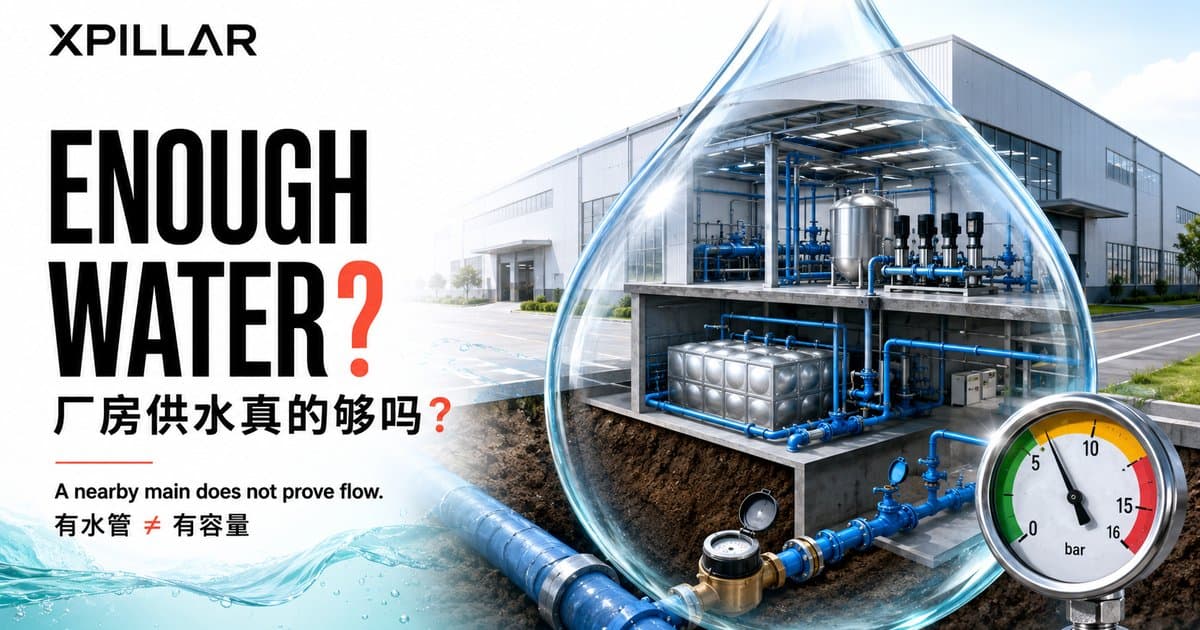
Why “there is a water pipe nearby” is not enough为什么“附近有水管”仍然不够?
An industrial property can be connected to water and still be unsuitable for the proposed manufacturing process. The limiting factor may be the external main, the tapping point, connection size, meter, local pressure, peak-hour performance, on-site tank, booster pumps, ageing internal pipes or the capacity to discharge wastewater.
工业物业即使已经接水,也可能不适合拟议生产。限制因素可能是外部主管、接驳点、接驳口径、水表、当地水压、用水高峰表现、厂内水池、增压泵、老化内部水管或废水排放容量。
Air Selangor’s published development-application flow illustrates the technical sequence in Selangor, Kuala Lumpur and Putrajaya. It requires identification of a suitable tapping source and notes that pressure, pipe size and other technical factors are considered. After source confirmation, external reticulation, the supply line, meter location, pump stations and service reservoirs—where required—must be designed and submitted. Other states have their own operators and procedures, but the practical lesson is the same: proximity to a main is not a technical approval. (Air Selangor water-supply application process)
Air Selangor公开的开发项目申请流程说明,在雪兰莪、吉隆坡及布城,申请需要先确定适合的接驳水源,并考虑水压、管径及其他技术因素。确认水源后,新的供水管线、水表位置、泵站及所需储水设施须进行设计和提交。其他州属采用各自供水单位与程序,但实务原则相同:靠近主管不等于取得技术批准。(Air Selangor供水申请流程)
The 12 factory water checks厂房供水的12项检查
1. Quantify normal, peak and emergency demand | 计算正常、峰值及紧急用水量
Begin with the production process, not the property listing. Ask the operations and engineering teams to prepare a water balance showing where water enters, how it is used, what is recycled and what leaves as effluent, product, vapour or sludge.
先从生产工艺开始,而不是先看房源广告。营运及工程团队应准备水量平衡表,说明水从哪里进入、如何使用、哪些会循环,以及哪些最终成为废水、产品、蒸汽或污泥。
Separate at least these demand categories:
至少应把需求分成以下类别:
- Process water — Mixing, washing, rinsing, plating, cutting and product formulation. Quantify daily volume, hourly peak, batch pattern and quality.
工艺用水 — 混合、清洗、漂洗、电镀、切削及产品配制。应计算每日用量、每小时峰值、批次规律及水质。
- Cooling and heat rejection — Cooling towers, chillers and heat exchangers. Quantify make-up water, blowdown and seasonal peak.
冷却及散热 — 冷却塔、冷水机组及热交换器。应计算补水、排污水及季节峰值。
- Boilers and steam — Boiler feed, condensate loss and cleaning. Quantify feedwater quality, peak steam cycle and treatment.
锅炉及蒸汽 — 锅炉进水、冷凝水损失及清洗。应计算进水水质、蒸汽峰值及处理。
- Cleaning and sanitation — CIP, washdown and hygiene. Quantify shift timing, cleaning peak and chemical interaction.
清洁与卫生 — CIP、冲洗及卫生清洁。应计算班次时间、清洗峰值及化学品影响。
- Domestic use — Toilets, canteen and staff facilities. Quantify headcount, shifts and expansion.
生活用水 — 厕所、食堂及员工设施。应计算人数、班次及扩产。
- Fire protection — Tanks, hydrants and sprinklers. Quantify separate design demand and replenishment requirement.
消防用水 — 水池、消火栓及喷淋。应计算独立设计需求及补水要求。
- Contingency — Interruption recovery and abnormal production. Quantify required buffer hours or production strategy.
应急用水 — 断水恢复及异常生产。应计算缓冲小时或停产策略。
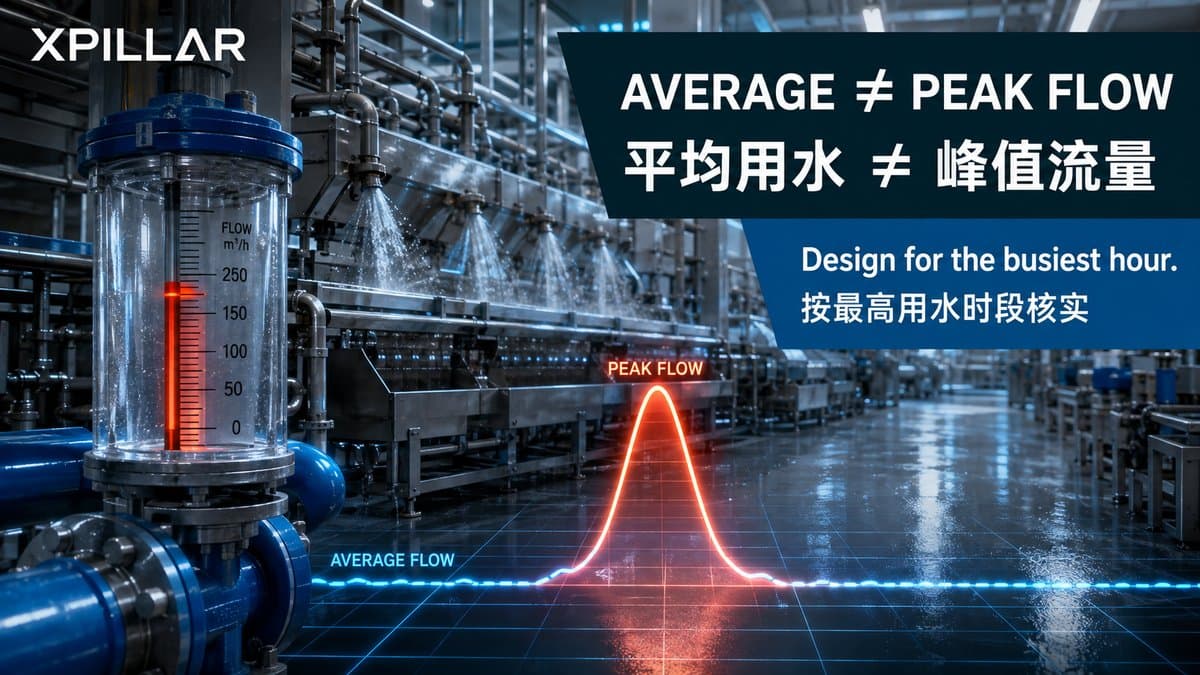
Do not use only a monthly estimate. A process consuming 1,000 cubic metres per month evenly has a different infrastructure need from a batch operation drawing a large volume in two hours. The site has to support the peak rate as well as the average.
不要只使用每月平均数。每月平均消耗1,000立方米但平均用水的工厂,与只在两个小时内大量取水的批次生产,需要完全不同的基础设施。厂址必须同时支持峰值和平均需求。
2. Identify the licensed operator and the actual tapping source | 确认持牌供水单位及真实接驳水源
Confirm which licensed water operator serves the property. Then determine whether the proposed supply will use the existing connection, a new tapping point, an upgraded main, a development reticulation system or another approved arrangement.
先确认由哪一家持牌供水单位服务该物业,再确定拟议供水是使用现有接驳、新接驳点、升级主管、园区管网或其他获批准方式。
Request project-specific written information rather than relying on an owner’s statement. The review should identify:
应取得项目专属书面资料,而不是只听业主说明。审查内容应包括:
- the proposed tapping source — 拟议接驳水源;- pipe material and nominal diameter where available — 可取得的管材及公称直径资料;
- available or design pressure information — 可取得或设计水压;
- connection and meter requirements — 接驳与水表要求;
- whether reinforcement or off-site works may be required — 是否需要加固或场外工程;
- the application, approval and inspection route — 申请、批准及检查程序;以及
- who is permitted to design and carry out the works — 哪些合资格人士可以设计和施工。
Under sections 50 and 51 of the Water Services Industry Act 2006, connection, modification and related works are controlled and must be undertaken in accordance with the Act and subsidiary legislation. A buyer should not assume that an informal private connection or owner-installed pipe can simply be reused. (Water Services Industry Act 2006, Act 655)
根据《2006年水务服务业法令》第50及51条,接驳、改动及相关工程受到管制,并须符合该法令及附属法规。买家不能假设非正式私人接驳或业主自行安装的水管可以继续使用。(Water Services Industry Act 2006, Act 655)
3. Verify flow and pressure—not only meter size | 核实流量与水压,而不是只看水表口径
A large meter does not automatically prove adequate flow at the machine. Actual performance is affected by upstream capacity, pressure, elevation, internal friction losses, simultaneous demand and the condition of the distribution system.
大水表不代表机器端一定有足够流量。实际表现会受上游容量、水压、高差、管道摩擦损失、同时用水和管网状况影响。
The technical review should establish:
技术审查应确定:
- expected static and residual pressure — 静压与剩余水压;- required peak flow at the property boundary — 物业边界需要的峰值流量;
- flow and pressure at critical production points — 关键生产点的流量与水压;
- whether performance changes during peak demand — 用水高峰时表现是否改变;
- booster-pump and pressure-control requirements — 增压泵及压力控制需求;以及
- whether the incoming supply can refill storage within the required time — 进水能否在规定时间内补满储水池。
Testing must be authorised and interpreted by the relevant qualified parties. A short tap test at one wash basin is not evidence that an industrial line, cooling tower or cleaning cycle can run at full demand.
测试必须经过授权,并由相关合资格人士解释结果。洗手盆短暂出水,并不能证明生产线、冷却塔或清洗程序能够满负荷运行。
4. Inspect the complete internal water system | 检查完整的厂内供水系统
The public operator’s responsibility and the owner’s internal system are not the same. Section 36 of the Water Services Industry Act places the water distribution licensee’s public-system maintenance duty up to the end of the communication pipe. The site’s tanks, pumps, internal reticulation, valves and process distribution require separate investigation. (Water Services Industry Act 2006, section 36)
公共供水单位责任与业主厂内系统并不相同。《水务服务业法令》第36条规定供水分销持牌人的公共系统维护责任至通信管末端;厂内水池、泵、内部管网、阀门及工艺供水系统需要另外调查。(Water Services Industry Act 2006, section 36)
Inspect and document:
应检查并记录:
- incoming pipe route and isolation valves — 进水管路线及隔离阀;- meter, bypasses and any submetering — 水表、旁通管及分表;
- suction and break tanks — 吸水池或缓冲水池;
- roof, ground or elevated storage tanks — 屋顶、地面或高位水池;
- booster pumps and duty/standby arrangement — 增压泵及一用一备配置;
- pressure vessels and controls — 压力容器与控制系统;
- internal ring mains and process branches — 厂内环形主管及生产支管;
- corrosion, leakage and unauthorised alterations — 腐蚀、漏水及未经批准的改动;
- access for maintenance and replacement — 维修和更换通道;以及
- as-built drawings, testing and maintenance records — 竣工图、测试及维修记录。
If the existing system was designed for a light warehouse, it may not support a food plant or electronics facility even when the public connection remains active.
如果现有系统原本为轻型仓库设计,即使公共接驳仍然有效,也未必能支持食品厂或电子厂。
5. Confirm storage, buffering and continuity strategy | 确认储水、缓冲及连续营运策略Storage is not a substitute for insufficient long-term supply, but it can separate a fluctuating production draw from the incoming network and provide resilience during short interruptions.
储水不能长期弥补供应不足,但可以把波动的生产取水与进水管网分开,并在短暂中断时提供韧性。
Calculate storage from the operating strategy. Consider: 储水容量应按照营运策略计算,并考虑:
- hours of production that must continue — 工厂必须继续生产多少小时;
- water required for safe shutdown and cleaning — 安全停机及清洁需要多少水;
- tank refill - time after an interruption — 中断后补满水池需要多久;
- separation of potable, process and fire-water storage — 饮用、工艺及消防储水是否分开;
- pump redundancy and standby power — 泵的冗余与备用电源;
- water-age and hygiene controls — 水龄及卫生控制;以及
- the practical availability of tanker delivery and access — 水车送水是否真实可行及能否进场。
The Water Services Industry Act recognizes circumstances in which a water distribution licensee may, with approval, reduce quantity or pressure or temporarily cease supply. Essential maintenance and safety issues may also require interruption. An industrial user should therefore design business-continuity measures instead of treating mains water as an unconditional, uninterrupted utility. (Act 655, sections 54–55)
《水务服务业法令》规定,在某些情况下,供水分销持牌人经批准可以降低供水量或水压,或暂时停止供水;必要维修及安全问题也可能导致中断。因此工业用户应设计营运连续性措施,而不能把自来水视为无条件、永不中断的公用设施。(Act 655, sections 54–55)
6. Match water quality to the manufacturing process | 让水质符合生产工艺Potable supply does not mean the water is ready for every industrial process. Electronics, pharmaceuticals, food production, boilers, cooling towers and surface treatment may require different controls for hardness, conductivity, silica, microbiological quality or other parameters.
饮用水不等于可以直接用于所有工业生产。电子、医药、食品、锅炉、冷却塔及表面处理,对硬度、电导率、二氧化硅、微生物或其他指标可能有不同要求。
Define 应明确:
- required incoming quality — 所需进水水质;
- treatment stages such as filtration, softening, reverse osmosis or deionisation — 过滤、软化、反渗透或去离子等处理阶段;
- reject-water volume — 浓水或废水量;- chemical storage and dosing — 化学品储存与投加;
- sampling, monitoring and laboratory responsibility — 取样、监测及实验室责任;
- space, drainage and power for the treatment system — 处理系统需要的空间、排水及电力;以及
- the effect of source changes or seasonal variation on treatment — 水源或季节变化对处理系统的影响。
The property review should reserve adequate space and access for treatment equipment. Water-treatment capex can be material, and reject streams affect the wastewater balance.
物业审查应为水处理设备预留足够空间及通道。水处理资本开支可能很高,而且处理产生的浓水会影响废水平衡。
7. Separate process, domestic and fire-water requirements | 分开工艺、生活及消防用水
Do not combine all water demand into a single unexplained number. Process water, domestic water and fire protection serve different purposes and may require separate storage, pumps, monitoring and approvals.
不要把全部用水合并成一个没有说明的数字。工艺用水、生活用水及消防用水用途不同,可能需要分别设置水池、泵、监控和批准。
A factory’s visible fire tank should not be counted as normal process storage unless the approved design and relevant authorities permit it. Likewise, process tanks may not satisfy fire-protection requirements. Review the approved fire design, tank arrangement, pump system and replenishment assumptions with qualified fire professionals.
除非核准设计及有关部门允许,不应把现有消防水池算作正常工艺储水。同样,工艺水池也未必符合消防要求。应由合资格消防专业人士检查核准消防设计、水池配置、泵系统及补水假设。
The transaction documents should state whether the landlord or tenant is responsible for base-building fire-water systems and any upgrade triggered by the tenant’s goods, racking, production or extension.
交易文件还应说明基础建筑消防供水系统由房东还是租户负责,以及租户货物、货架、生产或扩建触发的升级由谁承担。
8. Allow for expansion and neighbouring demand | 为扩产及邻近用水需求预留空间The existing operation may be small while the investment plan is large. Model demand for commissioning, first production, full capacity and the intended expansion phase.
目前营运规模可能较小,但投资计划可能很大。应分别模拟调试、首期生产、满负荷及未来扩产的用水量。
Ask whether: 应询问:
- an additional line will double cleaning or cooling demand — 新增生产线会不会把清洗或冷却需求增加一倍;- future buildings will share the same main or tank — 新建筑会不会共用同一主管或水池;- other tenants already draw from the same private reticulation — 其他租户是否已经共用私人管网;- the industrial park has planned developments — 工业园是否还有规划中的发展;- the meter and pipe route can be upgraded — 水表与管线路径能否升级;以及- land is available for larger tanks, pumps or treatment equipment — 是否有土地设置更大水池、泵或处理设备。
Do not conclude that a site is “future-proof” because the current tenant operates successfully. Its process, shift pattern, production rate and water quality may be completely different.
不要因为现有租户营运顺利,就认定厂址适合未来扩产。其工艺、班次、产量及水质要求可能完全不同。
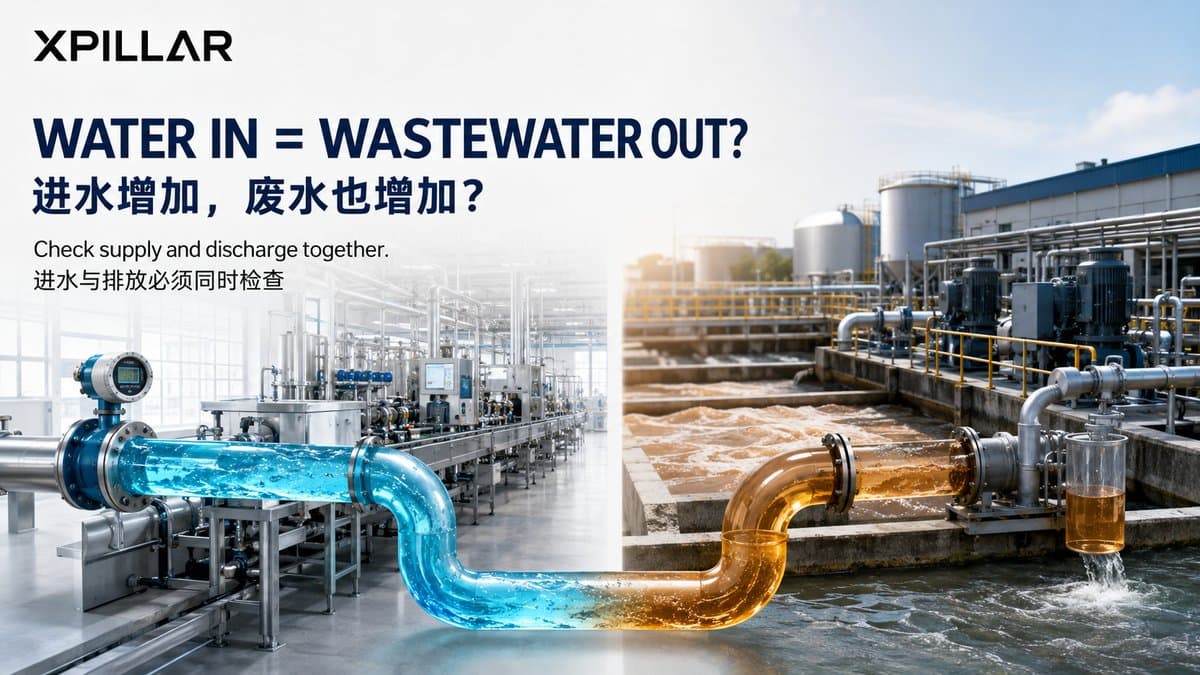
9. Verify wastewater and industrial-effluent capacity at the same time | 同时核实工业废水及排放能力For many manufacturers, additional water becomes additional wastewater. The site-selection review must follow the water through the process and confirm where every stream goes.
对许多制造企业而言,增加进水也会增加废水。选址审查必须追踪水在整个生产过程中的去向,并确认每一股水流最终排到哪里。
Identify: 应区分:
- sanitary sewage — 生活污水;- process effluent — 工艺废水;- cooling-tower blowdown — 冷却塔排污;- boiler blowdown — 锅炉排污;- cleaning and wash water — 清洗水;- reverse-osmosis reject — 反渗透浓水;- stormwater — 雨水;以及- contaminated first flush or spill containment — 受污染初期雨水或泄漏围堵水。
The Environmental Quality (Industrial Effluents) Regulations 2009 regulate industrial-effluent treatment and discharge, including notification, monitoring, records and discharge standards. The regulations also prohibit using dilution as a substitute for treatment. A larger water connection is not useful if the factory lacks a lawful and technically adequate effluent route. (Department of Environment: Industrial Effluents Regulations 2009)
《2009年环境质量(工业废水)条例》管制工业废水处理及排放,包括通知、监测、记录及排放标准,并禁止以稀释代替处理。如果厂房没有合法且足够的废水处理与排放路径,更大的进水接驳也没有意义。(Department of Environment: Industrial Effluents Regulations 2009)
Confirm the design and available capacity of any industrial effluent treatment system, the approved discharge point, sewer acceptance where applicable, sludge handling, monitoring equipment and responsibility for upgrades.
还要确认工业废水处理系统的设计及剩余容量、核准排放点、适用的污水管接收条件、污泥处理、监测设备及升级责任。
10. Evaluate conservation, recycling and alternative supply carefully | 谨慎评估节水、循环及替代水源
Water efficiency can reduce both supply and effluent costs. Review practical opportunities such as counter-current rinsing, condensate recovery, cooling-water optimisation, process segregation and treated-water reuse.
节水可以同时降低供水和废水成本。可研究逆流漂洗、冷凝水回收、冷却水优化、分流及处理水回用等措施。
However, alternative supply is not automatically available. Boreholes, rainwater, recycled water, tanker supply and private systems may involve land, source, quality, licensing, storage, treatment or operator requirements. Do not include an alternative source in the investment case until its legal and technical route is confirmed in writing.
但替代水源并非自动可用。地下水、雨水、再生水、水车及私人供水系统,可能涉及土地、水源、水质、执照、储存、处理及操作人员要求。未取得法律及技术书面确认前,不应把替代水源写入投资假设。
The business case should compare:
商业评估应比较:
- capital cost — 资本成本;- operating and treatment cost — 营运与处理成本;
- reliability — 可靠性;
- water quality — 水质;
- waste stream created — 产生的废物流;
- space and maintenance — 空间和维修;以及
- approvals and implementation time — 审批与实施时间。
11. Calculate the complete cost—not only the tariff | 计算完整成本,而不是只看水价T
he published water tariff is only one cost component. A water-constrained site can require substantial enabling works.
公开水价只是成本的一部分。供水受限制的厂址可能需要大量前期工程。
- External connection — Application, consultant, tapping, main extension, road works and reinstatement.
外部接驳 — 申请、顾问、接驳、主管延伸、道路工程及修复。
- Metering — Meter, chamber, deposits, account transfer and submetering.
水表 — 水表、水表井、押金、账户转名及分表。
- Internal infrastructure — Tanks, pumps, pipes, controls, telemetry and standby equipment.
内部设施 — 水池、泵、水管、控制、遥测及备用设备。
- Treatment — Filters, softeners, RO/DI, chemicals, laboratories and consumables.
水处理 — 过滤、软化、RO/DI、化学品、实验室及耗材。
- Wastewater — IETS, sewer connection, monitoring, sludge and disposal.
废水 — IETS、污水接驳、监测、污泥及处置。
- Reliability — Additional storage, redundancy, tanker connection and contingency stock.
可靠性 — 额外储水、冗余、水车接驳及应急库存。
- Ongoing cost — Tariff, electricity for pumps, maintenance, leakage and testing.
持续成本 — 水价、泵用电、维修、漏水及测试。
- Request preliminary budgets and responsibility allocation before comparing properties. A factory with a lower rent can become more expensive if the incoming water system, treatment plant and effluent works require major capex.
比较物业前,应取得初步预算并分配责任。较低租金的厂房,如果需要大规模进水系统、水处理及废水工程,最终可能更昂贵。
12. Make the property agreement conditional on evidence | 把供水证据写成交易先决条件
Water suitability should appear in the sale and purchase agreement, tenancy agreement or development contract—not remain in an email chain.
供水适用性必须出现在买卖协议、租赁协议或开发合同内,而不能只留在电邮中。
Where water is critical, consider project-specific provisions covering:
若供水属于关键条件,可针对项目写入:
- satisfactory written technical confirmation — 满意的书面技术确认;
- defined target demand and connection concept — 明确目标用水量及接驳概念;
- landlord works, tenant works and deadlines — 房东工程、租户工程及期限;
- rights to install tanks, pumps and treatment equipment — 安装水池、泵及处理设备的权利;
- access for surveys and applications before completion — 完成交易前进行勘察和申请的进场权;
- cost caps or price adjustments — 费用上限或价格调整;
- authority and operator approval — 政府部门及供水单位批准;
- termination or extension if a critical supply cannot be secured — 无法取得关键供应时的终止或延期;以及
- responsibility for internal defects and historic unauthorised work — 内部系统缺陷及历史未批准工程的责任。
Avoid an unqualified clause that makes the tenant responsible for “all utilities” before it knows whether the base connection and building infrastructure are usable.
在未确认基础接驳及建筑系统是否可用之前,不应接受让租户承担“全部公用设施”的无限制条款。
A practical factory water due-diligence table 实用厂房供水尽调表
What does the process need?
Evidence to request: Water balance, equipment schedule and peak-flow profile.
Red flag: Only a monthly estimate.
生产需要多少水?
应要求的证据:水量平衡、设备表及峰值曲线。
危险信号:只有每月估算
Where will the water come from?
Evidence to request: Operator correspondence and tapping-source information.
Red flag: “Main pipe is nearby” with no confirmation.
水从哪里来?
应要求的证据:供水单位函件及接驳水源资料。
危险信号:只说“附近有主管”。
Can the connection deliver?
Evidence to request: Pipe, meter, pressure, flow and design information.
Red flag: Existing bill treated as capacity proof.
接驳能否供应?
应要求的证据:水管、水表、水压、流量及设计资料。
危险信号:把旧水费单当作容量证明。
Can the site distribute it?
Evidence to request: Tank, pump and reticulation drawings; inspection records.
Red flag: No as-built plans or ageing/leaking system.
厂内能否输送?
应要求的证据:水池、泵及管网图与检查记录。
危险信号:没有竣工图或系统老化漏水。
What quality is needed?
Evidence to request: Process specification, test data and treatment concept.
Red flag: Potable water assumed suitable for all processes.
需要什么水质?
应要求的证据:工艺规格、测试及处理方案。
危险信号:假设饮用水适合所有工艺。
What happens during interruption?
Evidence to request: Storage calculation and continuity plan.
Red flag: No buffer or safe-shutdown plan.
断水怎么办?
应要求的证据:储水计算及连续营运计划。
危险信号:没有缓冲或安全停机方案。
Where does wastewater go?
Evidence to request: Effluent balance, IETS data and approved discharge route.
Red flag: Supply reviewed without discharge capacity.
废水排到哪里?
应要求的证据:废水平衡、IETS资料及核准排放路径。
危险信号:只审查进水、不审查排放。
Who pays and when?
Evidence to request: Contract schedule, budgets and approval timeline.
Red flag: Responsibility deferred until after signing.
谁负责付款?
应要求的证据:合同责任表、预算及批准时间表。
危险信号:签约后才分配责任。
Documents to request before committing签约前应要求的文件
Depending on the property and process, request:
根据物业及生产工艺,可要求:
- recent water bills and consumption history — 近期水费单及用水历史;
- current account and meter information — 现有账户及水表资料;
- approved external and internal reticulation plans — 核准外部与内部管网图;
- as-built drawings and test or commissioning records — 竣工图、测试及调试记录
- operator correspondence on tapping source, pressure, pipe and connection — 供水单位关于接驳水源、水压、管径及接驳的函件;
- tank sizes and condition reports — 水池容量及状况报告;
- pump schedules, curves, controls and maintenance records — 泵表、泵曲线、控制及维修记录;
- leakage, interruption and repair history — 漏水、停供及维修历史;
- water-quality results — 水质检测;
- process water balance and treatment proposal — 工艺水量平衡及处理方案;
- fire-water design and test records — 消防供水设计及测试记录;
- industrial-effluent treatment drawings, approvals and monitoring records — 工业废水处理图、批准及监测记录;
- sewerage and discharge information — 污水与排放资料;以及
- written allocation of upgrade cost and responsibility — 升级费用与责任的书面分配。
An old bill proves historical consumption, not guaranteed future capacity. A letter for a previous owner or a different production profile may also be insufficient. Confirm whether information remains valid for the proposed occupier and demand.
旧水费单只能证明历史用水,不能保证未来容量。以前业主或不同生产需求取得的函件也可能不够,应确认资料是否仍适用于新租户及拟议用水量。
Final decision rule 最终判断原则
A factory’s water system should be judged as one complete chain:
厂房供水必须作为一条完整链条评估:
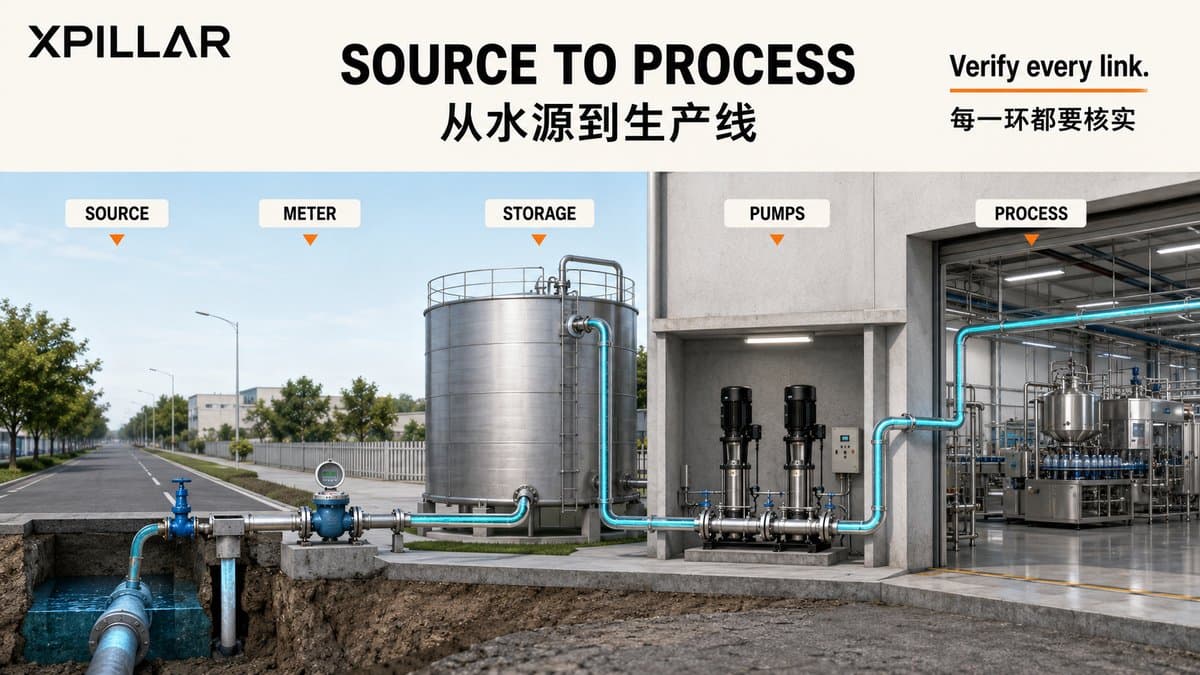
source → tapping point → connection → meter → storage → pumps → internal pipes → process → treatment → lawful discharge.
水源 → 接驳点 → 接驳管 → 水表 → 储水 → 水泵 → 内部管网 → 生产工艺 → 处理 → 合法排放。
If one link is unverified, the manufacturer may face delayed commissioning, reduced output, expensive retrofits or environmental non-compliance. Water due diligence is therefore not a minor utility check. For a high-consumption operation, it is a site-selection and investment decision.
只要其中一环没有核实,制造企业就可能面对投产延误、产量受限、昂贵改造或环境不合规。因此,对高耗水生产而言,供水尽调不是普通水电检查,而是选址与投资决策。
The safest sequence is to define demand first, obtain operator and authority evidence, complete technical inspections, price the full solution and make the transaction conditional on unresolved critical matters.
最稳妥的顺序是:先定义用水需求,取得供水单位及政府部门证据,完成技术检查,计算完整成本,并把尚未解决的关键事项写成交易先决条件。
How XPillar can help
XPillar 可以如何协助
XPillar helps manufacturers compare factories, warehouses and industrial land against real operating requirements—not only location and floor area. Search industrial properties in Malaysia, then coordinate water, environmental, legal and engineering reviews with the relevant operators, authorities and qualified professionals before committing.
XPillar帮助制造商按照真实营运需求比较厂房、仓库及工业地,而不只是比较地点和面积。可先浏览马来西亚工业物业,再由有关供水单位、政府部门及合资格专业人士完成供水、环境、法律和工程审查后作出承诺。
Frequently Asked Questions 常见问题
1. Does an existing factory water meter prove that supply is sufficient? 厂房已有水表,是否证明供水足够?
No. A meter proves that a connection exists, not that the site can deliver the incoming manufacturer’s required peak flow, pressure, quality or continuity. Verify the complete external and internal system.
不能。水表只能证明存在接驳,不能证明厂址能够提供新制造商需要的峰值流量、水压、水质及连续性。必须核实完整的外部和内部系统。
2. Is a water bill evidence of available factory capacity? 水费单可以证明厂房供水容量吗?
It is useful historical evidence, but it only shows past consumption. The previous user’s process and peak demand may differ, and network or site conditions may have changed.
水费单是有用的历史资料,但只显示过去用水。前用户的工艺与峰值可能不同,管网或厂内状况也可能已经改变。
3. Who confirms the suitable tapping source in Selangor? 雪兰莪的适合接驳水源由谁确认?
Air Selangor’s published process requires identification of a suitable tapping source and considers pressure, pipe size and technical factors. Applications and designs should follow the current Air Selangor process. Other states use their relevant water operators.
Air Selangor公开流程要求确定适合的接驳水源,并考虑水压、管径及技术因素。申请与设计应遵循Air Selangor现行程序;其他州属则由有关供水单位处理。
4. How much storage should a factory provide? 厂房应该准备多少储水?
There is no single number for every factory. Storage should reflect process demand, safe shutdown, hygiene, refill time, interruption strategy, separate fire-water requirements and current technical or authority rules.
没有适用于所有厂房的统一数字。储水应根据工艺需求、安全停机、卫生、补水时间、断水策略、独立消防用水及现行技术或政府规定计算。
5. Can a factory increase water use without checking wastewater capacity? 工厂可以在不检查废水容量的情况下增加用水吗?
It should not. Higher process-water use often increases industrial effluent, treatment load and sludge. Verify the IETS, sewer or discharge route and regulatory requirements at the same time.
不应该。更多工艺用水通常会增加工业废水、处理负荷及污泥。必须同时核实IETS、污水管或排放路径及监管要求。
6. Should water confirmation be a condition of the property agreement? 是否应把供水确认列为物业合同的先决条件?
For water-critical operations, yes. The agreement should identify the required evidence, responsible works, cost allocation, deadlines and remedy if the necessary supply cannot be secured.
对于依赖大量用水的生产,应该。协议应写明所需证据、负责工程、费用分配、期限,以及无法取得所需供水时的补救措施。