
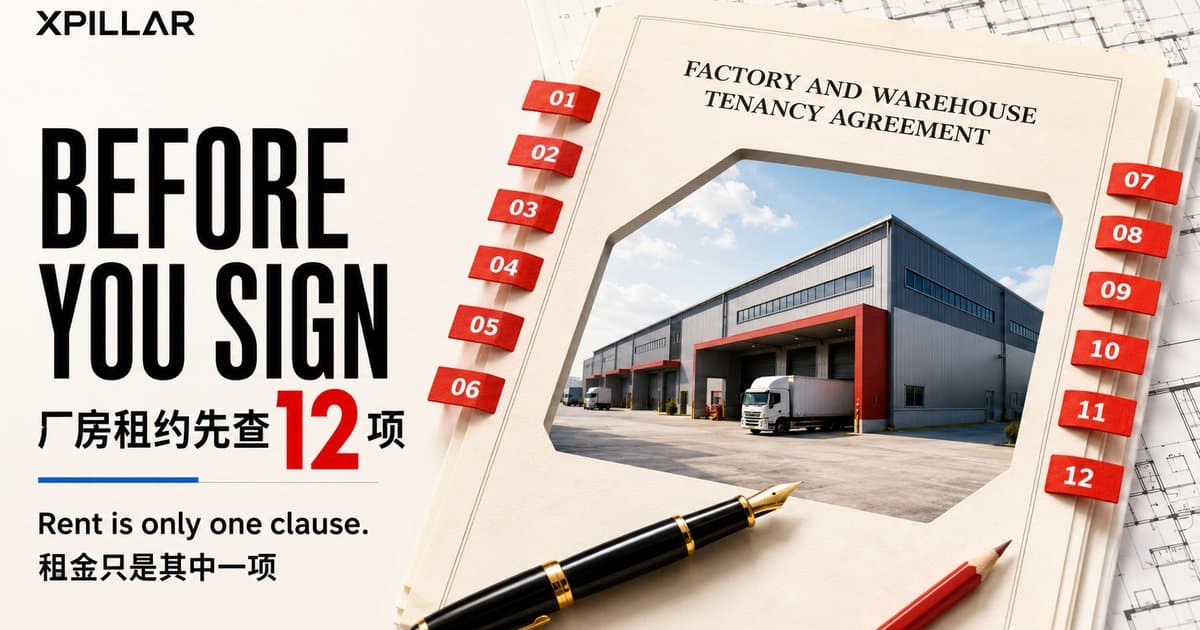
Factory and Warehouse Tenancy Agreements in Malaysia: 12 Clauses Tenants Must Check Before Signing马来西亚厂房与仓库租赁协议:租户签约前必须检查的12项条款
A practical guide to permitted use, fit-out responsibility, rent and outgoings, repairs, utilities, insurance, termination, reinstatement and stamp-duty compliance.
一份面向制造商、物流企业与工业物业租户的实用指南,涵盖批准用途、装修责任、租金及营运费用、维修、公用设施、保险、终止、恢复原状与印花税合规。
Answer first/ 先说结论What should an industrial tenant check before signing? 签订工业物业租约前必须检查什么?
Before signing a Malaysian factory or warehouse tenancy agreement, a tenant should make sure the contract accurately identifies the premises and permitted operation; makes commencement conditional on unresolved title, planning, building, fire, environmental or utility matters where necessary; records every rent, service charge and operating cost; allocates responsibility for fit-out, repairs and replacement; protects truck access and utility capacity; and sets workable rules for insurance, default, renewal, reinstatement and handover.
在马来西亚签订厂房或仓库租赁协议之前,租户应确认:协议准确写明出租范围和实际经营用途;尚未解决的地契、规划、建筑、消防、环境或公用设施问题,已被列为先决条件或明确的退出权利;所有租金、管理费和营运成本都有记录;装修、维修及设备更换责任分配清楚;货柜车通行和公用设施容量受到保障;保险、违约、续租、恢复原状及交还物业的规则可以实际执行。
The agreement should match three realities:
协议必须同时符合三项现实:
- what the property is legally and physically approved to support;物业在法律及实物条件上获准并能够支持什么用途;- what the incoming business intends to install and operate; and
新租户准备安装什么设备及进行什么业务;以及
- who will pay, obtain approvals or accept risk if the two do not match.
若两者不一致,谁负责付款、申请批准或承担风险。
A standard commercial tenancy template rarely answers all three. Industrial occupiers use more power, move heavier vehicles, install more equipment and face more operational approvals than an ordinary office or shop tenant. A clause that looks routine can therefore transfer a major building or compliance cost to the tenant.
一般商业租约模板未必能处理这些问题。工业租户通常需要更高电力、更多重型车辆通行、更多机械设备和更多营运审批。因此,看似普通的一项条款,可能把重大的建筑或合规成本转移给租户。
Important: This article provides general information, not legal, tax, engineering or regulatory advice. Requirements differ by state, land system, building, activity and transaction structure. Malaysia’s National Land Code applies to Peninsular Malaysia and the Federal Territory of Labuan; Sabah and Sarawak have separate land laws. Obtain advice on the actual property and agreement before signing.

重要说明: 本文仅供一般参考,不构成法律、税务、工程或监管意见。要求会因州属、土地制度、建筑、业务及交易结构而异。国家土地法典适用于马来西亚半岛及纳闽联邦直辖区;沙巴和砂拉越采用各自的土地法律。签约前应就实际物业及协议取得专业意见。
Tenancy or lease: the term mattersTenancy还是Lease:租期长短会影响法律结构
In everyday business language, “tenancy” and “lease” are often used interchangeably. Under the National Land Code, however, the legal structure can differ.
商业上经常把tenancy和lease统称为“租约”,但在国家土地法典下,两者可能具有不同的法律结构。
For Peninsular Malaysia and Labuan, section 213 of the National Land Code defines a “tenancy exempt from registration” to include a tenancy or subtenancy for a term not exceeding three years granted under section 223. Section 221 deals with leases for terms exceeding three years. A business taking a longer occupation period should therefore obtain Malaysian legal advice on whether the arrangement should be created and registered as a formal lease and whether title restrictions, charges or consent requirements affect it. (National Land Code, Act 828)
针对马来西亚半岛和纳闽,国家土地法典第213条把根据第223条批出的、不超过三年的租赁或转租,定义为无需登记的租赁(tenancy exempt from registration);第221条则处理超过三年的租约。企业若要取得更长的占用期,应向马来西亚律师确认是否需要签订并登记正式lease,以及地契限制、抵押或同意要求是否会产生影响。(National Land Code, Act 828)
The name printed at the top of a document does not by itself solve the issue. The duration, rights granted, land title and execution structure all matter.
文件名称写成“Tenancy Agreement”并不能自动解决问题。租期、赋予的权利、土地地契和签署结构同样重要。
The 12 clauses an industrial tenant should review工业租户应审查的12项条款
1. Premises, title and included areas 出租范围、地契与包含的区域The agreement should identify the correct landlord, registered proprietor, title or parcel, postal address, land area and rented built-up area. Attach a plan showing exactly what the tenant may use.
协议应写明正确的房东、注册业主、地契或分层单位、地址、土地面积及出租建筑面积,并附上清楚标示租户使用范围的图则。
Confirm whether the rent includes/ 必须确认租金是否包括:
- the whole factory or only part of it;整座厂房还是其中一部分;- yard, loading apron and container-staging space;空地、装卸区及货柜等候区;- guardhouse, office, canteen or workers’ facilities;保安亭、办公室、食堂或员工设施;- parking bays and motorcycle areas;汽车与摩托车位;- roof, external walls and signage zones;屋顶、外墙及招牌位置;- substations, pump rooms, tanks or utility compounds; and变电站、泵房、水池或公用设施区域;以及- access roads or other areas shared with another occupier.与其他租户共用的通道。
If the landlord is not the registered proprietor, request the documents establishing its authority to grant occupation. If the property is charged to a bank, ask the tenant’s lawyer whether financier consent or other protection is appropriate. If it is a strata industrial property, review the parcel boundaries, accessory parcels, common property, management rules and charges.
如果出租方不是地契上的注册业主,应要求其提供有权出租的证明。如果物业已抵押给银行,应让律师判断是否需要取得融资银行同意或其他保障。若是分层工业物业,还要检查单位边界、附属单位、共用产业、管理规则和费用。
Ambiguity about the rented area becomes expensive when trucks need to queue, containers need to be placed temporarily or the tenant discovers that a “private” yard is actually common property.
出租范围不清楚,往往会在货车需要排队、货柜需要临时停放,或租户后来发现所谓“私人”空地其实属于共用产业时,带来高昂成本。
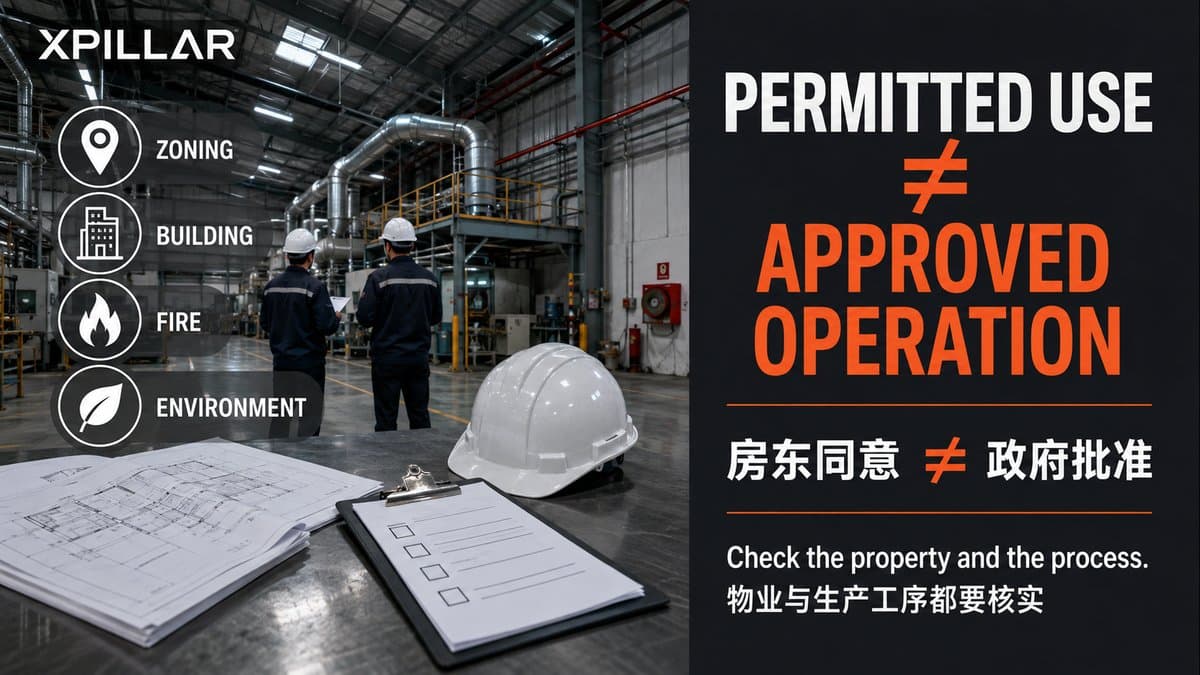
2. Permitted use and conditions before commitment | 允许用途与签约前提条件“Industrial use” is too broad. The agreement should describe the actual operation—such as electronics assembly, metal fabrication, food processing, cold storage, e-commerce fulfilment or general warehousing—and state that any approval remains subject to the relevant authorities.
“工业用途”过于宽泛。协议应写明实际业务,例如电子装配、金属加工、食品生产、冷链仓储、电商履约或普通仓储,并说明最终仍须符合有关政府部门的批准。
Before paying a non-refundable sum or becoming unconditionally bound, identify unresolved matters that should be conditions precedent or documented termination rights, for example:
在支付不可退还款项或无条件承担责任之前,应把尚未解决的重要事项列为先决条件或明确的终止权,例如:
- satisfactory title and corporate searches;地契及公司查询结果满意;- confirmation of local-plan zoning and approved building use;确认地方规划用途与建筑批准用途;- review of the CCC or older CF and approved building plans;审查CCC或旧CF以及核准建筑图;- confirmation that existing extensions, mezzanines and structures are approved;确认扩建、夹层及其他结构已经批准;- adequate electricity, water, sewerage and telecommunications;电力、供水、排污和电讯容量足够;- acceptable fire-safety and environmental position; and消防及环境状况可接受;以及- landlord, financier, management body or authority consent where required.已取得房东、银行、管理机构或政府部门的同意。
Do not rely on a general promise that the premises are “suitable for business.” Record the agreed evidence, deadline and consequence if a critical condition is not met.
不要只依赖“适合经营”的笼统承诺。应把所需文件、完成期限以及条件未满足时的后果写进协议。
3. Term, commencement, possession and fit-out period | 租期、起租、交付及装修期
Separate these dates clearly:
以下日期必须分别写清楚:
- agreement date — 协议签署日;- vacant-possession date — 空置交付日;- fit-out access date — 装修进场日;- tenancy commencement date — 租期开始日;- rent commencement date — 租金开始日;以及- expiry date — 租约到期日。
For an industrial move, the tenant may need time to submit plans, upgrade power, construct foundations, install exhaust systems, commission machinery and obtain operating approvals. A rent-free period is not useful if the landlord has not delivered vacant possession, essential utilities or the promised base-building work.
工业搬迁可能需要提交图则、提升电力、建造机器基础、安装排气系统、调试生产设备及取得营运批准。如果房东尚未交付空置物业、基本公用设施或承诺完成的基础工程,所谓免租装修期并没有实际价值。
State what condition the premises must be in on handover, what documents and keys must be delivered, and what happens if possession is late. A joint photographic condition report should be signed before fit-out starts.
协议应规定交付时的物业状态、必须交付的文件及钥匙,以及延迟交付的处理方法。装修前应由双方签署附照片的物业状况报告。
4. Rent, service charges, taxes and every operating cost | 租金、管理费、税费与所有营运成本The agreement should not leave costs hidden in broad phrases such as “all outgoings.” List every expected payment and who bears it.
协议不应把成本隐藏在“所有支出”等笼统词语里。每项付款及承担方都要列明。
Base rent — Is it calculated on land, built-up or lettable area? Is SST or another tax payable if applicable?
基本租金 — 按土地、建筑面积还是可出租面积计算?如适用,是否另加SST或其他税项?
Rent review — Fixed step-up, market review or renewal negotiation? What happens if the parties disagree?
租金调整 — 固定上调、按市场调整还是续租时协商?双方无法同意时如何处理?
Service or maintenance charge — Fixed or variable? What services are included? Is there a budget, reconciliation or audit right?
管理或维修费 — 固定还是浮动?包含什么服务?租户能否查阅预算、结算或审计?
Assessment and quit rent — Landlord or tenant? Is any increase recoverable?
门牌税与地税 — 房东还是租户承担?上涨部分能否转嫁?
Utilities — Direct meter or landlord recharge? Deposit, tariff, demand charge and loss factor?
公用设施 — 独立电表还是房东转收?押金、费率、需量收费及线路损耗如何处理?
Strata charges — Who pays maintenance charges, sinking fund, special levies and arrears?
分层物业费用 — 谁承担管理费、储备金、特别征费及历史欠款?
Security and common services — Guards, access control, landscaping, waste, pumps, roads and drainage?
保安与共用服务 — 保安、门禁、绿化、废物、泵站、道路与排水费用?
Legal and stamping costs — Which party appoints and pays? Who files and keeps the stamp certificate?
法律及盖章费用 — 谁委任、谁付款、谁提交及保存印花税证书?
Ask for recent bills and management statements rather than relying only on estimates. A lower headline rent can be offset by shared-infrastructure charges, utility deposits, maintenance obligations or compulsory upgrades.
应查看近期账单和管理报表,不要只听口头估算。表面较低的租金,可能被共用设施费、公用设施押金、维修责任或强制升级成本抵消。
5. Deposits, guarantees and refund mechanics | 押金、担保与退款机制Record every deposit separately: earnest deposit, security deposit, utility deposit, fit-out deposit and access-card deposit. The agreement should specify:
订金、租赁押金、水电押金、装修押金及门禁卡押金应分别记录。协议要说明:
- who holds each sum — 每笔款项由谁持有;- whether it may be applied during the term — 租期内能否用来抵扣;- when the tenant must replenish it — 何时必须补回;- whether interest is payable — 是否计算利息;- the documents required for release — 退款需要什么文件;- a deadline for refund after handover — 交还物业后多久必须退回;以及- how genuine deductions will be calculated and evidenced — 合理扣款如何计算和证明。
If a parent-company or director’s guarantee is requested, define its amount, duration and release. China-based groups should ensure that the Malaysian tenant entity, guarantor and payment flow match the approved corporate structure.
如果要求母公司或董事提供担保,应限定担保金额、有效期及解除条件。中国企业还应确保马来西亚承租公司、担保人及付款流程与获批准的公司架构一致。
6. Fit-out, machinery, structural work and approvals | 装修、机械、结构工程与审批Attach a fit-out responsibility schedule. Identify which works are landlord base-building obligations and which are tenant improvements.
应把装修责任表作为协议附件,区分房东的基础建筑责任与租户的装修工程。
Common industrial works include:
常见工业工程包括:
- electrical upgrades, transformers and switchboards — 电力提升、变压器及配电板;- machine foundations and pits — 机器基础和地坑;- floor strengthening or repairs — 地面加固或修复;- racking and mezzanine systems — 货架及夹层系统;- exhaust, ventilation and compressed-air lines — 排气、通风及压缩空气管线;- chilled or cold-room systems — 冷冻或冷库系统;- fire-system alterations — 消防系统改动;- drainage, effluent or pollution-control equipment — 排水、工业废水或污染控制设备;- cranes, hoists and loading equipment — 吊车、起重机及装卸设备;以及- external tanks, canopies, signage or guard facilities — 外部水池、雨棚、招牌或保安设施。
The clause should cover design submission, landlord response time, professional certification, authority approval, contractor rules, insurance, inspection and ownership at expiry. Landlord consent should not be confused with statutory approval. The agreement should also say whether the tenant may remove machinery and improvements and what must be reinstated.
条款应处理设计提交、房东回复期限、专业人士认证、政府批准、承包商规则、工程保险、检查及到期后的所有权。房东同意不等于政府批准。协议也应写明租户能否拆走机器与装修,以及哪些部分必须恢复原状。
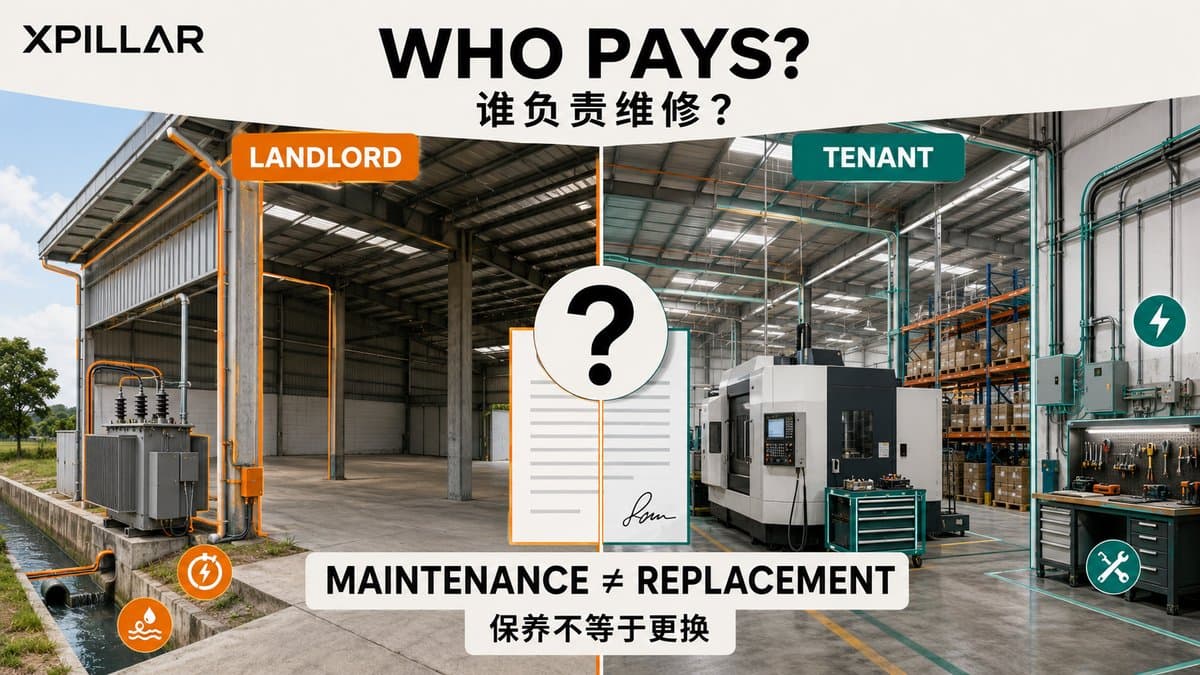
7. Repair, maintenance and replacement | 维修、保养与更换“Tenant to maintain the premises” can be much wider than it appears. Divide responsibility by system and distinguish maintenance from capital replacement.
“租户负责维护物业”可能比想象中更广。应按系统分配责任,并区分日常保养与资本性更换。
Structure — Foundation, columns, beams, roof frame, slab and retaining walls.
结构 — 地基、柱、梁、屋架、地板及挡土墙。
Building envelope — Roof sheets, waterproofing, gutters, external walls, doors and glazing.
建筑外围 — 屋面、防水、雨槽、外墙、门和玻璃。
Fire systems — Pumps, tanks, sprinklers, alarms, hose reels, extinguishers and inspections.
消防系统 — 泵、水池、喷淋、警报、消防喉辘、灭火器及检查。
Electrical — Incoming supply, transformer, main switchboard, internal wiring and tenant equipment.
电力 — 进线、变压器、总配电板、内部线路及租户设备。
Mechanical systems — Lifts, ventilation, air-conditioning, compressors and dock equipment.
机械系统 — 电梯、通风、空调、压缩机及装卸平台设备。
External works — Yard pavement, drains, fencing, gates, landscaping and access roads.
外部工程 — 空地路面、排水沟、围栏、大门、绿化及通道。
Shared infrastructure — Responsibility, access for repairs, cost allocation and service interruption.
共用设施 — 维修责任、进场权、费用分配及服务中断。
Clarify pre-existing defects, latent defects, fair wear and tear, insured damage, statutory upgrades and replacement after end-of-life. A condition report and defects schedule should sit beside the repair clause so that the tenant is not required to return an old building in a better condition than it received.
还要明确既有缺陷、隐蔽缺陷、正常损耗、保险事故、法定升级及使用寿命结束后的更换责任。物业状况报告与缺陷清单应配合维修条款,避免租户被要求把旧厂房交还得比接收时更好。
8. Utilities, capacity and service interruptions | 公用设施、容量与服务中断An electricity account or visible substation does not confirm available capacity. Record the agreed supply configuration, meter arrangement and any landlord works. Where capacity or an upgrade is critical, obtain technical confirmation and make the agreement conditional where appropriate.
有电表或看见变电站,并不代表容量足够。协议应记录双方确认的供电配置、电表安排及房东必须完成的工程。若电力容量或提升工程属于关键条件,应取得技术确认,并在适当情况下把它列为先决条件。
Check/ 应检查:
- electricity voltage, approved load and upgrade route — 电压、批准负荷及提升路径;- ownership and maintenance of transformer or substation equipment — 变压器或变电站设备的所有权与维修;- water demand and storage — 用水量与储水;- sewerage and industrial-effluent route — 排污及工业废水路径;- gas, steam, compressed air or other shared utilities — 燃气、蒸汽、压缩空气等共用设施;- fibre redundancy and telecom access — 光纤冗余及电讯接入;以及- rights to install solar systems, generators or energy-storage equipment — 安装太阳能、发电机或储能设备的权利。
The agreement should also address planned outages, emergency access, responsibility for equipment failure and whether the landlord gives any service-level commitment. Technical suitability should be assessed against the tenant’s machinery schedule, not a generic listing description.
协议还应处理计划停供、紧急进场、设备故障责任及房东是否提供任何服务承诺。技术适用性必须按照租户的机器清单评估,而不是依赖房源广告。
9. Access, loading, parking and shared operations 通行、装卸、停车与共用营运
Factory and warehouse access rights should be operational, not merely theoretical. Attach a site plan showing the gate, internal route, loading area, yard, parking and emergency access.
厂房与仓库的通行权必须可以实际使用。应附上标示大门、内部路线、装卸区、空地、停车位和消防通道的总图。
Record any restrictions on/ 必须记录以下限制:
- 24-hour operations — 24小时营运;- 20-foot or 40-foot container trucks — 20尺或40尺货柜车;- vehicle weight, height or turning route — 车辆重量、高度及转弯路线;- queuing and container placement — 排队和临时放置货柜;- loading-bay use — 装卸平台使用;- employee and visitor access — 员工与访客进出;- dangerous goods or refrigerated vehicles — 危险品或冷藏车;以及- use of common roads during maintenance or emergencies — 维修或紧急情况下使用共用道路。
The lease should not promise access that the title, management rules or physical site cannot deliver. Test the actual route before signing.
租约不能承诺地契、管理规则或现场条件无法提供的通行能力。签约前必须测试真实路线。
10. Compliance, insurance, indemnities and casualty | 合规、保险、赔偿与重大损坏Compliance responsibility should follow control. The landlord should not shift responsibility for a pre-existing building defect or missing base-building approval merely by requiring the tenant to comply with “all laws.” Equally, the tenant should bear responsibility for approvals and risks created by its process, goods, workforce, machinery and fit-out.
谁控制风险,谁承担相应的合规责任。房东不能仅以“租户须遵守所有法律”为由,把既有建筑缺陷或基础建筑批准问题全部转给租户;租户则应为其生产工艺、货物、员工、机器及装修产生的批准和风险负责。
Review the allocation of/ 应审查:
- building and fire insurance — 建筑及消防保险;- public liability and employer-related cover — 公众责任及雇主相关保险;- machinery breakdown and business interruption — 机器损坏及营业中断;- hazardous goods and pollution risk — 危险品及污染风险;- deductibles and uninsured losses — 自付额与未承保损失;- waiver of subrogation where appropriate — 适当情况下的代位求偿豁免;- evidence of renewal — 续保凭证;以及- rent suspension and termination after major damage — 严重损坏后的停租与终止权。
The indemnity should be tied to fault, breach or the party’s controlled risk, not written as an unlimited transfer of every loss to the tenant. The casualty clause should state who rebuilds, the repair deadline, when rent is suspended and when either party may terminate.
赔偿条款应与过错、违约或一方可控制的风险挂钩,不应无限制地把全部损失转给租户。重大损坏条款应说明谁负责重建、维修期限、何时停租以及双方何时可以终止。
11. Assignment, subletting, change of control and landlord dealings | 转让、转租、控制权变更与房东处置物业Corporate groups often need flexibility to reorganise, bring in an affiliate, outsource logistics or transfer an operation. Check whether assignment, subletting, licensing, sharing occupation or a change of control needs consent.
企业集团可能需要重组、引入关联公司、外包物流或转移业务。应确认转让、转租、许可使用、共享占用或控制权变更是否需要同意。
If consent is required, define the information, response period and reasonable conditions. Avoid discovering during a corporate restructuring that the occupancy cannot move with the business.
若需要同意,应规定所需资料、回复期限及合理条件,避免企业重组时才发现租赁权不能随业务转移。
Also consider the landlord side. The agreement should address sale of the property, transfer of deposits, notice to the tenant and continuity of contractual obligations. Because section 213 of the National Land Code contains specific rules about the effect and protection of tenancies exempt from registration against later dealings, the tenant’s lawyer should advise on appropriate protection for the particular term and title.
也要考虑房东一方。协议应处理物业出售、押金转交、通知租户及合同义务持续。由于国家土地法典第213条对无需登记租赁在后续土地交易中的效力及保护作出特别规定,应由租户律师根据具体租期及地契建议适当的保障方式。
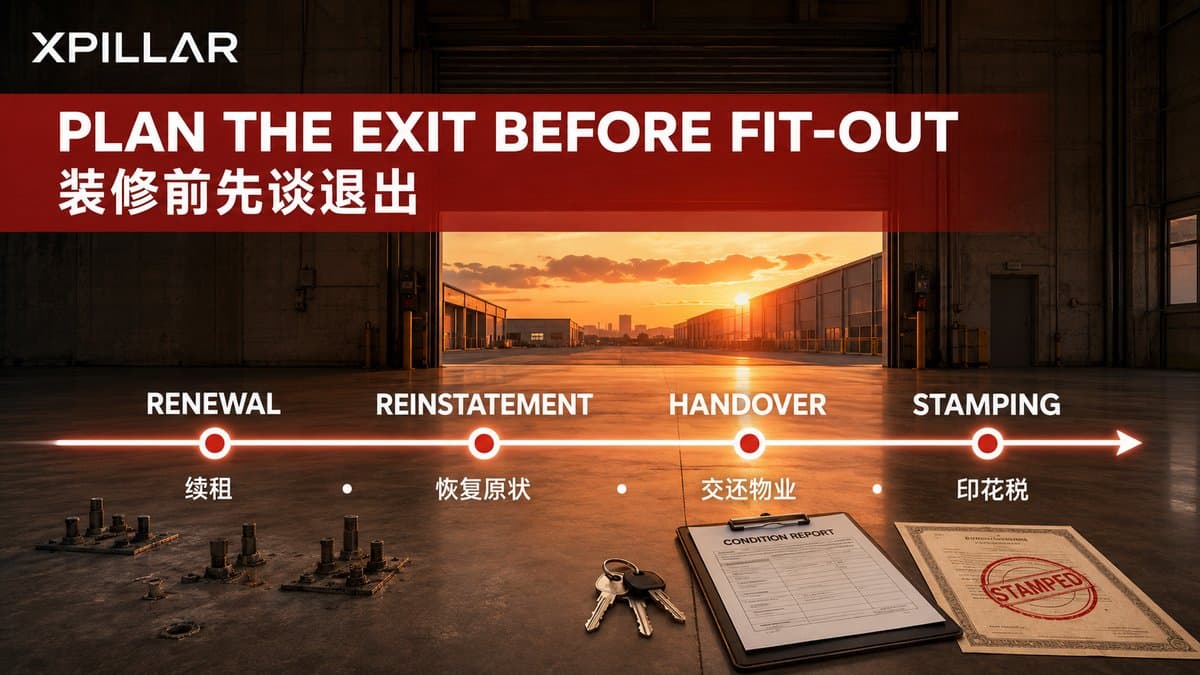
12. Default, termination, renewal, reinstatement and handover | 违约、终止、续租、恢复原状与交还物业The exit clauses can cost more than the first year’s rent. Review:
退出条款的成本可能高过第一年租金。应审查:
- payment and non-payment defaults — 付款及非付款违约;- remedy periods for fixable breaches — 可补救违约的改正期限;- insolvency, abandonment or illegality — 破产、弃置或违法经营;- termination if approvals or utilities cannot be obtained — 无法取得审批或公用设施时的终止权;- relocation, redevelopment or landlord break rights — 搬迁、重建或房东提前终止权;- tenant break rights and agreed compensation — 租户提前终止权与约定赔偿;- renewal notice period and rent-setting mechanism — 续租通知期及租金确定机制;- reinstatement scope and landlord election deadline — 恢复原状范围及房东选择期限;- removal of machinery, waste and contamination — 清除机器、废物及污染;以及- final inspection, utilities, keys, documents and deposit refund — 最终检查、水电、钥匙、文件与押金退款。
Avoid a vague obligation to restore the property to its “original condition” when no original-condition record exists. Attach the handover photographs, approved fit-out drawings and a reinstatement matrix. For expensive equipment or foundations, agree at the start what may remain and who owns it at expiry.
如果没有原始状况记录,就不要接受“恢复至原状”的笼统责任。应附上交付照片、核准装修图与恢复原状清单。对于昂贵的设备基础或装修,应在安装前就约定到期时哪些可以保留,以及归谁所有。
A practical responsibility matrix实用责任矩阵
Before execution, convert the negotiated deal into a one-page matrix and attach it to the agreement.
签署前,应把谈妥的条件整理成一页责任矩阵并附在协议中。
Title and authority to let
Landlord: Confirm ownership and authority.
Tenant: Conduct searches.
Evidence/deadline: Before agreement becomes unconditional.
地契与出租权
房东:确认所有权及授权。
租户:进行查询。
证明/期限:协议成为无条件前
Base-building approvals
Landlord: Provide available CCC/CF and approved plans.
Tenant: Verify against intended use.
Evidence/deadline: Due-diligence period.
基础建筑批准
房东:提供现有CCC/CF及核准图。
租户:对照拟经营用途核实。
证明/期限:尽调期内。
Incoming power
Landlord: Complete agreed base works.
Tenant: Provide load schedule and tenant equipment.
Evidence/deadline: Technical confirmation before fit-out.
进线电力
房东:完成约定的基础工程。
租户:提供负荷表及租户设备。
证明/期限:装修前取得技术确认。
Fire system
Landlord: Maintain base-building system.
Tenant: Upgrade for process, goods or fit-out as agreed.
Evidence/deadline: Approved plans and inspection records.
消防系统
房东:维护基础建筑系统。
租户:按工艺、货物或装修需要升级。
证明/期限:核准图及检查记录。
Structural condition
Landlord: Rectify agreed pre-existing defects.
Tenant: Avoid overloading; obtain approval for alterations.
Evidence/deadline: Condition report and engineer review.
结构状况
房东:修复约定的既有缺陷。
租户:避免超载;改动前获批。
证明/期限:状况报告及工程师审查。
Fit-out
Landlord: Review submissions within agreed time.
Tenant: Design, obtain approvals and insure works.
Evidence/deadline: Fit-out schedule.
装修
房东:在约定时间内审阅。
租户:设计、申请批准及购买工程保险。
证明/期限:装修计划表。
Reinstatement
Landlord: Elect what must be removed.
Tenant: Remove or make good agreed items.
Evidence/deadline: Election before expiry.
恢复原状
房东:选择必须拆除的项目。
租户:拆除或修复约定项目。
证明/期限:到期前作出选择。
Stamp duty
Landlord: Cooperate and provide execution copies.
Tenant: Responsible party files and pays as agreed.
Evidence/deadline: Statutory period.
印花税
房东:配合并提供签署文件。
租户:约定责任方负责申报及缴付。
证明/期限:法定期限内。
This does not replace the agreement. It helps reveal contradictions before the long-form clauses are signed.
矩阵不能取代正式协议,但能在签署长篇法律条款前暴露矛盾。
Stamp duty in 2026: do not leave it until later2026年印花税:不要拖到签约后才处理
Malaysia’s Inland Revenue Board explains that stamp duty is imposed on instruments rather than transactions, and instruments creating interests in property—such as tenancies and statutory leases—may attract ad valorem duty. Its published guidance states that an instrument signed in Malaysia generally must be stamped within 30 days; an instrument executed outside Malaysia generally must be stamped within 30 days after it is first received in Malaysia. (HASiL stamp-duty introduction; HASiL stamp-duty guide)
马来西亚内陆税收局(HASiL)说明,印花税针对的是法律文件而非交易本身;创建物业权益的文件,例如租赁及法定租约,可能须缴付从价印花税。其公开指南说明,在马来西亚签署的文件,一般须在签署日起30天内盖章;在国外签署的文件,一般须在首次带入马来西亚后30天内盖章。(HASiL印花税简介; HASiL印花税指南)
From 1 January 2026, rental and lease instruments fall within Phase 1 of Malaysia’s Stamp Duty Self-Assessment System (STSDS). HASiL states that the taxpayer or appointed agent must have a tax identification number, submit the instrument through MyTax, self-assess the duty, pay within the prescribed period and retain the stamped instrument and related records for seven years from the payment date. (HASiL STSDS)
从2026年1月1日起,租赁和租约文件已经进入马来西亚印花税自我评估系统(STSDS)第一阶段。HASiL说明,纳税人或受委任代理人须拥有税务识别号码,通过MyTax提交文件,自行评估税额,在规定期限内付款,并从缴税日起保存已盖章文件及相关记录七年。(HASiL STSDS)
The agreement should identify who will submit, assess and pay, who keeps the certificate, and who bears any penalty caused by delay or incorrect information. Obtain current tax or legal advice for the actual instrument rather than copying an old rent-based calculation.
协议应写明谁负责提交、自我评估及缴付,谁保存证书,以及因延误或资料错误产生的罚款由谁承担。应根据实际文件取得最新税务或法律意见,不要照抄旧有租金计算方式。
Documents to request before signing | 签约前应要求的文件
At minimum, an industrial tenant should consider requesting:
工业租户至少应考虑要求:
- title search and landlord corporate documents — 地契查询及房东公司文件;
- current quit-rent, assessment and strata-management statements where applicable — 最新地税、门牌税及分层管理账单(如适用);
- CCC, CF and approved architectural or building plans — CCC、CF及核准建筑图;
- approved alterations and structural records — 已批准改建及结构资料;
- fire certificate where applicable and fire-system maintenance records — 适用的消防证书及消防系统维护记录;
- recent electricity and water bills plus technical supply confirmation — 近期水电账单及技术供给确认;
- equipment, transformer, lift and pump maintenance records — 变压器、电梯、泵及其他设备维修记录;
- environmental approvals or records relevant to past and proposed activity — 与历史及拟经营活动相关的环境批准或记录;
- insurance schedule and claim history where relevant — 适用的保险清单及索赔历史;
- service-charge budget and reconciliation — 管理费预算与结算;
- inventory and joint condition report — 物品清单及双方物业状况报告;以及
- the signed fit-out, repair and reinstatement schedules — 已签署的装修、维修和恢复原状责任表。
The list should be adapted to the business. A cold-chain warehouse, electronics plant, chemical store and heavy-engineering factory do not require the same evidence.
文件清单应配合具体业务调整。冷链仓库、电子厂、化学品仓库与重型工程厂需要的证明不会相同。
Final decision rule最终判断原则
An industrial tenancy agreement is ready to sign only when the property review and the contract tell the same story.
只有当物业尽调结果与合同内容讲述同一个事实,工业租赁协议才适合签署。
If the factory requires a power upgrade, the lease should state who obtains it, who pays and what happens if it fails. If 40-foot container access is essential, the site plan and rights should protect it. If machinery needs foundations or roof penetrations, the fit-out and reinstatement clauses should address them before installation. If the building has unapproved alterations, the tenant should not accept open-ended responsibility for correcting the landlord’s historic problem.
如果工厂需要提升电力,租约必须说明谁申请、谁付款,以及申请失败时如何处理。如果40尺货柜车通行是关键要求,现场图及通行权必须给予保障。如果机器需要地基或穿透屋顶,装修与恢复原状条款必须在安装前处理。如果建筑存在未批准改建,租户不应无上限地承担纠正房东历史问题的责任。
The best agreement is not the longest. It is the one that converts the real industrial operation into clear rights, costs, evidence, deadlines and exit rules.
最好的协议不一定最长,而是能够把真实工业营运需求转化为清楚权利、成本、证明、期限及退出规则的协议。
How XPillar can helpXPillar可以如何协助
XPillar helps manufacturers, logistics operators and investors compare factories, warehouses and industrial land by real operating requirements. Search industrial properties in Malaysia, then coordinate legal and technical due diligence with appropriately qualified Malaysian advisers before committing.
XPillar帮助制造商、物流企业和投资者根据真实营运需求比较厂房、仓库及工业地。可先浏览马来西亚工业物业,再由具备相应资格的马来西亚专业人士完成法律及技术尽调后作出承诺。
Frequently Asked Questions | 常问问题
1. Is a three-year factory tenancy required to be registered at the Land Office?三年厂房租约需要在土地局登记吗?Under section 213 of the National Land Code, a tenancy or subtenancy not exceeding three years granted under section 223 is a tenancy exempt from registration. Longer occupation arrangements may require a different lease structure. Obtain advice for the actual title, term and state.
根据国家土地法典第213条,依据第223条批出且不超过三年的租赁或转租,属于无需登记的租赁。更长的占用安排可能需要不同lease结构,应根据实际地契、租期及州属取得法律意见。
2. Can the tenant rely on the tenancy agreement’s “permitted use” clause? 租户可以只依赖协议里的“允许用途”条款吗?No. Contractual permission from the landlord does not replace planning, building, fire, environmental, licensing or other authority approvals. The clause must align with the actual operation and applicable approvals.
不可以。房东在合同中的同意不能取代规划、建筑、消防、环境、营业执照或其他政府批准。条款必须与实际业务及所需批准相符。
3. Who should pay for factory repairs?厂房维修费用应该由谁承担?The agreement should allocate each system and distinguish routine maintenance, pre-existing defects, capital replacement, tenant damage and statutory upgrades. A condition report should be attached.
协议应按不同系统分配,并区分日常保养、既有缺陷、资本性更换、租户造成的损坏及法定升级。双方还应附上物业状况报告。
4. What if the factory does not have enough power after signing? 如果签约后发现电力不足怎么办?If capacity is essential, verify it before commitment and make the agreement conditional where appropriate. State who applies, pays and completes any upgrade and what remedy applies if the required supply cannot be obtained.
若电力容量属于关键条件,应在签约前核实,并在适当情况下列为先决条件。协议须说明谁负责申请、付款及完成提升,以及无法取得所需供电时的补救或终止权。
5. Must a warehouse tenancy agreement be stamped? 仓库租赁协议是否必须缴印花税?Rental and lease instruments may attract stamp duty under the Stamp Act 1949. From 1 January 2026, rental and lease instruments are in Phase 1 of STSDS. Confirm the applicable duty and submission process for the actual instrument.
租赁及租约文件可能根据《1949年印花税法》缴纳印花税。从2026年1月1日起,租赁及租约属于STSDS第一阶段,应就实际文件确认适用税额及申报方式。
6. What is the most overlooked industrial tenancy clause?最容易被忽略的工业租约条款是什么?Reinstatement is frequently underestimated. Machinery bases, mezzanines, wiring, exhaust systems, cold rooms and fire-system changes can be costly to remove. Agree the exit scope and condition evidence before fit-out begins.
恢复原状责任经常被低估。机器基础、夹层、电线、排气系统、冷库及消防改动的拆除成本可能很高。应在装修开始前就确认退出范围及物业原始状况。