
Answer first 先说结论
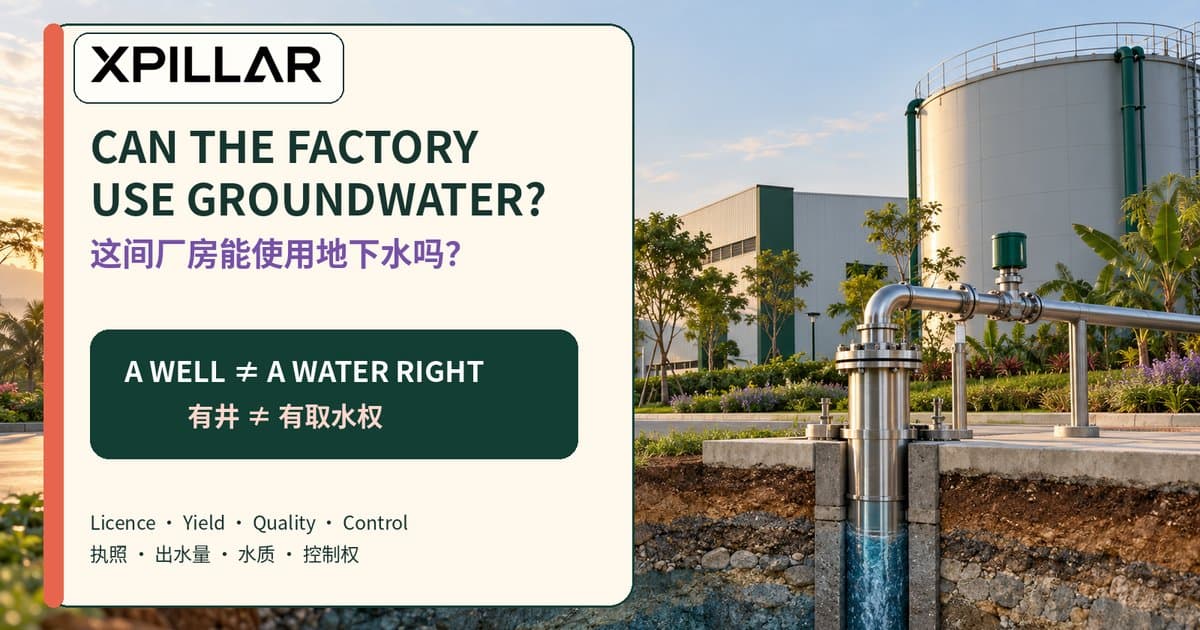
Possibly—but do not treat a borehole as a permanent utility entitlement.
有可能——但不能把钻井视为永久公用事业权利。
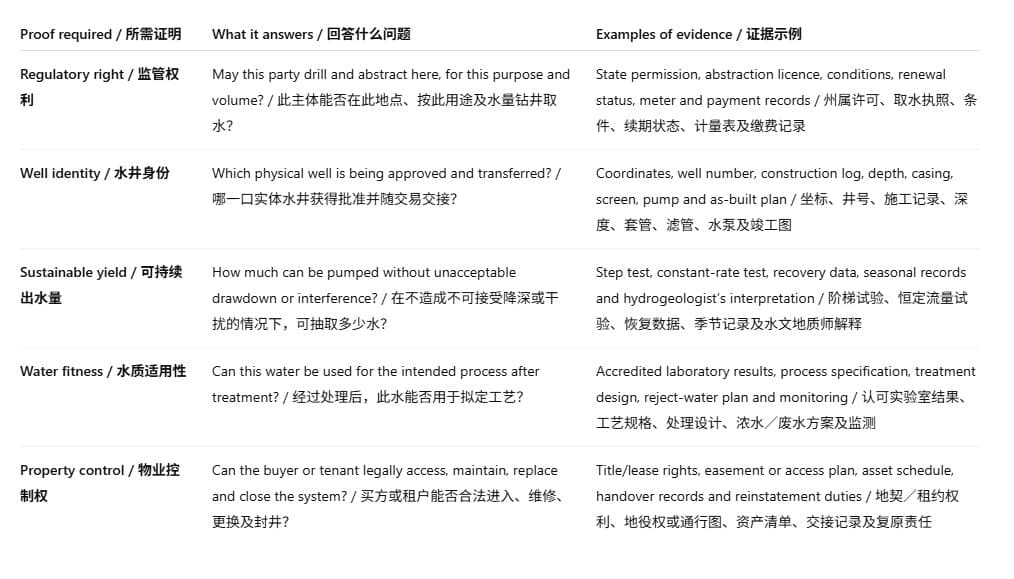
A Malaysian factory should rely on groundwater only after the exact state authority confirms the drilling and abstraction route, the licensed person and approved volume match the intended occupier, a competent pumping test demonstrates sustainable yield, laboratory results and treatment design match the actual process, and the sale or tenancy gives enforceable rights to operate, inspect, repair and close the well.
马来西亚厂房只有在以下条件同时满足后,才应依赖地下水:相关州属主管机关确认正确的钻井及取水程序;执照持有人与核准水量符合拟进驻企业;合资格抽水测试证明可持续出水量;化验结果和水处理设计匹配实际工艺;买卖或租赁文件赋予企业可执行的营运、检查、维修及封井权利。
The key distinction is simple: permission to drill, permission to abstract, physical water availability and water fitness for use are four different questions.
最关键的区别是:钻井许可、取水许可、实际水量及水质适用性,是四个不同问题。
An old well can exist without a current licence.
旧井可能存在,但执照已经失效。
A licensed well can produce less water than expected.
有执照的井,实际出水量可能低于预期。
Clear-looking water can still be unsuitable for a boiler, cooling tower, food process, electronics line or drinking-water system.
看起来清澈的水,也可能不适合锅炉、冷却塔、食品生产、电子生产线或饮用水系统。
Groundwater administration is state-specific.
地下水管理因州属而异。
In Selangor, for example, LUAS publishes separate procedures for permission to drill a well and for a new groundwater-abstraction licence.
以雪兰莪为例,LUAS分别公布钻井许可与新地下水取水执照程序。
Its application materials call for well design, step-pumping, constant-discharge and recovery-test records, and it also requires abstraction meters.
申请资料包括水井设计、阶梯抽水、稳定流量及恢复测试记录,并要求安装取水计量表。
These are useful evidence principles, but they must not be copied into another state without checking that state’s current law and authority.
这些资料可作为重要证据原则,但不能未经核实便套用于其他州属。
Five separate proofs—not one “groundwater-ready” claim五套独立证据——不能只靠一句“可用地下水”
The legal starting point: identify the correct state and authority法律起点:先确定正确州属及主管机关
Do not begin with the pump capacity.
不要先从水泵容量开始。
Begin with the property’s state, lot and authority.
而应先确认物业所在州属、地段及主管机关。
Water-resource licensing is not one uniform nationwide counter.
水资源执照并不是全国统一由一个部门办理。
The correct application, licence holder, fees, abstraction conditions, renewal timing and enforcement route can differ by state.
不同州属的申请、执照持有人、费用、取水条件、续期时间及执法程序都可能不同。
Obtain written confirmation for the actual site rather than relying on a contractor’s experience in another jurisdiction.
应就实际场地取得书面确认,不能只依赖承包商在其他州属的经验。
For Selangor properties, LUAS states that groundwater abstraction is licensed under the Selangor Water Management Authority framework.
对于雪兰莪物业,LUAS说明地下水取水受雪兰莪水务管理机构框架监管。
Its online system lists applications for permission to dig a well, a new groundwater or surface-water abstraction licence and renewal.
其网上系统列出钻井许可、新地下水或地表水取水执照及续期申请。
At federal level, section 13 of the Geological Survey Act 1974 requires a person who bores, drills, digs or otherwise develops a well to search for or extract water to notify the Director General of prescribed details, subject to a narrow domestic-well exception.
在联邦层面,《1974年地质调查法令》第13条规定,任何为寻找或抽取水源而钻、挖或开发水井的人,须向总监申报规定资料,但设有范围狭窄的家庭用井例外。
An industrial borehole should not assume that domestic exception applies.
工业钻井不应假设该家庭例外适用。
The 12 checks before buying, leasing or drilling购买、承租或钻井前的12项检查
1. Fix the intended water use and daily demand 固定用水用途及每日需求
Prepare an hourly and daily water balance.
编制每小时及每日用水平衡。
Separate drinking, sanitation, production, washing, cooling, boiler feed, fire reserve, irrigation and contingency.
把饮用、卫生、生产、清洗、冷却、锅炉给水、消防储备、灌溉及应急用水分开。
State peak demand, operating days, product expansion and minimum pressure.
列明高峰需求、营运天数、扩产计划及最低压力。
A single “m³ per day” figure can conceal a peak-hour shortfall or an unsuitable quality requirement.
单一“每日立方米”数字,可能掩盖高峰时段短缺或水质不匹配。
2. Confirm the authority, approval route and named licence holder 确认主管机关、审批程序及执照主体
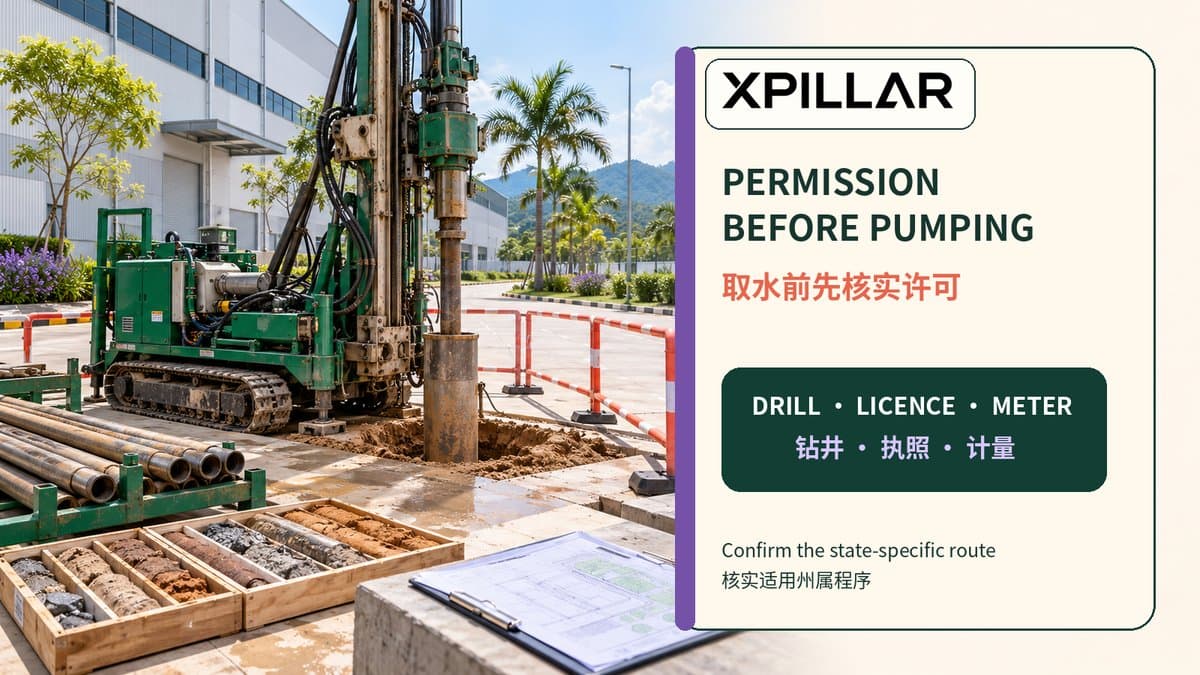
Ask the relevant state authority in writing whether the project needs permission to drill, an abstraction licence, a renewal or variation, and any supporting JMG or technical review.
以书面方式向相关州属主管机关确认:项目是否需要钻井许可、取水执照、续期或变更,以及是否需要JMG或其他技术审核。
Confirm who must hold the licence: landowner, operator, tenant or another party.
确认执照应由土地业主、营运者、租户还是其他主体持有。
A licence in the previous operator’s name should not be treated as transferable merely because the well stays on the land.
即使水井留在土地上,也不能因为前营运者曾持有执照,就假设执照可以自动转让。
3. Identify the exact well and reconcile every document 确认准确水井并核对所有文件
Record coordinates, photographs, well number, depth, diameter, casing and screen intervals, drilling date, contractor, pump, headworks, power supply, meter, tank and pipe route.
记录坐标、照片、井号、深度、直径、套管与滤管区间、钻井日期、承包商、水泵、井口装置、电源、计量表、储水罐及管线路径。
Match them against the licence, construction log, as-built drawing, pumping-test report and asset register.
并与执照、施工记录、竣工图、抽水测试报告及资产登记逐一匹配。
If a site has several wells, do not let one set of papers stand in for all of them.
如果场地有多口井,不能用一套文件代替全部水井。
4. Review the hydrogeology—not only nearby wells 审查水文地质——不能只看邻近水井
Nearby successful wells are a screening clue, not a guarantee.
邻近水井成功,只能作为初步线索,并非保证。
Obtain geological and hydrogeological interpretation for the actual lot: aquifer type, depth, recharge, faults, coastal salinity risk, neighbouring abstractions, sensitive receptors and known contamination.
应就实际地段取得地质及水文地质解释,包括含水层类型、深度、补给、断层、沿海盐化风险、邻近取水、敏感受体及已知污染。
JMG describes hydrogeological mapping, aquifer-potential assessment, well development and quality monitoring as part of its groundwater expertise.
JMG把水文地质制图、含水层潜力评估、水井开发及水质监测列为地下水专业工作。
5. Prove sustainable yield with a defensible pumping test 以可靠抽水测试证明可持续出水量
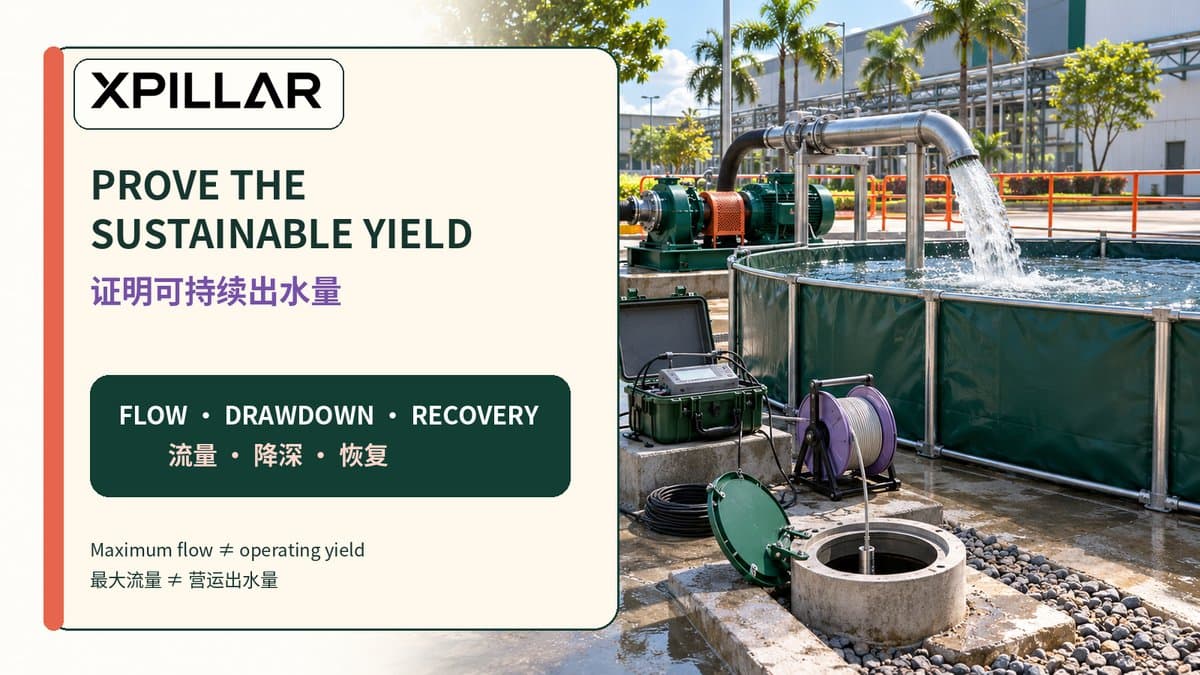
Request raw and interpreted records for step-drawdown, constant-rate and recovery testing.
要求提供阶梯降深、恒定流量及恢复测试的原始和解释记录。
Include date, duration, pumping rate, static and pumping water levels, observation points and instrument calibration.
资料应包括日期、持续时间、抽水率、静水位、抽水水位、观察点及仪器校准。
The useful answer is not merely the maximum flow achieved during a short test.
真正有用的答案,并不是短时间试验中达到的最大流量。
It is the recommended operating rate, duty cycle and limits supported by drawdown, recovery and seasonal conditions.
而是由降深、恢复及季节条件支持的建议营运流量、运行周期及限制。
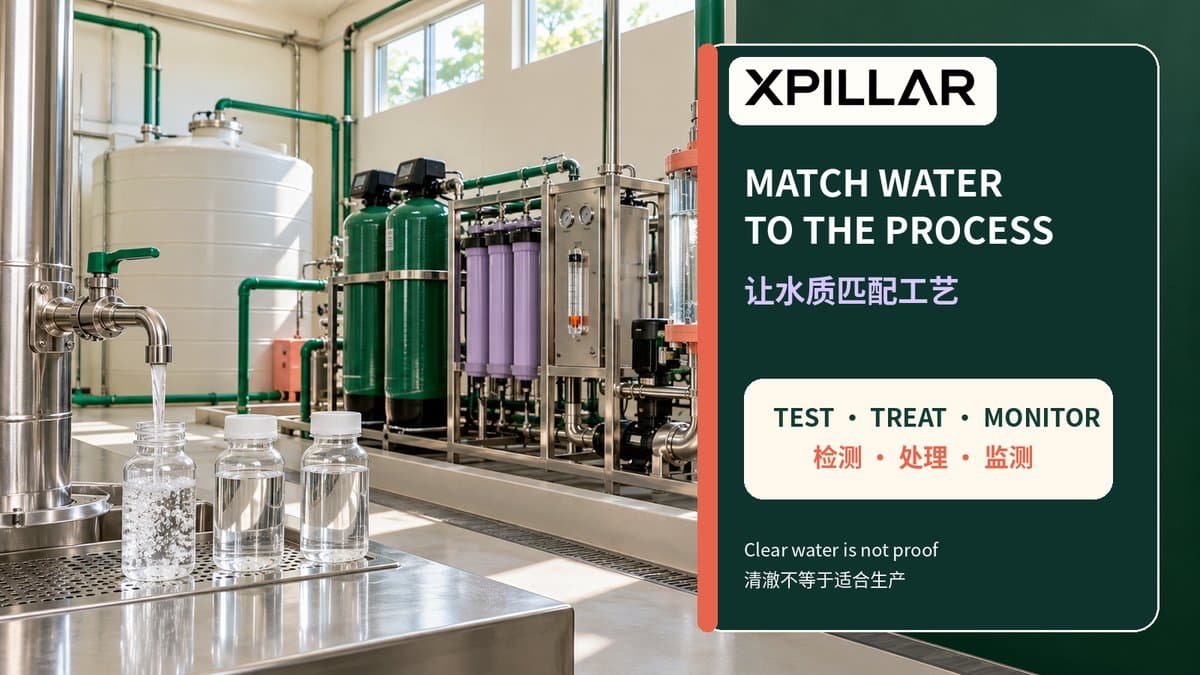
6. Test water against the actual process specification 按实际工艺规格检测水质
Use an accredited laboratory and a sampling plan that records the well, sampling point, pumping condition, preservation and chain of custody.
使用认可实验室,并采用记录水井、采样点、抽水状态、样本保存及交接链的采样计划。
Compare results with the equipment supplier’s and process owner’s limits for hardness, iron, manganese, chlorides, conductivity, silica, microbiology and any site-specific contaminants.
把结果与设备供应商及工艺负责人的限制比较,包括硬度、铁、锰、氯化物、电导率、二氧化硅、微生物及任何场地特定污染物。
Test parameters should be selected by risk and use, not by the cheapest generic package.
检测项目应根据风险与用途选择,而不是只购买最便宜的通用检测套餐。
Malaysia’s Department of Environment publishes separate groundwater standards and an industrial-use reference.
马来西亚环境局分别公布地下水标准及工业用途参考。
Treat that as an environmental quality reference, not automatic proof that the water is fit for a particular product, machine or drinking purpose.
应把它视为环境水质参考,而不是水源自动适合某种产品、设备或饮用用途的证明。
7. Design the complete treatment and storage train 设计完整水处理与储水流程
Translate the raw-water analysis into a process design: aeration, filtration, softening, reverse osmosis, disinfection, dosing, storage, pressure boosting and online monitoring as needed.
把原水分析转化为完整工艺设计:按需要配置曝气、过滤、软化、反渗透、消毒、加药、储水、增压及在线监测。
State design flow, recovery, redundancy, consumables, maintenance and bypass control.
列明设计流量、回收率、冗余、耗材、维修及旁路控制。
A treatment skid sized for average flow may fail at peak production.
只按平均流量配置的处理设备,可能无法应付生产高峰。
8. Plan reject water, backwash, sludge and overflow 规划浓水、反冲洗水、污泥及溢流水
Groundwater treatment does not make waste disappear.
地下水处理并不会让废弃物流消失。
Identify every backwash, RO reject, softener brine, cleaning stream, sludge and tank overflow.
应识别所有反冲洗水、反渗透浓水、软化盐水、清洗水、污泥及储罐溢流。
Measure likely volume and composition, then confirm the lawful sewer, industrial-effluent or return-water route.
估算水量与成分,再确认合法的污水、工业废水或回流水处理路径。
DOE’s Industrial Effluent Regulations apply to specified industrial-effluent discharges, while Selangor also regulates relevant return-water and pollutant discharges through LUAS.
DOE《工业废水条例》适用于规定的工业废水排放;雪兰莪也通过LUAS监管相关回流水及污染物排放。
9. Check wellhead location, protection and physical access 核实井口位置、保护及实体通行
Survey the well against buildings, foundations, drains, chemical storage, septic systems, fuel tanks, truck routes, future extensions and flood levels.
测量水井与建筑、基础、排水沟、化学品储存、化粪系统、油罐、货车路线、未来扩建及洪水水位的关系。
Protect the headworks from vehicle impact, surface runoff, unauthorised operation and contamination.
保护井口免受车辆撞击、地表径流、未经授权操作及污染。
Preserve safe lifting space for pump removal and a continuous access route for service vehicles.
并保留拆卸水泵所需的安全吊装空间和维修车辆持续通行路线。
10. Assess drawdown, settlement and neighbouring interference 评估降深、沉降及邻井干扰
Ask the hydrogeologist and geotechnical engineer whether the proposed abstraction could affect nearby wells, soft ground, foundations, buried services, peat, coastal aquifers or contaminated plumes.
请水文地质师及岩土工程师评估拟议取水是否会影响邻近水井、软弱土层、基础、地下管线、泥炭地、沿海含水层或污染羽流。
Monitor water levels and condition where risk warrants it.
风险较高时,应监测水位及场地状态。
“The pump works” is not proof that prolonged abstraction will have no off-site or structural consequence.
“水泵能运行”并不能证明长期取水不会造成场外或结构影响。
11. Build monitoring, metering, maintenance and backup into operations 把监测、计量、维修及备用方案纳入营运
Define licensed volume, abstraction meter, water-level monitoring, sampling frequency, reporting, pump inspection, well redevelopment, disinfection, alarms and spare parts.
明确核准水量、取水计量表、水位监测、采样频率、报告、水泵检查、洗井/修复、消毒、警报及备件。
Keep public-utility or tanker backup for outages, contamination, drought restrictions, pump failure and treatment downtime.
为水井停用、污染、旱季限制、水泵故障及处理系统停机保留公共供水或水车备用方案。
In Selangor, LUAS’s published procedure includes abstraction-meter specifications.
雪兰莪LUAS公布的程序包含取水表规格。
The actual project should still confirm the currently applicable requirement for the licence.
实际项目仍须确认当前执照条件。
12. Put ownership, conditions precedent and closure duties into the deal 把权属、先决条件及封井责任写入交易
Attach a serialised asset schedule and controlled plan to the sale or tenancy.
在买卖或租赁文件中附上带序列号的资产清单及受控图则。
State who owns the well, pump, meter, tanks, treatment system and underground pipes; who holds and renews licences; who pays charges and testing; who may access the well; and who bears repair, contamination, third-party claims and lawful closure.
写明水井、水泵、计量表、储水罐、处理系统及地下管线的所有权;由谁持有及续期执照、支付费用和检测;谁可进入井区;以及谁承担维修、污染、第三方索赔及合法封井责任。
Make reliance on groundwater conditional on authority confirmation, acceptable pumping-test results, acceptable water quality and a costed treatment design.
把依赖地下水列为有条件事项:须取得主管机关确认、可接受的抽水测试结果、可接受的水质及有成本预算的处理设计。
A practical demand-and-yield test实用的需求与出水量测试
Do not compare the factory’s daily demand with a single “well yield” number.
不要把厂房每日需求直接与一个“水井出水量”数字比较。
Use the lowest defensible operating yield, planned pumping hours, treatment recovery and storage.
应采用最保守且有证据支持的营运流量、计划抽水时间、水处理回收率及储水量。
Illustrative example only仅供说明的示例
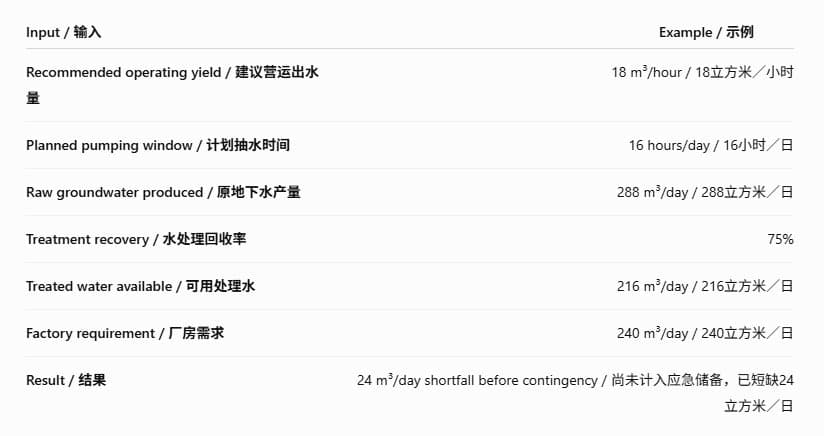
This well is not a complete standalone supply for the stated demand.
这口井无法独立满足上述需求。
The team must reduce demand, extend lawful operating hours, add proven capacity, improve recovery or retain a backup source—subject always to licence conditions and sustainable yield.
团队必须降低需求、在合法范围内延长抽水时间、增加经证明的供水能力、提高回收率,或保留备用水源;所有方案仍须符合执照条件及可持续出水量。
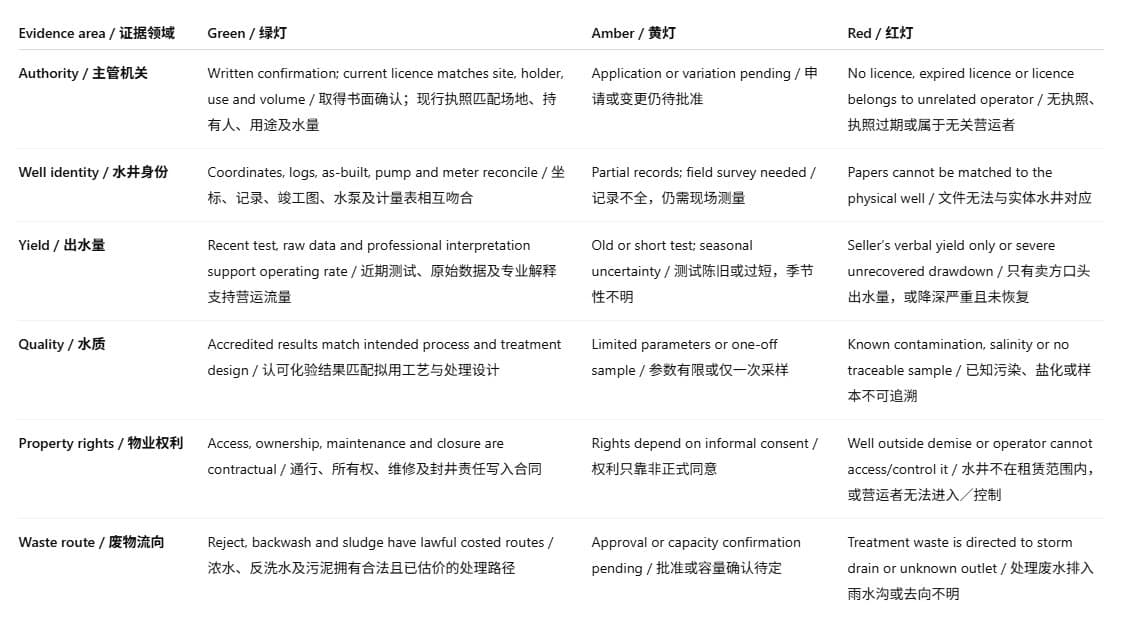
Documents to request before commitment承诺交易前应索取的文件
State authority’s written guidance, drilling permission, abstraction licence, conditions, renewal and payment records.
州属主管机关书面指示、钻井许可、取水执照、条件、续期及缴费记录。
JMG notification or technical records applicable to the well.
适用于该水井的JMG申报或技术记录。
Well coordinates, construction log, lithological and borehole logs, as-built drawing and closure history.
水井坐标、施工记录、岩性与钻孔记录、竣工图及封井历史。
Pump, motor, meter, electrical panel, tank and treatment-equipment schedules.
水泵、电机、计量表、电控箱、储水罐及水处理设备清单。
Raw step-test, constant-rate and recovery data with the signed interpretation.
原始阶梯试验、恒定流量及恢复数据,以及签署的专业解释。
At least one recent traceable laboratory report, plus historical trend data where available.
至少一份近期且可追溯的实验室报告;如有,连同历史趋势数据。
Treatment design basis, process flow, recovery, consumables, alarms and reject-water balance.
水处理设计基础、工艺流程、回收率、耗材、警报及浓水水量平衡。
Water-level, abstraction-volume, quality, maintenance and incident records.
水位、取水量、水质、维修及事故记录。
Plans showing access, protection zone, underground pipes and relationship to drains and hazards.
显示通行、保护区、地下管线以及与排水和危险源关系的图则。
Sale or lease clauses covering licence, access, ownership, outages, contamination, handover and closure.
涵盖执照、通行、所有权、停水、污染、交接及封井的买卖或租赁条款。
Frequently Asked Questions常见问题
1. If a factory already has a borehole, can a new buyer or tenant use it immediately? 厂房已有钻井,新买方或租户可以马上使用吗?
Not safely on that fact alone.
不能只凭这一点就安全使用。
Confirm the current state approval, licence holder, permitted use and volume, JMG records, well identity, test results, water quality and contractual access.
应核实现行州属批准、执照持有人、核准用途与水量、JMG记录、水井身份、测试结果、水质及合同通行权。
A previous operator’s approval may require renewal, transfer or a new application.
前营运者的批准可能需要续期、变更或重新申请。
2. Is permission to drill the same as a groundwater-abstraction licence? 钻井许可等于地下水取水执照吗?
No. 不等于。
In Selangor, LUAS publishes separate procedures for well-drilling permission and a new groundwater-abstraction licence.
雪兰莪LUAS分别公布钻井许可与新地下水取水执照程序。
The exact sequence must be confirmed with the relevant state authority for the actual location.
其他地点的准确程序,必须向相关州属主管机关确认。
3. Does the landowner automatically own an unlimited right to groundwater? 土地业主是否自动拥有无限地下水取水权?
Do not assume so. 不能这样假设。
Groundwater abstraction is regulated, and the competent state authority can control the licence, volume, conditions, monitoring, charges and renewal.
地下水取水受监管,相关州属主管机关可控制执照、水量、条件、监测、费用及续期。
Property ownership and regulatory permission are different rights.
土地所有权与监管许可属于不同权利。
4. How much groundwater can a factory rely on? 厂房可以依赖多少地下水?
Use the lower of the licensed quantity and the professionally recommended sustainable operating yield.
应采用核准水量与专业建议可持续营运出水量中的较低者。
Then apply pumping hours, treatment recovery, maintenance downtime, seasonal uncertainty and contingency.
再计算抽水时间、水处理回收率、维修停机、季节不确定性及应急储备。
A short maximum-flow test is not a bankable supply figure.
短时间最大流量测试不能作为可靠供水数字。
5. If groundwater meets DOE’s industrial-use standard, is it ready for production? 地下水符合DOE工业用途标准,就能直接投入生产吗?
Not necessarily. 不一定。
DOE’s standard is an environmental quality reference.
DOE标准属于环境水质参考。
The factory must still compare the water with product, hygiene, equipment, boiler, cooling, semiconductor, food or other process specifications and design any necessary treatment.
厂房仍须把水质与产品、卫生、设备、锅炉、冷却、半导体、食品或其他工艺规格比较,并设计所需处理。
6. Can groundwater replace the public water connection? 地下水可以取代公共供水接驳吗?
Sometimes it can reduce dependence, but a resilient plan normally keeps an approved backup for pump failure, licence restrictions, contamination, drought conditions, treatment downtime and changing demand.有时可以降低依赖,但稳健方案通常会为水泵故障、执照限制、污染、旱季、水处理停机及需求变化保留核准备用水源。
Do not surrender a valuable utility connection without a documented reliability study.
未完成可靠性研究前,不应放弃有价值的公共供水接驳。
7. Who is responsible for water-treatment reject and backwash water? 谁负责水处理浓水及反冲洗水?
The transaction and operating documents should name the responsible operator.
交易及营运文件应指定责任营运者。
The discharge must also follow applicable DOE, sewerage, local and state water-resource requirements.
排放也必须遵守适用的DOE、污水、地方政府及州属水资源要求。
It should never be assumed that clear-looking reject water may enter a storm drain.
不能因为浓水看起来清澈,就假设可以排入雨水沟。
8. What should be a condition precedent in the sale or tenancy? 买卖或租赁应设置哪些先决条件?
At minimum: written authority confirmation, a licence acceptable to the intended operator, verified well identity, acceptable pumping-test results, acceptable laboratory results, a costed treatment and waste plan, enforceable access and ownership rights, and a backup-water strategy.
最低限度应包括:主管机关书面确认、适用于拟营运者的执照、水井身份核实、可接受的抽水测试、可接受的化验结果、有成本预算的处理与废物流向方案、可执行的通行及所有权,以及备用水源策略。
Set a long-stop date and exit mechanism if these conditions fail.
若条件无法满足,应设置最迟完成日及退出机制。
Final decision rule最终决策原则
Do not pay a “groundwater-ready” premium until the same evidence package proves right, rate, quality and control.
在同一套证据同时证明权利、流量、水质及控制权之前,不要为“可用地下水”支付溢价。
The intended party must have the regulatory right to abstract.
拟营运者必须拥有合法取水权。
The well must be able to sustainably deliver the required rate.
水井必须能够持续提供所需流量。
The water must be able to meet the process specification after a costed treatment train.
水质必须能在经过有成本预算的处理后符合工艺规格。
The transaction must give continuous control of the well, system, monitoring, waste route and closure.
交易文件必须赋予企业对水井、系统、监测、废物流向及封井的持续控制。
If one element is missing, value the borehole as an unresolved risk—not guaranteed utility capacity.
任何一项缺失,都应把钻井视为待解决风险,而不是有保证的公用设施容量。
This article provides an industrial-property due-diligence framework, not legal, hydrogeological, engineering, environmental, water-quality or health advice. Requirements vary by state, site, aquifer, activity and intended use. Obtain written confirmation from the competent authority and advice from qualified professionals for the actual property.
本文提供工业物业尽调框架,不构成法律、水文地质、工程、环保、水质或健康意见。
要求会因州属、场地、含水层、业务及用途而异。