
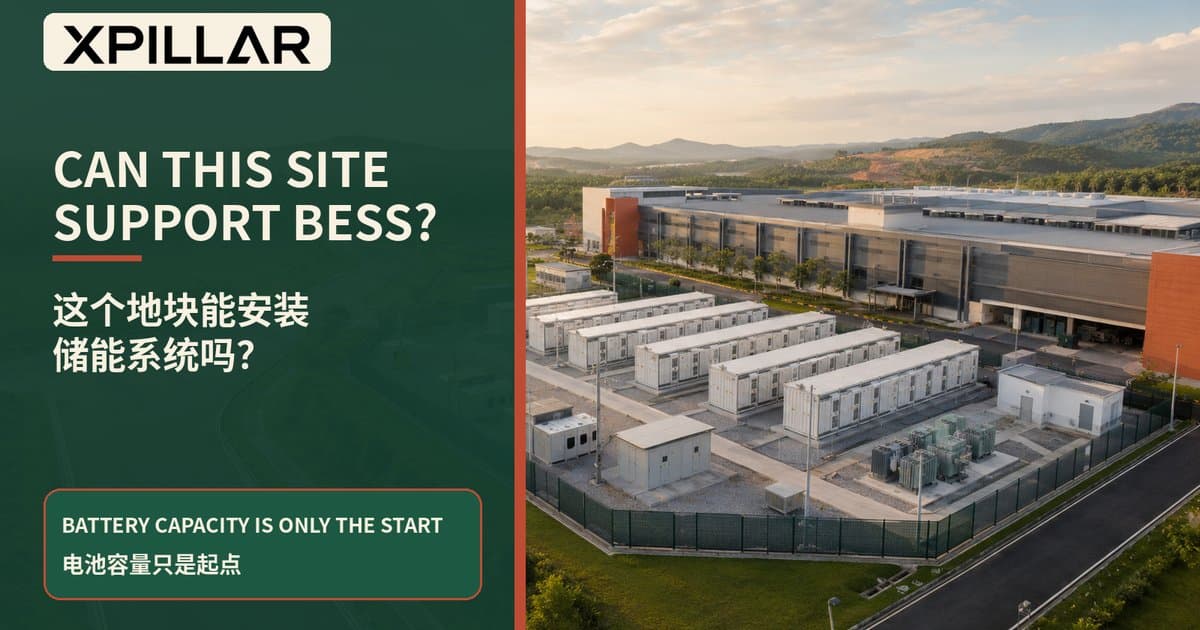
A practical property guide to BESS purpose, site layout, fire strategy, electrical design, licensing, commissioning and lifecycle responsibility.

从储能用途、场地布局、消防策略、电气设计、牌照与调试,到全生命周期责任的物业实务指南。
Answer first: a BESS is not a drop-in container
先说结论:BESS并不是放下集装箱就能使用
A Malaysian factory, warehouse or data centre can potentially install a battery energy storage system (BESS), but spare land, an existing transformer or nearby transmission infrastructure does not prove that the project is feasible.
马来西亚的厂房、仓库或数据中心可能具备安装电池储能系统(BESS)的条件,但有空地、现成变压器或附近有输电设施,并不等于项目一定可行。
A BESS changes the electrical installation, fire strategy, emergency access, drainage and flood exposure, building or planning position, maintenance regime, insurance profile and end-of-life obligations of the property.
BESS会改变物业的电气装置、消防策略、紧急通道、排水与洪水风险、建筑或规划状态、维护制度、保险风险及退役责任。
The Energy Commission's 2026 BESS Safety Guidelines apply to lithium-ion BESS and expressly cover grid-connected end-user systems used by commercial and industrial consumers.
马来西亚能源委员会2026年《BESS安全指南》适用于锂离子BESS,并明确涵盖商业与工业用户使用的并网终端系统。
The guidelines require competent persons, hazard assessment, electrical and thermal protection, testing, commissioning and maintenance. They recommend outdoor installation; if indoor installation is unavoidable, appropriate fire suppression and applicable Fire and Rescue Department requirements must be addressed.
指南要求委任合格人员、完成危害评估,并落实电气与热风险保护、测试、调试及维护。指南建议户外安装;如无法避免室内安装,则必须配置适当灭火系统,并符合马来西亚消防与拯救局的相关要求。
The safest transaction rule is simple:
最稳妥的交易原则很简单:
Do not value, buy, lease or reserve a site for BESS until the proposed duty, usable energy, site layout, fire concept, electrical single-line diagram, licensing route and lifecycle responsibility have been tested against that exact property.
在拟定用途、可用电量、场地布局、消防方案、电气单线图、牌照路径及全生命周期责任针对该物业完成验证之前,不应把BESS价值计入物业,也不应为此无条件买地、租赁或预留场地。
First define what the battery must do
首先明确电池究竟要完成什么任务
“We want a 20 MW battery” is not an operating brief.
“我们要一个20 MW电池”并不是完整营运需求。
A manufacturer may want peak-demand management, solar-energy shifting, short-duration ride-through, backup for selected production loads or participation in a grid programme.
制造商可能需要管理最大需量、把白天太阳能移至其他时段、短时穿越、为部分生产负载提供后备,或参与电网计划。
A data centre may be assessing resilience for particular electrical paths, but a BESS does not automatically replace UPS systems or standby generators.
数据中心可能希望加强特定供电路径的韧性,但BESS不会自动取代UPS或备用发电机。
Each objective creates a different charging pattern, discharge duration, grid interface, redundancy design and commercial model.
不同目标会产生不同充放电模式、持续时间、电网接口、冗余设计与商业模式。
Before evaluating property, record the critical load, acceptable interruption, required autonomy, charging source, expected cycles, operating temperature, intended islanded operation, export or zero-export position, growth forecast and failure response.
在评估物业前,应记录关键负载、可接受中断时间、所需供电时长、充电来源、预计循环次数、运行温度、是否孤岛运行、是否输出或零输出、增长预测及故障应对。
This one-page duty brief should be approved by operations, electrical engineering, finance, safety and property teams.
该一页式用途说明应由营运、电气工程、财务、安全及物业团队共同确认。
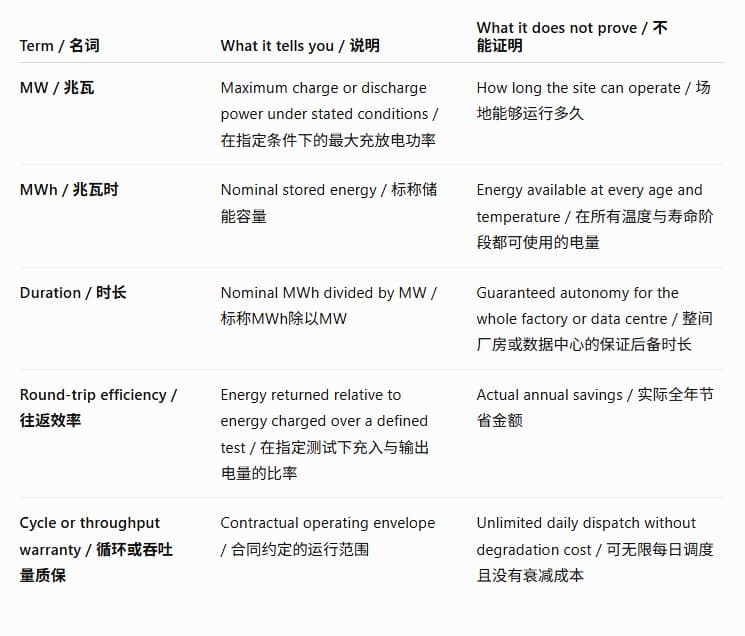
MW, MWh and usable energy are different
MW、MWh与真正可用电量并不相同
MW describes the rate at which power can be delivered or absorbed. MWh describes stored energy.
MW代表系统能够输出或吸收电力的速率;MWh代表储存的电量。
Dividing nominal MWh by nominal MW gives an arithmetic duration, not a guaranteed operating duration.
用标称MWh除以标称MW所得只是数学上的时长,并不等于保证运行时长。
For example, a 20 MW / 40 MWh BESS has a nominal two-hour ratio, but the usable duration for a real facility can be lower after reserve state of charge, degradation, auxiliary cooling loads, conversion losses, warranty limits and the difference between battery output and total facility demand.
例如,20 MW / 40 MWh BESS的标称比率为两小时,但考虑预留荷电状态、衰减、辅助冷却用电、转换损耗、质保限制,以及电池输出与设施总负载之间的差异后,实际可用时长可能更短。
The 12 checks before committing to the property or BESS
承诺物业或储能投资前的12项检查
1. Define the duty, critical load and operating mode 明确用途、关键负载与运行模式
Identify whether the BESS is intended for cost management, renewable-energy shifting, power-quality support, backup, microgrid operation or grid services.
应明确BESS用于成本管理、可再生能源移峰、电能质量支持、后备、微电网运行,还是电网服务。
Map which loads remain energised, for how long and under which failure scenarios.
同时列明哪些负载会持续供电、持续多久,以及对应哪些故障情景。
If islanded operation is intended, the 2026 guidelines require a transfer switch or circuit breaker capable of safely isolating the BESS from the utility network, together with permanent identification of circuits that remain energised.
如计划孤岛运行,2026年指南要求配置能够安全隔离公用电网的转换开关或断路器,并永久标识在孤岛模式下仍带电的回路。
2. Confirm usable capacity, degradation and expansion allowance 核实可用容量、衰减与扩展余量
Obtain the guaranteed usable energy at beginning and end of warranty, allowable depth of discharge, reserve state of charge, ambient-temperature assumptions, auxiliary consumption, response time, annual throughput, availability and augmentation plan.
应取得质保期初与期末的保证可用电量、允许放电深度、预留荷电状态、环境温度假设、辅助用电、响应时间、年度吞吐量、可用率及增容计划。
Reserve physical and electrical capacity for replacement or additional modules if future growth is part of the investment case.
如投资逻辑包含未来增长,还必须预留更换或增加电池模块所需的物理及电气空间。
3. Prove the right to occupy, build, connect and maintain 证明有权占地、施工、接电与维护
Check the title, express conditions, restrictions in interest, lease, tenancy, lender security and management-corporation rules where relevant.
应检查地契、明确用途条件、利益限制、租约、银行抵押,以及适用时的管理机构规则。
A tenant normally needs more than permission to place equipment: the documents should cover foundations, cabling, switchgear, access, fire systems, remote monitoring, shutdown rights, insurance, assignment, reinstatement and equipment removal at expiry.
租户通常不只需要“允许摆放设备”,文件还应涵盖基础、布线、开关设备、进出权、消防系统、远程监控、停机权、保险、转让、恢复原状及租约届满时拆除设备等事项。
4. Map the local planning and building pathway 绘制地方规划与建筑审批路径
Ask the appointed architect, engineer or planner and the relevant local authority whether the proposal requires planning permission, building-plan amendment, temporary-structure approval, engineering plans or other submissions.
应由受委建筑师、工程师或规划师向有关地方政府确认,项目是否需要规划许可、建筑图修改、临时构筑物准证、工程图或其他呈报。
Malaysia's OSC system includes pathways for planning permission, building plans, engineering plans and minor or temporary structures; the correct combination depends on the proposed works and local authority.
马来西亚OSC系统涵盖规划许可、建筑图、工程图,以及小型或临时构筑物等程序;具体组合取决于工程内容与当地政府要求。
Do not assume that a container is outside building control merely because it can be transported.
设备即使可以运输,也不能因此假设集装箱不受建筑管制。
5. Design the fire and emergency concept around the actual battery 按照实际电池系统制定消防与紧急应对方案
The fire strategy should be based on chemistry, cell and enclosure design, credible failure modes, test evidence, separation, fire-service access, detection, suppression, ventilation, explosion or deflagration control where applicable, emergency shutdown, water supply, contaminated runoff control and post-incident recovery.
消防策略应以电池化学体系、电芯与箱体设计、可信故障模式、测试证据、间距、消防通道、探测、灭火、通风,以及适用时的爆燃控制、紧急停机、水源、受污染消防水控制与事故后恢复为基础。
The Energy Commission requires a comprehensive hazard-mitigation strategy and thermal-runaway protection.
能源委员会要求制定全面危害缓解策略及热失控防护。
The guidelines recommend outdoor installation. If indoor installation is unavoidable, appropriate fire suppression and applicable BOMBA requirements must be met.
指南建议BESS安装在户外。如无法避免室内安装,必须设置适当灭火系统并符合BOMBA的适用要求。
6. Test the physical site—not only the available acreage 检验实际场地,而不只是空地面积
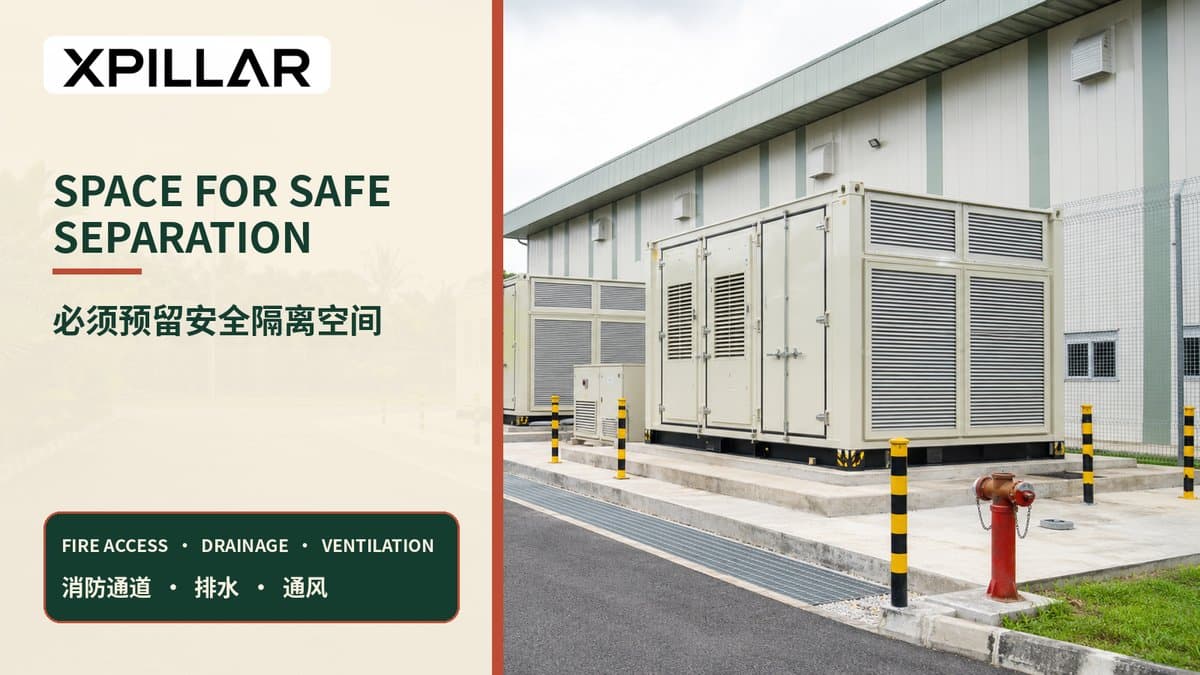
Overlay the proposed footprint with legal boundaries, setbacks, easements, utilities, future expansion, lorry circulation, fire-appliance access and assembly points.
应把拟建占地与法定地界、退界、地役权、公用设施、未来扩建、货车动线、消防车通道及集合点叠加检查。
Investigate platform level, flood history, design flood level, groundwater, drainage outfall, soil bearing capacity, settlement, wind exposure, lightning, contamination, vehicle impact, security, nearby occupancies, heat rejection and noise.
同时调查平台标高、洪水历史、设计洪水位、地下水、排水出口、地基承载力、沉降、风害、雷击、污染、车辆撞击、保安、邻近用途、散热及噪音。
Outdoor enclosures must meet the Energy Commission's stated ingress-protection requirements—IP54 or higher, with a higher rating where site conditions require it.
户外箱体必须满足能源委员会规定的防护等级——至少IP54;如场地条件更严苛,则需采用更高等级。
7. Rebuild the electrical single-line diagram 重新建立完整电气单线图
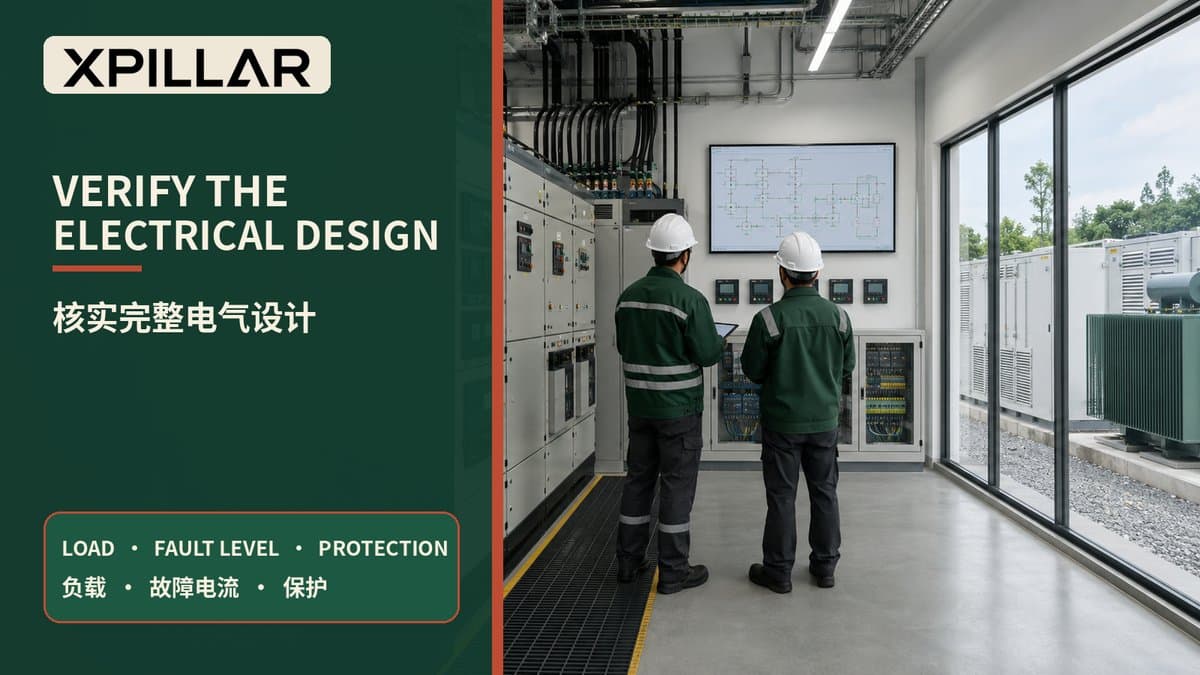
The electrical study should identify the point of connection, transformer and switchgear ratings, conductor routes, short-circuit level, protection coordination, earthing, harmonics, power quality, metering, export limitation, synchronisation, anti-islanding and emergency isolation.
电气研究应确定接入点、变压器与开关设备额定值、线路走向、短路电流水平、保护协调、接地、谐波、电能质量、计量、输出限制、同步、防孤岛及紧急隔离。
A vacant bay in a switchboard is not proof that the installation can accept the proposed BESS.
开关柜内有空位,并不能证明现有装置可以接入拟议BESS。
8. Confirm Energy Commission licensing and utility requirements 确认能源委员会牌照与公用事业要求
“Behind the meter” does not mean “outside regulation.”
“表后储能”并不代表“不受监管”。
The Energy Commission's July 2026 licensing infographic states that BESS installations of 5 kW and above are subject to licensing.
能源委员会2026年7月牌照图解指出,5 kW及以上BESS装置须申请牌照。
Private installations below 5 MW use ECOS, while private installations of 5 MW and above and public generation licences use the Online Application System.
低于5 MW的私人装置通过ECOS申请,5 MW及以上私人装置及公共发电牌照则使用Online Application System。
The legal category depends on whether electricity is for private use or supplied to another person.
法律类别取决于电力是供私人使用,还是供应他人。
9. Protect factory and data-centre continuity 保护厂房与数据中心的运行连续性
Model the failure of each component, not only a successful discharge.
应模拟每个部件失效,而不只是成功放电。
Ask what happens if the battery management system, energy management system, power-conversion system, cooling system, protection relay, communications link or transfer equipment is unavailable.
需要判断电池管理系统、能源管理系统、功率转换系统、冷却系统、保护继电器、通信链路或转换设备不可用时会发生什么。
For a data centre, do not treat a BESS vendor's availability figure as proof of facility-level redundancy.
对于数据中心,不能把BESS供应商提供的可用率直接视为设施级冗余证明。
The BESS must be assessed within the complete electrical architecture, including UPS, generators, static or automatic transfer, maintenance bypass, fuel strategy, control logic and the site's operating standard.
BESS必须放在完整电气架构中评估,包括UPS、发电机、静态或自动转换、维护旁路、燃料策略、控制逻辑及场地运行标准。
10. Build a whole-life commercial model 建立全生命周期商业模型
The model should include installed cost, civil works, fire and electrical upgrades, financing, import and taxes where applicable, round-trip losses, auxiliary energy, tariff and maximum-demand treatment, degradation, augmentation or module replacement, planned downtime, software and connectivity, maintenance, insurance, land opportunity cost and decommissioning.
商业模型应包括安装成本、土建、消防与电气升级、融资、适用时的进口与税务成本、往返损耗、辅助用电、电价与最大需量处理、衰减、增容或模块更换、计划停机、软件与通信、维护、保险、土地机会成本及退役。
Test at least a base case, downside case and changed-operating-profile case.
至少应测试基准情景、下行情景及营运负载改变情景。
Do not count the same benefit twice—for example, using the same energy simultaneously for peak shaving, full backup and an external service.
不要把同一项效益重复计算——例如假设同一批电量能够同时用于削峰、完整后备与外部服务。
11. Allocate performance, contract and insurance risk 分配性能、合同与保险风险
Align the equipment-supply agreement, EPC contract, long-term service agreement, software licence, warranty, performance guarantee, landlord consent, lender consent and insurance.
应协调设备供应协议、EPC合同、长期服务协议、软件许可、质保、性能保证、业主同意、贷款人同意及保险。
Define who owns the battery and environmental attributes; who carries damage to the building, grid or third parties; who responds to recalls; how availability and capacity are measured; and what happens if the OEM, integrator or software provider exits the market.
还应明确电池及环境属性归谁所有;建筑、电网或第三方损害由谁承担;召回由谁处理;可用率与容量如何测量;以及原厂、系统集成商或软件供应商退出市场时如何应对。
Ask the property and liability insurers to review the final design, commissioning evidence, emergency plan and maintenance regime before contract close—not after installation.
应在合同签署前,而不是安装后,要求物业险与责任险保险人审核最终设计、调试证据、应急计划与维护制度。
12. Plan maintenance, incident response and end-of-life 规划维护、事故应对与退役
The 2026 guidelines require maintenance under a valid Permit to Work and by competent persons or persons under their control, with records kept and updated.
2026年指南要求维护工作必须在有效工作许可证下,由合格人员或在其监管下进行,并保存及更新记录。
Prepare inspection frequencies, spare parts, firmware governance, isolation and lock-out procedures, emergency contacts, first-responder information, incident reporting, damaged-module quarantine and recovery arrangements.
项目方应制定检查频率、备件、固件管理、隔离与上锁程序、紧急联系人、提供给救援人员的资料、事故报告、受损模块隔离及恢复安排。
At replacement or decommissioning, batteries containing cadmium, nickel, mercury or lithium are listed as scheduled waste code SW103 in DOE's eSWIS waste-code list.
在更换或退役时,含镉、镍、汞或锂的废电池在环境局eSWIS废物代码清单中列为SW103受管制废物。
Confirm classification, storage, transporter, licensed receiving facility, cross-border restrictions where relevant, data records and financial responsibility before the first battery arrives—not at the end of the project.
应在第一批电池运抵前,而不是项目结束时,确认分类、储存、运输商、持牌接收设施、适用时的跨境限制、数据记录及财务责任。
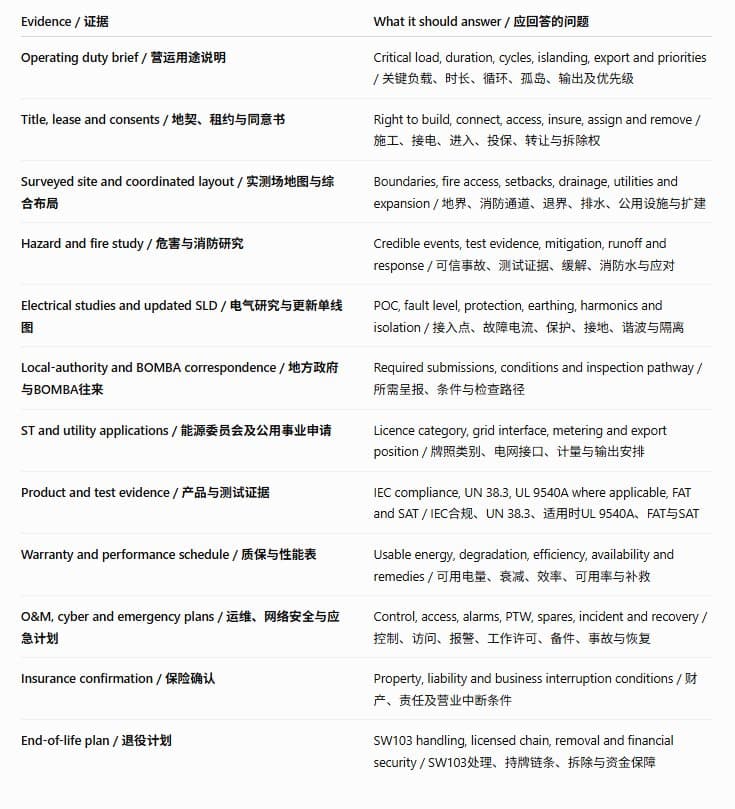
Evidence to request before approving a BESS site
批准BESS场地前应索取的证据
Five investment gates/ 五个投资决策关口
Gate 1 — Purpose: is there a defined operational problem?
关口1——用途:是否存在明确的营运问题?
Proceed only when the load data, duty cycle, resilience objective and decision owner are documented. “Energy transition” alone is not a specification.
只有在负载数据、用途循环、韧性目标及决策负责人已经记录后才进入下一步。“能源转型”本身并不是技术规格。
Gate 2 — Site: can the exact property accommodate the complete system?
关口2——场地:该物业能否容纳完整系统?
Confirm the surveyed footprint, legal control, fire access, drainage, platform level, utilities and future expansion—not only the container dimensions.
确认实测占地、合法控制权、消防通道、排水、平台标高、公用设施及未来扩展,而不只是集装箱尺寸。
Gate 3 — Approval: is the licensing and submission route credible?
关口3——审批:牌照及呈报路径是否可信?
Require a written matrix covering the local authority, BOMBA, Energy Commission, utility and any environmental obligations, with responsible parties and dependencies.
要求书面矩阵列出地方政府、BOMBA、能源委员会、公用事业及任何环境责任,并注明负责人及相互依赖关系。
Gate 4 — Design: can the system fail safely without defeating operations?
关口4——设计:系统能否安全失效且不破坏营运?
Approve procurement only after the coordinated fire, civil, electrical, control and emergency designs show credible failure and recovery paths.
只有在综合消防、土建、电气、控制及应急设计显示可信的故障与恢复路径后,才批准采购。
Gate 5 — Economics: is the downside case still acceptable?
关口5——经济性:下行情景是否仍可接受?
Test lower utilisation, changed tariffs, faster degradation, replacement, insurance, downtime and delayed approvals.
应测试较低利用率、电价变化、较快衰减、更换、保险、停机及审批延迟。
The board should see both the property cost and the whole-life energy-system cost.
董事会应同时看到物业成本与能源系统全生命周期成本。
Red flags during property selection
选址过程中的风险信号
“The battery will solve our power-capacity shortage.” A BESS stores energy; it does not by itself create utility capacity or remove charging constraints.
“电池可以解决供电容量不足。” BESS储存电能;它本身不会创造公用事业供电容量,也不会消除充电限制。
“It is behind the meter, so no licence is needed.” Current Energy Commission licensing requirements must be checked for the actual size and use.
“这是表后系统,所以不需要牌照。” 必须按照实际容量与用途核实现行能源委员会牌照要求。
“Two hours of battery means two hours for the whole site.” Nominal ratio is not usable autonomy.
“两小时电池等于整个场地可运行两小时。” 标称比率不等于实际可用后备时长。
“The container fits, therefore the site fits.” Fire access, separation, civil works, drainage, electrical rooms and maintenance space can require much more land.
“集装箱放得下,所以场地就合适。” 消防通道、隔离、土建、排水、电气房与维护空间可能需要更多土地。
“The vendor will take back the batteries later.” Make that obligation, price, licensed chain and security enforceable now.
“供应商以后会回收电池。” 现在就必须把责任、价格、持牌处理链与履约保障写成可执行条款。
Frequently Asked Question/ 常见问题
1. Does a BESS increase the TNB capacity available to my factory? BESS会增加TNB向厂房提供的容量吗?
Not by itself. A BESS may reduce or reshape demand if charged and dispatched correctly, but it also needs charging energy and an approved electrical arrangement.
不会自动增加。BESS在正确充电与调度下可能降低或重塑需量,但它也需要充电电源及获批电气安排。
Utility capacity, maximum demand, connection works and timing must still be verified separately.
公用事业容量、最大需量、接电工程及时间仍须分别核实。
2. Can a BESS replace a data centre's UPS and generators? BESS能否取代数据中心的UPS与发电机?
Not automatically. A BESS can form part of a resilience architecture, but UPS response, generator start, transfer logic, maintenance bypass, runtime, failure domains and operating standards must be engineered as one system.
不能自动取代。BESS可以成为韧性架构的一部分,但UPS响应、发电机启动、转换逻辑、维护旁路、运行时长、故障域及运行标准必须作为一个整体设计。
3. Will a 20 MW / 40 MWh BESS supply 20 MW for exactly two hours? 20 MW / 40 MWh BESS是否能准确以20 MW供电两小时?
That is the nominal arithmetic ratio. Usable duration depends on reserve state of charge, degradation, temperature, auxiliary loads, conversion losses, dispatch limits and warranty conditions.
这是标称数学比率。实际可用时长取决于预留荷电状态、衰减、温度、辅助负载、转换损耗、调度限制及质保条件。
4. Should a BESS be installed indoors or outdoors? BESS应安装在室内还是户外?
Malaysia's 2026 Energy Commission guideline recommends outdoor installation.
马来西亚能源委员会2026年指南建议户外安装。
If indoor installation is unavoidable, appropriate fire suppression and applicable BOMBA requirements must be addressed.
如无法避免室内安装,必须处理适当灭火系统及BOMBA适用要求。
5. Does every industrial BESS need an Energy Commission licence? 每个工业BESS都需要能源委员会牌照吗?
The Energy Commission's July 2026 infographic states that BESS installations of 5 kW and above are subject to licensing, with different portals and licence categories according to capacity and whether the installation supplies others or is for private use.
能源委员会2026年7月图解指出,5 kW及以上BESS须申请牌照;根据容量及装置是供私人使用还是向他人供电,申请平台与牌照类别有所不同。
6. Can a tenant install BESS at a leased factory? 租户能否在租用厂房安装BESS?
Potentially, but the tenant should obtain landlord and other required consents and document foundations, cabling, fire systems, access, insurance, assignment, reinstatement and removal.
有可能,但租户应取得业主及其他所需同意,并明确基础、布线、消防系统、进入权、保险、转让、恢复原状及拆除。
The lease term should also support the economic life and contractual obligations.
租期也应足以配合系统经济寿命与合同责任。
7. Is a BESS automatically allowed if the property already has rooftop solar?
物业已有屋顶太阳能,就能自动安装BESS吗?
No. Solar ownership and programme terms, the electricity account, grid interface, export control, electrical capacity, fire strategy, site rights and BESS licensing must be aligned.
不能。必须协调太阳能所有权与计划条款、电力账户、电网接口、输出控制、电气容量、消防策略、场地权利及BESS牌照。
Existing solar approval is not BESS approval.
现有太阳能批准并不等于BESS批准。
8. What happens to lithium batteries at end-of-life? 锂电池寿命结束后如何处理?
DOE's eSWIS list classifies waste batteries containing lithium under scheduled waste code SW103.
环境局eSWIS清单把含锂废电池列为SW103受管制废物。
The owner and operator should plan compliant storage, transport, licensed recovery or disposal, records, emergency handling and financial responsibility in advance.
业主与营运方应提前规划合规储存、运输、持牌回收或处置、记录、紧急处理及财务责任。
Conclusion/ 结论
Malaysia's BESS market has moved from concept to operation: TNB announced on 18 May 2026 that its 100 MW / 400 MWh Santong project was the country's first grid-connected BESS.
马来西亚BESS市场已经从概念走向营运:TNB于2026年5月18日宣布,100 MW / 400 MWh的Santong项目成为全国首个并网BESS。
For individual factories, warehouses and data centres, however, that national milestone does not make every industrial plot battery-ready.
然而,对个别厂房、仓库与数据中心而言,这项国家里程碑并不代表每块工业地都已经适合安装电池。
The investable site is the one where the property rights, complete footprint, fire response, electrical design, regulatory pathway, operating controls, insurance and end-of-life chain can all be evidenced. Battery capacity is only the start.
真正具备投资条件的场地,是能够证明物业权利、完整占地、消防应对、电气设计、监管路径、运行控制、保险及退役处理链全部可执行的场地。电池容量只是起点。
XPillar can help manufacturers, logistics operators, data-centre users, owners and investors shortlist Malaysian industrial properties by land, building, power, access and expansion requirements before specialist electrical, fire, planning, environmental, insurance and legal due diligence begins.
XPillar可协助制造商、物流营运商、数据中心用户、地主与投资者,按照土地、建筑、供电、出入口及扩建需求筛选马来西亚工业物业,再进入电气、消防、规划、环境、保险及法律专业尽调。
Important: This article provides general industrial-property information, not electrical, fire, engineering, planning, environmental, insurance, tax, legal or investment advice. Requirements vary by location, system, use and authority and may change. Obtain current written confirmation from the relevant authorities, utility, competent persons and professional advisers before committing.
重要提示: 本文仅提供一般工业地产资讯,不构成电气、消防、工程、规划、环境、保险、税务、法律或投资意见。要求会因地点、系统、用途及主管机关而异,也可能更新。作出承诺前,应向有关主管机关、公用事业单位、合格人员及专业顾问取得现行书面确认。