
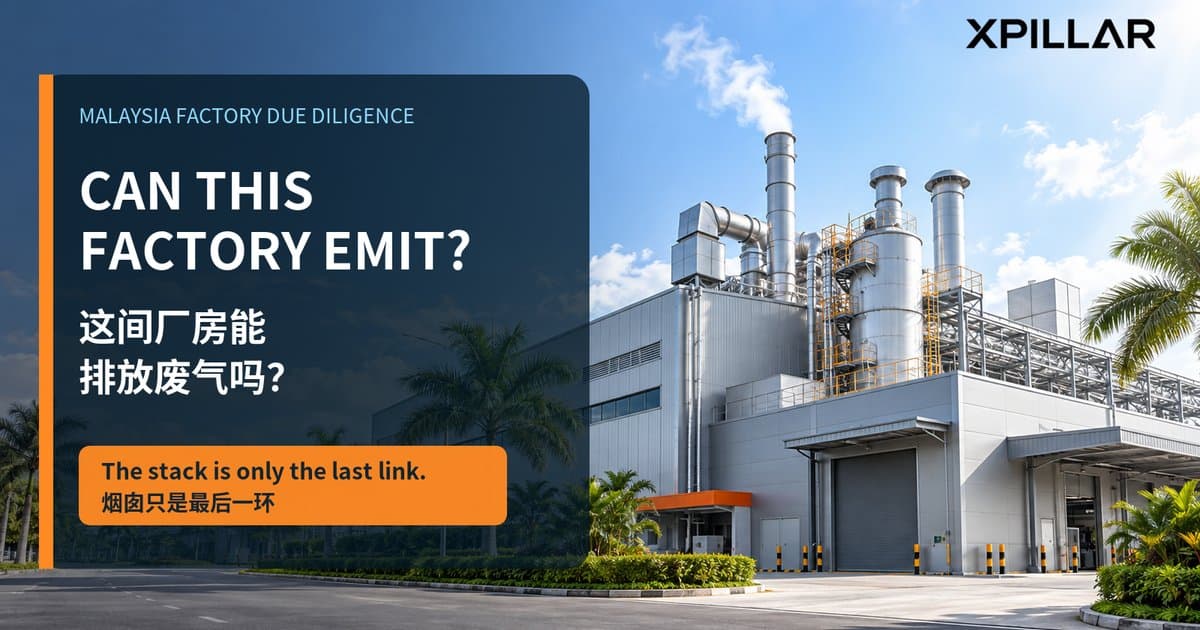
The answer first / 先说结论
A Malaysian factory is not ready for air-emitting operations merely because it is industrial, has a chimney, contains an old scrubber or was previously occupied by a manufacturer.
马来西亚厂房不会因为属于工业用途、设有烟囱、留有旧洗涤塔,或前租户曾从事制造业,就自动适合进行会产生废气的营运。
The incoming operator must prove that its actual process, fuel, raw materials, production capacity, operating hours and pollutants fit the approved and technically workable air-emission system.
新营运者必须证明,其实际生产工艺、燃料、原料、产能、营运时间及污染物,与获批且技术上可行的废气排放系统相匹配。
The correct chain is: process and fuel → emission-source inventory → hood or enclosure → ductwork → air-pollution-control system (APCS) → fan, utilities and residues → stack → sampling or continuous monitoring → alarm, failure response and shutdown.
正确的审核链条是:工艺与燃料 → 排放源清单 → 集气罩或密闭收集 → 风管 → 空气污染控制系统(APCS)→ 风机、公用设施及残留物 → 烟囱 → 定期采样或连续监测 → 警报、故障应对及停机。
A weakness at any link can delay commissioning, require major retrofit or make the site unsuitable.
任何一环不足,都可能拖延投产、产生重大改造费用,甚至令场地不适用。
Malaysia’s Environmental Quality (Clean Air) Regulations 2014 require written notification to the Department of Environment (DOE) at least 30 days before specified works such as constructing a new premises or source, making a material change in emissions or modifying an APCS.
马来西亚《2014年环境质量(清洁空气)条例》规定,在进行指定工程前,例如建设新场所或新排放源、对排放作重大改变,或修改空气污染控制系统,须至少提前30天书面通知环境局(DOE)。
The Regulations also address best available techniques, APCS design and operation, monitoring and response to control-system failure.
条例也涵盖最佳可行技术、控制系统的设计与营运、监测及控制系统故障应对。
The exact obligations depend on the facility and activity; they cannot be inferred from a property advertisement.
具体责任取决于设施与活动,不能从房源广告推断。
Build an emission-source register before viewing factories看厂前先建立排放源登记表
Do not begin with the number of chimneys.
不要从烟囱数量开始。
Begin with every activity that can release dust, smoke, fumes, mist, vapour, odour or combustion gas—including releases that escape into the workroom or through doors and roof vents instead of a stack.
而要从每一项可能产生粉尘、烟气、熏烟、雾滴、蒸气、异味或燃烧废气的活动开始,包括没有经烟囱、而是逸散到工作区、门口或屋顶通风口的排放。
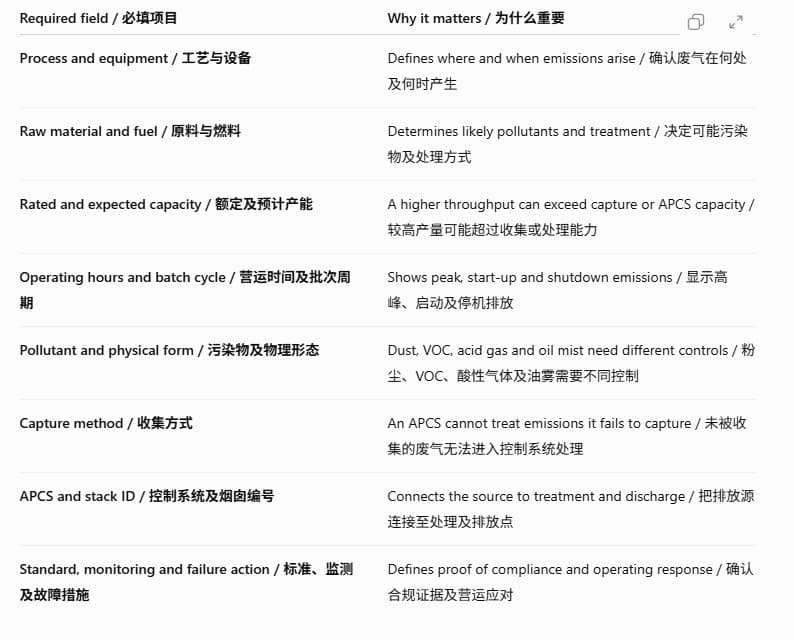
Visible smoke is not the compliance test肉眼看不到烟,并不等于合规
No visible plume does not prove that dust, volatile organic compounds, acid gases or other pollutants are within applicable limits.
肉眼看不到烟,并不能证明粉尘、挥发性有机物、酸性气体或其他污染物符合适用限值。
Conversely, a white plume may partly be condensed water vapour rather than smoke.
反过来,白色烟羽也可能部分属于冷凝水蒸气,而非烟尘。
Compliance must be established through the applicable legal requirements, approved conditions, equipment performance and reliable monitoring—not a brief visual inspection.
合规必须依据适用法规、核准条件、设备性能及可靠监测来证明,而不是靠短暂目测。
1. Define the exact process, fuel and production envelope明确工艺、燃料及生产范围
List every boiler, furnace, oven, dryer, generator, spray booth, coating line, welding station, grinder, mixer, transfer point and thermal process.
列出每台锅炉、熔炉、烘箱、干燥机、发电机、喷漆房、涂装线、焊接工位、研磨机、混合机、转运点及热处理工艺。
Record normal and maximum throughput, fuels, solvents, powders, temperatures, recipes and operating hours.
并记录正常及最高产量、燃料、溶剂、粉料、温度、配方及营运时间。
The same building may be suitable for assembly but unsuitable for coating, heat treatment, food frying or metal melting.
同一栋建筑可能适合装配,却不适合涂装、热处理、食品油炸或金属熔炼。
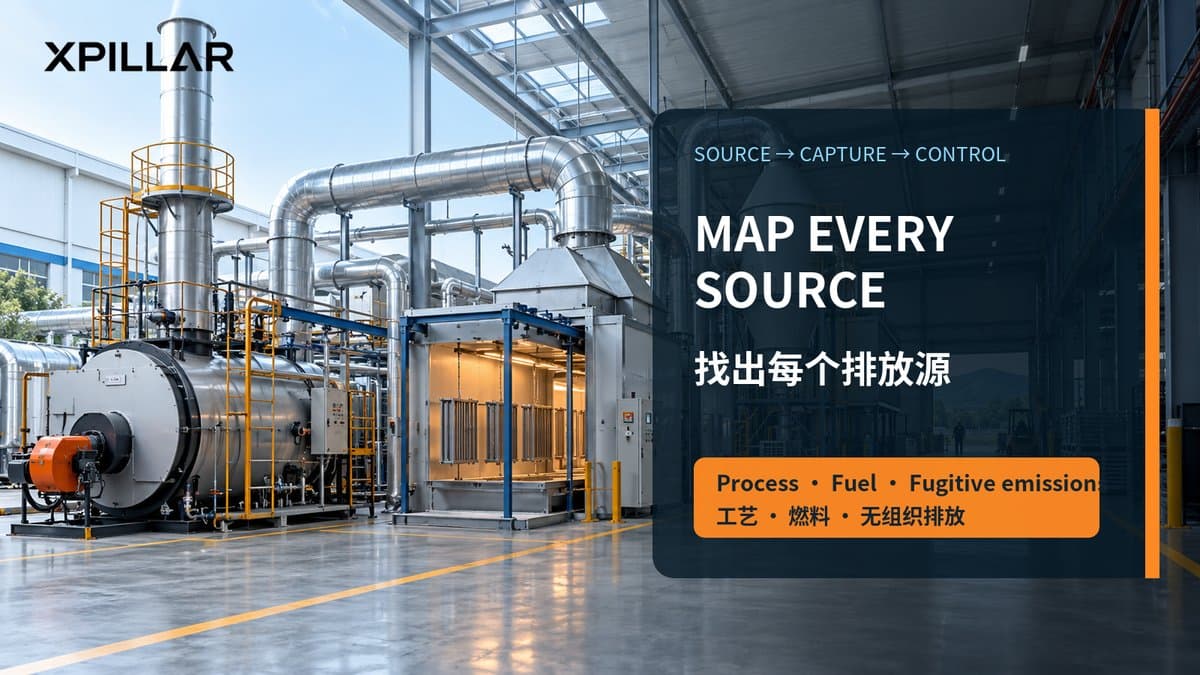
2. Map point sources and fugitive emissions标示有组织及无组织排放源
Trace pollutants from the point of generation.
从污染物产生点开始追踪。
Check whether transfer points, tank vents, material charging, cleaning, maintenance and door opening create fugitive emissions.
检查物料转运、储罐呼吸口、投料、清洗、维修及开门过程是否产生无组织排放。
A tall stack does not solve an uncontrolled release at the machine or warehouse floor.
高烟囱不能解决机器旁或仓库地面的失控逸散。
3. Verify the approved property and DOE pathway核实物业批准及DOE路径
Compare title conditions, zoning, planning permission, approved building plans, Certificate of Completion and Compliance, local-authority licence and environmental approvals with the intended process.
把地契条件、规划分区、规划许可、核准建筑图、竣工及合规证书、地方政府执照及环境批准,与拟进行的工艺逐项比对。
Then identify whether the new source, change in fuel, increase in capacity, revised pollutant or APCS modification triggers the written-notification and approval pathway.
随后确认新增排放源、更换燃料、提高产能、改变污染物或修改控制系统,是否触发书面通知及批准程序。
The 30-day notification period is not a promise that approval, design, construction, testing and commissioning can all be completed within 30 days.
提前30天通知并不代表批准、设计、施工、测试及投产都能在30天内完成。
Build a realistic programme around the actual submissions and technical works.
项目时间表必须根据实际呈交及技术工程来制定。
4. Do not treat the former operator’s file as transferable permission不要把前营运者的文件当作可直接转移的许可
Obtain previous notifications, approvals, EIA conditions where applicable, APCS declarations, as-built drawings, stack-test reports, CEMS records, maintenance logs, complaints, notices and incident records.
应取得过去的通知、批准、适用时的环评条件、控制系统声明、竣工图、烟囱测试报告、连续排放监测记录、维修记录、投诉、通知及事故记录。
They are useful evidence of site history, but the incoming operator must still test them against its own company, process, capacity, fuel, materials and operating profile.
这些资料有助于了解场地历史,但新营运者仍须按自己的公司、工艺、产能、燃料、原料及营运模式重新审核。
5. Test capture at the source检查源头收集效果
Review hood position, enclosure, face velocity, cross-drafts, operator access, make-up air and whether doors or forklifts disturb capture.
检查集气罩位置、密闭程度、捕集风速、横向气流、操作空间、补风,以及开门或叉车运行是否干扰收集。
A well-sized scrubber cannot compensate for a hood that allows most fumes to escape into the building.
即使洗涤塔容量充足,也无法弥补大部分烟气在进入系统前已经逸散的问题。
6. Verify duct routing, structure, corrosion and fire risk核实风管路线、结构、腐蚀及火灾风险
Walk the full duct route.
逐段检查完整风管路线。
Confirm space above machines, roof penetrations, structural supports, inspection doors, clean-out points, condensate drainage, corrosion-resistant materials and safe maintenance access.
确认机器上方空间、屋面穿孔、结构支撑、检查门、清理点、冷凝液排放、耐腐蚀材料及安全维修通道。
Also assess combustible deposits, sparks, hot surfaces and incompatible streams before combining ducts.
在合并风管前,还须评估可燃积尘、火花、高温表面及不相容气流。
7. Match the APCS to the pollutant and duty按污染物及工况匹配控制系统
A bag filter, cartridge collector, cyclone, wet scrubber, activated-carbon system or thermal treatment unit is not interchangeable with another.
布袋除尘器、滤筒、旋风分离器、湿式洗涤塔、活性炭系统或热处理设备不能互相随意替代。
Confirm pollutant chemistry, particle size, temperature, moisture, concentration, airflow, peak load, removal efficiency and disposal route.
应确认污染物化学性质、粒径、温度、湿度、浓度、风量、高峰负荷、去除效率及处置路线。
Under the Clean Air Regulations, APCS design and construction are tied to professional engineering, proper operation and maintenance, and competent-person duties.
根据清洁空气条例,控制系统的设计及建造涉及专业工程要求,并须妥善营运、维护及安排合格人员值守。
For activities in the First Schedule, the Regulations require best available techniques that are economically achievable.
对于第一附表所列活动,条例要求采用经济上可实现的最佳可行技术。
The assessment is activity-specific; a landlord’s claim that an old scrubber is “DOE standard” is not a technical conclusion.
评估必须针对具体活动;业主声称旧洗涤塔“符合DOE标准”,并不能代替技术结论。
8. Account for utilities and secondary waste计算公用设施及二次废物
The APCS may require substantial electrical capacity, process water, compressed air, treatment chemicals, standby parts and safe access.
控制系统可能需要大量电力、工艺水、压缩空气、处理药剂、备用零件及安全通道。
It may also create scrubber blowdown, spent carbon, filter cake, dust, contaminated filters or sludge.
也可能产生洗涤废水、废活性炭、滤饼、粉尘、受污染滤材或污泥。
Verify whether each output is wastewater, scheduled waste or another controlled stream and whether the property can lawfully manage it.
应确认每一种产物属于废水、受管制废料或其他受控物流,并核实物业能否依法处理。
9. Check stack location, height and surrounding receptors检查烟囱位置、高度及周边敏感点
Stack design is site- and process-specific.
烟囱设计必须针对具体场地及工艺。
Consider building downwash, nearby roofs, air intakes, offices, worker accommodation, neighbouring factories, homes, schools, terrain and future development.
应考虑建筑下洗、邻近屋顶、进风口、办公室、员工住宿、相邻工厂、住宅、学校、地形及未来发展。
DOE’s 2026 notice adopted the Guidelines on Pollution Prevention in Industrial Siting 2025, replacing the earlier 2017 siting guidance.
DOE于2026年发出通知,采用《2025年工业选址污染防治指南》,并取代2017年的旧选址指南。
Location screening should therefore use the current framework and project-specific authority or dispersion advice where required.
因此,区位筛查应使用现行框架,并在需要时取得针对项目的主管机关或扩散评估意见。
Do not assume that extending a stack later is simple.
不要假设日后加高烟囱很简单。
It can affect structure, lightning protection, access, neighbourhood impact, dispersion performance and approvals.
因为这可能影响结构、防雷、通道、邻里影响、扩散表现及批准。
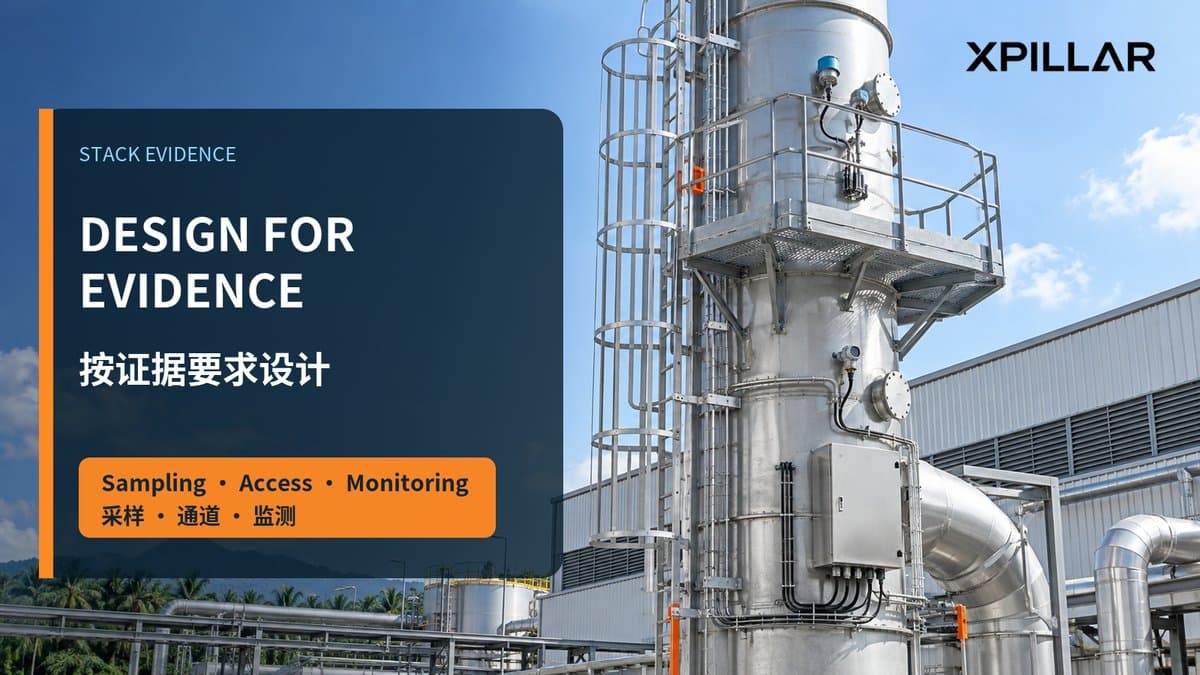
10. Design safe sampling points and periodic monitoring设计安全采样点及定期监测
Confirm sampling ports, straight duct sections, platform size, guardrails, ladder or stair access, lifting of instruments, power, lighting and weather protection before signing.
签约前应确认采样孔、足够的直管段、平台尺寸、护栏、梯子或楼梯通道、仪器吊运、电源、照明及防雨设施。
An inaccessible or badly located sampling point can make a technically capable system difficult to verify.
即使处理系统技术上有能力,采样点若无法安全到达或位置不正确,也会令合规验证困难。
11. Confirm whether CEMS applies—and whether the data can be trusted确认是否需要CEMS,并核实数据可靠性
Continuous Emission Monitoring Systems (CEMS) are not automatically required for every factory or every stack.
连续排放监测系统(CEMS)并非自动适用于每一家工厂或每一根烟囱。
Applicability depends on the activity, relevant schedules, approval conditions and DOE directions.
是否适用取决于活动、相关附表、批准条件及DOE指示。
Where CEMS applies, check analyser suitability, sample conditioning, calibration, data acquisition, availability, maintenance, reporting and connectivity requirements using DOE’s 2025 Series of CEMS Guidelines and project-specific confirmation.
若需要CEMS,应根据DOE的《2025年CEMS系列指南》及项目确认,检查分析仪适用性、样气处理、校准、数据采集、有效运行时间、维护、报告及连接要求。
Historical data should be checked for gaps, repeated flat values, frequent calibration failure, unexplained downtime and whether the production rate during testing reflects the proposed operating duty.
历史数据应检查是否有缺口、长期不变的重复数值、频繁校准失败、不明停机,以及测试时的生产负荷是否代表拟定营运工况。
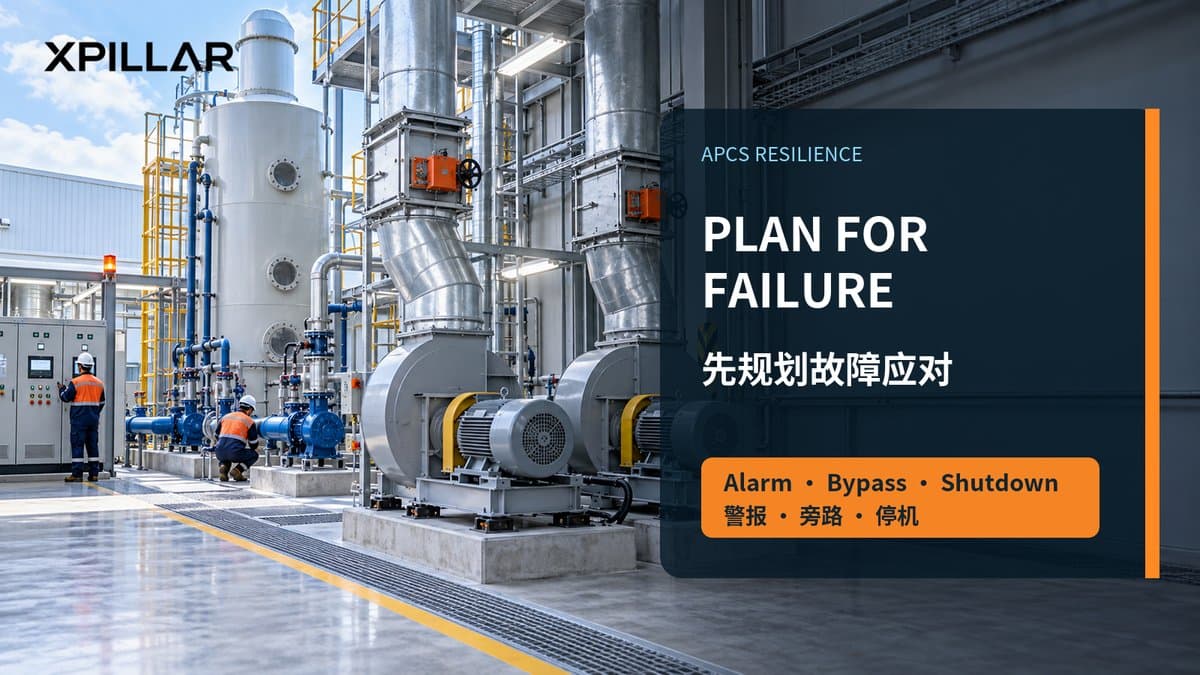
12. Plan for APCS failure, alarm, bypass and shutdown 预先规划控制系统故障、警报、旁路及停机
Map what happens when a fan, pump, chemical dosing unit, filter, sensor, power supply or communication link fails.
应说明风机、泵、加药设备、过滤器、传感器、电源或通讯发生故障时会发生什么。
Identify alarms, standby capacity, interlocks, safe production reduction, shutdown authority, repair access, spare parts and restart criteria.
并确认警报、备用能力、联锁、安全减产、停机权限、维修通道、备件及重启标准。
Any bypass route must be identified and controlled—not discovered during an incident.
任何旁路路线都必须预先识别并受控,而不是事故发生后才被发现。
Where Regulation 8 applies, failure of an APCS must be notified to the Director General no later than one hour after the failure occurs.
在条例第8条适用时,空气污染控制系统发生故障后,必须最迟在一小时内通知环境局总监。
The property, process and operating plan must therefore make a controlled response practically possible.
因此,物业、工艺及营运计划必须让受控应对在实际操作上可行。
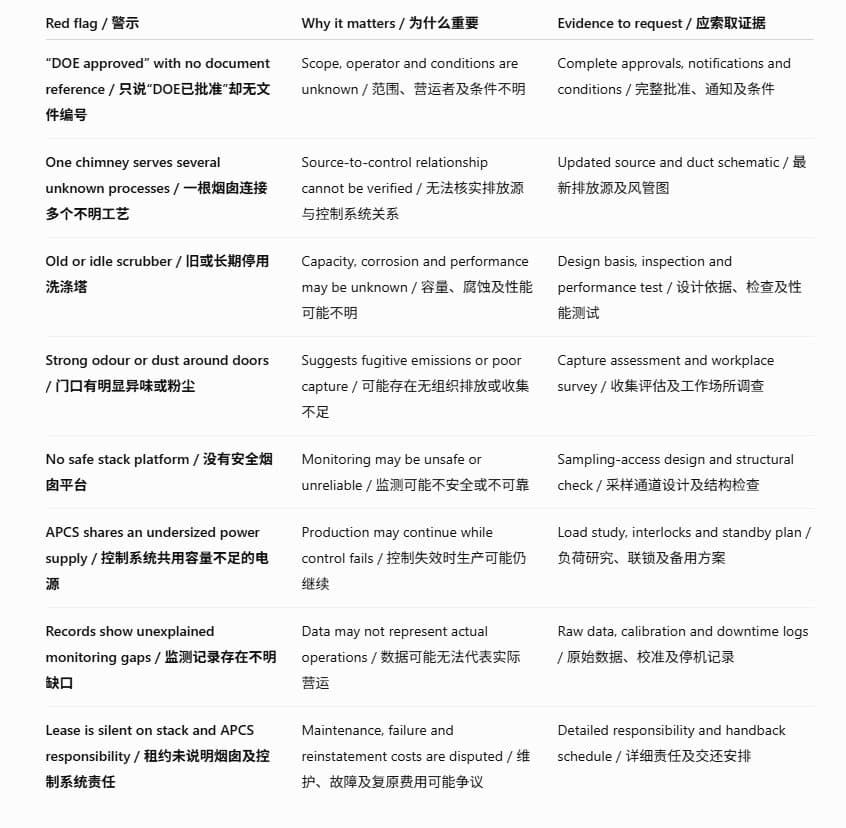
Property red flags that require resolution必须解决的物业警示
Documents to request before signing签约前应索取的文件
Process flow diagram, equipment list, capacity, fuel and material schedule.
生产流程图、设备清单、产能、燃料及原料表。
Emission-source register and source-to-APCS-to-stack schematic.
排放源登记表及“排放源—控制系统—烟囱”示意图。
DOE notifications, approvals, licence or EIA conditions where applicable.
适用的DOE通知、批准、执照或环评条件。
APCS design basis, professional engineer’s documents, declaration and as-built drawings.
控制系统设计依据、专业工程师文件、声明及竣工图。
Stack and duct structural drawings, roof-penetration and corrosion records.
烟囱及风管结构图、屋面穿孔及腐蚀记录。
Stack-test reports, CEMS raw data where applicable and calibration records.
烟囱测试报告、适用时的CEMS原始数据及校准记录。
APCS inspection, maintenance, breakdown, alarm and spare-parts history.
控制系统检查、维护、故障、警报及备件记录。
Complaints, enforcement notices, incidents and corrective-action records.
投诉、执法通知、事故及纠正措施记录。
Wastewater, sludge, spent-filter, dust and scheduled-waste routes.
废水、污泥、废滤材、粉尘及受管制废料去向。
Proposed retrofit design, authority pathway, budget and commissioning programme.
拟改造设计、主管机关路径、预算及投产时间表。
Contract protection for buyers and tenants买家与租户的合同保护
Make the transaction conditional on satisfactory technical and regulatory due diligence where appropriate.
在适用情况下,应把令人满意的技术及监管尽调列为交易先决条件。
Define who must obtain approvals, provide landlord consent, open roofs and walls, upgrade power or water, repair legacy systems, conduct performance testing and pay if the intended process cannot be approved.
合同须说明由谁取得批准、提供业主同意、进行屋顶或墙体工程、升级电力或供水、维修旧系统、执行性能测试,以及若拟定工艺无法获批,费用由谁承担。
For a lease, allocate ownership and maintenance of hoods, ducts, APCS, stack, CEMS, platforms and structural supports.
对于租赁,应明确集气罩、风管、控制系统、烟囱、CEMS、平台及结构支撑的所有权与维护责任。
Also define access, downtime, utility cost, reporting, pollution liability, removal, decontamination and reinstatement at expiry.
并说明通道、停机、公用费用、报告、污染责任、拆除、去污及租期届满时的复原要求。
A practical test for China-based manufacturers中国制造企业的实用审核方法
Do not send a Chinese factory design to a Malaysian property team as equipment dimensions alone.
不要只把中国工厂的设备尺寸交给马来西亚物业团队。
Provide a bilingual process-and-emissions brief showing production capacity, fuel, raw materials, source temperature, pollutants, airflow, control technology, operating hours, monitoring and waste streams.
应准备双语“工艺与排放需求书”,列明产能、燃料、原料、源头温度、污染物、风量、处理技术、营运时间、监测及废物流。
Ask the Malaysian engineer and environmental consultant to identify local gaps before the tenancy or purchase becomes unconditional.
并在租赁或买卖无条件生效前,要求马来西亚工程师及环境顾问确认本地差距。
This turns “Can the machine fit?” into the correct decision:
这样才能把“机器放得下吗?”转化为正确问题:
“Can the entire process operate lawfully, reliably and at the planned production rate on this site?”
“整套工艺能否在这个场地依法、可靠,并按计划产能运行?”
Frequently Asked Questions常见问题
1. Does every factory with a chimney have DOE approval? 每间有烟囱的厂房都获得DOE批准吗?
No. 不是。
A chimney only shows a physical discharge route.
烟囱只显示物理排放路线。
Verify the source, operator, approved activity, APCS, conditions, monitoring and current records.
仍须核实排放源、营运者、核准活动、控制系统、条件、监测及现行记录。
2. Can a new tenant rely on the former tenant’s DOE records? 新租户可以直接依赖前租户的DOE记录吗?
No. 不可以直接依赖。
Historical records are valuable due-diligence evidence, but the new operator must confirm the pathway for its own company, process, capacity, materials, fuel and modifications.
历史记录是重要尽调证据,但新营运者必须按自己的公司、工艺、产能、原料、燃料及改造确认适用路径。
3. Is CEMS mandatory for every stack? 每根烟囱都必须安装CEMS吗?
No. 不是。
Applicability depends on the activity, schedules, approval conditions and DOE direction.
是否适用取决于活动、附表、批准条件及DOE指示。
Obtain project-specific confirmation.
应取得针对项目的确认。
4. Does no visible smoke mean the emissions comply? 看不到烟是否代表排放合规?
No.不是。
Many pollutants are not reliably judged by sight.
许多污染物无法通过肉眼可靠判断。
Use the applicable standards, approved conditions and valid monitoring data.
必须依据适用标准、批准条件及有效监测数据。
5. Can we simply make the stack taller after moving in? 入驻后可以直接把烟囱加高吗?
Do not assume so. 不要这样假设。
Structural design, lightning protection, access, dispersion, neighbouring receptors, notification and approvals may all be affected.
结构、防雷、通道、扩散、周边敏感点、通知及批准都可能受影响。
6. Who should maintain the APCS in a leased factory? 租赁厂房的控制系统应由谁维护?
The lease must state it clearly. 租约必须明确说明。
Regulatory operating duties remain with the relevant operator, while ownership, access, capital replacement and reinstatement should be contractually allocated.
相关营运者仍须承担监管营运责任,而所有权、通道、资本性更换及复原责任则应在合同中分配。
7. Can air-pollution control create another environmental problem? 废气处理会产生另一种环境问题吗?
Yes. 会。
Scrubbers, filters and carbon systems can create wastewater, sludge, dust, spent media or scheduled waste.
洗涤塔、过滤器及活性炭系统可能产生废水、污泥、粉尘、废介质或受管制废料。
Every secondary stream needs a lawful route.
每一种二次废物流都必须有合法去向.
8. Who should inspect the property? 应由哪些专业人士检查物业?
Typically, an environmental consultant and professional engineer work with the process, EHS, structural, fire, mechanical and legal teams.
通常应由环境顾问及专业工程师,与工艺、EHS、结构、消防、机械及法律团队共同审核。
DOE and other authorities determine regulatory acceptance; a property agent does not replace those professionals.
监管接受由DOE及其他主管机关决定,地产代理不能取代这些专业人士。
Final decision rule 最终决策原则
Do not approve a factory because it “already has a chimney”.
不要因为厂房“已经有烟囱”就批准选址。
Approve it only when each proposed emission source has a verified capture, treatment, discharge, monitoring and failure-response path—and when the legal, technical, financial and contractual evidence agrees.
只有当每一个拟定排放源都具备经核实的收集、处理、排放、监测及故障应对路径,而且法律、技术、财务及合同证据相互一致时,才应作出承诺。
This article provides general property due-diligence information, not legal, engineering or regulatory advice.
本文仅提供一般物业尽调资料,不构成法律、工程或监管意见。
Requirements vary by process and site.
具体要求会因工艺及场地而异。
Obtain project-specific advice and written confirmation from qualified professionals and the relevant authorities before committing.
承诺交易前,应取得合格专业人士及相关主管机关针对项目的意见与书面确认。