
Can This Factory Support a Cleanroom in Malaysia? 12 Checks Before Buying or Leasing马来西亚厂房能否建设洁净室?买家和租户签约前必须核实的12项条件
A practical guide to cleanroom classification, layout, HVAC, power, utilities, validation, fire safety and conversion cost for advanced manufacturing facilities.
一份面向先进制造企业的实用指南,涵盖洁净等级、布局、空调、电力、工艺公用设施、验证、消防及改造成本。
Answer first: how do you know whether a factory can support a cleanroom?先说结论:怎样判断一座厂房能否支持洁净室?
A Malaysian factory can support a cleanroom only when its building, structure, electrical supply, cooling system, air-handling space, process utilities, exhaust routes, fire strategy and approval pathway can be engineered around the incoming production process. An existing white room, HEPA filters or a previous ISO classification report is not enough.
马来西亚厂房只有在建筑、结构、供电、制冷、空调设备空间、工艺公用设施、排风路线、消防方案及审批路径都能配合新生产工艺时,才真正适合建设洁净室。现场有白色房间、HEPA过滤器或旧的ISO检测报告,并不足以证明厂房可直接投入使用。
Before buying or leasing, the occupier should issue a written User Requirement Specification (URS) covering the product, process, target cleanliness class, room state, temperature, humidity, pressure cascade, occupancy, equipment heat load, material and personnel flow, process gases, water, exhaust, monitoring, validation and expansion. Qualified Malaysian professionals should then compare that requirement with the property and price the gaps.
买厂或租厂前,企业应先准备一份书面的用户需求说明(URS),明确产品、工艺、目标洁净等级、测试状态、温度、湿度、压差、人数、设备发热量、人员及物料流线、工艺气体、用水、排风、监控、验证及扩产要求。之后,再由马来西亚合资格专业人士将这些要求与物业现状比较,并计算差距及改造成本。
The practical question is not:
真正需要问的不是:
“Does this factory already have a cleanroom?”
“这座厂房现在有没有洁净室?”
It is:
而是:
“Can this building repeatedly achieve the required production environment—in operation, with people and machines running—and can that performance be documented, maintained and approved?”
“人员和设备正式运转后,这座建筑能否持续达到生产环境要求,并且能够记录、维护、验证及取得相关批准?”
If the answer is not supported by drawings, calculations, utility data, commissioning records and a conversion budget, the cleanroom should be treated as an unverified fit-out rather than a proven property advantage.
如果没有图纸、计算书、公用设施数据、调试记录及改造预算支持,就应把现有洁净室视为尚未核实的装修,而不是已经证明的物业优势。
Important: This article provides general property information, not cleanroom design, engineering, GMP, medical-device, occupational-safety, environmental, fire, legal or investment advice. Requirements depend on the product, process, location and authority. Obtain written advice from the relevant regulators and qualified Malaysian professionals before committing.
重要说明: 本文只提供一般工业地产信息,不构成洁净室设计、工程、GMP、医疗器械、职业安全、环境、消防、法律或投资意见。具体要求取决于产品、工艺、地点及主管机构。签约前应取得相关监管机构及马来西亚合资格专业人士的书面意见。
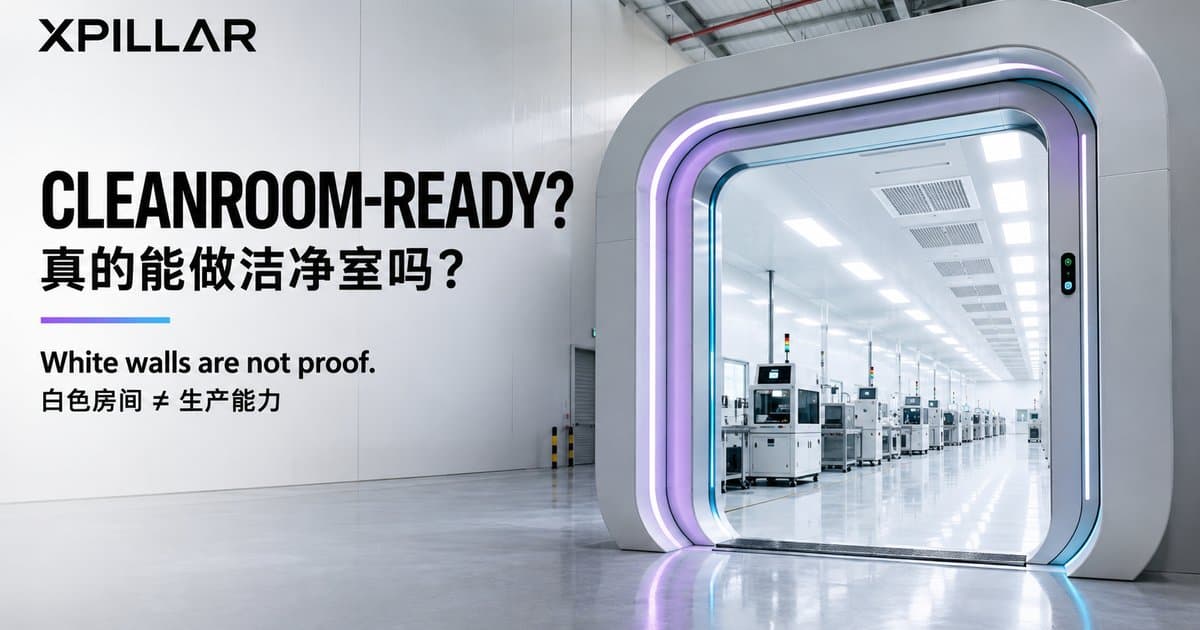
“Cleanroom-ready” is not a universal property specification“Cleanroom-ready”不是统一的物业规格
ISO 14644-1 classifies air cleanliness by airborne particle concentration. ISO 14644-2 addresses monitoring used to provide evidence of continued performance, while ISO 14644-4 covers cleanroom design, construction and start-up. These standards show why a cleanliness-class label alone cannot describe the whole facility. (ISO 14644 cleanroom standards)
ISO 14644-1按照空气悬浮粒子浓度划分空气洁净度;ISO 14644-2处理证明洁净室持续表现的监控;ISO 14644-4则涵盖设计、建造及启动。这些标准也说明,单凭一个洁净等级无法完整描述整座设施。(ISO 14644洁净室标准)
A property advertisement may use “cleanroom-ready” to mean any of the following:
物业广告中的“cleanroom-ready”可能只是指:
- an empty shell with enough ceiling height for services;空壳厂房拥有足够安装机电设施的高度;- an existing cleanroom left by a former tenant;前租户留下一个现成洁净室;
- a production floor with epoxy finishes and air-conditioning;生产区铺设环氧地面并安装空调;
- a building with spare electrical or chilled-water capacity; or 物业可能还有部分电力或冷冻水余量;或
- a facility previously used for electronics or medical products.厂房过去曾用于电子或医疗产品生产。
Those conditions are not equivalent. There is no single property-level “cleanroom-ready” certificate that proves suitability for every semiconductor, electronics, medical-device, pharmaceutical, aerospace or precision-engineering process.
这些情况并不相同。市场上没有一种统一的物业级“cleanroom-ready证书”,可以证明同一座厂房适合所有半导体、电子、医疗器械、制药、航空或精密工程生产。
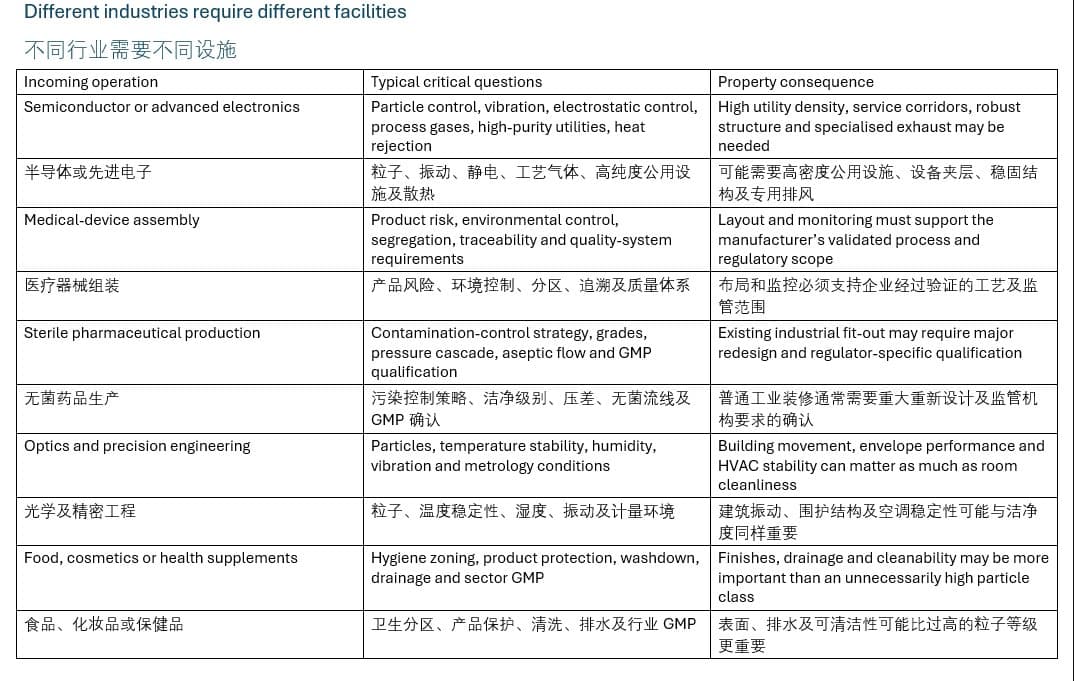
Malaysia’s NPRA has adopted the revised PIC/S Annex 1 for sterile medicinal products and advises manufacturers to assess it together with related GMP chapters and regulatory documents. Medical-device manufacturers should separately determine how Malaysia’s Medical Device Act, establishment licensing and ISO 13485 quality-system obligations apply to their products. (NPRA revised PIC/S Annex 1, Malaysia Medical Device Authority)
马来西亚NPRA已采用修订后的PIC/S Annex 1无菌药品要求,并提醒企业必须结合其他GMP章节及监管文件进行差距分析。医疗器械制造商则应另外确认《Medical Device Act》、企业执照及ISO 13485质量体系如何适用于其具体产品。(NPRA修订PIC/S Annex 1、马来西亚医疗器械管理局)
The 12 checks before buying or leasing买厂或租厂前必须检查的12项条件
1. Define the process before viewing property | 看厂前先定义生产工艺
Start with a URS, not a property brochure. It should state:
第一步应该是URS,而不是物业宣传册。URS应列明:
- product and process steps;产品与生产步骤;- applicable standard or regulator;适用标准或监管机构;
- target cleanroom class or grade;目标洁净等级;
- classification state: as-built, at-rest or operational;测试状态:竣工、静态或动态;
- temperature and humidity ranges;温度及湿度范围;
- room pressure relationships;房间压差关系;
- operating hours and occupancy;营运时间及人数;
- equipment dimensions, weight and heat output;设备尺寸、重量及发热量;
- chemical, gas, water, vacuum and compressed-air needs;化学品、气体、水、真空及压缩空气需求;
- exhaust and waste streams;排风及废物流;
- gowning, cleaning and material-transfer procedures;更衣、清洁与物料转移程序;
- monitoring, alarm and data-integrity needs; and监控、报警与数据完整性要求;以及
- future capacity.未来产能。
ISO 14644-1 classification is based on airborne particle concentration at designated sampling locations. It does not by itself certify product sterility, microbiological control, temperature, humidity, pressure, chemical contamination or regulatory compliance. (ISO 14644-1:2015)
ISO 14644-1的洁净等级是根据指定采样点的空气悬浮粒子浓度确定。它本身并不证明产品无菌、微生物控制、温湿度、压差、化学污染或监管合规。(ISO 14644-1:2015)
2. Verify title, approved use and conversion approvals | 核实地契、批准用途及改造审批
An industrial title does not prove that every high-technology process is allowed. Compare the incoming operation with:
工业地契不代表所有高科技生产工艺都获准进行。企业必须将计划中的营运与以下资料比较:
- title category, express conditions and restrictions;地契类别、明示条件及利益限制;- local-plan zoning and planning permission;地方规划用途及规划许可;- approved building plans and CCC or earlier CF;核准建筑图和CCC或旧CF;- approved factory, warehouse, laboratory and office areas;核准厂房、仓库、实验室及办公室面积;- unapproved mezzanines, plant platforms or external structures;未经批准的夹层、设备平台或外部建筑;- local-authority premise and business licensing;地方政府场所及营业执照;- manufacturing, product or sector approvals;制造、产品或行业批准;- DOE notification or approval requirements; andDOE通知或批准要求;以及- BOMBA submissions and Fire Certificate position.BOMBA申请和Fire Certificate状况。
Cleanroom conversion can add air-handling units, ceiling grids, service platforms, exhaust stacks, gas stores, chillers, cooling towers, tanks and generators. Determine before signing which works require planning, building, fire, environmental or workplace-safety submissions—and whether the landlord will provide the necessary consent and documents.
洁净室改造可能增加空调机组、天花网格、设备平台、排气管、气体储存间、冷水机、冷却塔、水箱及发电机。签约前应确认哪些工程需要规划、建筑、消防、环境或职业安全申请,以及业主是否愿意提供同意书及原始文件。
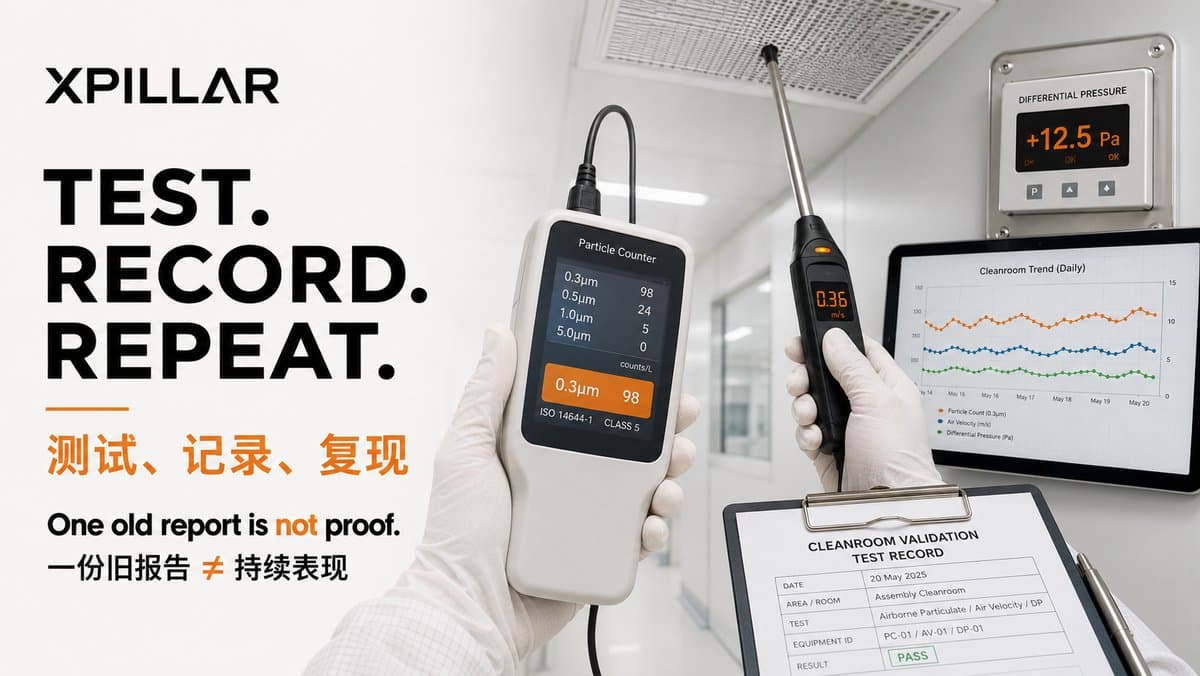
3. Plan people, material, waste and maintenance flow | 规划人员、物料、废物及维修流线A cleanroom is not only a room; it is a controlled operating sequence. Review:
洁净室不仅是一个房间,而是一套受控营运流程。应检查:
- personnel entrance, change rooms and gowning stages;人员入口、更衣室及分级更衣;- raw-material receipt and quarantine;原料收货和隔离区;
- airlocks, pass boxes and transfer routes;气闸、传递窗及物料路线;
- clean and dirty corridors;洁净及非洁净走廊;
- waste and rejected-product removal;废物和不合格品运出路线;
- maintenance access without entering critical space;不进入关键区域也能进行的维修通道;
- segregation between production batches or product families;不同批次或产品之间的分隔;
- emergency escape; and紧急逃生;以及
- future line expansion.未来生产线扩建。
A previous tenant’s layout may conflict with the new process. Reversing a pressure cascade or moving heavy equipment after completion can be much more expensive than redesigning the flow before the lease is signed.
前租户的布局可能与新工艺完全冲突。完工后才改变压差方向或移动重型设备,成本往往远高于签约前重新设计流线。
4. Test the building envelope, structure and geometry | 检查围护结构、承重及建筑空间Record the usable dimensions, not only the gross built-up area:
必须记录真正可使用的尺寸,而不只是建筑面积:
- clear height below beams and services;梁底及机电设施下的净高;
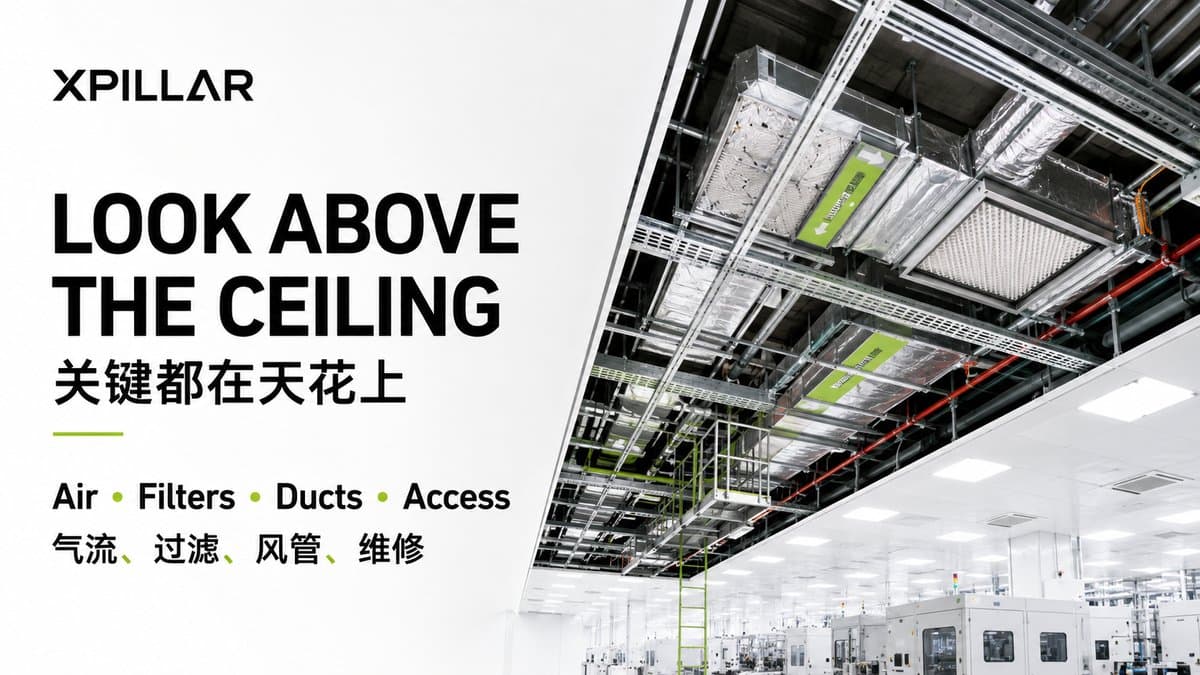
- space above the cleanroom ceiling for ducts, filters, pipework and access;洁净室天花以上安装风管、过滤器、管道及维修通道的空间;
- column grid and wall positions;柱距和墙体位置;
- slab loading, point loads and vibration sensitivity;楼板承重、点荷载及振动敏感度;
- roof loading for air-handling equipment;屋顶安装空调设备的承载能力;
- external plant-yard capacity;室外设备区面积;
- wall and roof water ingress;墙体和屋顶渗水;
- floor flatness and settlement;地面平整度及沉降;
- penetrations and pest-entry points; and穿孔及害虫进入点;以及
- routes for large equipment installation and replacement.大型设备安装和日后更换的运输路线。
The cleanroom ceiling may carry filters, lights and services, but maintenance personnel and equipment should not be assumed to be supported unless the system was designed for that loading. A structural engineer should verify the actual arrangement.
洁净室天花可能承载过滤器、灯具及管线,但除非设计明确允许,否则不能假设它可以承受维修人员或其他设备。实际结构应由结构工程师核实。
5. Establish HVAC, filtration and pressure-cascade requirements | 确定空调、过滤及压差要求
The existing comfort air-conditioning system is rarely proof of cleanroom capability. A qualified designer should calculate:
普通舒适性空调几乎不能证明洁净室能力。合资格设计人员应计算:
- supply and return airflow;送风及回风量;- filtration stages and terminal HEPA or ULPA filters where required;过滤级别,以及适用时的末端HEPA或ULPA过滤器;
- room air-change or airflow strategy;换气或气流组织;
- sensible and latent heat load;显热及潜热负荷;
- outside-air and exhaust balance;新风与排风平衡;
- temperature and humidity control;温湿度控制;
- pressure differential and door interaction;压差和开门时的相互影响;
- recovery after door opening or interruption;开门或系统中断后的恢复时间;
- cooling-coil and dehumidification duty;冷却盘管和除湿能力;
- redundancy and failure mode; and备用能力及故障状态;以及
- access for filter testing and replacement.过滤器测试和更换通道。
ISO 14644-2 focuses on monitoring that provides evidence of cleanroom performance related to airborne particles. A one-time certificate from a previous tenant cannot prove ongoing performance under the incoming occupancy and equipment load. (ISO 14644-2:2015)
ISO 14644-2重点处理通过监控证明洁净室空气粒子表现。前租户留下的一次性证书,无法证明新人员和设备正式运行后的持续表现。(ISO 14644-2:2015)
6. Confirm electricity supply and power quality | 确认供电容量与电能质量
Cleanrooms can be electricity-intensive because air-handling, cooling, exhaust, process tools, compressors, pumps and monitoring may run continuously. Verify:洁净室可能非常耗电,因为空调、制冷、排风、生产设备、压缩机、水泵及监控系统可能需要连续运行。应核实:
- approved and available supply capacity;已批准和实际可用的供电容量;
- transformer and switchboard ratings;变压器及总配电板额定值;
- actual maximum-demand profile;实际最高需量记录;
- harmonic and voltage-quality exposure;谐波及电压质量风险;
- equipment starting current and sequencing;设备启动电流和启动顺序;
- protection, earthing and cable routes;保护、接地及电缆路线;
- essential and non-essential load separation;重要及非重要负载分组;
- generator and UPS scope;发电机和UPS覆盖范围;
- clean shutdown and restart sequence; and安全停机及重新启动程序;以及
- capacity for future lines.未来生产线的电力余量。
TNB’s Electricity Supply Application Handbook sets out current supply-application, connection and metering guidance. Historical bills show previous consumption, not guaranteed spare capacity for the proposed cleanroom. (TNB ESAH)
TNB的Electricity Supply Application Handbook列出现行供电申请、连接及计量指南。旧电费单只能说明过去用电量,不能保证新洁净室所需的备用容量。(TNB ESAH)
7. Verify cooling, heat rejection and water capacity | 核实制冷、散热及供水能力Electrical capacity alone is not enough. The process and HVAC may require chillers, cooling towers, condenser-water pumps, process-cooling water and make-up water.
有足够电力并不代表机电系统已经足够。生产设备及空调可能需要冷水机、冷却塔、冷凝水泵、工艺冷却水及补充水。
Check / 应检查:
- installed and available cooling capacity;已安装和实际可用的制冷量;- chilled-water temperatures and flow;冷冻水温度及流量;
- simultaneous peak loads;所有系统同时运行时的峰值负荷;
- chiller efficiency and remaining life;冷水机效率及剩余寿命;
- redundancy during service or failure;维修或故障期间的备用能力;
- cooling-tower location, condition and treatment;冷却塔位置、状况及水处理;
- condensate, overflow and drainage routes;冷凝水、溢流及排水路线;
- water-supply flow, storage and interruption strategy; and供水流量、储水及中断应对;以及
- landlord or multi-tenant allocation.业主或多租户之间的容量分配。
Ask for design calculations, plant schedules, commissioning data, trend logs and maintenance records. A nameplate total is not the same as dependable capacity after derating, ageing and simultaneous operation.
企业应索取设计计算、设备表、调试数据、趋势记录及保养记录。设备铭牌总容量并不等于在老化、降额和同时运转后仍可靠可用的能力。
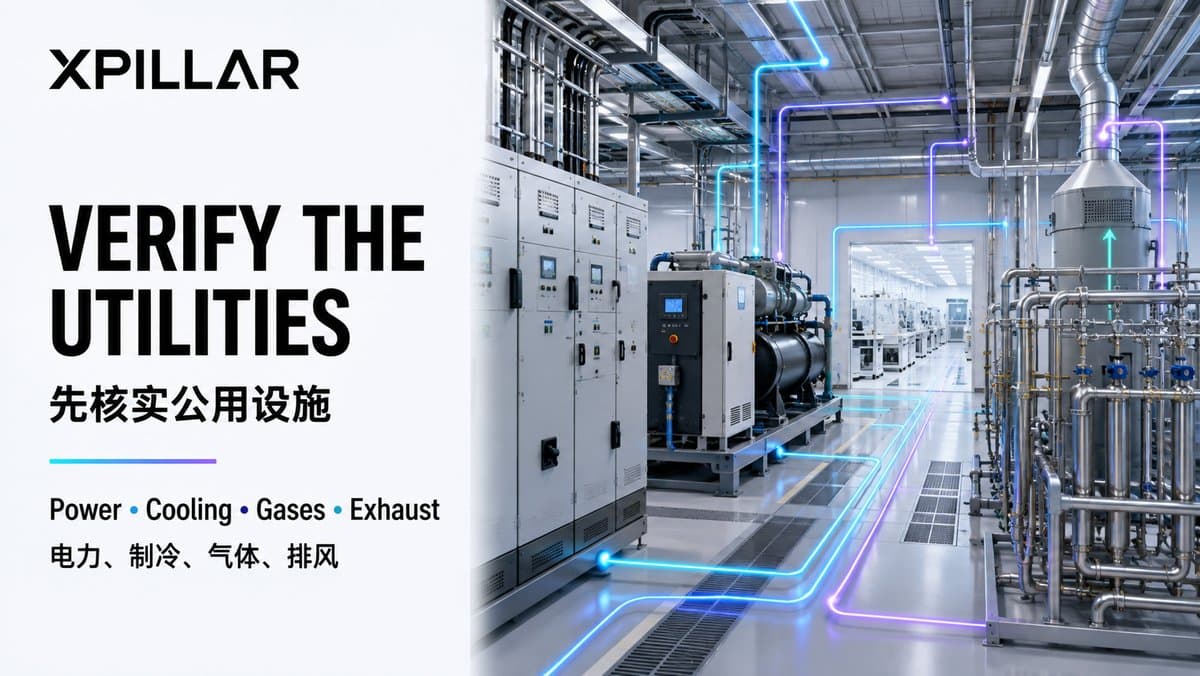
8. Map every process utility and hazardous service | 列出全部工艺公用设施及危险介质Depending on the operation, the factory may need:
不同生产工艺可能需要:
- clean dry compressed air;洁净干燥压缩空气;
- nitrogen, oxygen, argon or specialty gases;氮气、氧气、氩气或特殊气体;
- vacuum;真空;
- purified or deionised water;纯化水或去离子水;
- steam;蒸汽;process cooling water;工艺冷却水;
- chemical delivery and storage;化学品输送及储存;
- scrubbers or abatement systems; and洗涤塔或尾气处理;以及
- dedicated waste collection.专用废物收集。
For each service, verify capacity, pressure, purity, redundancy, routing, detection, isolation, ventilation, storage and emergency response. Confirm whether a gas or chemical room is approved and whether delivery vehicles can reach it without crossing incompatible operational routes.
每一种设施都必须核实容量、压力、纯度、备用能力、管线路线、检测、隔离、通风、储存及紧急应对。还要确认气体或化学品房是否获得批准,以及送货车辆是否能够避免穿过不相容的营运区域。
Do not assume that pipes left by a former occupier are usable. Identify ownership, materials, certification, cleaning status, test records and abandonment risk.
不要假设前租户留下的管道可以直接使用。必须确认所有权、材质、证书、清洁状态、测试记录及废弃管线风险。
9. Assess exhaust, emissions and environmental pathways | 评估排风、排放及环境合规路线
Clean supply air does not remove the need to manage process exhaust. Solvents, acids, dust, fumes, heat and gases may require dedicated extraction and treatment.洁净送风不能取代工艺排风管理。溶剂、酸、粉尘、烟气、热量及气体可能需要独立抽排和处理。
Verify/ 应核实:
- source and composition of each exhaust stream;每条排风的来源及成分;
- capture points and duct materials;捕集位置及风管材质;
- segregation of incompatible streams;不相容排风的分隔;
- fan, scrubber or abatement capacity;风机、洗涤塔或处理设备容量;
- stack position and discharge route;排气筒位置及排放路线;
- make-up air and pressure effect;补风及其对压差的影响;
- monitoring and maintenance access;监测与维修通道;
- scheduled-waste arrangements; and受管制废物安排;以及
- industrial-effluent implications.工业废水影响。
Malaysia’s Environmental Quality (Clean Air) Regulations 2014 include notification, emission-control, air-pollution-control-system and performance-monitoring obligations for applicable premises and activities. The incoming process—not the former tenant’s use—must be assessed. (DOE Clean Air Regulations 2014)
马来西亚《Environmental Quality (Clean Air) Regulations 2014》对适用场所及活动设有通知、减排、污染控制系统及表现监测要求。评估必须依据新企业的实际工艺,而不是前租户的用途。(DOE Clean Air Regulations 2014)
测试依据失效。
10. Reconcile fire safety with cleanroom construction | 协调洁净室结构与消防安全
Cleanroom panels, concealed voids, process chemicals, gas cylinders, cable loading, raised floors and altered escape routes can change the fire strategy.
洁净板材、隐藏空间、工艺化学品、气瓶、电缆负荷、架高地板及改变后的逃生路线,都可能影响消防设计。
Check/ 应检查:
- approved fire-compartment layout;核准防火分区;
- combustibility and approval records for panels and insulation;板材及保温材料的燃烧性能和批准记录;
- sprinkler coverage above and below ceilings where applicable; 适用时天花上方及下方的喷淋覆盖;
- detection, alarm and suppression systems;探测、报警及灭火系统;
- smoke control and shutdown interfaces;排烟与设备停机联动;
- emergency exits and door hardware;紧急出口及门锁五金;
- fire-engine access;消防车通道;
- hazardous-material storage;危险物料储存;
- impairment and maintenance records; and消防系统停用及维修记录;以及
- whether the intended works trigger new submissions.新装修是否触发重新申请。
JBPM states that all legally designated premises require a Fire Certificate. Whether or not a specific property falls within that category, the proposed fit-out and process must still be checked against applicable fire requirements. (JBPM Fire Certificate guidance)
JBPM说明,所有法定“指定场所”都必须取得Fire Certificate。即使某物业不属于该类别,新装修及生产工艺仍须符合适用的消防要求。(JBPM Fire Certificate指南)
11. Demand commissioning, qualification and monitoring evidence | 索取调试、确认及持续监控证据
A previous cleanroom should have an evidence trail. Request, as applicable:
现有洁净室应有完整证据链。按实际情况索取:
- URS and design qualification records;URS及设计确认记录;
- approved as-built drawings;核准竣工图;
- equipment and filter schedules;设备及过滤器表;
- installation and operational qualification;安装及运行确认记录;
- airflow-volume and velocity tests;风量及风速测试;
- HEPA-filter integrity tests;HEPA过滤器完整性测试;
- particle-count and recovery tests;粒子及恢复测试;
- pressure, temperature and humidity mapping;压差、温度及湿度分布测试;
- alarm challenge tests;报警功能测试;
- balancing reports;风系统平衡报告;
- calibration certificates;校准证书;
- cleaning and maintenance records;清洁及保养记录;
- trend data and deviation history; and趋势数据及偏差记录;以及
- requalification reports.再确认报告。
Then determine what can legitimately be reused. A report belongs to a particular room configuration, equipment state, test condition and date. Moving walls, filters, equipment or production loads can invalidate the assumptions behind it.
之后必须判断哪些资料能够合理沿用。每份报告只对应特定房间配置、设备状态、测试条件及日期。移动墙体、过滤器、设备或改变生产负荷,都可能令原有
12. Price conversion, downtime and transaction responsibility | 计算改造、停产及合同责任
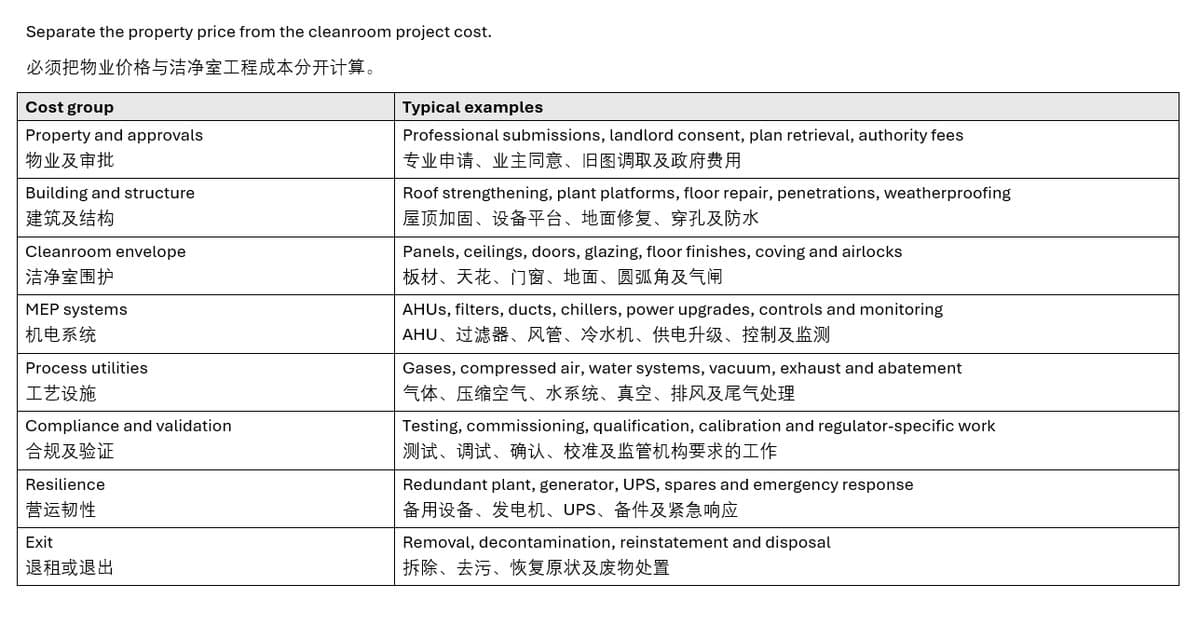
A practical cleanroom-property review sequence实用的洁净室厂房评估顺序
Define the process: Complete the URS and regulatory pathway.
定义生产: 完成URS及监管路线。
Screen locations: Confirm zoning, labour, suppliers, logistics, power and water.
筛选地区: 核实规划、劳工、供应链、物流、电力及供水。
Review documents: Examine approvals, drawings, utilities and existing qualification records.
审查文件: 检查批准、图纸、公用设施及现有确认记录。
Inspect the property: Bring cleanroom, MEP, structural, fire and process specialists as required.
现场检查: 按需要带洁净室、机电、结构、消防及工艺专家看厂。
Model the gaps: Compare the URS with the actual building and systems.
计算差距: 把URS与建筑和系统现状逐项比较。
Test critical systems: Agree representative inspections and performance tests.
测试关键系统: 约定具有代表性的检查及表现测试。
Price and programme: Include approvals, equipment lead times, validation and contingency.
确定成本与时间: 包括审批、设备交期、验证及预备金。
Protect the transaction: Use appropriate conditions precedent, access rights and responsibility clauses.
保护交易: 加入适当的先决条件、进场权及责任条款。
Conclusion 结论
Malaysia’s semiconductor, medical-device and advanced-manufacturing growth is increasing demand for specialised industrial facilities. MIDA’s 2026 announcement for AIXTRON’s Penang project, for example, describes a new integrated facility with multiple cleanrooms and dedicated logistics areas—illustrating that cleanrooms must be planned together with the wider building and operation. (MIDA, AIXTRON Penang facility, 2026)
马来西亚半导体、医疗器械及先进制造业的发展,正在提高市场对专业工业设施的需求。MIDA在2026年公布的AIXTRON槟城项目,就包括多间洁净室和专用物流区,说明洁净室必须与整座建筑及实际营运共同规划。(MIDA:AIXTRON槟城厂房,2026)
For buyers and tenants, the safest principle is simple:
对买家和租户而言,最安全的原则是:
Treat every existing cleanroom as unverified until its design, condition, utilities, approvals and performance have been matched to the incoming process.
在现有洁净室的设计、状况、公用设施、批准及表现全部与新工艺匹配前,都应把它视为尚未核实。
A cheaper factory with an incompatible structure or insufficient utilities can cost more—and take longer—than a higher-priced property with a credible conversion pathway. XPillar can help decision-makers shortlist Malaysian industrial properties by location, building specification, utilities, access and expansion requirements before specialist technical due diligence begins.
一座价格较低但结构不适合或公用设施不足的厂房,最终成本和投产时间可能高于一座价格较高但改造路线清晰的物业。XPillar可以先根据地点、建筑规格、公用设施、车辆通行及扩建需求,协助企业筛选马来西亚工业地产,再进入专业技术尽调。
Frequently Asked Questions常见问题
1. Does an ISO cleanroom certificate prove that the factory suits my process?ISO洁净室证书是否证明厂房适合我的生产?No. It records specified test results for a particular configuration, state and date. The incoming user must still verify product-specific controls, HVAC, utilities, process load, monitoring, approvals and continued performance.
不能。证书只记录特定配置、测试状态及日期下的结果。新企业仍须核实产品控制、空调、公用设施、生产负荷、持续监测、审批及实际营运表现。
2. What does “cleanroom-ready factory” mean in Malaysia?马来西亚“cleanroom-ready厂房”是什么意思?There is no universal property definition. It may describe a shell with service space, an existing room, spare utilities or only a former clean operation. Buyers and tenants should demand measurable specifications and evidence.
它没有统一的物业定义,可能只是有机电空间的空壳、现成房间、部分公用设施余量,或前租户曾从事洁净生产。买家和租户必须要求可量化规格及证据。
3. Can an ordinary warehouse be converted into a cleanroom?普通仓库可以改成洁净室吗?Sometimes, but feasibility depends on approved use, clear height, structure, weather-tightness, electrical and cooling capacity, plant space, process utilities, exhaust, fire design and the cost and timing of approvals.
有可能,但须视批准用途、净高、结构、防水、供电和制冷量、设备空间、工艺设施、排风、消防设计,以及审批成本和时间而定。
4. Is a high air-change rate enough to achieve a cleanroom class?高换气次数是否足以达到洁净等级?No. Performance also depends on filtration, airflow pattern, leakage, pressure, heat load, occupancy, equipment, cleaning and operating discipline. The system must be designed and tested as a whole.
不足够。表现还取决于过滤、气流组织、泄漏、压差、热负荷、人数、设备、清洁和营运纪律。必须把整套系统一起设计及测试。
5. Who should inspect a cleanroom factory before signing?签约前应由谁检查洁净室厂房?The team may include a cleanroom designer, MEP engineer, structural engineer, fire consultant, process or quality specialist, environmental consultant and legal adviser, depending on the operation and transaction.
视生产及交易情况,团队可能包括洁净室设计师、机电工程师、结构工程师、消防顾问、工艺或质量专家、环境顾问及律师。
6. Should the tenancy be conditional on utility and approval confirmation?租约是否应以供电及审批确认为先决条件?Where critical capacity or approvals remain uncertain, the parties should obtain legal advice on suitable conditions precedent, testing access, approval cooperation, commencement, termination and cost allocation before signing.
如果关键容量或审批仍不确定,签约前应取得法律意见,设置适当的先决条件、测试进场权、审批配合、起租、终止及费用分配条款。