
Answer first 先说结论
Yes—two or more industrial lots in Peninsular Malaysia may potentially be amalgamated into one lot under one title, but only when the statutory and state-specific requirements are satisfied.
可以——马来西亚半岛的两个或以上工业地段,有可能合并为一个地段并由一张地契持有,但必须符合国家土地法典及相关州属的具体规定。
Under section 146 of the National Land Code, the lots must be vested in the same proprietor, held under separate Registry or Land Office titles, be contiguous, and be situated in the same mukim, town or village.
《国家土地法典》第146条要求这些地段归属于同一注册地主、分别以登记处地契或土地局地契持有、彼此相邻,并位于同一个mukim、town或village。
For this purpose, each lot must share at least one boundary with another lot in the group.
就这项规定而言,每个地段都必须至少与组内另一个地段共用一段边界。
Approval is still required; physical proximity, one fence or one development concept is not enough.
合并仍须取得批准;位置靠近、使用同一围篱或拥有一份整体发展概念图,都不足以证明地契已经合并。
The commercial mistake is to assume that buying three adjoining titles automatically produces one factory site.
常见的商业误区,是认为购买三张相邻地契,就会自动形成一个厂房场地。
A single building, fire route, internal road, drainage system or production line may need to cross former title boundaries.
单一建筑、消防通道、内部道路、排水系统或生产线,可能需要跨越原有地契边界。
That operating concept must be supported by the eventual title structure, planning and building approvals, registered interests, survey, road and utility arrangements—not merely by a coloured master plan.
该营运概念必须得到最终地契结构、规划与建筑批准、登记权益、测量、道路及公用设施安排的共同支持,而不能只依赖一张彩色总平面图。
Scope note: The National Land Code framework discussed here applies to Peninsular Malaysia. Sabah and Sarawak have separate land laws. State rules, forms, fees, approving authorities and technical requirements vary. This is a due-diligence guide, not legal or planning advice; appoint a Malaysian conveyancing lawyer, licensed land surveyor and the relevant planning and engineering consultants for the actual site.
适用范围说明: 本文所述《国家土地法典》框架适用于马来西亚半岛。沙巴与砂拉越采用各自的土地法律。各州的规则、表格、费用、批准机关及技术要求有所不同。本文属于尽调指南,不构成法律或规划意见;具体地块应由马来西亚房地产律师、持牌土地测量师及相关规划与工程顾问处理。
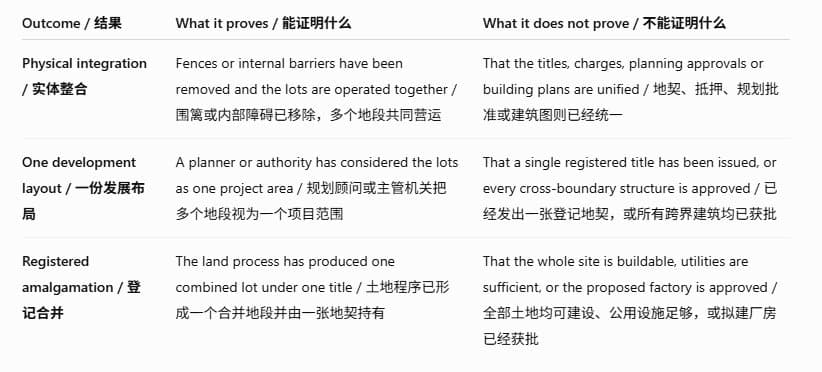
Three different outcomes that buyers must not confuse买家不能混淆的三种结果
The 12 checks12项检查
1. Define why one title is commercially necessary 先说明为何商业上必须合并为一张地契
Start with the operating plan.
应先从营运方案出发。
Does the proposed factory building cross a title boundary?
拟建厂房是否跨越地契边界?
Will one fire appliance route, stormwater system, guardhouse, loading yard, substation or production line serve all lots?
多个地段是否共同使用一条消防车道、雨水系统、保安亭、装卸场、变电站或生产线?
Is one title needed for financing, a long-term lease, a future disposal or a single development approval?
融资、长期租赁、未来出售或整体发展审批是否需要一张地契?
Amalgamation can simplify some matters, but it can also reduce future flexibility because the owner can no longer sell or finance one former lot separately without another land process.
土地合并可以简化部分事项,但也可能降低未来弹性,因为业主日后不能再单独出售或融资其中一个原地段,除非重新进行土地程序。
Record the business reason before incurring survey and application costs.
投入测量及申请费用前,应先记录清楚合并的商业目的。
2. Confirm one registered proprietor across every lot 确认每个地段属于同一注册地主
Section 146 is framed around two or more contiguous lots vested in the same person or body.
第146条的前提,是两个或以上相邻地段归属于同一个人或机构。
Similar company names, common shareholders or companies within one group are not the same as one registered proprietor.
公司名称相似、股东相同或同属一个集团,并不等于同一注册地主。
Obtain fresh official title searches for every lot and compare the exact registered name, registration number and ownership share.
应为每个地段取得最新正式地契查册,并核对准确注册名称、公司号码及持有份额。
If different entities own the lots, the legal and tax advisers must first determine whether an ownership transfer or another structure is required.
如果地段由不同实体持有,法律及税务顾问必须先判断是否需要转让业权或采用其他结构。
Do not price that restructuring as a clerical step.
不要把这项重组当作简单行政手续来估价。
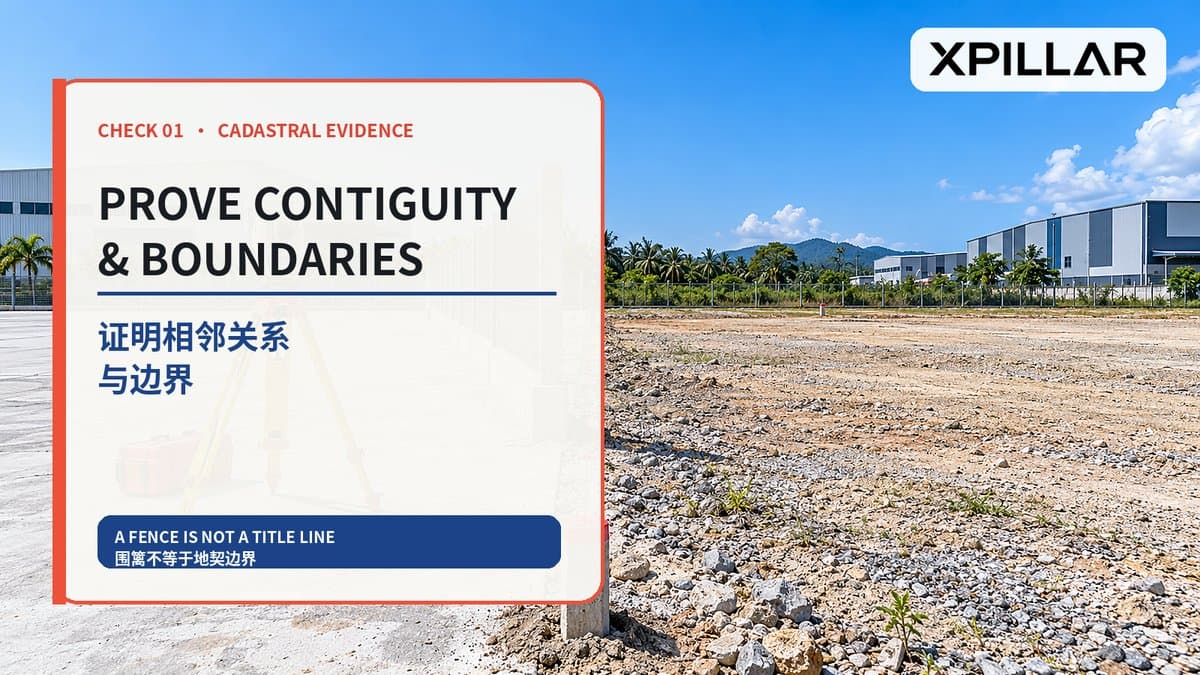
3. Prove statutory contiguity and the same locality 证明符合法定相邻关系及同一地区要求
For amalgamation, each lot must share at least one boundary with another lot in the proposed group.
进行土地合并时,每个地段必须至少与拟合并组内另一个地段共用一段边界。
Lots separated by a public road, drainage reserve, river, railway corridor, utility reserve or intervening state land may look like one cluster but may not satisfy the statutory boundary test.
被公共道路、排水保留地、河流、铁路走廊、公用设施保留地或中间政府土地分隔的地段,虽然看起来属于同一范围,却可能不符合法定共用边界测试。
The lots must also be within the same mukim, town or village.
所有地段还必须位于同一个mukim、town或village。
Use certified cadastral information and a licensed land surveyor’s advice.
应采用经认证的地籍资料,并取得持牌土地测量师意见。
A sales brochure, satellite image or on-site fence cannot establish the registered boundary.
销售宣传图、卫星图或现场围篱都不能确定登记边界。
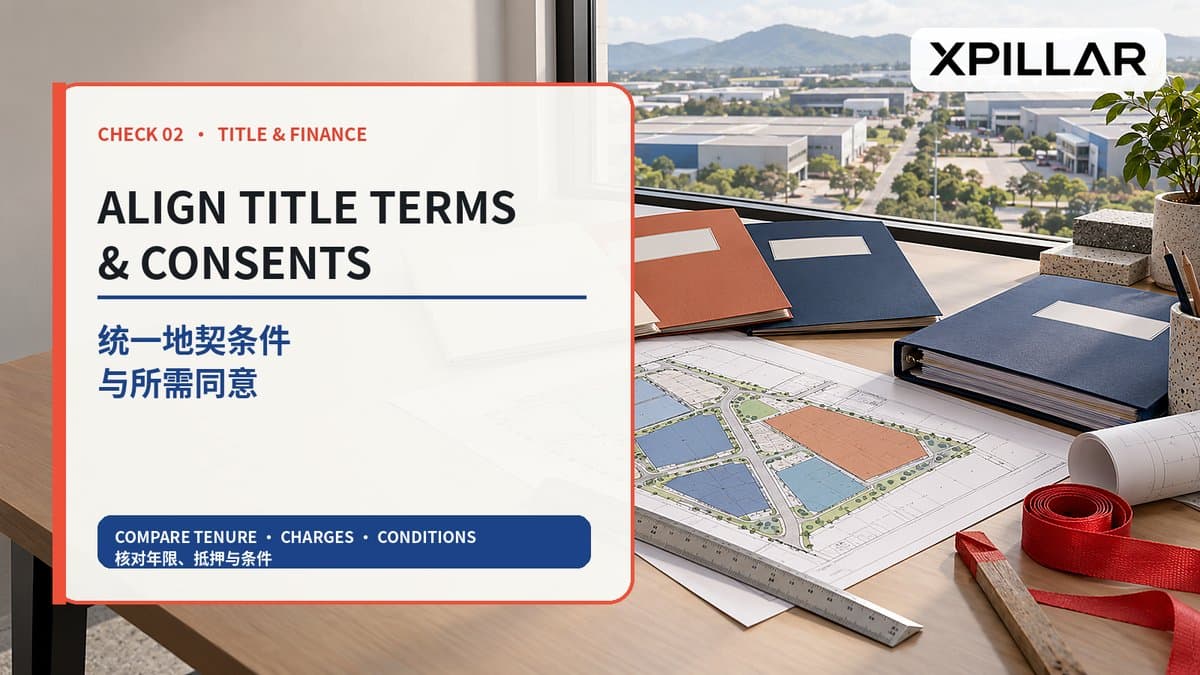
4. Compare title class, tenure, rent, land-use category and conditions 比较地契类别、年限、地租、土地用途类别及条件
Create a title comparison schedule.
应制作地契比较表。
Differences in Registry versus Land Office title, freehold versus leasehold term, expiry dates, rent rates, land-use category, express conditions or restrictions in interest may change the approving route.
登记处地契与土地局地契、永久地契与租赁地契、到期日、地租率、土地用途类别、明文条件或利益限制之间的差异,都可能改变审批路线。
Under section 147, specified differences require State Authority sanction.
根据第147条,特定差异需要州政府批准。
The State Authority may direct the tenure, rent, category, conditions and restrictions for the combined title.
州政府可决定合并地契的年限、地租、土地用途类别、条件及限制。
A premium may be required if a term is extended.
如果租期获得延长,也可能需要缴付额外地价。
Do not assume the “best” condition among the original titles will automatically carry across the combined site.
不要假设原有地契中“最好”的条件会自动套用于整个合并场地。
Obtain written professional advice on the likely title outcome and cost exposure.
应就可能形成的新地契条件及成本风险取得书面专业意见。
5. Identify the correct approval level 确认正确批准层级
The National Land Code provides different approval routes depending on title class and area, while states administer the process under their own land rules and systems.
《国家土地法典》根据地契类别及面积规定不同批准路线,各州则依据本州土地规则及系统执行程序。
For example, Selangor’s current official page states that its Land Administrator handles qualifying Land Office-title cases, its State Director handles Registry-title cases, and Menteri Besar approval applies to specified cases such as certain combined areas above four hectares, mixed title classes or dissimilar title terms.
例如,雪兰莪州现行官方页面说明,符合条件的土地局地契案件由土地行政官处理,登记处地契案件由州土地及矿务局局长处理;某些合并后面积超过4公顷、混合地契类别或地契条件不一致的案件,则由州务大臣批准。
Confirm the route for the actual state before setting a completion deadline.
设定交易完成期限以前,必须确认相关州属对该地块的实际程序。
An application submitted to the wrong pathway can invalidate the project schedule even when the land is otherwise suitable.
即使土地本身适合,申请路线错误也可能令整个项目时间表失效。
6. Clear land revenue and title compliance issues 清理欠缴土地税及地契合规问题
Section 147 imports relevant approval conditions from section 136, including that no item of land revenue is outstanding and that the proposal does not breach a restriction in interest or other written law.
第147条引入第136条的相关批准条件,包括不得欠缴土地收入,且申请不得违反利益限制或其他成文法。
Obtain current quit-rent receipts, title searches and written confirmation of any breach notice, enforcement issue or unresolved title condition.
应取得最新地税收据、地契查册,以及有关任何违约通知、执法问题或尚未解决地契条件的书面确认。
An industrial use on the ground does not prove that every title is endorsed for the same industrial category or express condition.
现场已经作为工业用途,并不能证明每张地契都载有相同工业用途类别或明文条件。
7. Obtain written consents from registered interest holders 取得登记权益持有人的书面同意
The statutory conditions require written consent from specified holders of registered interests, including relevant chargees, lessees and lienholders.
法定条件要求特定登记权益持有人提供书面同意,包括相关承押人、承租人及留置权持有人。
In practice, each title may be charged to a different bank, secure a different facility, or be subject to a lease with different terms.
实务上,每张地契可能抵押给不同银行、担保不同贷款,或受不同租赁条款约束。
Prepare an interest matrix showing each title, lender, charge, lease, caveat, lien, consent condition, discharge mechanism and target date.
应制作权益矩阵,列明每张地契、贷款银行、抵押、租赁、私人禁令、留置权、同意条件、解除机制及目标日期。
“The bank should agree” is not evidence.
“银行应该会同意”并不是证据。
8. Align amalgamation with planning permission 把地契合并与规划许可对齐
Section 136’s planning requirements, as applied to amalgamation, include obtaining necessary planning-authority approval and avoiding conflict with an approved development plan or planning decision.
第136条适用于土地合并的规划要求,包括取得所需规划机关批准,以及不得违反已批准的发展规划或规划决定。
The land application and the factory layout should therefore be coordinated rather than treated as unrelated consultant packages.
因此,土地申请与厂房布局应互相协调,而不应交给不同顾问各自独立处理。
A planning approval may still reserve space for road widening, drains, retention ponds, utility corridors, landscape buffers, fire access or public infrastructure.
规划批准仍可能要求预留道路拓宽、排水、蓄洪池、公用设施走廊、绿化缓冲、消防通道或公共基础设施空间。
One title cannot erase those requirements.
一张地契不能消除这些要求。
9. Commission the right survey work 委任正确的测量工作
The application under section 148 uses Form 9C and includes a plan showing the lots to be amalgamated.
第148条的申请采用表格9C,并须附上显示拟合并地段的图则。
Approval is not the same as completion.
获得批准不等于程序已经完成。
The combined area may still require survey work, fees, preparation and registration of the final title.
合并范围仍可能需要完成测量、缴费、编制及登记最终地契。
Before purchase, ask the licensed land surveyor to identify title boundaries, boundary marks, encroachments, road or drain reserves, easements, wayleaves and any mismatch between occupation and cadastral records.
购买以前,应由持牌土地测量师确认地契边界、界石、侵占、道路或排水保留地、地役权、公用设施通行权,以及现场占用与地籍记录之间的任何差异。
A building that already crosses the apparent line deserves special scrutiny.
已经跨越表面边界的建筑尤其需要严格核实。
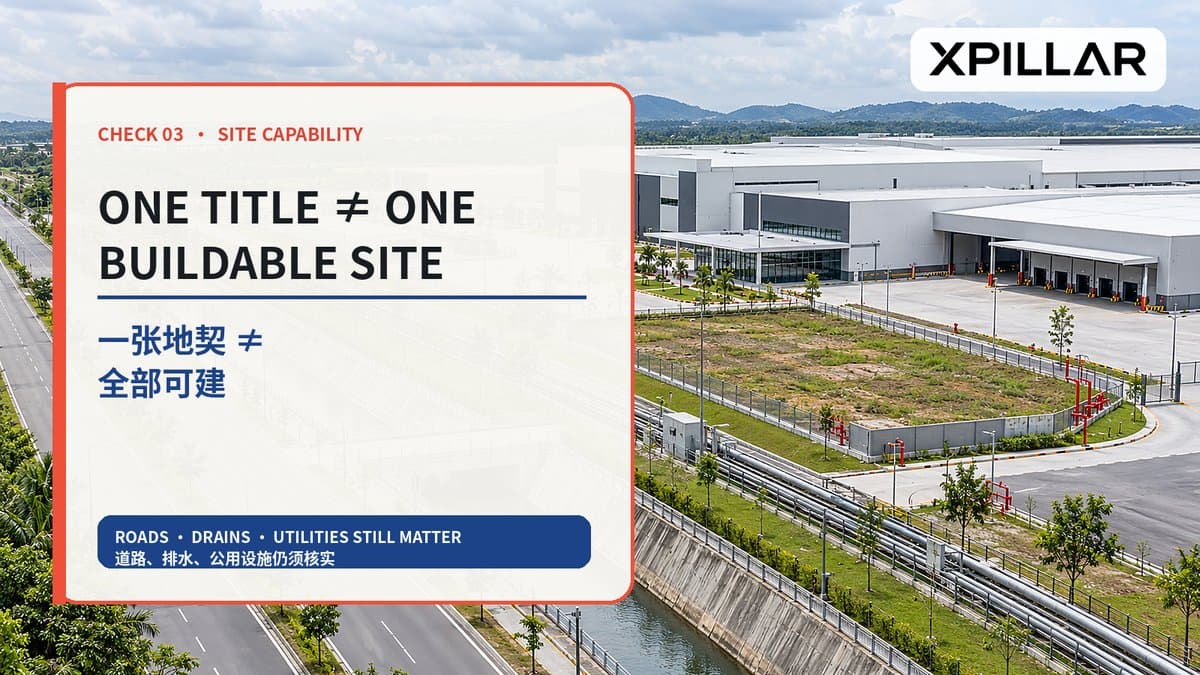
10. Test roads, drains and utilities as legal and engineering systems 把道路、排水及公用设施视为法律与工程系统核实
Removing a former title boundary does not move a public drain, extinguish a utility wayleave, approve a road crossing or increase electricity, water, sewerage, gas or telecommunications capacity.
取消原有地契边界,不会移动公共排水沟、消灭公用设施通行权、批准跨越道路,也不会增加电力、供水、污水、燃气或通讯容量。
Map every corridor and connection against the proposed factory footprint.
必须把每条走廊及接驳点与拟建厂房范围逐项叠合核对。
If the factory depends on crossing a drain, relocating a pipeline or closing an access, obtain the relevant authority or asset owner’s written position before treating the solution as feasible.
如果厂房需要跨越排水沟、迁移管线或关闭出入口,应先取得相关主管机关或资产拥有人的书面立场,才能把方案视为可行。
11. Sequence acquisition, financing and the new title 安排收购、融资与新地契的正确顺序
The buyer, seller and lenders must decide who will own all lots at the application stage, who pays premiums and professional costs, how existing charges are discharged or replaced, and when purchase money is released.
买家、卖家及金融机构必须决定:提出申请时由谁持有全部地段、谁承担额外地价及专业费用、现有抵押如何解除或替换,以及买卖款何时释放。
Where the buyer is acquiring multiple lots from one seller, completion may need to be conditional on approval, survey milestones or issuance of the combined title.
如果买家向同一卖家购买多个地段,交易完成可能需要以取得批准、达到测量里程碑或发出合并地契为条件。
Where different sellers or group companies are involved, the sequencing becomes more complex.
如果涉及不同卖家或集团公司,交易顺序会更加复杂。
Do not allow one lot to complete unconditionally if the factory is unusable without the others.
如果缺少任何一个地段就无法使用厂房,不应让其中一宗交易无条件先行完成。
12. Put the land process into the transaction documents 把土地程序写进交易文件
The SPA, option, tenancy or development agreement should define the required outcome and evidence, not merely say “subject to amalgamation”.
买卖协议、选择权、租约或发展协议应明确所需结果及证据,而不能只写“以土地合并为条件”。
Address the applicant, application deadline, authority conditions, acceptable combined title terms, premiums, surveys, consultants, consents, area tolerance, access and utilities, long-stop date, extension rights, deposit control, refund, termination and what happens if approval is granted on commercially unacceptable conditions.
文件应处理申请人、申请期限、主管机关条件、可接受的合并地契条款、额外地价、测量、顾问、同意、面积误差、出入口及公用设施、最后期限、延期权、订金控制、退款、终止,以及批准附带商业上不能接受条件时的处理方式。
The safest payment schedule follows evidence: verified titles, application submission, written consents, approval, survey completion, registration and delivery of the agreed title outcome.
较稳健的付款安排应跟随证据:已核实地契、正式提交申请、取得书面同意、获得批准、完成测量、完成登记,以及交付双方约定的地契结果。
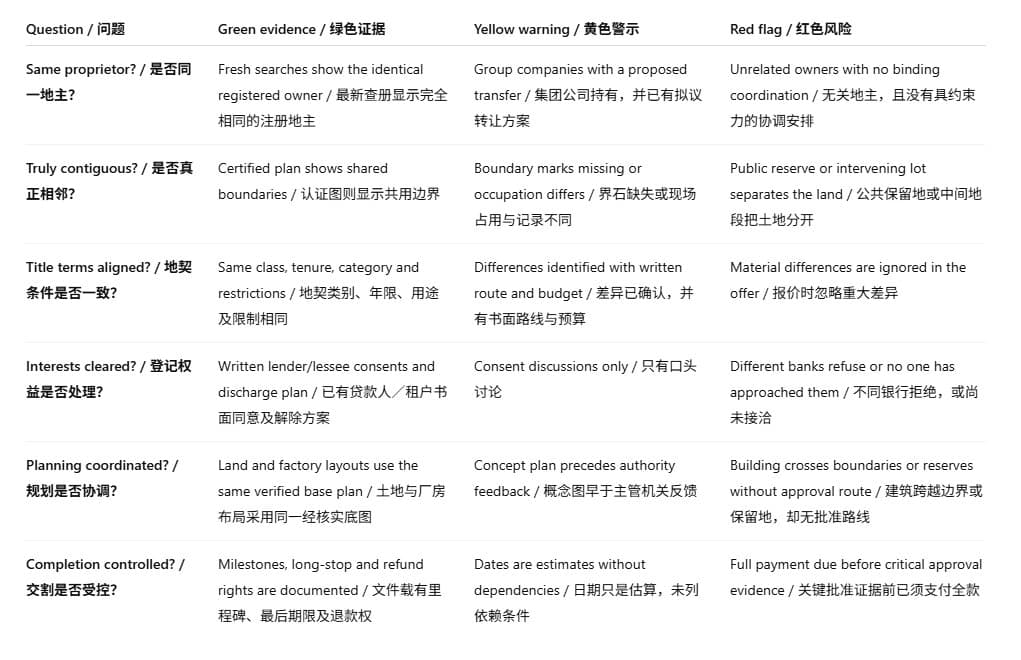
A practical evidence matrix实用证据矩阵
Recommended transaction sequence建议交易顺序
Search every title and verify ownership, title class and registered interests.
查册每张地契,核实业权、地契类别及登记权益。
Overlay the cadastral plan, topographic survey, planning layout, roads, drains and utilities.
叠合地籍图、地形测量图、规划布局、道路、排水及公用设施。
Obtain written advice on the correct state approval route and likely combined-title terms.
取得有关正确州属审批路线及可能合并地契条件的书面意见。
Secure lender, lessee and other required consents in principle.
原则上取得银行、租户及其他所需同意。
Make the offer and definitive agreement conditional on defined evidence milestones.
让报价及正式协议以明确证据里程碑为条件。
Submit the land and planning applications on coordinated plans.
采用互相协调的图则提交土地及规划申请。
Complete survey, payments, title registration and financing documentation.
完成测量、缴费、地契登记及融资文件。
Only then treat the combined site as the deliverable promised in the deal.
完成以上程序以后,才把合并场地视为交易中承诺交付的成果。
Final perspective最后观点
Land amalgamation can support a larger and more efficient factory, warehouse, data-centre campus or logistics hub.
土地合并可以支持更大型、更高效的厂房、仓库、数据中心园区或物流基地。
But the value is not created by deleting lines from a concept plan.
但价值并不是通过在概念图上删除几条线创造的。
It is created when ownership, statutory contiguity, title conditions, registered interests, planning, survey and infrastructure all support the same operational site.
而是当业权、法定相邻关系、地契条件、登记权益、规划、测量及基础设施都共同支持同一个营运场地时才真正形成。
For an industrial buyer, the right question is not simply, “Can these lots be amalgamated?”
对工业买家而言,正确问题不只是“这些地段能不能合并?”
It is:
而是:
“Can they be amalgamated on acceptable terms, within the required timeline, and still deliver the factory footprint, access, utilities and financing structure we need?”
“这些地段能否在可接受条件及所需期限内完成合并,同时仍能提供我们需要的厂房范围、出入口、公用设施及融资结构?”
Frequently Asked Questions常见问题1. Is sharing one corner enough for two lots to be contiguous? 两个地段只在一个角相接,是否足以构成相邻?
Section 146 states that each lot must share at least one boundary with another lot in the group.
第146条规定,每个地段必须至少与组内另一个地段共用一段边界。
A single point or corner should not be assumed to be a shared boundary.
只有一个点或角相接,不应假设属于共用边界。
Ask a licensed land surveyor and the relevant land authority to confirm the cadastral relationship.
应由持牌土地测量师及相关土地机关确认地籍关系。
2. Can lots owned by two companies in the same group be amalgamated directly? 同一集团两家公司分别持有的地段可以直接合并吗?
Do not assume so. 不能直接假设可以。
The statutory route is framed around lots vested in the same proprietor.
法定路线以多个地段归属于同一注册地主为前提。
The companies may need to restructure ownership first, subject to legal, tax, financing, state-consent and other requirements.
有关公司可能需要先重组业权,并须处理法律、税务、融资、州政府同意及其他要求。
3. Can lots on opposite sides of a public road be amalgamated? 公共道路两侧的地段可以合并吗?
Usually they should not be treated as contiguous because the road reserve interrupts the shared boundary.
通常不应把它们视为相邻,因为道路保留地中断了共用边界。
Confirm the cadastral titles and state-specific route.
应核实地籍地契及相关州属程序。
Operating both sites together is a different question from registered amalgamation.
共同营运两个场地,与登记土地合并属于不同问题。
4. Does amalgamation approval mean the new title has already been issued? 获得土地合并批准是否代表新地契已经发出?
No. 不代表。
Approval may still be followed by authority conditions, payments, survey work, preparation and registration of the final title.
批准以后仍可能需要履行主管机关条件、缴费、完成测量、编制及登记最终地契。
Track approval and title issuance as separate milestones.
应把获得批准与发出地契列为两个独立里程碑。
5. What happens if the original leasehold titles have different expiry dates? 原有租赁地契到期日不同,如何处理?
That is one of the dissimilarities identified in section 147.
这属于第147条列明的差异之一。
State Authority sanction may be required, and the State Authority may direct the tenure for the combined area.
可能需要州政府批准,州政府也可决定合并范围的持有年限。
If a term is extended, a premium may be imposed.
如租期获得延长,可能需要缴付额外地价。
Obtain a written state-specific assessment before pricing the land.
土地定价前,应取得针对相关州属的书面评估。
6. Can a factory be built across two titles before amalgamation? 土地合并完成前,可以让厂房跨越两张地契吗?
Do not assume it is acceptable. 不能假设可以。
The planning, building, fire, financing and title implications must be resolved for the actual proposal.
具体方案必须解决规划、建筑、消防、融资及地契影响。
If amalgamation is essential to the approved layout, construction should not run ahead of the land and planning evidence.
如果获批布局必须依赖土地合并,就不应让施工进度超前于土地与规划证据。
7. Will amalgamation remove easements, drains or utility reserves? 土地合并会消除地役权、排水或公用设施保留地吗?
Not automatically. 不会自动消除。
Those rights, reserves and physical assets require separate title, authority and engineering review.
这些权利、保留地及实体设施需要分别进行地契、主管机关及工程核实。
The combined title may remain subject to existing or newly imposed interests and conditions.
合并地契仍可能受现有或新设权益与条件约束。
8. Should a buyer complete first and amalgamate later? 买家应否先完成收购,再进行土地合并?
Only after advisers assess the commercial fallback.
只有在顾问评估商业替代方案以后才可考虑。
If the factory depends on one combined site, completing all purchases without approval protection can leave the buyer owning several valuable but operationally unsuitable lots.
如果厂房必须依赖一个合并场地,在没有批准保障下完成全部收购,可能令买家持有数个有价值却不适合营运的地段。
Use conditions precedent, staged payments, a long-stop date and defined refund or termination rights where appropriate.
适当情况下,应采用先决条件、分阶段付款、最后期限,以及明确退款或终止权。