
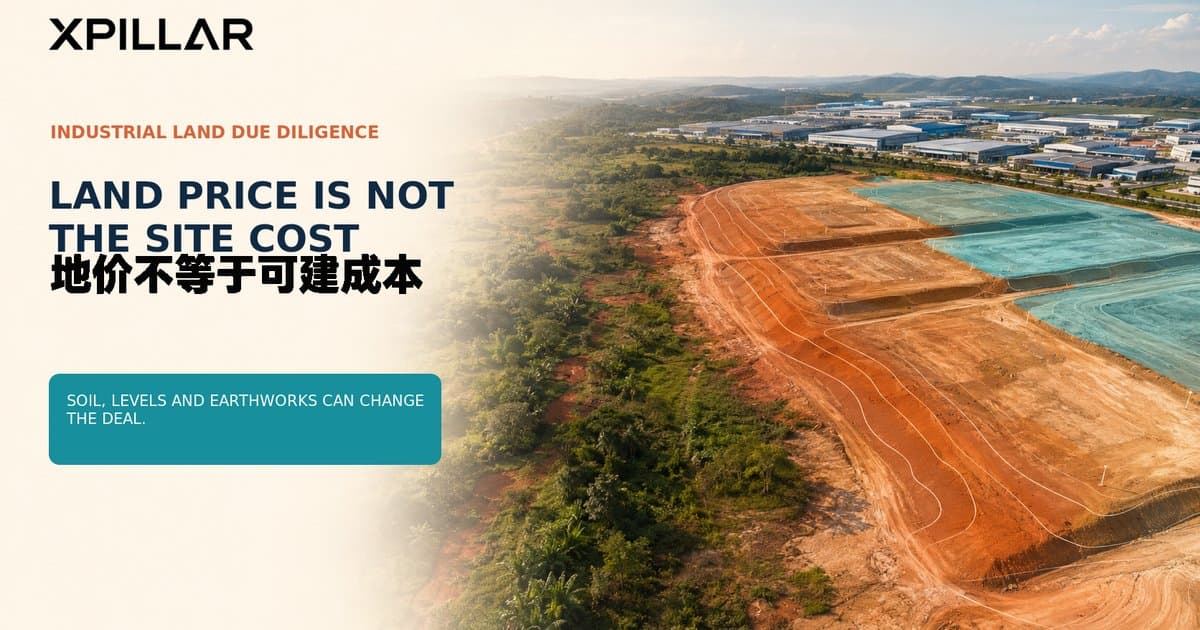
Buying Industrial Land in Malaysia? 12 Soil, Platform-Level and Earthworks Checks Before Signing购买马来西亚工业土地前:土质、平台标高与土方工程的12项检查
A practical guide to site investigation, cut-and-fill, retaining structures, drainage, net buildable area and transaction protection.
从岩土勘察、挖填方、挡土结构、排水、净可建面积到交易保障的实用指南。
Answer first: land price is not the finished site cost先说结论:地价不等于可以开工的场地成本
Before buying industrial land in Malaysia, verify three figures separately:
购买马来西亚工业土地前,必须把以下三个数字分开核实:
- gross title area — the land legally contained in the title or surveyed parcel;地契总面积 — 产权或核准测量地块内的法定面积;- net buildable area — the part that can realistically accommodate buildings, yards and essential plant after roads, setbacks, slopes, drainage, ponds, reserves and other constraints; and净可建面积 — 扣除道路、退界、边坡、排水、蓄洪池、保留地及其他限制后,真正能安排建筑、货场和必要设备的土地;以及
- development-enablement cost — the work needed to create safe, approved and serviceable platforms for the proposed factory, warehouse, data centre or industrial campus.场地开发成本 — 把土地做成安全、获批并具备厂房、仓库、数据中心或工业园建设条件所需的工程费用。
A parcel can look flat from the road and still contain soft deposits, uncontrolled fill, shallow rock, high groundwater, old ponds, buried structures or level differences that materially change foundations, drainage and earthworks. Conversely, a sloping site is not automatically unsuitable if the project can use split levels and the engineering, approvals, cost and programme remain acceptable.
一块从路边看起来平坦的土地,仍可能有软土、无记录填土、浅层岩石、高地下水、旧池塘、地下遗留物或高差,进而改变基础、排水和土方工程。相反,有坡度的土地也不一定不适合;如果项目可以采用分层平台,而且工程、审批、费用和工期可接受,仍可能具备价值。
The correct decision is not based on whether the soil “looks hard.” It requires a coordinated review of the development concept, boundary and topographic survey, geological information, site investigation, platform levels, earthworks, drainage, utilities, approvals and commercial terms.
正确做法不是用脚踩一踩,判断“泥土够不够硬”,而是把项目方案、地界和地形测量、地质资料、岩土勘察、平台标高、土方、排水、公用设施、审批和商业条款一起检查。
Practical rule: Do not compare industrial land only by price per square foot. Compare the cost and time required to deliver each site to the same usable development standard.
实用原则: 不要只按每平方英尺地价比较工业土地。应比较每一块地达到同样可使用开发标准所需的费用和时间。
Important: This article provides general industrial-property information, not geotechnical, civil, structural, environmental, planning, legal, valuation or construction advice. Site conditions and authority requirements vary. Engage appropriately qualified Malaysian professionals and obtain written, site-specific advice before committing.
重要说明: 本文只提供一般工业地产信息,并非岩土、土木、结构、环境、规划、法律、估值或施工意见。不同地块及主管机关要求会有差异,承诺前应聘请适当的马来西亚专业人士,并取得针对地块的书面意见。
Why this issue matters to manufacturers, logistics operators and data-centre developers为什么制造商、物流企业和数据中心开发商必须重视
An industrial user rarely needs land in the abstract. It needs a working platform with defined building levels, truck access, utilities, drainage, foundations, yards and room for expansion.
工业用户需要的不是抽象的土地面积,而是具备明确建筑标高、货车通道、公用设施、排水、基础、货场和扩建空间的可用平台。
Ground and earthworks risk can affect:
地质和土方风险会影响:
- whether shallow footings, piles or ground improvement may be required;是否需要浅基础、桩基或地基处理;- settlement tolerance for high-bay racks, precision production or data halls;高位货架、精密生产或数据机房的沉降控制;
- floor-level transitions and truck gradients;楼面高差和货车坡度;
- retaining-wall height and usable yard width;挡土墙高度和可用货场宽度;
- stormwater detention and discharge arrangements;雨水蓄排方案;
- the depth and route of underground utilities;地下公用设施的深度和路线;
- construction sequence and wet-weather productivity;施工顺序及雨季效率;
- imported or exported fill volumes;外运或外购填土数量;
- approvals and environmental controls; and审批和环保控制;以及
- the date when building construction can begin.主体建筑可以开工的日期。
For China-based manufacturers, this is also a translation problem. The land seller may quote acreage and a platform description, while the factory design team works with equipment loads, finished-floor levels, vibration limits and commissioning dates. Those two sets of information must be converted into one coordinated site brief.
对中国制造企业而言,这也是资料转换问题。卖方提供的通常是英亩数和平台描述,而工厂设计团队关注机器荷载、完成面标高、振动限制和投产日期。两套资料必须整理成一个协调的场地需求说明。
The four numbers every industrial-land comparison should show每一块工业土地都应列出的四个数字
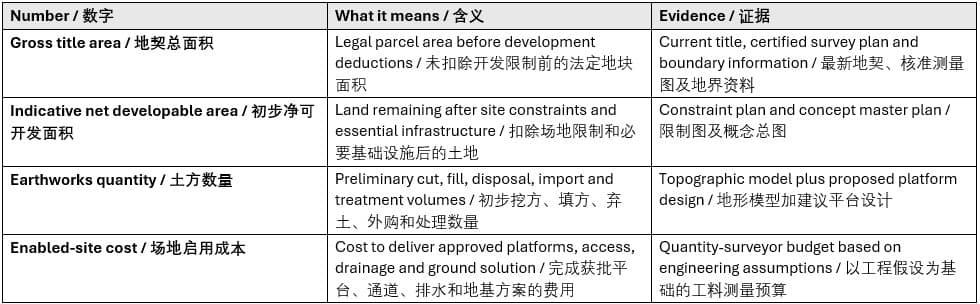
None of these numbers should be copied from a neighbouring development without testing the actual parcel.
以上数字都不能直接从邻近发展项目复制过来。
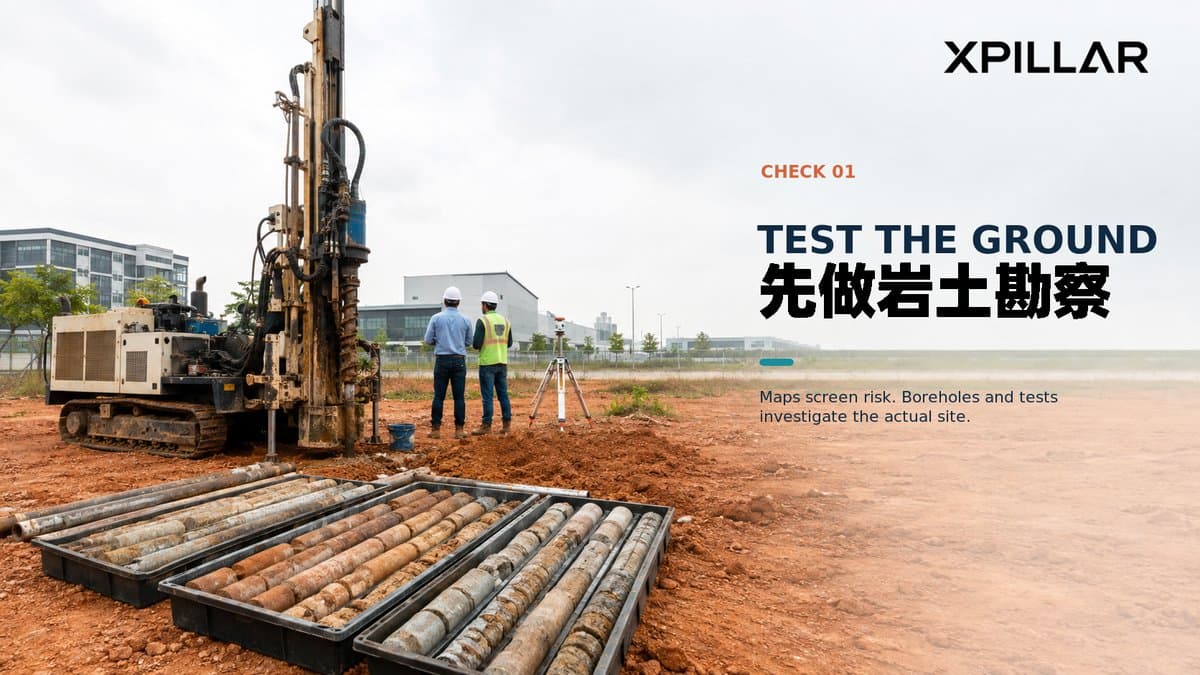
1. Define the proposed industrial project before testing the land 先定义工业项目,再决定怎样勘察土地
The investigation should answer the questions created by the actual project. Prepare a brief covering:
勘察必须回答实际项目提出的问题。项目说明至少应包括:
- intended factory, warehouse, data-centre or industrial use;拟建厂房、仓库、数据中心或其他工业用途;
- building footprints, heights and structural grid;建筑位置、高度和结构柱网;
- warehouse rack loads, machinery loads and vibration sensitivity;货架、机器及振动要求;
- data-hall, transformer, tank, silo or heavy-equipment zones;数据机房、变压器、储罐、筒仓或重型设备区域;
- yard, dock and container-truck requirements;货场、装卸台和货柜车需求;
- target finished-floor and external platform levels;目标建筑完成面和室外平台标高;
- basement, pit, trench or underground-tank proposals;地下室、地坑、沟槽或地下储罐;
- utilities and drainage corridors;公用设施和排水路线;
- initial and ultimate development phases; and首期及最终发展规模;
- 以及target start of construction and operation.目标施工与投产日期。
A generic soil report may not address a heavy press, high-bay automated warehouse, deep process pit or closely controlled data-centre settlement criterion. The development brief should guide the investigation scope and interpretation.
一份普通土质报告未必能够回答重型冲床、自动化高位仓库、深工艺坑或严格数据中心沉降要求。调查范围和解释必须由项目需求引导。
2. Confirm boundaries, existing levels and a reliable survey datum 核实地界、现有标高和统一测量基准
Obtain a current topographic and engineering survey by the appropriate professionals. It should show, as relevant:
由适当专业人员完成最新地形和工程测量,并视项目列出:
- title and occupation boundaries;地契及实际占用边界;
- spot levels and contours;点标高和等高线;
- survey benchmark and vertical datum;测量基准点及高程基准;
- road, verge and drain levels;道路、路肩和排水沟标高;
- rivers, ponds, wetlands and natural channels;河流、水塘、湿地及天然水道;
- slopes, embankments and retaining structures;边坡、路堤和挡土结构;
- buildings, foundations and buried remnants that can be identified;可识别的建筑、基础及地下遗留物;
- visible utilities, poles, chambers and easements;可见公用设施、电杆、检查井和地役权;
- adjoining land levels and discharge points; and邻地标高和排水出口;以及
- trees and other features that may affect development.可能影响发展的树木和其他特征。
Do not mix levels taken from different datums. A proposed platform shown as “RL 12.00” has little value unless the reference datum, benchmark and relationship to the road, drain, outfall and neighbouring land are clear.
不要把不同基准系统的标高混在一起。图纸写“RL 12.00”并不足够,还要知道基准、基点,以及与道路、排水出口和邻地的实际关系。
The Town and Country Planning Act 1976 defines earthworks broadly to include excavation, levelling, filling, tree felling, disturbing land, forming access and laying utilities or drainage. For projects within its scope, the planning-permission framework therefore needs to be considered before treating earthworks as a simple pre-construction activity.
《1976年城乡规划法令》对土方工程的定义很广,包括开挖、整平、填土、砍树、扰动土地、形成通道,以及铺设公用设施或排水。对于该法令适用的项目,不能把土方工程当成无需规划考虑的简单前期施工。
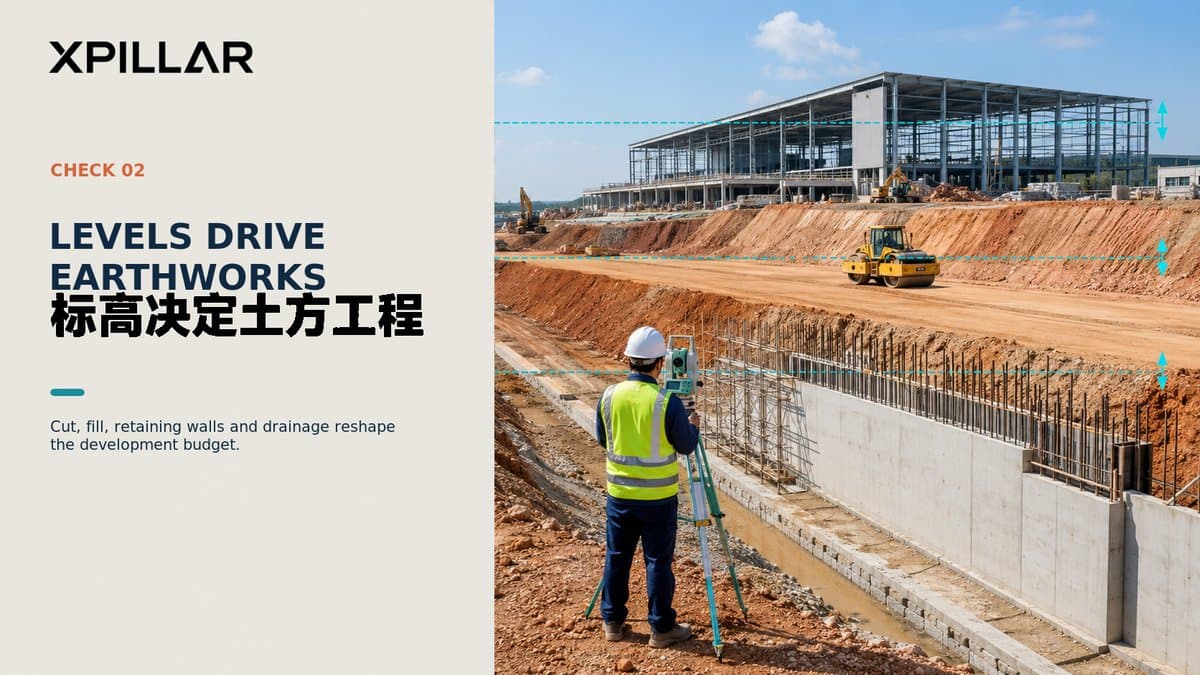
3. Screen geology, groundwater and land history—but do not stop at maps 用地图筛选地质、地下水和土地历史,但不能停在地图
Desktop information helps identify questions before intrusive work begins. Review available:
进行侵入式勘察前,可先检查:
- geological and terrain mapping;地质和地形图;- historical aerial images and older land use;历史航空照片及过往土地用途;
- former mining, quarry, landfill, pond or agricultural features;旧矿区、采石场、填埋场、水塘或农业设施;
- nearby borehole or groundwater information;附近钻孔或地下水资料;
- known slope or ground-instability records;已知边坡或地面不稳定记录;
- flood and drainage information; and洪水和排水资料;以及
- previous development and filling history.过往开发及填土历史。
JMG's MyGEMS portal publishes interactive layers for surface geology, groundwater, geophysics, mines and quarries, among other themes; the portal currently states that several public datasets are updated to November 2025. These layers are useful for regional screening, not for certifying the ground conditions or foundation solution of a specific lot.
JMG 的 MyGEMS 提供地表地质、地下水、地球物理、矿山和采石场等互动图层;平台目前说明多项公开资料更新至2025年11月。这些资料适合区域初筛,不能证明某一地块的实际土层、基础或沉降表现。
Land history matters because apparently level land may have been created by filling a pond, valley or former excavation. Ask who placed the fill, when it was placed, what material was used and whether there are placement, compaction and testing records.
土地历史很重要,因为看似平坦的平台可能是填平旧池塘、山谷或开挖区而成。应询问由谁填土、何时施工、用了什么材料,以及是否有铺填、压实和测试记录。
Environmental due diligence is a separate workstream. Unusual odour, staining, buried drums, ash, waste, oil or uncontrolled imported material should trigger specialist review rather than being treated only as a soil-strength question.
环境尽调属于另一条工作线。如果现场有异常气味、油迹、灰渣、废料、地下桶罐或来源不明的填料,应由环境专业人士审查,不能只当成土质承载问题。
4. Design a site investigation for the actual development 按实际项目设计岩土勘察
The geotechnical engineer should determine the appropriate investigation scope based on the site, project and existing information. Depending on the case, it may include:
岩土工程师应根据地块、项目及现有资料确定调查范围。视情况可能包括:
- boreholes and sampling;钻孔和取样;
- standard penetration or other in-situ tests;标准贯入或其他原位测试;
- trial pits;试坑;
- groundwater observations or monitoring;地下水观察或监测;
- laboratory classification, strength and consolidation testing;分类、强度和固结等实验室测试;
- rock coring and weathering assessment;岩芯和风化程度评估;
- chemical-aggressivity tests relevant to concrete and steel;与混凝土及钢材耐久性有关的化学测试;
- geophysical surveys where justified; and有需要时的地球物理调查;以及
- investigation of existing fill, buried obstructions or slope materials.对现有填土、地下障碍或边坡材料的调查。
Borehole count and depth should not be chosen merely to produce the cheapest report. Investigation locations should address building zones, heavy loads, retaining structures, ponds, cut slopes, filled valleys, utilities and areas of suspected variability.
钻孔数量和深度不能只按最低报价决定。位置应覆盖建筑、重载、挡土结构、水塘、挖坡、填谷、公用设施及可能变化较大的区域。
Local submission requirements vary. As a current example, an OSC 3 Plus earthworks checklist for Kuala Terengganu lists a geotechnical or slope-stability report, hydraulic report, ESCP and soil-investigation report among the possible application documents. This does not create one nationwide checklist; it shows why the buyer must check the actual local authority and proposal.
地方呈交要求并不统一。例如,OSC 3 Plus 目前显示的瓜拉登嘉楼土方图清单,把岩土或边坡稳定报告、水力报告、ESCP 及土质勘察报告列为可能需要的申请文件。这并不代表全国采用同一清单,而是说明买家必须查询目标地块和项目适用的地方政府要求。
5. Translate the ground report into project decisions 把土质报告转化成项目决定
A soil report should not end with borehole logs. Ask the appointed engineers to explain what the findings mean for:报告不应只停留在钻孔柱状图。应请工程师解释结果对以下事项的影响:
- foundation type and preliminary depth;基础类型及初步深度;
- allowable bearing and settlement behaviour;地基承载和沉降表现;
- total and differential settlement;总沉降及差异沉降;
- ground-improvement options;地基处理方案;
- floor slabs and external pavements;地坪和室外路面;
- excavation stability and temporary works;开挖稳定及临时工程;
- groundwater control;地下水控制;
- pile installation risk, obstructions and vibration;打桩障碍、施工振动和风险;
- seismic or geohazard considerations where relevant;适用时的地震或地质灾害因素;
- retaining structures and slope stability;挡土结构和边坡稳定;
- durability exposure; and耐久性环境;以及
- additional investigation required after the layout develops.布局发展后需要补充的勘察。
Treat early recommendations as design assumptions, not final guarantees. A concept layout can change load locations, cut depths and platform geometry, which may require supplementary investigation.
初步建议只是设计假设,不是最终保证。概念布局改变荷载位置、开挖深度或平台形状后,可能需要追加调查。
For logistics and precision operations, serviceability can be as important as ultimate strength. Small differential movement can affect narrow-aisle floors, automated systems, dock levellers, conveyors, sensitive machinery and underground pipes.
对物流和精密生产而言,正常使用表现与极限强度同样重要。小幅差异沉降也可能影响窄巷道地坪、自动化系统、装卸平台、输送线、精密机器和地下管道。
6. Coordinate platform level with roads, drainage and factory operation 把平台标高与道路、排水和生产一起协调
The proposed platform is not simply “make the land flat.” Its level must work with:设计平台不是简单“把地整平”。其标高必须同时满足:
- public-road access and permissible driveway gradients;公共道路接驳和允许坡度;
- container-truck circulation and dock geometry;货柜车转弯及装卸台关系;
- finished-floor level and flood strategy;建筑完成面和防洪策略;
- gravity drainage and available outfall;重力排水和可用出口;
- sewer and utility depths;污水及公用设施深度;
- neighbouring land and boundary transitions;邻地及边界高差;
- cut-and-fill balance;挖填平衡;
- retaining-wall height;挡土墙高度;
- building steps or split levels; and建筑分层或高差;以及
- future expansion.未来扩建。
Raising the whole site can reduce some flood or drainage concerns but increase imported fill, retaining walls, driveway gradients and impacts on neighbours. Lowering the site can reduce fill but create excavation, groundwater, outfall and access problems.
把整块地抬高可能改善部分排水问题,但会增加外购填土、挡土墙、入口坡度和对邻地的影响。把场地降低可能减少填方,却增加开挖、地下水、排水出口和道路接驳问题。
Review at least one coordinated section from the road, through the building platform, to the downstream drainage point. A plan view alone can hide critical vertical conflicts.
至少应查看一条从公共道路、穿过建筑平台、到下游排水出口的完整剖面。平面图往往会隐藏关键垂直冲突。
7. Quantify cut, fill, treatment, import and disposal 分开计算挖方、填方、处理、外购和弃土
Use a surveyed existing-ground model and a concept proposed-ground model to prepare preliminary earthworks quantities. Separate:
用现状地形模型和建议地形模型准备初步土方数量,并分开计算:
- reusable cut;可再用挖方;- unsuitable or contaminated material;不适用或受污染材料;
- rock excavation;岩石开挖;
- engineered fill;工程填土;
- topsoil stripping and storage;表土剥离及储存;
- imported fill;外购填土;
- off-site disposal;外运弃土;
- ground improvement;地基处理;
- surcharge or preload material;堆载或预压材料;
- temporary working platforms; and临时施工平台;以及
- settlement allowance or regrading.沉降预留或再次整平。
A site described as “balanced cut and fill” may still be expensive if the cut material is unsuitable for engineered fill, excavation is predominantly rock, material must be processed, or construction sequencing prevents direct reuse.
所谓“挖填平衡”仍可能很昂贵,因为挖出的土未必适合作工程填料,开挖可能主要是岩石,材料可能需要处理,或施工顺序不允许直接循环使用。
For imported fill, check source, suitability, approvals, haul route, testing and placement specification. For exported material, check lawful destination, transport constraints and responsibility. Do not use a generic rate per cubic metre without defining material type, haul distance, treatment and market conditions.
外购填料要核实来源、适用性、审批、运输路线、测试和铺填规范;外运材料要核实合法去向、运输限制和责任。不要在没有定义材料、运输距离、处理和市场条件时,直接套用一个每立方米价格。
9. Investigate groundwater and wet-weather construction risk调查地下水及雨季施工风险
Groundwater can affect excavation, slope stability, settlement, basement or pit design, piling, temporary works and the construction programme. One water level recorded during drilling is not necessarily the long-term high level.
地下水会影响开挖、边坡、沉降、地下室或地坑、打桩、临时工程和工期。钻孔当日量到的一次水位,未必代表长期最高水位。
Ask whether monitoring should consider seasonal conditions, nearby ponds, rivers, tides, drains, pumping or future development. Also consider:
应询问监测是否需要考虑季节、附近水塘、河流、潮汐、排水、抽水或未来发展,并检查:
- dewatering method and discharge;降水方法和排放;- impact on adjacent ground and structures;对邻地及建筑物的影响;- base instability or piping risk;基底失稳或管涌风险;- softening of exposed soils;土层暴露后软化;- wet-season access and haul roads;雨季道路和运输;- temporary drainage and pump redundancy; and临时排水和备用抽水;以及- delayed compaction or failed earth platforms.压实延误或施工平台失效。
Groundwater and stormwater are related but not interchangeable. A dry surface does not prove low groundwater, and a high groundwater table does not by itself establish flood risk.
地下水与雨水有关,但不是同一件事。地面干燥不代表地下水低;地下水位高也不能单独证明地块会发生洪水。
10. Plan drainage, erosion and sediment control with the earthworks 把排水、防侵蚀和防泥沙与土方一起设计
Earthworks change runoff paths and expose soil. Temporary controls must operate before the permanent drainage system is complete.
土方施工会改变径流路线并暴露泥土。永久排水未完成前,临时措施必须先运作。
Coordinate/ 应协调:
-diversion of clean upstream water;把上游清水绕开施工区;- temporary earth drains;临时土沟;
- sediment basins and traps;沉淀池和泥沙陷阱;
- staged clearing and stabilisation;分阶段清理和稳定;
- slope protection;边坡保护;
- construction entrances and wheel washing;工地出入口和洗轮设施;
- monitoring and maintenance after storms;暴雨后的检查和维护;
- permanent detention or retention;永久蓄洪或调蓄;
- final outfall and downstream capacity; and最终排放口和下游容量;以及
- handover from temporary to permanent drainage.临时排水转入永久系统的交接。
JPS's Guideline for Erosion and Sediment Control in Malaysia provides a framework for ESCP preparation and construction-site controls. JPS also publishes MSMA resources covering stormwater planning, quantity and quality controls, construction-stage erosion and sediment management, waterways and special drainage applications.
JPS 的马来西亚侵蚀与泥沙控制指南提供 ESCP 和施工场地控制框架;JPS 的 MSMA 资料也涵盖雨水规划、流量与水质控制、施工期间侵蚀与泥沙管理、水道及特殊排水应用。
Do not defer ESCP and temporary drainage until after clearing begins. Mud leaving the site, silted drains or uncontrolled runoff can create compliance, neighbour and programme problems before the first foundation is built.
不能等到清地后才考虑 ESCP 和临时排水。泥浆流出工地、排水沟淤塞或径流失控,会在第一根柱子施工前就造成合规、邻里和工期问题。
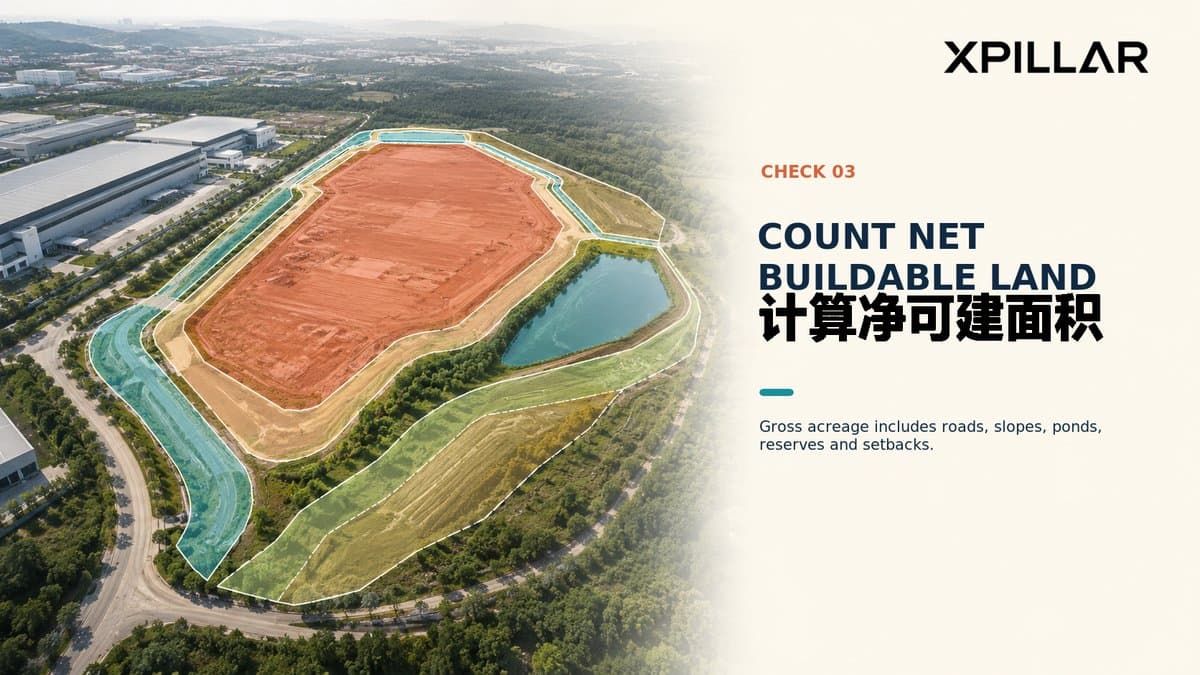
11. Calculate net buildable land—not only gross acreage 计算净可建面积,而不是只看总英亩数
Prepare a constraint and opportunity plan that distinguishes:
准备限制与机会图,把以下区域分开:
- building platforms;建筑平台;- yards, loading and fire access;货场、装卸和消防通道;- internal roads and gate approaches;内部道路和入口;
- utility plants and corridors;公用设施设备和走廊;
- drains, detention ponds and watercourses;排水、蓄洪池和水道;
- slopes and retaining structures;边坡和挡土结构;
- road, river, drain and utility reserves;道路、河流、排水和公用设施保留地;
- planning setbacks and buffers;规划退界和缓冲区;
- landscape and environmental areas;绿化和环境区域;
- easements and third-party rights; and地役权及第三方权利;以及
- future expansion land.未来扩建土地。
Then test a concept master plan. The useful metric is not simply “20 acres.” It is whether the site can accommodate the required building, yard, circulation, utilities and expansion in a workable shape.
然后用概念总图测试。真正有意义的问题不是“有没有20英亩”,而是能否用合理形状安排所需建筑、货场、道路、公用设施和扩建。
Two parcels with equal title area can produce very different net buildable areas. A regular site with modest earthworks may be more valuable to an occupier than a cheaper irregular parcel with steep edges, a large pond and a constrained access point.
两块总面积相同的地,净可建面积可能差很大。形状规则、土方较少的土地,对自用企业可能比价格较低但边界陡、水塘大、入口受限的土地更有价值。
12. Map approvals, full cost, programme and transaction protection 整理审批、完整费用、工期及交易保障
Before committing, build an approval matrix for the actual location and project. Depending on the proposal, it may involve planning permission, earthworks, roads and drainage, building plans, utilities, JPS review, environmental screening, tree or slope requirements and other technical agencies.
签约前根据地点和项目制作审批矩阵。视建议发展内容,可能涉及规划许可、土方、道路与排水、建筑图、公用设施、JPS 审查、环境筛选、树木或边坡要求及其他技术部门。
The Environmental Quality (Prescribed Activities) (Environmental Impact Assessment) Order 2015 identifies categories of development for which EIA requirements may apply, including certain industrial-estate, slope, coastal, infrastructure and other activities. Do not assume that every industrial land purchase requires an EIA—or that none does. Screen the actual development against the current order and obtain DOE advice where appropriate.
《2015年环境质量(指定活动)(环境影响评估)命令》列明可能适用 EIA 的发展类别,包括部分工业园、边坡、海岸、基础设施及其他活动。不能假设所有工业地都需要 EIA,也不能假设一定不需要;应按实际项目及现行命令筛选,并在需要时向 DOE 查询。
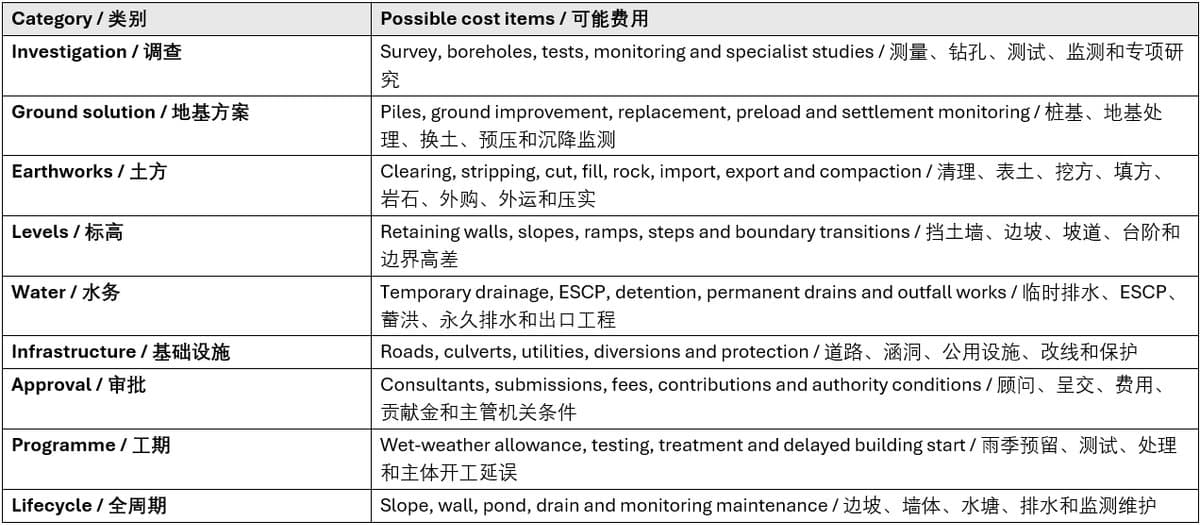
Where ground and earthworks risk is material, consider project-specific legal provisions covering:
如果地质和土方风险重要,可在律师建议下针对项目处理:
- access for survey and intrusive investigation;允许测量和侵入式勘察的进场权;- satisfactory geotechnical, environmental and engineering due diligence;满意的岩土、环境和工程尽调;- seller disclosure of filling, ponds, mining, waste, settlement and ground incidents;卖方披露填土、水塘、采矿、废物、沉降和地面事故;- delivery of previous reports, approvals and earthworks records;交付旧报告、审批和土方记录;- permission to liaise with authorities and utility providers;与主管机关及公用事业单位沟通的授权;- verification of boundaries, levels and outfall rights;核实地界、标高和排水出口权;- defined planning and earthworks assumptions;明确规划及土方假设;- price adjustment, retention or cost-sharing where agreed;双方同意的调价、保留款或费用分担;- a long-stop date for critical approvals; and关键审批的最后期限;以及- termination and deposit-refund rights if an essential condition is not met.关键条件不满足时的终止和退还订金权。
The wording and risk allocation require Malaysian legal advice. The objective is to prevent an unknown ground condition from becoming an unlimited post-completion obligation.
具体条文和风险分配应由马来西亚律师处理。目的在于避免未知地质条件在交易完成后变成没有上限的责任。
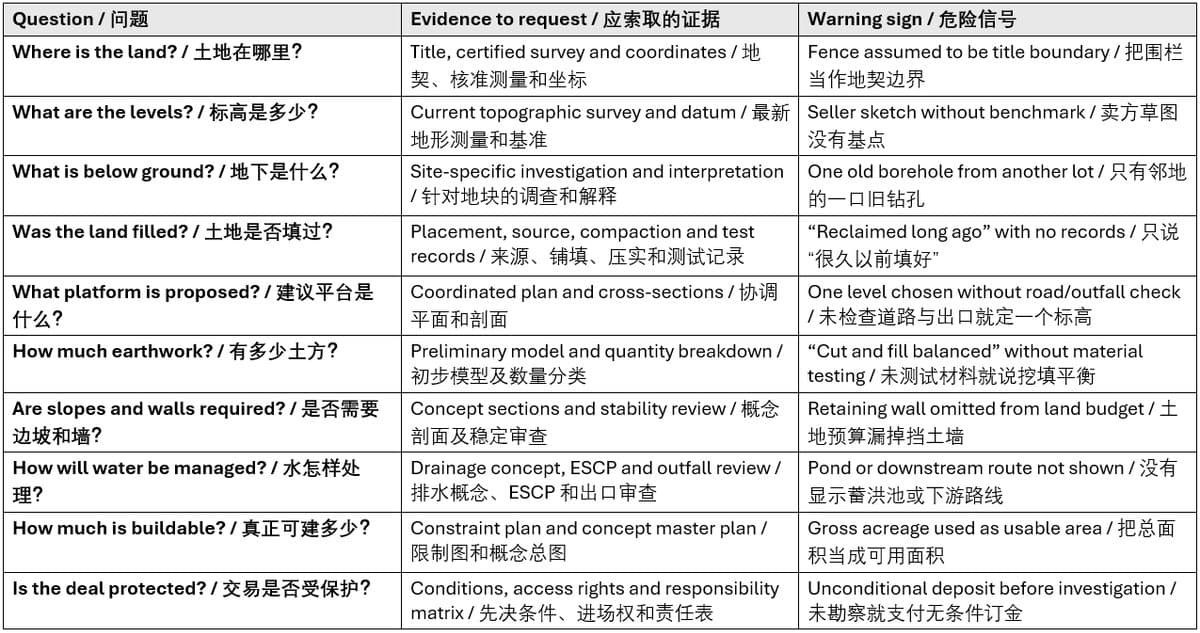
Conclusion总结
Industrial land should be valued as a future operating site, not only as a title area. Soil, groundwater, levels, earthworks, slopes, drainage and infrastructure determine how much of the parcel is usable, how quickly construction can begin and how much capital is required before the first building column is erected.
工业土地应按未来运营场地估值,而不是只看地契面积。土质、地下水、标高、土方、边坡、排水和基础设施,决定多少土地真正可用、何时可以施工,以及第一根建筑柱子开工前需要投入多少资本。
The safest sequence is:
最稳妥的顺序是:
- define the project and its operational requirements;定义项目及营运需求;
- survey and investigate the actual parcel;测量和调查实际地块;
- test a coordinated platform and master-plan concept;测试协调的平台与概念总图;
- price the complete enabled-site scope; and计算完整场地启用成本;以及
- keep the transaction conditional until the critical risks are understood and allocated.在关键风险被理解及分配前,让交易保持附带条件。
Xpillar can help Malaysian and China-based manufacturers, logistics operators, investors, developers and data-centre users shortlist industrial land by location, title area, shape, access, surrounding infrastructure and project requirements before specialist technical and legal due diligence begins.
Xpillar可协助马来西亚及中国制造商、物流企业、投资者、开发商和数据中心用户,根据地点、地契面积、形状、通道、周边基础设施和项目需求初筛工业土地,再由专业技术和法律团队完成尽调。
Frequently Asked Questions常见问题
1. Is a flat-looking industrial site automatically cheaper to develop?看起来平坦的工业地是否一定更便宜开发?No. It may contain soft ground, uncontrolled fill, buried obstructions, high groundwater or unsuitable material. Survey and site-specific investigation are required.
不一定。地下可能有软土、无记录填土、地下障碍、高地下水或不适用材料,仍须进行测量和针对地块的调查。
2. Can a geological map replace boreholes?地质图可以代替钻孔吗?No. Mapping supports regional screening and investigation planning. It does not certify the soil profile, groundwater, settlement or foundation solution for the exact building location.
不可以。地图适合区域筛选和规划调查,但不能证明具体建筑位置的土层、地下水、沉降或基础方案。
3. What is the difference between gross land and net buildable land?总面积与净可建面积有什么不同?Gross land is the total parcel area. Net buildable land is the portion that can practically accommodate the required development after roads, setbacks, slopes, ponds, drainage, reserves, utilities and other constraints.
总面积是整个地块的面积;净可建面积是扣除道路、退界、边坡、水塘、排水、保留地、公用设施及其他限制后,真正能安排项目的部分。
4. Why does platform level matter?为什么平台标高那么重要?Platform level affects access gradients, drainage, flood strategy, cut-and-fill, retaining walls, utility depth, neighbouring land and the building's finished-floor level.
平台标高会影响入口坡度、排水、防洪、挖填方、挡土墙、公用设施深度、邻地关系及建筑完成面。
5. Does balanced cut and fill mean low earthworks cost?
挖填平衡是否代表土方费用很低?Not necessarily. Cut material may be unsuitable for reuse, rock may require special excavation, or sequencing may require material to be stored, processed, imported or exported.
不一定。挖出的土可能不能再用,岩石需要特殊开挖,或施工顺序要求储存、处理、外购或外运材料。
6. Should soil investigation be completed before paying a deposit?是否应该在支付订金前完成土质勘察?For a material acquisition or ground-sensitive project, seek access and legal advice so appropriate investigation and satisfactory review can occur before the commitment becomes unconditional.
对于重大收购或对地质敏感的项目,应取得进场权和法律意见,让适当勘察和满意审查在交易转为无条件前完成。
7. Does every industrial development require an EIA?每一个工业发展项目都需要 EIA 吗?No. EIA applicability depends on whether the actual proposal falls within a prescribed activity and its relevant conditions. Screen the current EIA Order and consult DOE where needed.
不是。是否需要取决于实际项目是否属于现行命令的指定活动及相关条件。应按最新 EIA Order 筛选,并在需要时向 DOE 查询。