
Buying Data Centre Land in Malaysia? 10 Water, Cooling and Drainage Checks Before You Commit
购买马来西亚数据中心用地前:水资源、冷却与排水的10项尽调
The answer first/ 先说结论
A Malaysian site is not data-centre ready merely because it has suitable zoning, fibre routes and a promising power connection. Before signing, the investor should establish a defensible water balance: where cooling and domestic water will come from, how much will be required at each development phase, what happens during an interruption, where blowdown and wastewater will go, and whether the site can manage tropical stormwater without compromising critical equipment.
一块拥有合适用途、光纤路线和潜在电力接入的数据中心土地,并不代表它已经具备开发条件。签约前,投资者应建立一份可验证的水资源方案:冷却及日常用水来自哪里、各阶段需要多少水、供水中断时如何维持运行、冷却塔排污水及废水排往哪里,以及场地是否能够承受马来西亚热带暴雨而不影响关键设备。
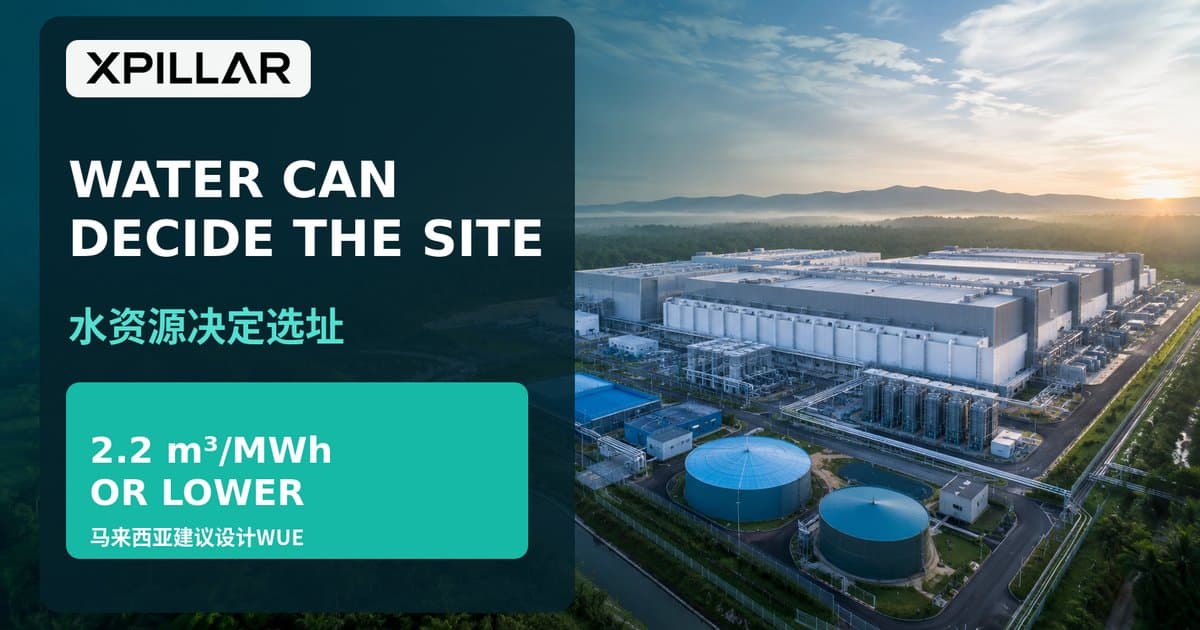
Malaysia’s Guidelines for Sustainable Development of Data Centre recommend a design Water Usage Effectiveness (WUE) of 2.2 m³/MWh or lower, advise new facilities in Peninsular Malaysia to consider locations with a Water Stress Index below 0.8, encourage reclaimed or reused water, and call for continued monitoring and improvement. These are not substitutes for site-specific engineering or utility confirmation; they are an early screening framework.
马来西亚《数据中心可持续发展指南》建议设计水资源使用效率(Water Usage Effectiveness,WUE)为 2.2立方米/兆瓦时或以下;在马来半岛选址时,应考虑水资源压力指数(Water Stress Index)低于 0.8 的地区;同时鼓励使用再生水或循环水,并持续监测及改善WUE。这些指标不能替代项目本身的工程研究或供水单位书面确认,但非常适合作为早期筛选标准。
The commercial lesson is simple: do not value land only by acreage and power proximity. Value the enabled site—after water, cooling, drainage, environmental and resilience constraints are priced and verified.
商业上的核心很直接:不要只按土地面积和电力距离判断价格,而要按水源、冷却、排水、环保与韧性条件确认后的**“可启用场地”**估值。
Why water due diligence belongs before the land commitment为什么水资源尽调必须在买地前完成
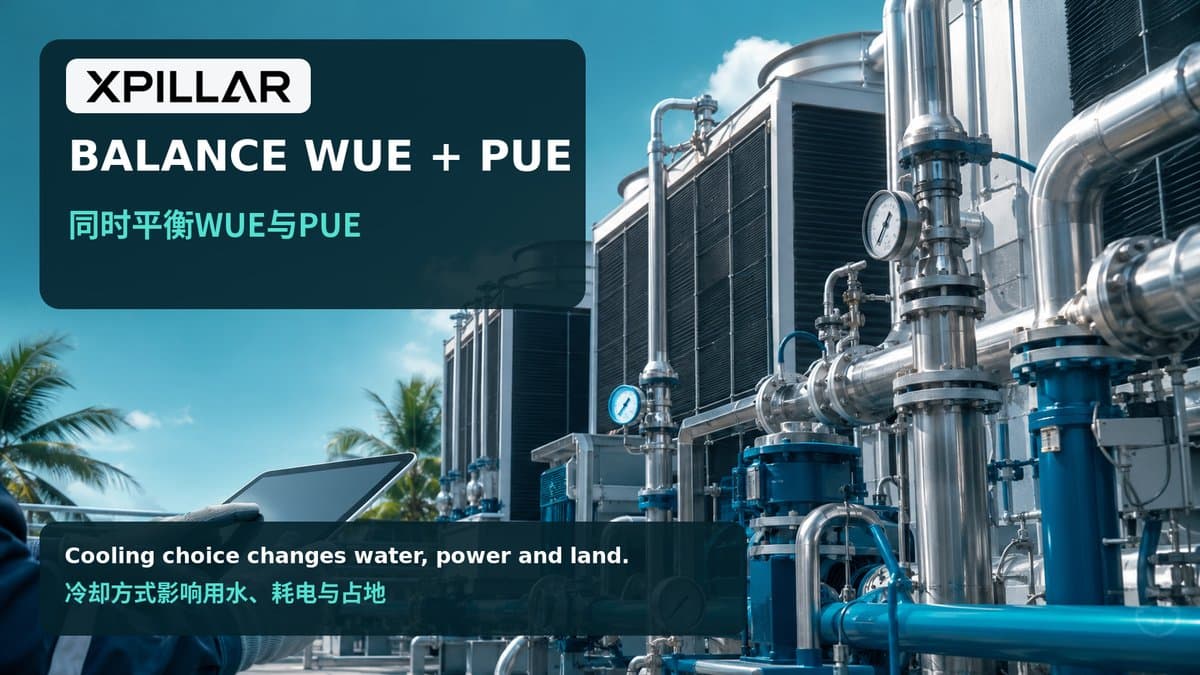
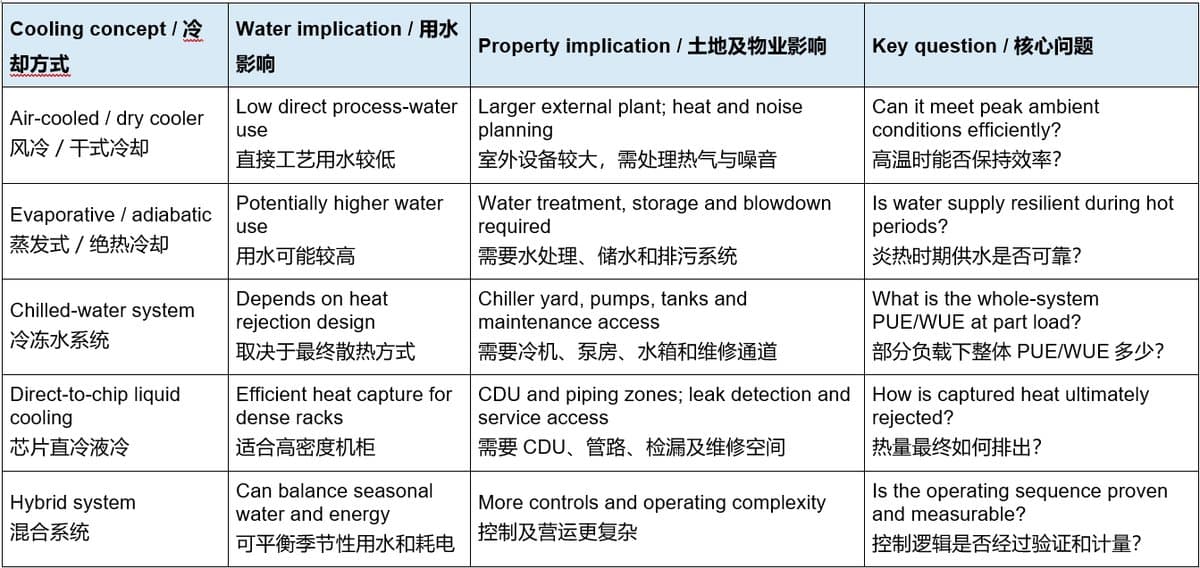
Data-centre cooling design influences water demand, electrical load, plant footprint, noise, capital cost and operating efficiency. A concept based on evaporative cooling may reduce compressor energy in some conditions but increase water consumption. A dry-cooling approach can reduce operational water demand but may use more electricity or require more plant area. Closed-loop liquid cooling can serve high-density racks efficiently, but it still needs a complete heat-rejection strategy.
冷却系统会同时影响数据中心的用水量、耗电量、设备占地、噪音、建设成本和营运效率。蒸发式冷却在某些条件下可降低压缩机耗电,却会增加用水;干式冷却可减少直接用水,但可能需要更多电力或更大的设备空间;闭式液冷能够有效支持高密度机柜,但仍需要完整的最终散热方案。
Therefore, “water available” is not a bankable answer. The buyer needs a written, phased and technically compatible answer covering quantity, pressure, quality, redundancy, connection timing and discharge.
所以,“这里有水”并不是足够可靠的答案。 买方需要的是书面、分阶段并与冷却技术相匹配的供水量、压力、水质、备用方案、接驳时间和排放条件。
1. Prepare a phased water balance—not one headline number 编制分阶段水量平衡表,而不是只看一个总数字
Calculate demand for the initial IT load, each expansion phase and full build-out. Separate process cooling, humidification where applicable, domestic use, cleaning, fire-water make-up and landscape demand. Show daily average, peak-day and emergency requirements.
分别计算首期IT负载、每个扩建阶段和最终满载的需求。把工艺冷却、适用情况下的加湿、生活用水、清洁、消防补水及绿化用水分开,并列出平均日、最高日和紧急状态需求。
The calculation should state the assumed cooling architecture, local design weather, operating hours, cycles of concentration, blowdown and losses. Without these assumptions, two consultants can produce very different demand figures for the same megawatt capacity.
计算必须注明冷却方式、当地设计气候、运行时间、浓缩倍数、排污和损耗。缺少这些假设,同一个兆瓦规模可能产生完全不同的用水答案。
2. Confirm the supply with the actual water operator 向实际供水单位取得书面确认
Ask the relevant state water operator for a written feasibility response. Confirm:
应向相关州属的供水单位申请正式书面可行性意见,并确认:
- available connection point and pipe size;
可用接驳点和管径;
- expected pressure and deliverable flow;
预计压力和可供应流量;
- off-site upgrading or contribution requirements;
场外升级工程或出资要求;
- lead time and dependencies;
所需时间及前置条件;
- water-quality parameters relevant to the cooling plant;
与冷却设备有关的水质参数;以及
- whether the answer covers Phase 1 only or ultimate demand.
确认范围究竟只涵盖第一期,还是最终满载需求。
A nearby main is evidence of proximity, not reserved capacity. The sale agreement should distinguish between a seller’s representation and an operator’s formal confirmation.
附近有水管只代表距离近,不代表容量已经为项目保留。买卖协议应清楚区分卖方的陈述与供水单位的正式确认。
3. Screen water stress before detailed design 在详细设计前筛查水资源压力
The national sustainable-data-centre guideline recommends considering a Water Stress Index below 0.8 for Peninsular Malaysia. Use the official map as an initial screen, then test the conclusion with the water operator, catchment information, supply-zone constraints and projected demand from other developments.
国家可持续数据中心指南建议马来半岛的新项目考虑水资源压力指数低于 0.8 的地点。官方地图只能作为第一层筛选,随后仍须结合供水单位意见、集水区资料、供水分区限制,以及其他新发展项目的预计需求进一步核实。
Water stress is not the same as “no water.” It is a signal that resilience, efficiency and stakeholder scrutiny may be more important.
水资源压力并不等于“完全没有水”,而是说明项目更需要重视供水韧性、用水效率及利益相关者审查。
4. Compare cooling strategies on both WUE and PUE 同时比较WUE与PUE,而不是只看节水
Do not optimise WUE in isolation. A low-water design that materially raises energy consumption may weaken the total business case. Compare options using a common IT-load profile and the same Malaysian weather data.
不能只追求低WUE。如果节水方案显著增加耗电,整体商业效益可能反而变差。所有方案应采用相同的IT负载曲线和马来西亚气候数据进行比较。
5. Design for interruption—not only normal supply 按供水中断情景设计备用能力
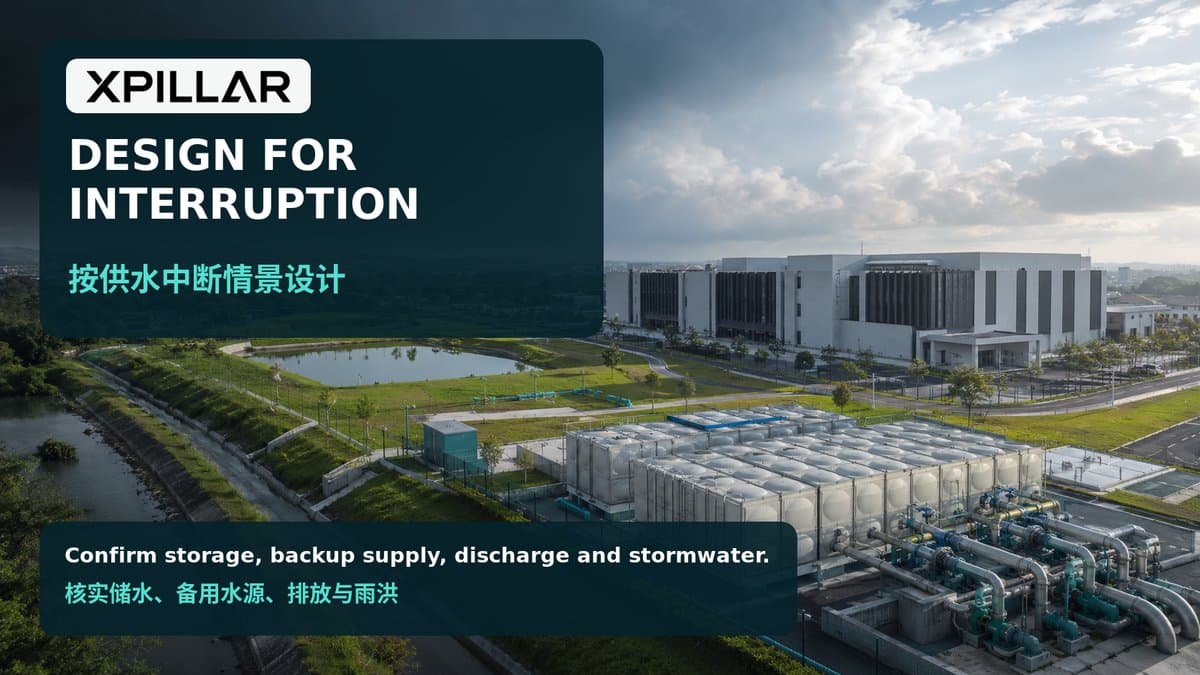
The resilience plan should define how long cooling can continue if incoming water is restricted. Check whether on-site tanks, dual feeds, recycled-water availability, alternative operating modes or reduced-load procedures are technically and commercially realistic.
韧性方案应说明进水受限时,冷却能够持续多久。核对场内水箱、双路供水、再生水、替代运行模式或降载程序是否在技术及商业上真正可行。
Storage volume must be based on a scenario, not a generic number of hours. Include usable tank volume, pump redundancy, treatment capacity, refill rate and simultaneous fire-water requirements. Do not assume process-water storage can substitute for a separately required fire-water system.
储水量必须根据明确事故情景计算,而不能只说“可以支持几个小时”。计算还应考虑有效水箱容量、泵组冗余、处理能力、补水速度及同时存在的消防用水需求。不能假设工艺储水可以自动取代独立要求的消防储水系统。
6. Test water quality and treatment requirements 检查水质和处理要求
Raw water quality affects scaling, corrosion, biological control, filtration, chemical use, equipment life and blowdown volume. Obtain representative water-quality data and ask the mechanical engineer and equipment suppliers to specify treatment requirements.
原水水质会影响结垢、腐蚀、微生物控制、过滤、化学药剂使用、设备寿命和排污量。应取得具代表性的水质资料,并让机电工程师及设备供应商确认处理要求。
If reclaimed water is proposed, verify its source, quality consistency, delivery arrangement, outage risk, treatment responsibility and permissions. Reused water can improve potable-water resilience, but an unconfirmed future pipeline should not be treated as existing infrastructure.
若计划使用再生水,应核实来源、水质稳定性、输送安排、中断风险、处理责任和批准条件。循环或再生水可以提高自来水供应韧性,但尚未落实的未来管线不能当作现有基础设施。
7. Verify wastewater and cooling-tower blowdown discharge 确认废水及冷却塔排污去向
Identify every discharge stream, its expected flow and quality, and the accepting system. Confirm whether pre-treatment, monitoring, separate drainage, trade-effluent approval or off-site works are required.
列出每一种排放水流、预计流量和水质,并确认接收系统。核实是否需要预处理、监测、独立管线、工业排放批准或场外工程。
Keep process discharge, sanitary sewage and stormwater conceptually separate. A convenient drain on a survey plan is not proof that industrial discharge is acceptable.
工艺排水、生活污水和雨水应分别处理。测量图上有一条方便的排水沟,并不代表可以排放工业废水。
8. Model stormwater for a tropical site 按热带暴雨条件设计雨洪系统
Data centres contain highly sensitive equipment and often extensive hardstand, roofs, security setbacks, substations and generator yards. The civil design should assess finished platform levels, overland flow paths, detention requirements, outfall levels, drain reserve, access during storms and the relationship between critical equipment and the design flood level.
数据中心拥有大量高度敏感设备,也通常有大面积硬地、屋顶、保安缓冲区、变电站和发电机区。土木设计必须检查完成平台标高、地表径流路线、调蓄要求、排放口标高、排水保留地、暴雨期间的通行条件,以及关键设备与设计洪水位之间的安全关系。
Malaysia’s Urban Stormwater Management Manual (MSMA) is an important design reference, but local authority and drainage-agency requirements must be confirmed for the particular site.
马来西亚城市雨洪管理手册(MSMA)是重要设计参考,但具体项目仍须确认地方政府及水利灌溉部门对该地块的要求。
9. Reserve enough land for the complete water and cooling system 为完整水务和冷却系统预留土地
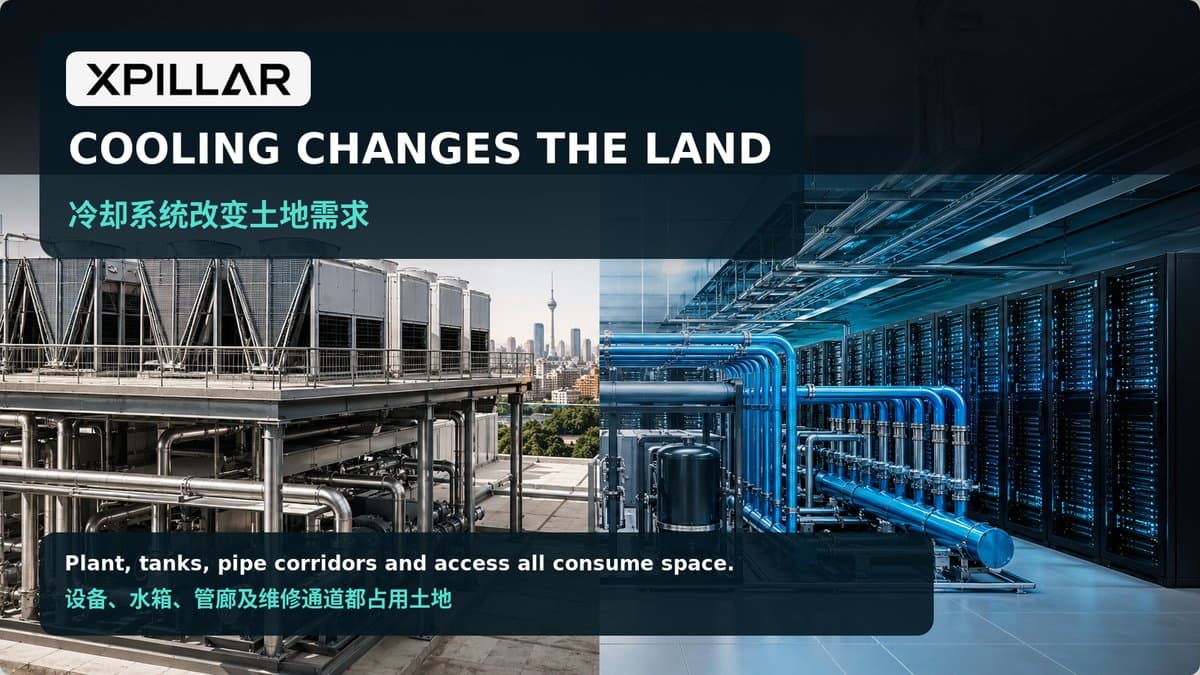
The title area is not the same as usable data-centre area. Allow for cooling plant, tanks, treatment rooms, pump houses, detention ponds, drainage reserves, pipe corridors, maintenance crane access, acoustic setbacks, security zones and future modules.
地契面积不等于可用数据中心面积。总体规划必须预留冷却设备、水箱、水处理房、泵房、调蓄池、排水保留地、管线走廊、吊装维修通道、噪音缓冲区、保安区域和未来扩建模块。
Protect these footprints in the site master plan before calculating saleable or lettable technical capacity. A compact site may support fewer IT megawatts than a simple plot-ratio calculation suggests.
应先在总平面图中保护这些空间,再计算项目可以支持多少IT兆瓦。面积紧凑的土地,其实际技术容量可能远低于简单容积率推算。
10. Put measurable conditions into the transaction 把可量化的关键条件写入交易文件
Where water or drainage is critical, the sale, lease or option documentation should give the buyer time and access to complete studies and obtain written confirmations.
如果供水或排水决定项目可行性,买卖、租赁或选择权文件应给予买方足够时间和场地权限完成研究并取得书面确认。
Depending on the transaction, protections may include:
视交易情况,可考虑:
- a due-diligence period with site access;
包含进场权的尽调期限;
- conditions precedent tied to utility feasibility;
以公用设施可行性作为交易先决条件;
- a defined acceptable capacity and connection date;
明确可接受的容量和接驳日期;
- rights to undertake surveys and applications;
进行测量、调查及申请的权利;
- disclosure of prior correspondence and approvals;
披露过往往来文件及批准;以及
- a price adjustment, extension or termination mechanism if a critical assumption fails.
如果关键假设不成立,可启动调价、延期或终止机制。
Legal drafting should be handled by Malaysian counsel. Technical advisers should make the requirements measurable enough for the lawyers to document.
法律条款应由马来西亚律师拟定;技术顾问则应把项目要求写成足够明确、可量度的条件,让律师能够纳入交易文件。
A practical document request list 买方实用资料清单
Before making an unconditional commitment, request:
在作出无条件承诺前,建议索取:
- title, survey and topographic information;
地契、测量及地形资料;
- planning and land-use particulars;
规划与土地用途资料;
- utility correspondence and previous water applications;
供水单位往来信函及既有申请;
- proposed IT-load and cooling narrative by phase;
各阶段IT负载和冷却设计说明;
- water balance and WUE calculation;
水量平衡表及WUE计算;
- preliminary drainage and detention concept;
初步排水与调蓄方案;
- water-quality data and treatment basis;
水质资料及处理基础;
- wastewater and blowdown discharge concept;
废水和排污水方案;
- flood, platform-level and outfall information;
洪水、平台标高和排放口资料;
- environmental screening and approval matrix;
环境筛查及批准矩阵;
- site master plan showing all plant and reserves;
显示全部设备和保留地的总平面图;以及
- preliminary capital-cost and programme risk register.
初步资本开支与进度风险清单。
Red flags that deserve escalation 需要提高警惕的情况
“There is a large pipe nearby” but no operator letter.
只说“附近有一条大水管”,却没有供水单位书面确认。
Water demand is quoted without identifying the cooling system.
报出用水量,却没有说明采用什么冷却方式。
Phase 1 has supply, but ultimate build-out has not been assessed.
只确认第一期供水,却没有评估最终满载需求。
Reclaimed water is assumed from a proposed facility with no committed delivery date.
假设未来会有再生水,却没有落实的供应日期。
Blowdown is shown entering a storm drain without acceptance evidence.
把冷却塔排污直接接入雨水沟,却没有接收单位允许的证据。
The detention pond or tank footprint is omitted from the land-efficiency calculation.
土地效率计算遗漏调蓄池或水箱占地。
Backup storage is stated in hours without defining the failure scenario.
只说储水能够支持若干小时,却没有定义实际故障或中断情景。
Cooling equipment is placed close to a boundary without acoustic or maintenance review.
冷却设备靠近土地边界,但没有进行噪音或维修通道审查。
Platform level is selected without coordinated flood and outfall analysis.
平台标高没有与洪水及排放口分析协调。
Conclusion 总结
For data-centre land, water is not a secondary utility. It connects site selection, cooling design, energy efficiency, resilience, planning, environmental compliance and the real amount of developable land.
对数据中心用地而言,水并不是次要公用设施。它同时连接选址、冷却设计、能源效率、运营韧性、规划、环境合规和实际可开发面积。
The strongest acquisition decision is therefore made by a multidisciplinary team—property adviser, data-centre engineer, civil and drainage engineer, utility specialist, environmental consultant and lawyer—working from the same phased capacity plan.
因此,最稳健的收购决定应由多专业团队共同完成,包括工业地产顾问、数据中心工程师、土木及排水工程师、公用设施专家、环境顾问和律师,并且所有人都应依据同一份分阶段容量计划工作。
XPillar can help buyers identify suitable industrial land, organise property-level information and coordinate the commercial due-diligence pathway; technical capacity and approvals must ultimately be confirmed by the relevant professionals and authorities.
XPillar可以协助买方筛选合适的工业土地、整理物业层面的资料并协调商业尽调流程;最终技术容量和正式批准仍须由相关专业人士及主管单位确认。
Official references: MIDA — Guideline for Sustainable Development of Data Centre; MIDA — Sustainable Cooling Solutions, 1 October 2025; Department of Irrigation and Drainage — MSMA; SPAN official portal.
官方资料: MIDA《数据中心可持续发展指南》;MIDA可持续冷却资料(2025年10月1日);马来西亚水利灌溉局MSMA;SPAN官方网站。
Frequently Asked Questions
常见问题
1. Is a nearby water main enough proof for a data-centre purchase?
附近有水管,就足够证明土地适合数据中心吗?
No. The buyer should obtain written confirmation of capacity, pressure, connection scope, timing and any upgrading requirement from the relevant operator.
不够。买方应向相关供水单位取得容量、压力、接驳范围、时间和升级要求的书面确认。
2. What WUE should a Malaysian data centre consider? 马来西亚数据中心应参考什么WUE?
Malaysia’s sustainable-data-centre guideline recommends a design WUE of 2.2 m³/MWh or lower, with continued monitoring and improvement. Project requirements may be more stringent.
国家可持续数据中心指南建议设计WUE为 2.2立方米/兆瓦时或以下,并持续监测和改善;个别项目可能需要更严格指标。
3. Does liquid cooling eliminate water risk? 液冷是否能完全消除水资源风险?
No. It can reduce heat-transfer losses and support dense racks, but the project still needs a complete heat-rejection, make-up water and emergency operating strategy.
不能。液冷有助于提高高密度机柜的散热效率,但项目仍需要完整的最终散热、补水和紧急运行方案。
4. Can reclaimed water be used? 可以使用再生水吗?
The national guideline encourages reclaimed or reused water. Feasibility depends on source, quality, reliability, treatment, connection and approvals.
国家指南鼓励使用再生水或循环水,但可行性取决于来源、水质、可靠性、处理、接驳和批准。
5. What should be made a condition precedent? 哪些事项应列为交易先决条件?
This depends on the deal, but critical utility capacity, acceptable connection timing and required access for studies are common points to discuss with Malaysian legal and technical advisers.