
A practical guide to site history, soil and groundwater assessment, remediation exposure and transaction protection for industrial-property buyers, tenants, investors and developers.
一份为工业地产买家、租户、投资者及发展商而设的实用指南,涵盖厂址历史、土壤与地下水评估、修复风险及交易保障。
The answer first/ 先说结论
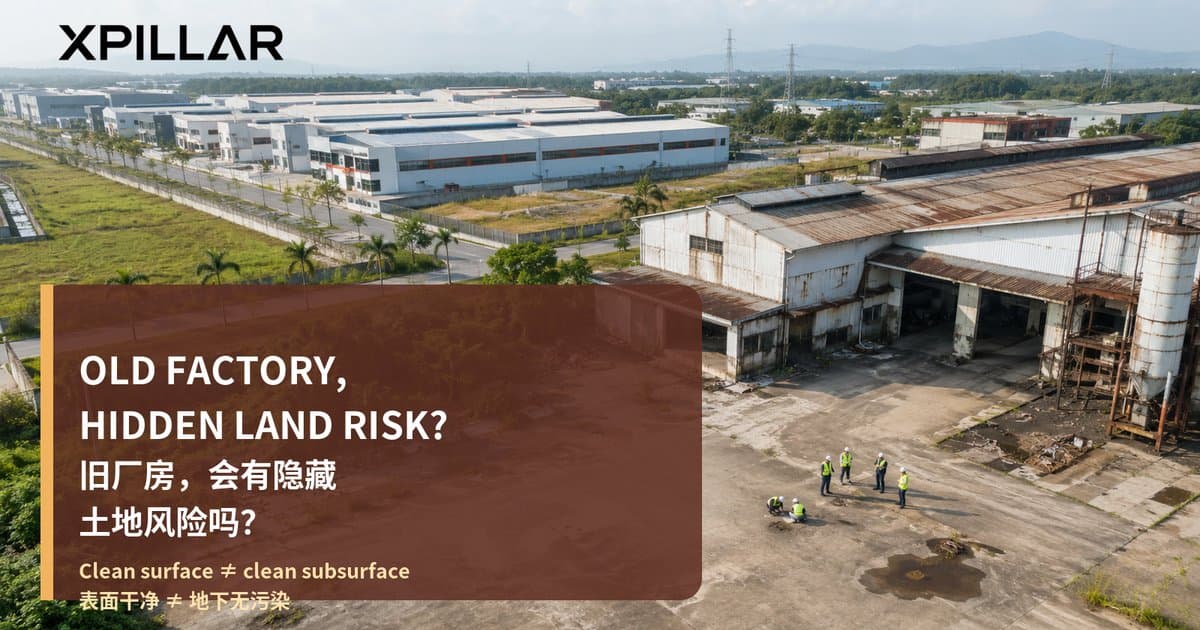
Do not decide that an old Malaysian factory is “clean” or “contaminated” from its appearance, current use or one generic soil test.
不要只凭外观、目前用途或一次普通土壤检测,就判断马来西亚旧厂房“没有污染”或“已经污染”。
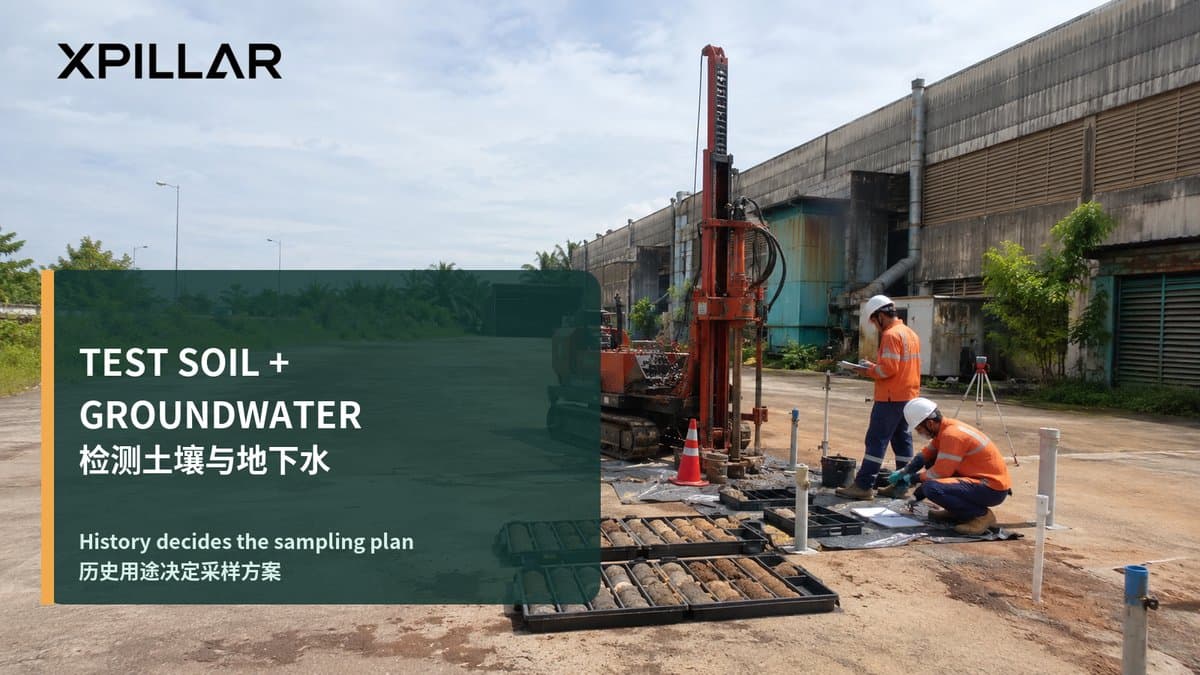
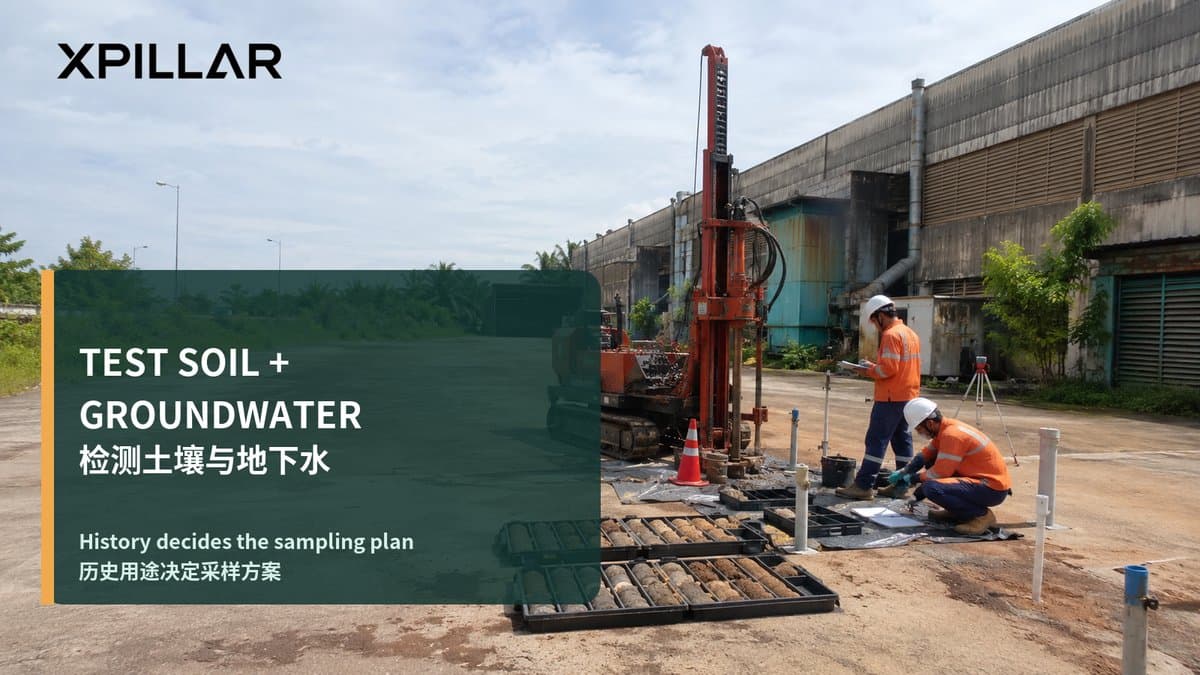
Begin with the site’s full operating history and a professional initial assessment. If potential sources or pathways are identified, use a site-specific investigation to test the relevant soil and groundwater.
正确做法是先追查完整营运历史并完成专业初步评估;若发现潜在污染源或迁移路径,再按照具体厂址调查相关土壤与地下水。
Where results indicate concern, define the extent, evaluate risk against the intended future use, develop the remediation or control strategy, and reflect the scope, cost, responsibility, access and completion evidence in the transaction documents before the acquisition or lease becomes unconditional.
结果若显示需要关注,应界定污染范围、根据未来用途评估风险、制定修复或控制方案,并在买卖或租赁交易成为无条件之前,把工程范围、成本、责任、进场权及完成证明写入合同。
Malaysia’s Department of Environment (DOE) contaminated-land framework expressly treats property transfer and redevelopment as situations that may require assessment.
马来西亚环境局(DOE)的污染土地管理框架明确把物业转让及重新发展列为可能需要评估的情况。
DOE’s first contaminated-land guideline also states that sellers or owners should disclose soil and groundwater information and that buyers should perform soil and groundwater assessment as part of pre-transaction due diligence.
DOE第一号指南也说明,卖方或业主应披露有关土壤与地下水的资料,而买家应在交易前尽调中进行土壤与地下水评估。
This makes contaminated-land review a property decision—not merely a factory operator’s later compliance issue.
因此,土地污染审查属于房地产交易决策,并不是等到新工厂营运后才处理的合规问题。
Important: This article is general property information, not environmental, engineering, legal, valuation or tax advice.
重要说明: 本文只提供一般工业地产资料,不构成环境、工程、法律、估值或税务意见。
Investigation scope and responsibility depend on the actual site, transaction, intended use, contracts and authorities.
调查范围及责任取决于实际厂址、交易结构、未来用途、合同与主管机关。
Appoint appropriately qualified Malaysian professionals and obtain project-specific advice before committing.
作出承诺前,应委任具备适当资格的马来西亚专业人士,并取得项目专属意见。
Geotechnical risk and contamination risk are not the same
岩土风险与污染风险并不相同
A geotechnical investigation normally asks whether the ground can support a building, road, platform, tank or machine foundation.
岩土勘察通常关注土地能否承载建筑物、道路、平台、储罐或机器基础。
A contaminated-land assessment asks what substances may be present, where they came from, how they may move through soil, groundwater or vapour, who or what may be exposed, and whether the risk is acceptable for the intended use.
污染土地评估则关注可能存在什么物质、污染从哪里产生、如何通过土壤、地下水或蒸气迁移、哪些人或环境可能接触,以及针对拟议用途有关风险是否可以接受。
The two workstreams can share drilling access and geological information, but one report should not be assumed to answer the other.
两项工作可以共享钻探通道和地质资料,但不能假设其中一份报告能够代替另一份。
A site may have strong ground and a contamination issue; it may also have soft ground with no evidence of contamination.
一个厂址可能地基坚固却存在污染,也可能软土严重但没有污染证据。
Which past activities justify closer review?
哪些历史用途需要加强审查?
Past industrial use does not automatically prove contamination.
过去曾作工业用途,并不自动证明土地已受污染。
It determines what questions, records and sampling strategy are reasonable.
但它会决定应提出什么问题、索取哪些记录,以及采用怎样的采样方案。
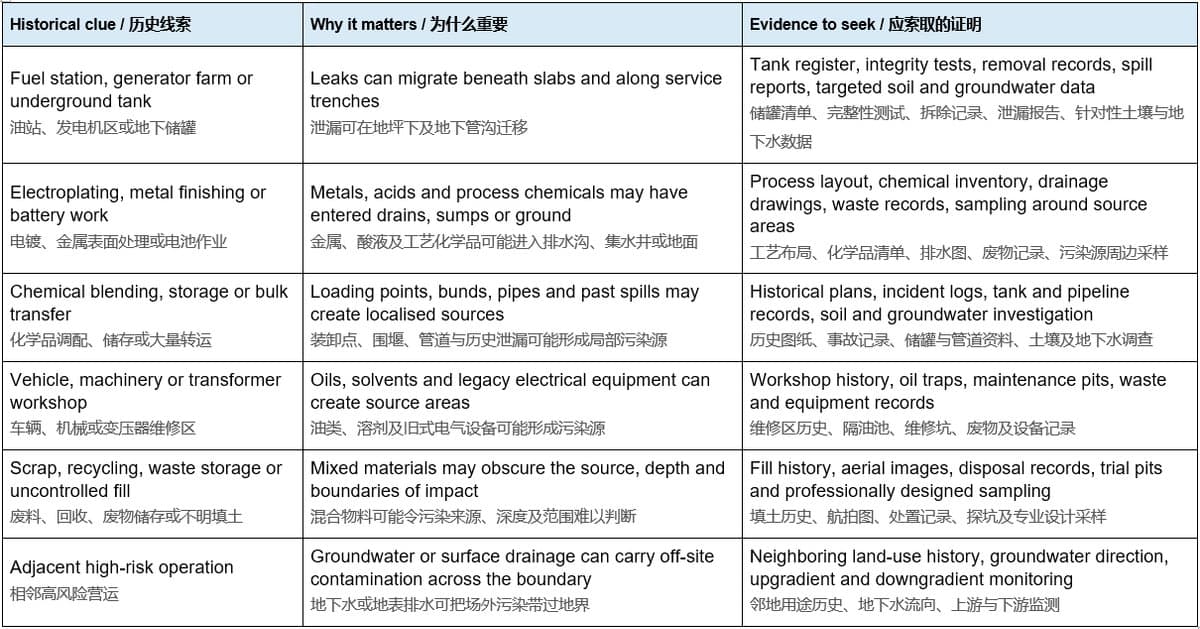
DOE’s screening guideline lists potentially polluting activities, while its assessment guideline directs reviewers to examine former processes, releases, waste practices, tanks, utilities, neighboring properties and hydrogeology.
DOE筛查指南列出可能污染地下土壤与地下水的活动,其评估指南则要求审查旧生产工序、泄漏、废物处理、储罐、地下设施、邻近物业及水文地质。
The 12 contaminated-land checks
12项污染土地检查
1. Define the intended future use before testing 检测前先确定未来用途
Risk depends partly on exposure.
风险部分取决于接触方式。
A logistics yard, food factory, data centre, childcare-linked workplace, high-excavation redevelopment and residential conversion do not create the same pathways or receptors.
物流堆场、食品厂、数据中心、设有托儿设施的工作场所、大规模开挖重建及改作住宅,并不具有相同的迁移路径或受体。
Record the proposed buildings, basements, utilities, earthworks, workers, sensitive neighbours, groundwater use and long-term exit plan before setting the investigation scope.
确定调查范围前,应记录拟建建筑、地下室、公用设施、土方工程、员工、敏感邻居、地下水用途及长期退出计划。
2. Confirm the exact transaction and land boundary 确认交易结构与准确地界
Identify whether the buyer is acquiring the land and building, shares in a property-owning company, only part of a parent title, a lease, or a redevelopment right.
先确认买家购买的是土地与建筑、持有物业公司的股权、母地契中的一部分、租赁权益,还是重新发展权。
Overlay the legal boundary with former operating areas, tanks, drains, fill and neighbouring sources.
应把法定地界与旧营运区、储罐、排水、填土及邻近污染源叠合。
A contamination plume does not stop at a fence or proposed subdivision line.
污染带不会因为围篱或建议分割线而停止迁移。
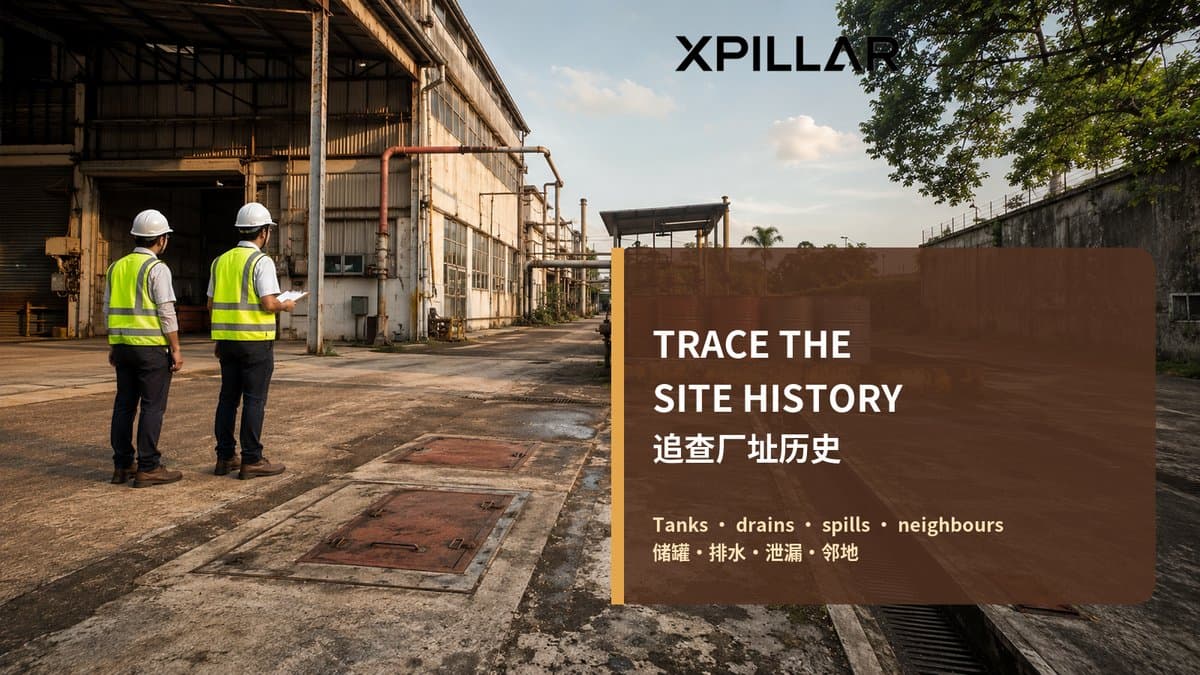
3. Build a chronological site-use history 建立按时间排序的厂址用途历史
Do not review only the last tenant.
不要只调查最后一家租户。
Establish when the land was first developed; every known operator and process; former building footprints; demolition and filling; tank installation and removal; chemical, waste and fuel areas; fires, spills and complaints; and material changes in drainage.
应追查土地何时开始开发、历任营运者及生产工序、旧建筑位置、拆除与填土、储罐安装与拆除、化学品、废物及燃油区域、火灾、泄漏与投诉,以及排水系统的重大改变。
Use title and planning records, approved plans, aerial or satellite history, owner files, interviews and regulatory records where available.
可按实际情况使用地契和规划记录、核准图、历史航拍或卫星图、业主档案、访谈及监管记录。
4. Demand a structured seller data room 要求卖方建立有结构的资料室
Ask for all earlier environmental assessments, soil and groundwater results, remediation plans, closure evidence, DOE correspondence, scheduled-waste records, spill and complaint logs, drainage and utility plans, tank registers, integrity tests, demolition records, insurance claims, licences and notices.
应索取过去所有环境评估、土壤与地下水结果、修复方案、完成证明、DOE往来文件、受管制废物记录、泄漏与投诉记录、排水和公用设施图、储罐清单、完整性测试、拆除记录、保险索赔、执照及通知。
Missing records do not prove contamination, but they increase uncertainty and may change the scope, price or transaction conditions.
资料缺失并不等于土地受污染,但会增加不确定性,并可能改变调查范围、价格或交易条件
5. Walk the site with its history in hand 带着历史资料进行现场踏勘
Inspect former process bays, chemical stores, loading areas, workshops, sumps, drains, oil interceptors, pits, wells, transformers, above-ground and underground tanks, distressed vegetation, unusual fill, stains, odours and patched slabs.
现场检查应涵盖旧生产区、化学品仓、装卸区、维修区、集水井、排水沟、隔油池、地坑、水井、变压器、地上和地下储罐、异常枯萎植物、不明填土、污渍、气味及修补地坪。
The objective is not to diagnose contamination by sight; it is to test whether the records and current physical evidence tell the same story.
目的不是凭肉眼诊断污染,而是核对文件与现场证据是否讲述同一个事实。
6. Review adjacent land and groundwater movement 审查邻地及地下水迁移
Contamination may originate off-site or migrate beyond the property.
污染可能来自场外,也可能从厂址迁移到邻地。
Review past and present neighbouring uses, surface-water routes, drainage, topography, groundwater depth and likely flow direction.
应审查邻地过去与目前用途、地表水路线、排水、地形、地下水深度及可能流向。
A credible sampling plan may need background, upgradient and downgradient locations instead of testing only obvious areas within the fence.
可信的采样方案可能需要设置背景点、地下水上游点及下游点,而不是只检测围篱内肉眼可见的位置。
7. Appoint the right independent environmental professional 委任合适且独立的环境专业人士
DOE’s assessment guideline assigns key investigation work to registered contaminated-land professionals, including the Registered Environmental Site Assessor or Registered Contaminated Land Manager.
DOE评估指南把关键调查工作交由注册污染土地专业人士处理,包括注册环境场地评估师或注册污染土地经理。
Confirm the current registration, relevant project experience, scope, professional independence, laboratory arrangements and reliance rights for the buyer or financier.
买家应核实当前注册状态、相关项目经验、工作范围、专业独立性、实验室安排,以及买家或融资方能否依赖有关报告。
DOE’s myCEP portal is the appropriate starting point for current professional registration information.
DOE的myCEP平台是核实现行专业注册资料的起点。
8. Design targeted soil and groundwater sampling 设计针对性的土壤与地下水采样
Randomly drilling a few holes can miss a localised source.
随意钻几个孔可能完全错过局部污染源。
The conceptual site model should connect potential sources, pathways and receptors, then determine sample locations, depths, media, analytes, laboratory methods and quality control.
概念场地模型应连接潜在污染源、迁移路径与受体,再决定采样位置、深度、介质、分析物、实验室方法及质量控制。
Groundwater monitoring-well locations should reflect suspected sources, flow direction and possible off-site influence.
地下水监测井的位置也应反映可疑污染源、水流方向及可能的场外影响。
9. Interpret screening results correctly 正确解释筛查结果
DOE’s Malaysian Site Screening Levels are screening tools, not a substitute for professional interpretation or a universal property warranty.
DOE的马来西亚场地筛查值属于筛查工具,不能取代专业解释,也不是适用于所有物业的无污染保证。
Results should be reviewed with detection limits, background conditions, data quality, land use, exposure pathways and the conceptual site model.
结果必须结合检测限、自然背景、数据质量、土地用途、接触路径及概念场地模型进行判断。
A value below a screening level does not cure a poor investigation.
低于筛查值不能弥补错误的调查。
An exceedance generally indicates that further assessment may be needed, not automatically that the site can never be used.
超过筛查值通常代表需要进一步评估,并不自动表示土地永远不能使用。
10. Delineate the extent and assess risk 界定污染范围并评估风险
Where concern is identified, determine the horizontal and vertical extent, affected media, source behaviour and migration.
若发现需要关注的结果,应界定水平与垂直范围、受影响介质、污染源特性及迁移情况。
Risk assessment may then establish whether the risk is unacceptable for the intended use and what site-specific target or controls are appropriate.
之后可通过风险评估判断针对未来用途的风险是否不可接受,并确定适当的场地专属目标或控制措施。
This step turns an isolated laboratory number into a development and transaction decision.
这一步才能把孤立的实验室数字转化为开发与交易决策。
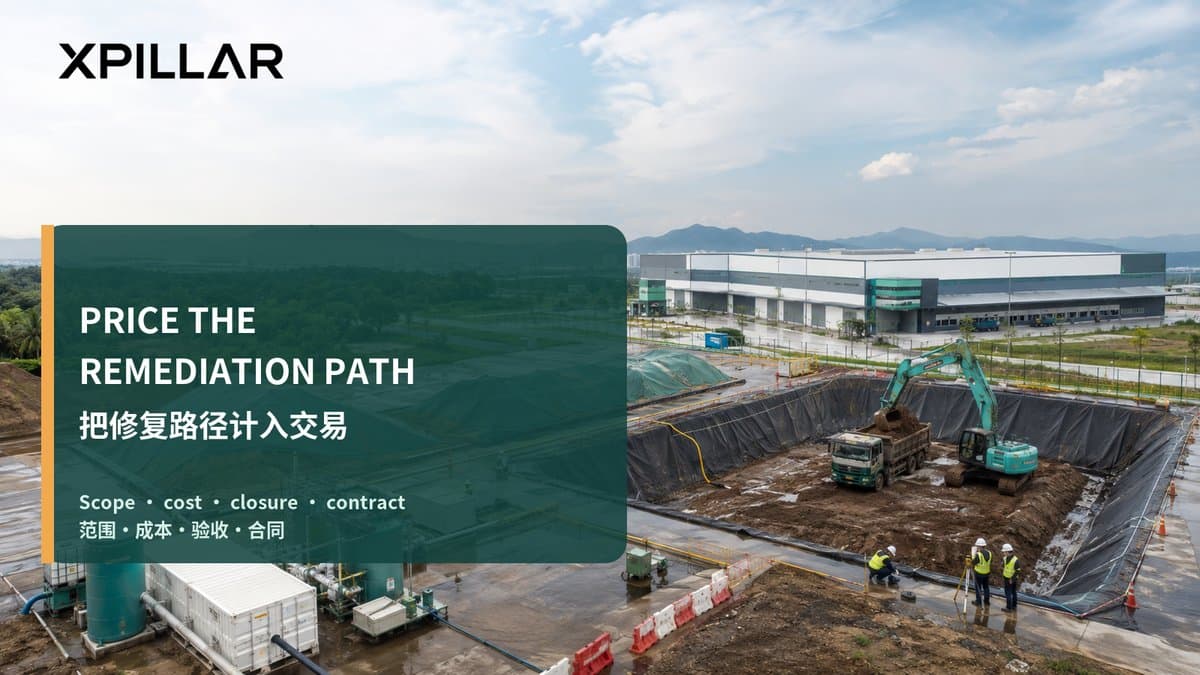
11. Price the remediation and closure pathway 估算修复及完成验收路径
DOE’s third contaminated-land guideline uses a risk-based remediation approach and covers planning, implementation and closure.
DOE第三号指南采用以风险为基础的修复方法,并涵盖方案、实施及完成验收。
Possible responses may include removal, treatment, containment, engineering controls, monitoring or administrative controls, depending on the project.
视项目而定,措施可能包括挖除、处理、封存、工程控制、监测或行政控制。
Budget not only the main works but also design, approvals, temporary works, disposal, imported fill, groundwater management, validation, monitoring, delay, financing and contingency.
预算不应只计算主要工程,还要纳入设计、审批、临时工程、处置、回填材料、地下水管理、验证、监测、延误、融资及预备费。
Earthworks for a new basement or utility corridor may change both exposure and cost.
新建地下室或公用设施走廊的土方工程,也可能改变接触风险与成本。
12. Convert uncertainty into transaction protection 把不确定性转化为交易保障
The offer, sale and purchase agreement, tenancy or development agreement should address disclosure, site access, intrusive investigation, reinstatement, reliance on reports, conditions precedent, approval of the remediation plan, responsibility for historical and new contamination, cost allocation, price retention or other agreed security, completion evidence, long-stop dates, termination and post-completion access.
要约、买卖协议、租赁协议或发展协议应处理资料披露、进场调查、钻探及恢复、报告依赖权、先决条件、修复方案批准、历史与新增污染责任、成本分配、价款保留或其他双方同意的保障、完成证明、最后期限、终止权及完成后的进场权。
Legal drafting must be based on the actual findings—not a generic “as is where is” clause.
法律文件必须依据实际调查结果起草,不能只依赖笼统的“现状交付”条款。
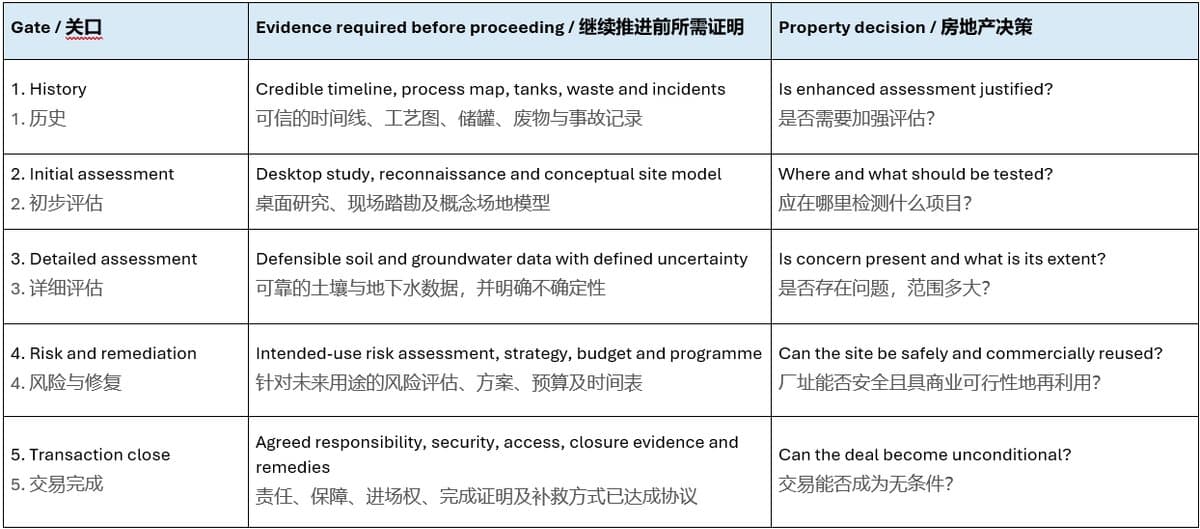
A five-gate decision framework
五个投资决策关口
Evidence to request before signing
签约前应索取的资料
full historical ownership and occupier schedule;
完整的历任业主与占用者清单;
- historical site, process, drainage, tank and utility plans;
历史厂址、工艺、排水、储罐及公用设施图;
- aerial-image and development history;
航拍图及开发历史;
- chemical, fuel and scheduled-waste records;
化学品、燃油与受管制废物记录;
- spill, fire, complaint, enforcement and insurance records;
泄漏、火灾、投诉、执法及保险记录;
- previous environmental, soil, groundwater and remediation reports;
过去环境、土壤、地下水与修复报告;
- tank integrity, decommissioning and removal records;
储罐完整性、停用及拆除记录;
- current and historical neighbouring land uses;
当前及历史邻地用途;
- conceptual site model and investigation plan;
概念场地模型与调查方案;
- laboratory results with quality-control information;
包含质量控制资料的实验室结果;
- risk assessment, remediation action plan and cost estimate, where applicable;
适用时的风险评估、修复行动方案及成本估算;
- validation, closure and monitoring records; and
验证、完成验收及监测记录;以及
- a transaction responsibility matrix with dates and remedies.
包含期限与补救方式的交易责任表。
Common mistakes that create expensive surprises
容易造成重大损失的常见错误
Treating a clean concrete slab as proof of clean soil.
把干净的混凝土地坪当作地下无污染证明。
Relying on a geotechnical borehole report for contamination clearance.
使用岩土钻孔报告代替污染土地调查。
Testing the cheapest standard list without reviewing historical processes.
不调查历史工序,只检测最便宜的标准项目。
Sampling only inside the legal boundary and ignoring groundwater direction.
只在法定地界内采样,却忽略地下水流向。
Assuming the previous operator’s licence proves no historical release occurred.
假设上一家营运者持有执照,就代表从未发生历史泄漏。
Budgeting excavation but not disposal, treatment, groundwater, validation or delay.
只预算挖土,却没有计算处置、处理、地下水、验证及延误。
Signing unconditionally before obtaining intrusive-access rights and results.
尚未取得钻探进场权和结果,就签署无条件交易。
Accepting a broad seller disclaimer without allocating known and unknown risks.
接受宽泛的卖方免责,却没有分配已知与未知风险。
The final decision rule 最终判断原则
An old factory or brownfield site should not be rejected merely because of its age, and it should not be accepted merely because it is paved, operating or attractively priced.
旧厂房或棕地不应只因年代久远就被否决,也不应只因已有地坪、正在营运或价格吸引就直接接受。
The investable question is:
真正的投资问题是:
Do we understand the site’s history, source areas, soil and groundwater condition, intended-use risk, remediation pathway, total cost and contractual responsibility well enough to make the commitment?
我们是否已经充分掌握厂址历史、潜在污染源、土壤与地下水状况、未来用途风险、修复路径、总成本及合同责任,从而能够作出承诺?
XPillar helps manufacturers, logistics operators, data-centre users, investors and developers compare Malaysian industrial properties using the operating and due-diligence evidence that matters.
XPillar协助制造商、物流企业、数据中心用户、投资者及发展商,按照真实营运需求与关键尽调证据比较马来西亚工业物业。
Property screening should then be completed with the relevant Malaysian environmental, engineering, planning, legal and valuation professionals.
之后应由相关马来西亚环境、工程、规划、法律及估值专业人士完成项目专属审查。
Frequently Asked Questions
常见问题
1. Is every old factory in Malaysia contaminated? 马来西亚每一间旧厂房都有土地污染吗?
No. 不是。
Age or industrial use is not proof of contamination.
年代或工业用途并不等于污染证明。
It is a reason to reconstruct site history, identify potential sources and commission a proportionate professional assessment.
它们只是说明需要追查厂址历史、识别潜在污染源,并按风险进行适当的专业评估。
2. Does a geotechnical soil investigation prove that land is environmentally clean? 岩土勘察能否证明土地没有环境污染?
Not usually. 通常不能。
Geotechnical and contamination investigations have different objectives, sampling strategies and laboratory analyses.
岩土与污染调查的目标、采样方案及实验室分析不同。
Their scopes must be reviewed separately.
必须分别审查各自工作范围。
3. Can a buyer rely only on the seller’s declaration? 买家可以只依赖卖方声明吗?
No. 不可以。
Seller disclosure is important, but DOE’s framework also places pre-transaction soil and groundwater due diligence on the buyer.
卖方披露很重要,但DOE框架也要求买家在交易前对土壤与地下水进行尽调。
The scope should reflect the actual history and proposed use.
调查范围应反映实际历史及拟议用途。
4. Does one result above a DOE screening level mean the site cannot be used? 一项结果超过DOE筛查值,是否代表土地不能使用?
Not automatically. 不一定。
Screening levels identify potential concern.
筛查值用于识别潜在问题。
The data quality, extent, background, pathways, receptors and intended use may require further assessment and risk evaluation before a decision is made.
作出决定前,还可能需要评估数据质量、污染范围、自然背景、迁移路径、受体及未来用途。
5. Who should conduct the contaminated-land assessment? 谁应该进行污染土地评估?
Use appropriately registered and experienced Malaysian contaminated-land professionals for the required scope.
应根据所需范围委任具备适当注册及经验的马来西亚污染土地专业人士。
Verify current registration through DOE’s myCEP system and confirm that the buyer and relevant financiers can rely on the deliverables.
通过DOE的myCEP系统核实现行注册,并确认买家及相关融资方可依赖其交付成果。
6. Who pays for remediation after an industrial-property sale? 工业物业出售后,谁承担修复费用?
The answer is project-specific and may involve the polluter, current owner, seller, buyer, operator and contractual arrangements.
答案取决于具体项目,可能涉及污染者、现任业主、卖方、买家、营运者及合同安排。
DOE’s guideline discusses polluter and current-owner responsibility in its framework, but parties should obtain Malaysian environmental and legal advice and allocate investigation, remediation and residual risk expressly in the transaction documents.
DOE指南在其框架内讨论污染者与现任业主的责任,但交易各方仍应取得马来西亚环境与法律意见,并在合同中明确分配调查、修复及剩余风险。
7. Is a contaminated-land assessment the same as an EIA? 污染土地评估是否等于环境影响评估(EIA)?
No. 不是。
Contaminated-land assessment investigates existing or historical site conditions.
污染土地评估调查的是现有或历史厂址状况。
An EIA evaluates a prescribed proposed activity under the Environmental Quality (Prescribed Activities) (Environmental Impact Assessment) Order 2015.
EIA则根据适用法律评估拟进行的指定活动。
A project may require one, both or neither, depending on its facts; determine each requirement separately.
视项目事实而定,可能需要其中一项、两项或都不需要,必须分别确认。