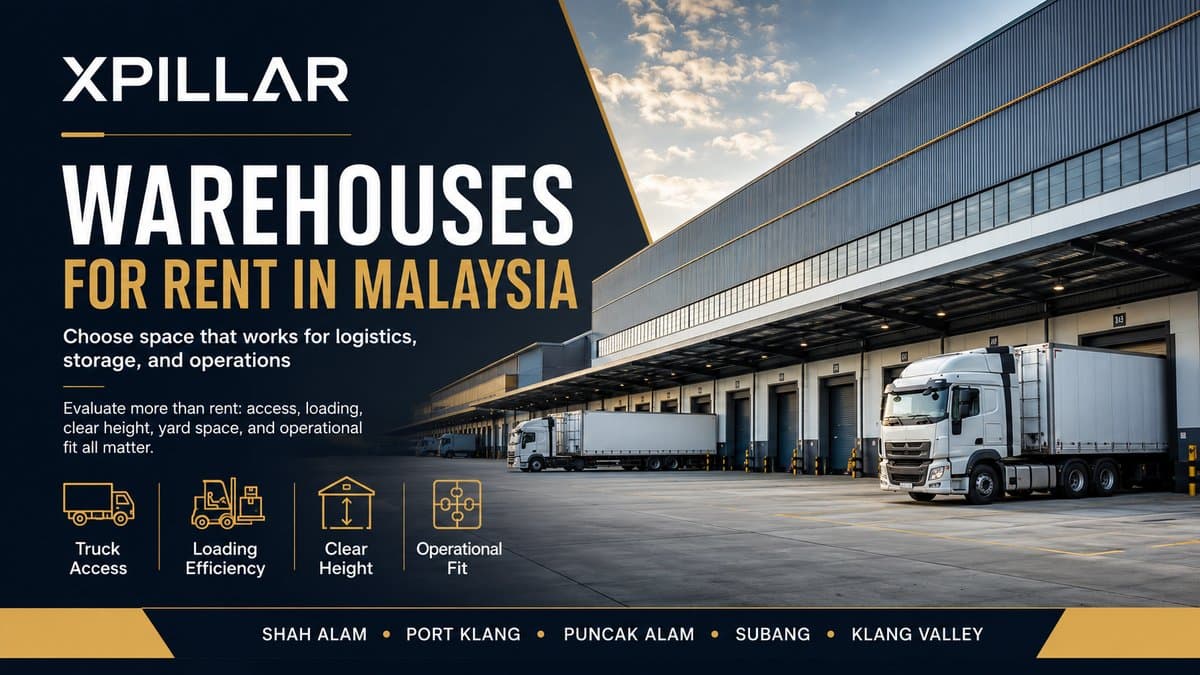
A warehouse that looks workable on paper can fail the moment your first trailer tries to reverse into the loading bay. That is why businesses searching for warehouses for rent in Malaysia need to evaluate more than rental rate and built-up size. For logistics operators, distributors, importers, manufacturers, and investors, the right warehouse is an operating asset. The wrong one becomes a daily bottleneck.
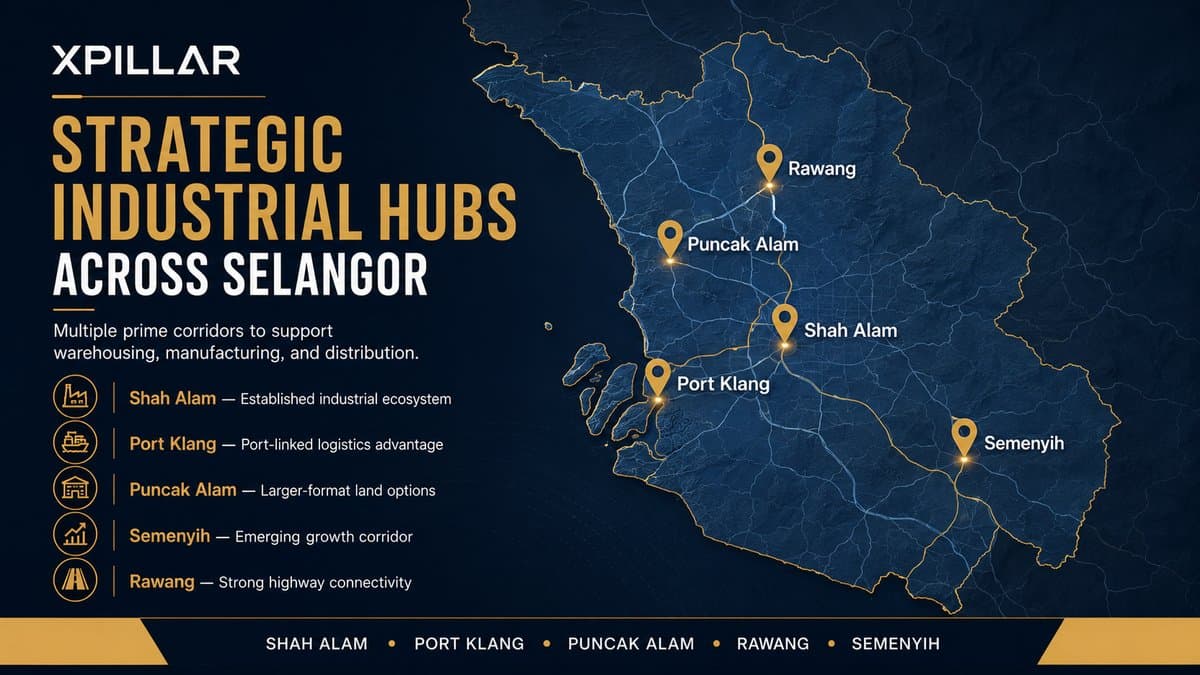
In the Klang Valley and wider Selangor market, warehouse demand is tied closely to transport access, labor availability, industrial clustering, and turnaround speed. A site in Shah Alam may support fast regional distribution. A facility in Port Klang may suit import-heavy users who need port proximity. A warehouse in Puncak Alam or further out may offer better value per square foot, but with trade-offs in travel time, connectivity, or tenant profile. The right decision depends on what the building needs to do, not just where it sits on a map.
Start with function. A warehouse should match your operating model before it matches your budget. If your business runs palletized storage with regular container movements, clear height, loading configuration, yard depth, and truck circulation matter immediately. If you handle light assembly or value-added packaging, power supply, floor loading, office ratio, and worker flow become equally relevant.
This is where many searches lose time. Users compare broad categories instead of matching technical requirements. A 20,000 square foot warehouse and another warehouse of the same size may serve completely different uses. One may have poor access for articulated lorries, limited electrical capacity, and low ceiling clearance. The other may be ready for higher-volume industrial use with proper loading support and stronger infrastructure. Similar size does not mean similar utility.
Location remains the first major filter, but it should be read in layers. The obvious question is whether the property is near your suppliers, customers, highways, ports, or industrial nodes. The more useful question is how that location performs during actual operating hours. A warehouse near a main expressway still may suffer from congestion at the final approach road. A building near dense industrial activity may be efficient for subcontracting and labor, yet slower for outbound traffic during peak periods. Site visits should test movement, not just distance.
Headline rental is only one part of occupancy cost. Businesses that focus only on monthly rent often underestimate what the site will really cost over the lease term. Maintenance obligations, reinstatement exposure, utility upgrades, insurance, security requirements, fit-out spending, and deposit structure all affect the real number.
A lower rent can become expensive if the warehouse needs racking adjustments, office renovation, dock modifications, or electrical upgrading before operations begin. The reverse can also be true. A slightly higher monthly rental may make sense if the building is already configured for your throughput, compliance needs, and truck movement.
This matters even more in established industrial corridors such as Shah Alam, Subang Jaya, and Port Klang, where asking rates often reflect infrastructure quality, access, and demand depth. A premium location may reduce transport cost, improve driver productivity, and shorten delivery windows. For some occupiers, that operational gain justifies the higher rent. For others, especially businesses with lower movement frequency, a more peripheral location may produce better margin.
Lease structure also deserves close review. The useful questions are straightforward. How long is the commitment, what are the renewal terms, who handles major repairs, and what escalation is built into the rental schedule? Industrial tenants should also check whether the permitted use aligns with actual operations, especially if storage includes regulated goods, food-related handling, or supporting production activity.
A warehouse that fits physically but not contractually can still become a poor deal.
Not every market serves the same type of occupier. In Selangor and the Klang Valley, warehouse selection is often driven by corridor logic.
Port Klang typically suits users with port-linked distribution, container traffic, freight forwarding, and import-export operations. The value here is obvious for businesses that need frequent vessel-linked movement or fast transfer from port to storage. The trade-off can be higher demand pressure and tighter competition for well-positioned stock.
Shah Alam remains one of the strongest all-around industrial locations because it supports both warehousing and light to medium industrial activity. It benefits from established industrial ecosystems, labor access, and good highway connectivity. For many occupiers, it offers the best balance of infrastructure, recognizability, and market liquidity.
Subang Jaya and nearby areas can work well for businesses that prioritize centrality, mature infrastructure, and access to urban demand centers. The constraint is often stock age, access limitations on certain roads, or cost compared with more outer-ring locations.
Puncak Alam and selected emerging zones may present more attractive rental value and larger site formats. These locations can suit users with less time-sensitive distribution requirements or those planning expansion with longer operating horizons. The trade-off usually comes down to distance from key nodes and the availability of immediate surrounding services.
For investors, corridor choice affects more than tenant demand. It also shapes vacancy risk, rent resilience, and the type of occupier profile likely to take the space. A warehouse in a prime logistics belt often attracts stronger leasing interest, but entry cost and competition can be higher. Secondary locations may produce better yield spreads, though leasing periods may be less predictable.
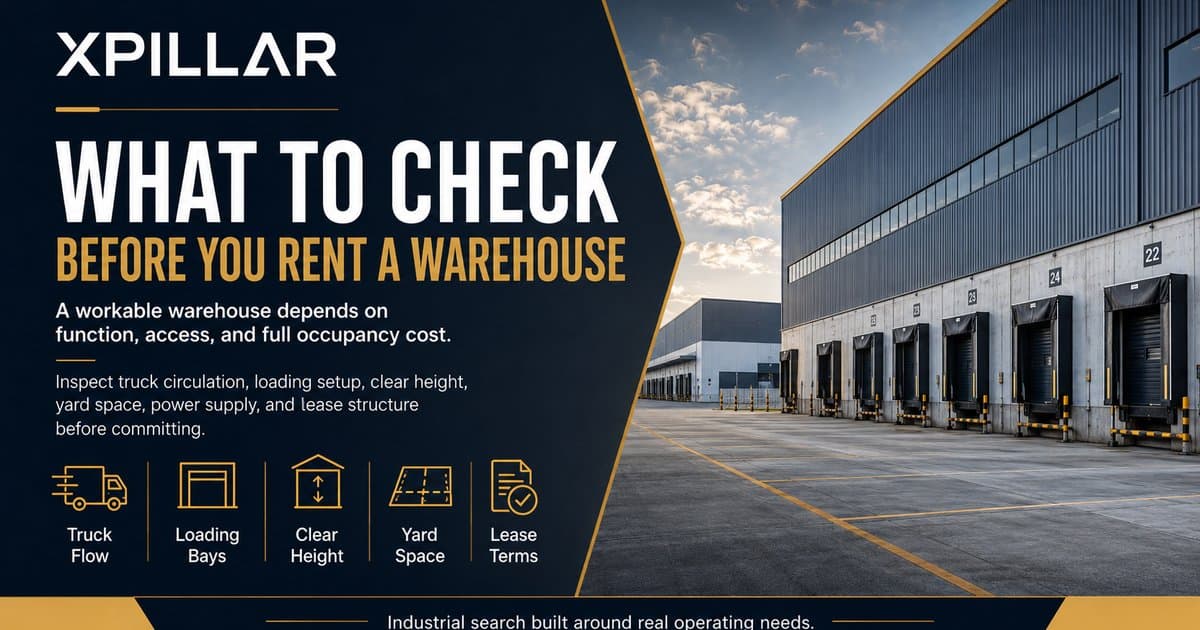
What serious tenants should inspect on-site
Photos and listing details can narrow the search, but they do not replace a physical inspection. Industrial property decisions should be grounded in what the building can handle on an ordinary working day.
The first checkpoint is access. Review road width, turning radius, guardhouse positioning, traffic flow, and whether heavy vehicles can enter and exit without operational friction. Then check loading. A warehouse without the right loading format can slow receiving and dispatch every day, even if the rental rate looks attractive.
Inside the building, inspect clear height, column spacing, floor condition, roof integrity, natural lighting, ventilation, and water ingress history. If your operation relies on machinery or dense storage, power capacity and floor loading are not side issues. They are core decision points. If you need office support, assess whether the office portion is practical or inflated at the expense of usable warehouse area.
Yard space is another common blind spot. Tenants often focus on the internal built-up and only later realize there is not enough room for staging, parking, trailer waiting, or container handling. In logistics and industrial use, external circulation can be as important as the internal floor plate.
Documentation should be checked with the same discipline as the building itself. Confirm land use compatibility, tenancy terms, built-up details, and whether any extensions or modifications were done properly. For occupiers with operational compliance needs, this step should happen early, not after commercial terms are agreed.
The industrial market is not well served by vague listings. Serious tenants and investors need pricing visibility, location precision, size clarity, and asset categorization that reflects transaction intent. A generic listing that says warehouse available in Selangor is not useful if it omits access profile, tenure cues, built-up area, or whether the property suits logistics, storage, or hybrid industrial use.
This is where a focused marketplace has an edge. XPillar is built around industrial and commercial search behavior, which means users can evaluate warehouses by the factors that actually affect decision-making: location, type, size, and pricing visibility. For time-sensitive searches, that structure matters. It cuts down on unsuitable inquiries and helps both tenants and agents move faster toward viable options.
That same discipline benefits owners and landlords. Better listing clarity tends to attract better-matched inquiries. In industrial leasing, relevance is more valuable than broad traffic. A tenant looking for low-clearance storage in a secondary corridor is not the same as a tenant seeking a high-throughput logistics facility near a port. Treating both searches as identical wastes time on both sides.
The best warehouse decision usually comes from a narrow, practical process. Define the operational requirement first, test the location against real movement patterns, inspect the building as an operating facility, and price the deal on full occupancy cost rather than base rent alone. In a market where timing, access, and building specifications can change business performance, the right warehouse is not just available space. It is the space that works the way your business needs it to work.