A warehouse that saves 20 minutes on every outbound trip can outperform a cheaper building in the wrong pocket of Selangor. That is why shah alam industrial properties continue to draw attention from manufacturers, distributors, investors, and owner-occupiers who care less about brochure language and more about access, zoning, labor reach, and usable floor area.
Shah Alam is not a fringe industrial location riding on old reputation. It is still one of the most established industrial markets in the Klang Valley, with mature infrastructure, known industrial sections, and direct relevance for businesses that need dependable movement between factory, warehouse, port, and urban consumption zones. For buyers and tenants, the real question is not whether Shah Alam works. The question is which part of Shah Alam works for the business model, and at what entry price.
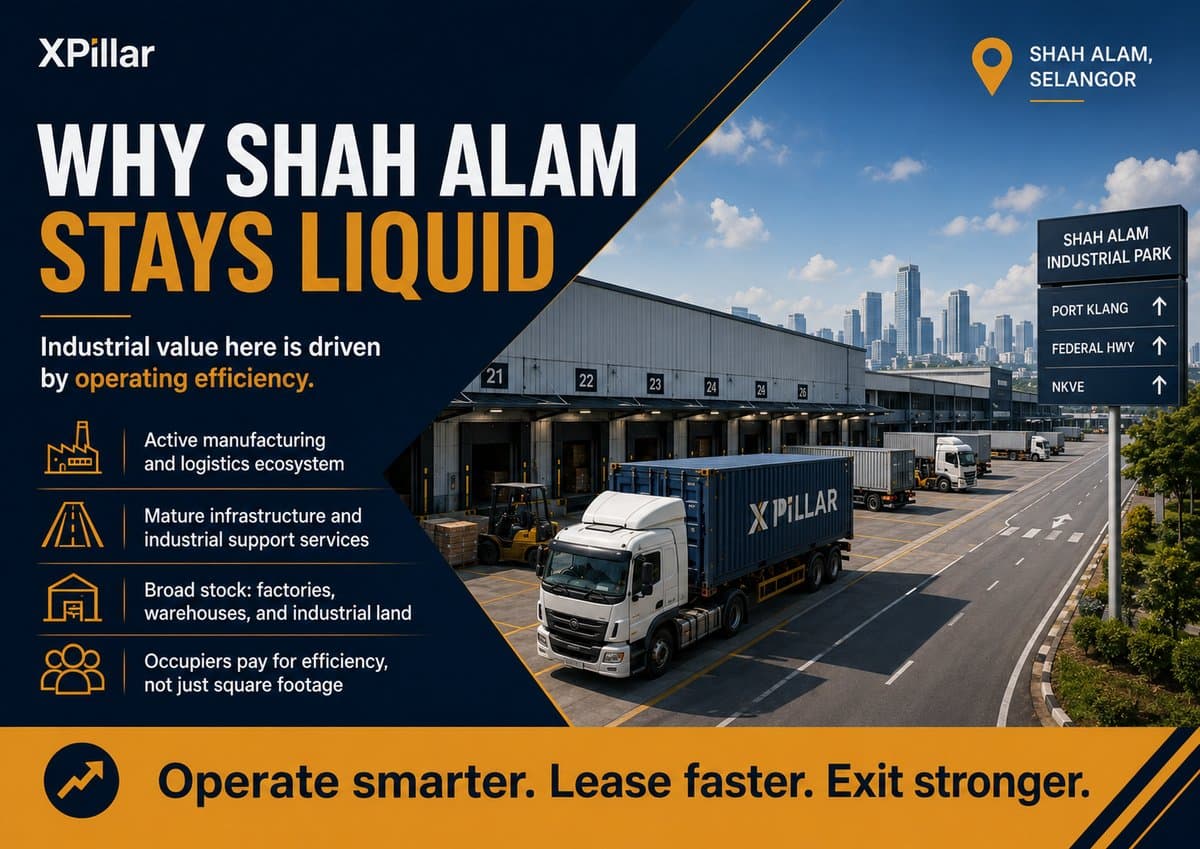
Shah Alam holds a practical advantage that many secondary industrial locations cannot replicate. It sits within an active manufacturing and logistics ecosystem, not an isolated industrial cluster that depends on future promises. Occupiers already understand the area, transporters already serve it, and industrial support services are already present.
That matters because industrial property performance is rarely about the building alone. A factory for sale may look attractive on price per square foot, but if trailer access is poor or workforce catchment is weak, the asset becomes harder to operate and harder to exit later. In Shah Alam, many occupiers are paying for operating efficiency as much as for land and building value.
The market also benefits from variety. Buyers can find detached factories, semi-detached factories, terrace factories, warehouses, and industrial land, while tenants can target ready-built facilities or spaces with room for retrofit. This range keeps transaction activity broad. A logistics operator, food manufacturer, engineering company, and investor may all be searching in Shah Alam, but they are not necessarily competing for the exact same stock.
A common mistake is treating Shah Alam as one uniform industrial market. It is not. Different sections carry different strengths, limitations, and pricing logic. Some areas are better for general warehousing. Others fit production users who need power supply, broader road access, or older but larger industrial plots.
Established industrial sections often command stronger interest because businesses know what they are getting. Road networks, neighboring occupiers, and utility support are easier to assess. In practical terms, this reduces site selection risk. Newer or less proven pockets may offer better headline pricing, but the trade-off can be longer market acceptance, fewer nearby industrial services, or less efficient traffic flow for heavy vehicles.
For investors, section-level analysis matters because tenant demand is not evenly distributed. A generic warehouse in a proven industrial corridor can lease faster than a better-looking asset in a weaker pocket. For owner-occupiers, the same logic applies to future resale. The right section can protect value even if the building later needs refurbishment.
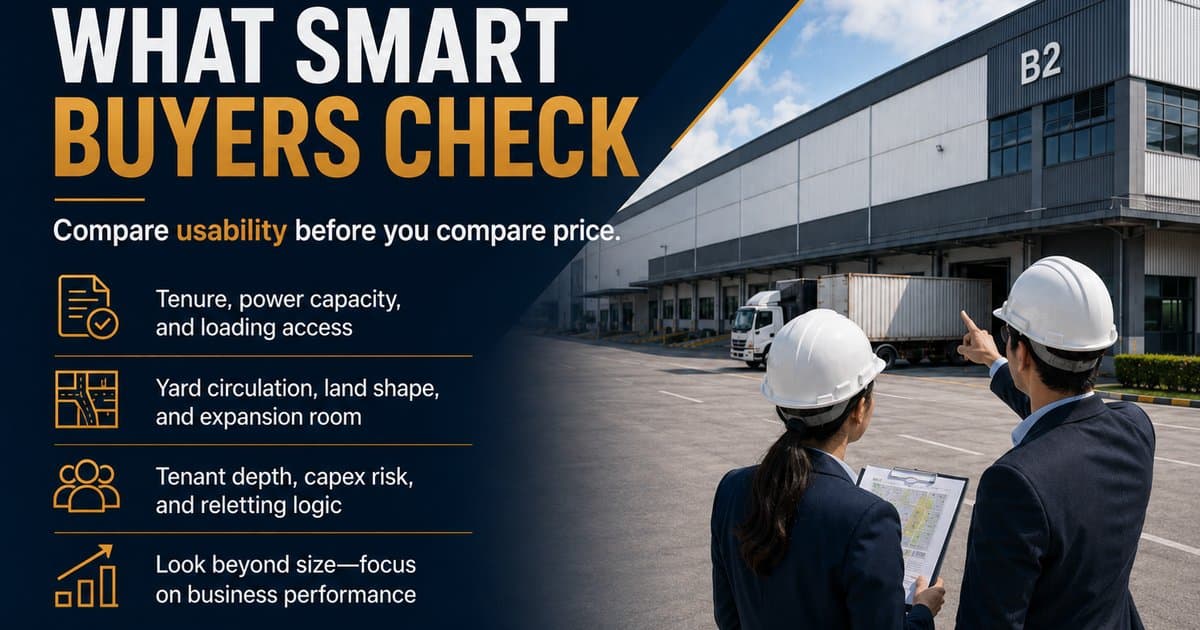
Most serious buyers are not searching by city name alone. They are filtering by transaction intent and operating need. A manufacturer may prioritize floor loading, ceiling height, power capacity, and expansion room. A logistics user may focus on loading bays, container accessibility, highway links, and yard circulation. An investor may look at tenancy profile, lease term, rebuild potential, and land tenure.
This is why advertised pricing without property specifics only goes so far. Two industrial assets with similar built-up sizes can trade very differently if one has better frontage, higher power capacity, more regular land shape, or freehold tenure. Even age is not a simple discount factor. An older factory in a highly recognized industrial section may hold stronger value than a newer building in a less practical location.
In Shah Alam, tenure still shapes buyer behavior. Freehold stock usually attracts a wider field of interest, especially for businesses making long-term capex decisions. Leasehold assets can still move well if pricing is sensible and the site supports immediate operations, but the buyer pool may narrow depending on remaining tenure and financing conditions.
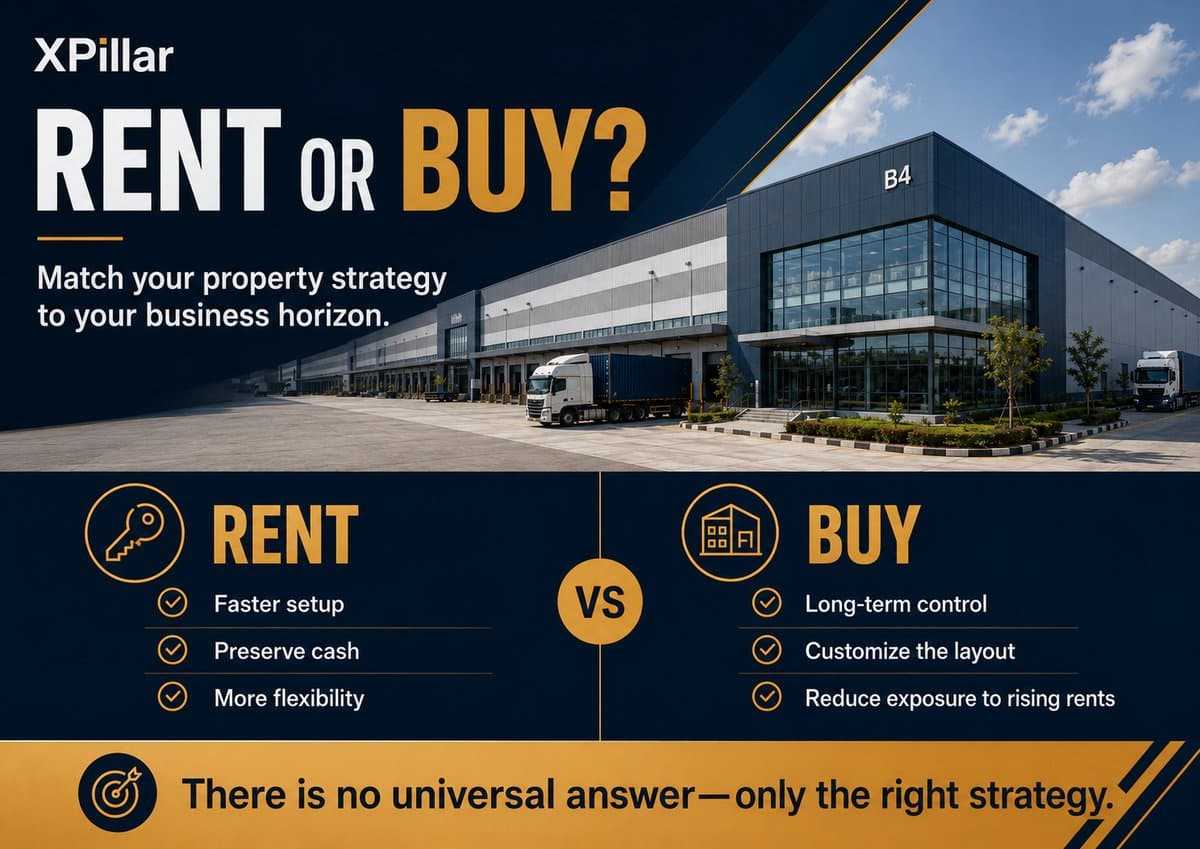
Renting works best when speed and flexibility matter more than long-term capital positioning. A tenant can secure operational space faster, preserve cash, and avoid tying capital into land. This is often the better route for companies testing a new distribution node, managing project-based demand, or waiting for a custom-built site elsewhere.
Buying becomes more attractive when the operation is stable and the site is core to the business. A factory owner who expects to stay in Shah Alam for years may prefer control over layout, improvements, and long-term occupancy costs. Ownership also reduces exposure to rising rents in established industrial pockets where replacement stock is limited.
There is no universal right answer. Some businesses overbuy too early and end up carrying an inefficient asset. Others rent for too long in a tight market and absorb years of escalations without building any balance sheet value. The better decision usually comes from matching property strategy to business horizon, not from assuming ownership is always stronger.
The market for shah alam industrial properties is shaped by more than just land area and building size. Access to highways, container movement suitability, power availability, building specification, and plot efficiency all influence pricing. So does neighborhood credibility. If an asset sits in a section where industrial users actively want to operate, it tends to hold pricing better.
Yard space is another factor that is often undervalued in early searches. A property with proper circulation and loading can justify a premium over a larger but awkward site. The same goes for regular land shape. Expansion, parking, and production flow become easier when the site is functional from day one.
For rental stock, landlords who understand industrial demand tend to price around usability, not just gross square footage. A warehouse with limited dock function or poor lorry turning radius may need a discount even if the address is strong. Occupiers comparing rents should look closely at operational efficiency, because hidden inefficiencies often cost more than the monthly rental difference.
Industrial investors often like Shah Alam because the market is easier to explain than speculative fringe areas. Demand is rooted in real business use. That said, not every asset is investment-grade just because it sits in an established city.
The first issue is tenant depth. A specialized building may command rent from one specific industry but struggle with backfill later. The second issue is capex. Some older industrial properties appear attractive on entry yield, but major roof, electrical, fire compliance, or layout upgrades can quickly change the numbers. The third issue is land value versus income value. In some cases, the real upside is redevelopment or repositioning, not current rent.
Investors should also separate owner-user appeal from pure investment appeal. An asset that sells well to an end user may still be difficult as a leased investment if tenancy terms are short or building specification is dated. Good industrial investing is usually about practical reletting logic, not optimistic assumptions.
Serious industrial searches move faster when the basics are clear upfront. Price, location, tenure, land area, built-up size, property type, and access profile should be reviewed before any site visit. If those fundamentals do not line up, inspection time is usually wasted.
After that, look at the property through an operating lens. Can trailers enter and maneuver? Is the building ratio sensible for the business? Is there enough loading area, parking, or future expansion room? Does the surrounding environment support the intended use, or will movement constraints create friction every day?
This is where a focused marketplace such as XPillar becomes useful. When listings are organized by asset type, transaction category, and practical specifications, buyers and tenants can compare industrial opportunities faster and remove poor fits earlier.
Shah Alam remains one of the more dependable industrial markets in Selangor because it offers what serious occupiers and investors actually need - established sections, recognizable demand, and a broad range of factory, warehouse, and industrial land options. But the strongest deals are rarely the broadest ones. They come from clear criteria, realistic pricing expectations, and close attention to how a property performs in actual business use.
If you are searching here, be specific early. The right industrial property is not simply the cheapest available unit or the newest building on the page. It is the one that makes your operation easier, your leasing risk lower, or your long-term capital decision stronger.