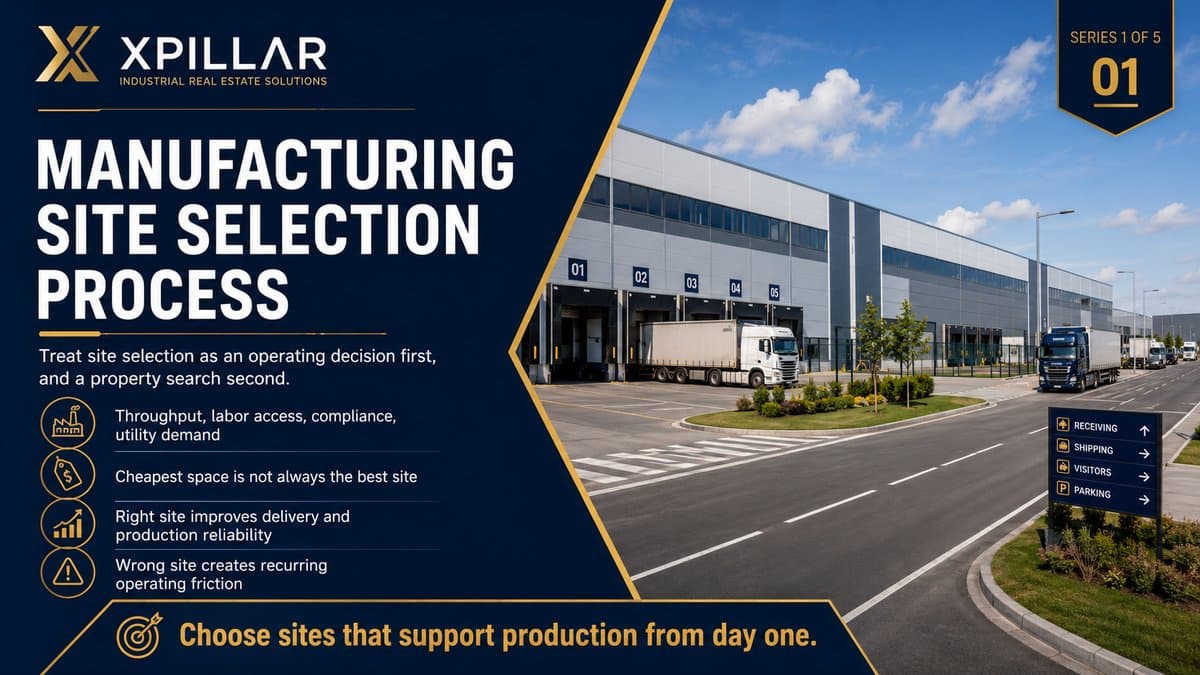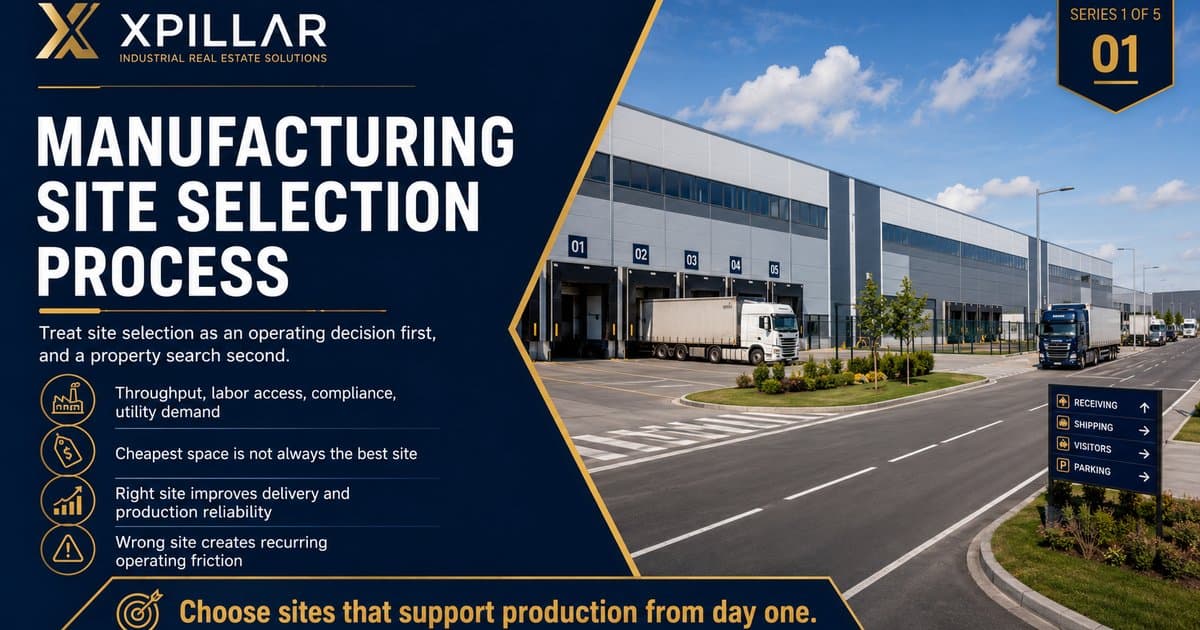
A manufacturing site can look right on paper and still fail under operating pressure. Rent may be competitive, the built-up area may be sufficient, and the location may sit inside a known industrial corridor - but if power supply is unstable, access roads are poor for heavy vehicles, or zoning limits future use, the mistake becomes expensive fast. That is why the manufacturing site selection process needs to be treated as an operating decision first and a property search second.
For manufacturers, logistics operators, and industrial investors, site selection is rarely about finding the cheapest square foot. It is about securing a location that supports throughput, labor access, compliance, utility demand, and expansion over time. In practical terms, the right site improves delivery performance, hiring stability, and production reliability. The wrong site creates recurring friction that no lease negotiation can fix.
The manufacturing site selection process is a structured evaluation of location, building, land, legal use, and operating conditions before acquisition or tenancy. It starts with internal requirements, then moves into market screening, shortlist comparison, technical review, and commercial negotiation.
That sounds straightforward, but the difficulty is in the trade-offs. A site closer to ports may reduce outbound freight costs while increasing occupancy costs. A lower-cost industrial land parcel may offer future expansion but require larger upfront capital for infrastructure and approvals. An existing factory may speed up occupancy, yet retrofitting it for production lines, ventilation, floor loading, or compliance can erase that advantage.
This is why experienced occupiers define non-negotiables early. If your process depends on three-phase power, hazardous material handling, cleanroom conditions, food-grade compliance, or 24-hour truck movement, those are not details to work out later. They should shape the search from the beginning.
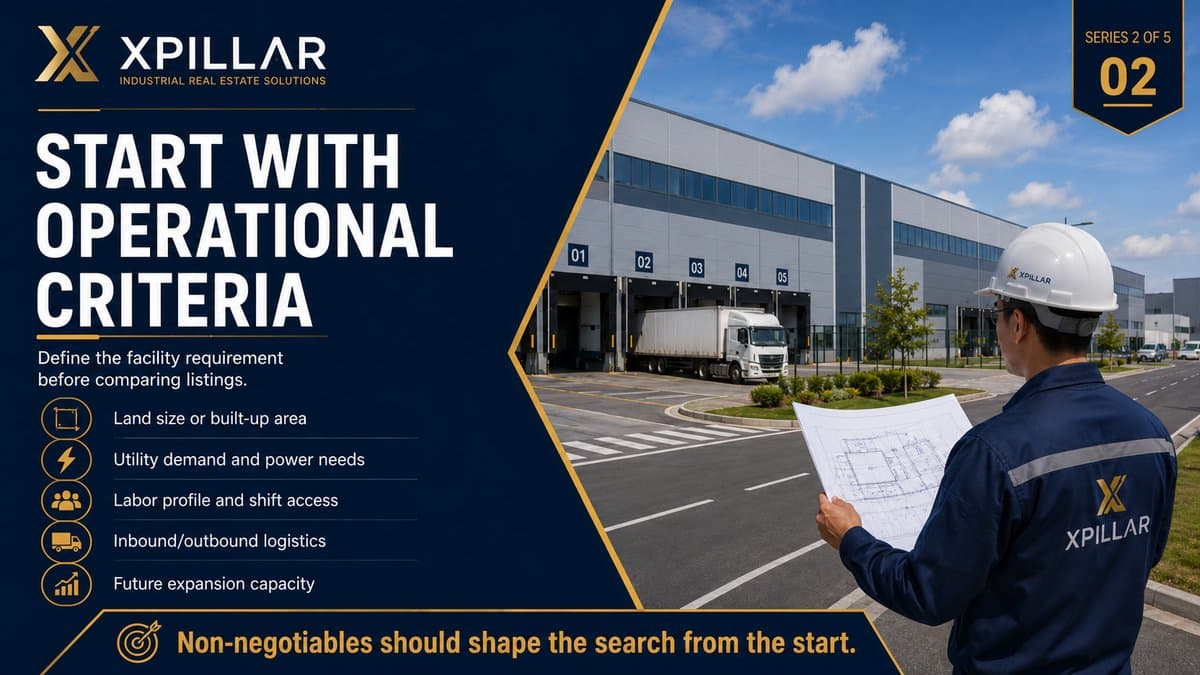
Before comparing locations, define the operating profile of the facility. The site requirement for a light assembly plant is different from a heavy fabrication site, and both differ again from a temperature-controlled processing facility. The asset type has to match the production model.
Most manufacturers need clarity on five points at the start: required land size or built-up area, utility demand, labor profile, inbound and outbound logistics, and future capacity. This internal brief should also state whether the business is buying or renting, whether freehold matters, and whether a greenfield site or existing building is acceptable.
In Malaysia, this matters even more in established industrial zones where stock varies sharply by age, access, and compliance condition. A factory in Shah Alam may offer mature infrastructure and labor access, while Port Klang may perform better for port-linked movement and container activity. Puncak Alam or outer industrial pockets may present better land economics, but travel time, supplier distance, and workforce availability need closer review.
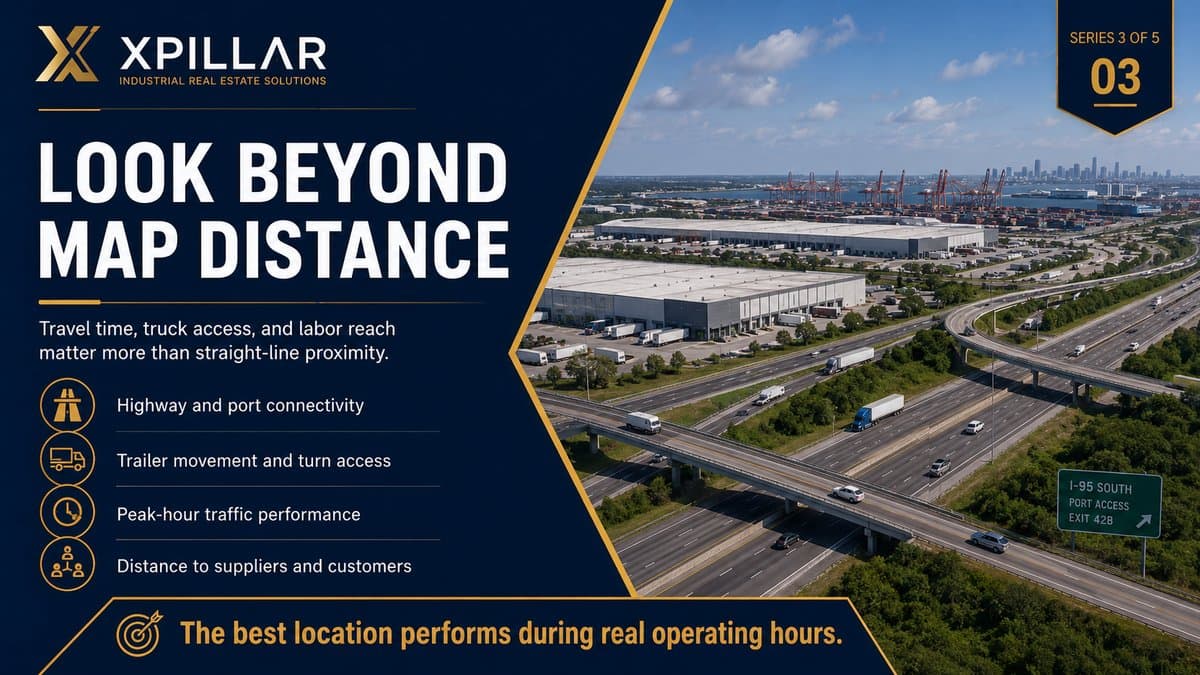
Location is still the central variable, but good site selection looks beyond proximity. Travel time to highways, ports, suppliers, and labor catchments matters more than straight-line distance. A property may appear well positioned on a map, yet lose practical value because of congestion, turn restrictions for trailers, or weak last-mile industrial road conditions.
For manufacturers, the real question is how the location performs at operating hours. Can trucks enter and exit efficiently during peak periods? Are there route constraints for container haulage or oversized loads? How far is the site from customers or consolidation hubs? If production is shift-based, can staff reach the facility reliably at early and late hours?
Labor access can be a deciding factor, especially in sectors where technical staff, line workers, warehouse crews, or maintenance teams are hard to replace. Lower occupancy cost in a distant location may look attractive until turnover rises and transport support becomes a recurring cost. In many cases, paying more for a site within a proven labor catchment is the more efficient long-term decision.
A manufacturing property is only as useful as its permitted use. Buyers and tenants often focus on the building and postpone land-use review, but zoning, planning controls, and licensing compatibility should be checked early.
This is where deals often slow down. A site may be marketed as industrial, but the specific use class, existing approvals, environmental conditions, or local authority requirements may not fully match the intended operation. If the facility will involve food processing, chemicals, emissions, storage restrictions, or high utility loads, the compliance path should be reviewed before commercial commitment.
Tenure also matters. Freehold industrial assets can appeal to owner-occupiers and long-term investors because they provide stronger control over future use and redevelopment. Leasehold assets may still be excellent operational choices, especially in prime corridors where location is the main value driver, but the remaining term and financing implications need careful review.
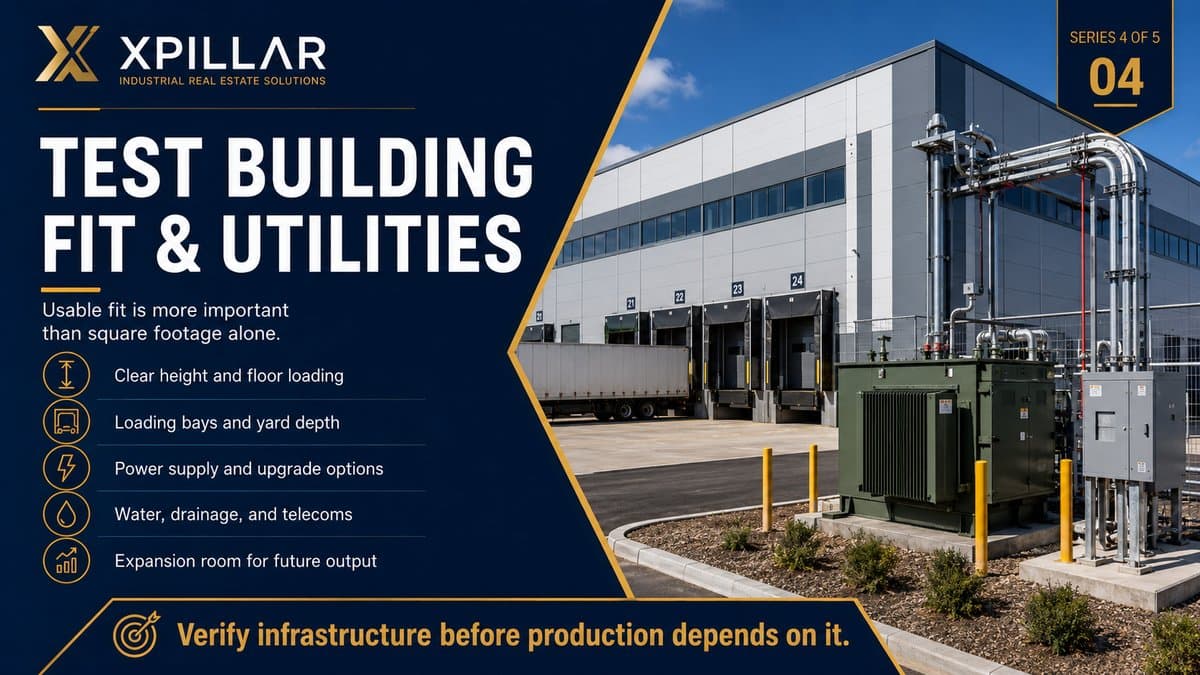
A factory with the right square footage can still be functionally wrong. The manufacturing site selection process should test the building against production flow, not just size. Clear height, floor loading, column spacing, loading bays, yard depth, ventilation, drainage, and power configuration all affect usability.
For example, a site with limited loading access can disrupt truck scheduling even if the interior layout is acceptable. A building with insufficient floor loading may not support machinery placement. A facility that lacks adequate transformer capacity may require capex and approval lead time before operations can start. These are not secondary concerns. They determine time to production.
Expansion capacity deserves the same attention. If output is expected to increase over the next three to five years, assess whether the site allows extension, additional storage, or a more efficient yard plan. Businesses often outgrow technically suitable sites because they chose only for current demand.
Utilities should never be assumed. Power, water, drainage, gas availability, telecommunications, and waste management need direct verification because production continuity depends on them.
Power is usually the first checkpoint. Manufacturers should confirm existing supply, upgrade options, substation proximity, and whether the current setup supports machinery loads and future scaling. Water-intensive operations need the same scrutiny, especially where quality, treatment, and discharge conditions affect compliance or process stability.
Infrastructure outside the lot line matters too. Flood history, road durability, drainage performance, and industrial traffic patterns all affect operating risk. In some markets, an older site in a mature estate may outperform a newer site if the surrounding infrastructure is more reliable.
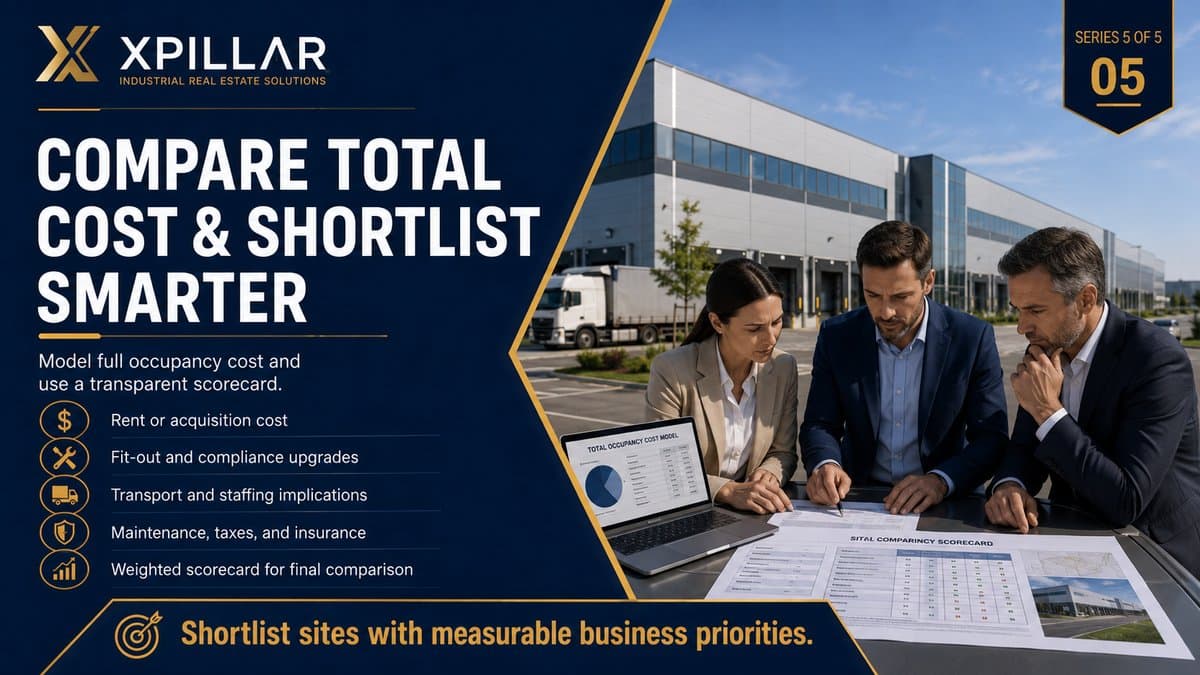
Headline price is easy to compare. Total operating cost is not. A disciplined review should include rent or acquisition cost, fit-out or reinstatement expense, transport costs, staffing implications, utility upgrades, maintenance risk, insurance, taxes, and approval timelines.
This is where lower-priced sites often lose their edge. A cheaper property farther from ports, labor, or suppliers may create ongoing transport and workforce costs. An older building with attractive pricing may require heavier capex for electrical systems, fire safety, roofing, or floor reinforcement. A prime industrial asset may cost more upfront while reducing hidden operating friction.
That is why site selection should be modeled over a realistic occupancy period. For a tenant, a three- to five-year horizon may be enough to compare total cost. For a buyer, the analysis should also account for asset liquidity, resale demand, and redevelopment potential.
Once a search narrows to viable options, a weighted scorecard helps decision-makers compare sites without getting pulled off course by one attractive feature. Cost should be one category, not the whole model.
Typical scoring areas include logistics performance, labor access, zoning fit, utility readiness, building suitability, expansion potential, tenure, and total cost. The exact weighting depends on the business. A port-linked manufacturer may rank freight access highest. A labor-intensive operator may place more weight on commuting patterns and workforce supply. An investor-owner may prioritize freehold position and long-term industrial demand.
This approach also helps align internal teams. Operations, finance, engineering, and leadership often value different things. A scoring framework keeps the decision tied to measurable business priorities rather than individual preference.
Industrial property decisions are market-specific. Two factories with similar size and asking price can perform very differently because of road access, ownership structure, authority processes, or surrounding industrial activity. That is why local knowledge matters.
In active industrial corridors across Selangor and the Klang Valley, inventory moves on practical details: tenure, access, power readiness, zoning clarity, and realistic transport performance. A platform like XPillar is useful when it helps buyers and tenants compare industrial assets by transaction intent, property type, and location without wasting time on irrelevant stock.
The best manufacturing site decisions are rarely the fastest or the cheapest. They are the ones where the property, the location, and the operating model line up cleanly enough to support production from day one and growth after that. If a site cannot do both, keep looking.