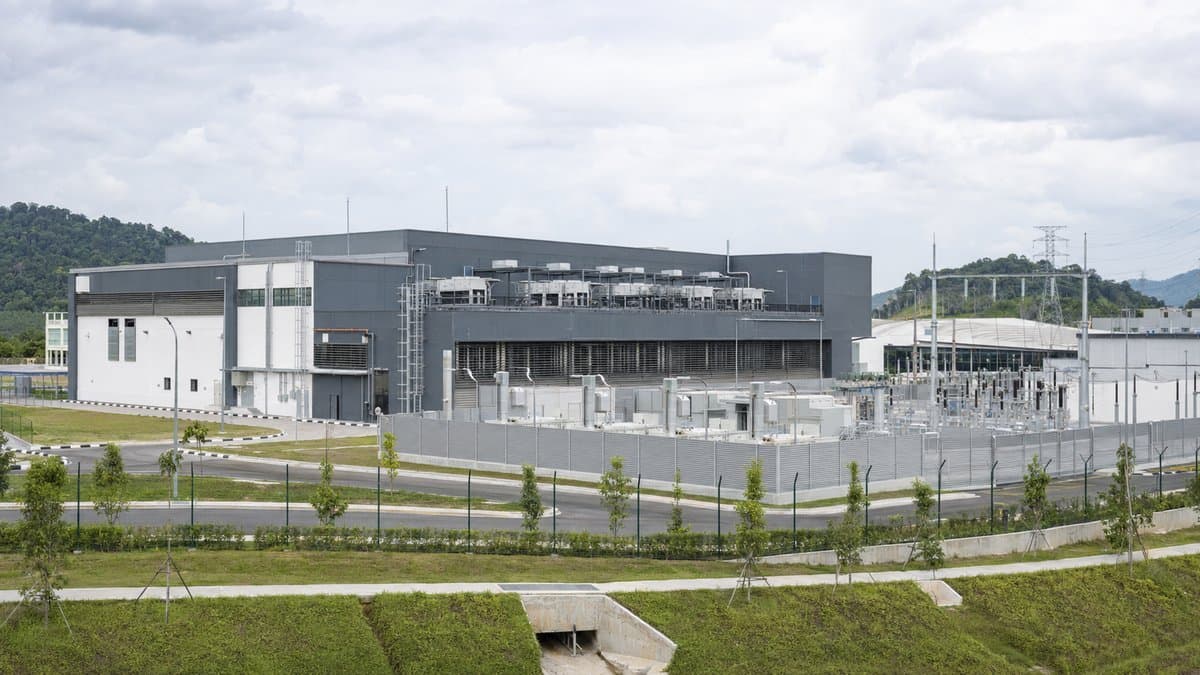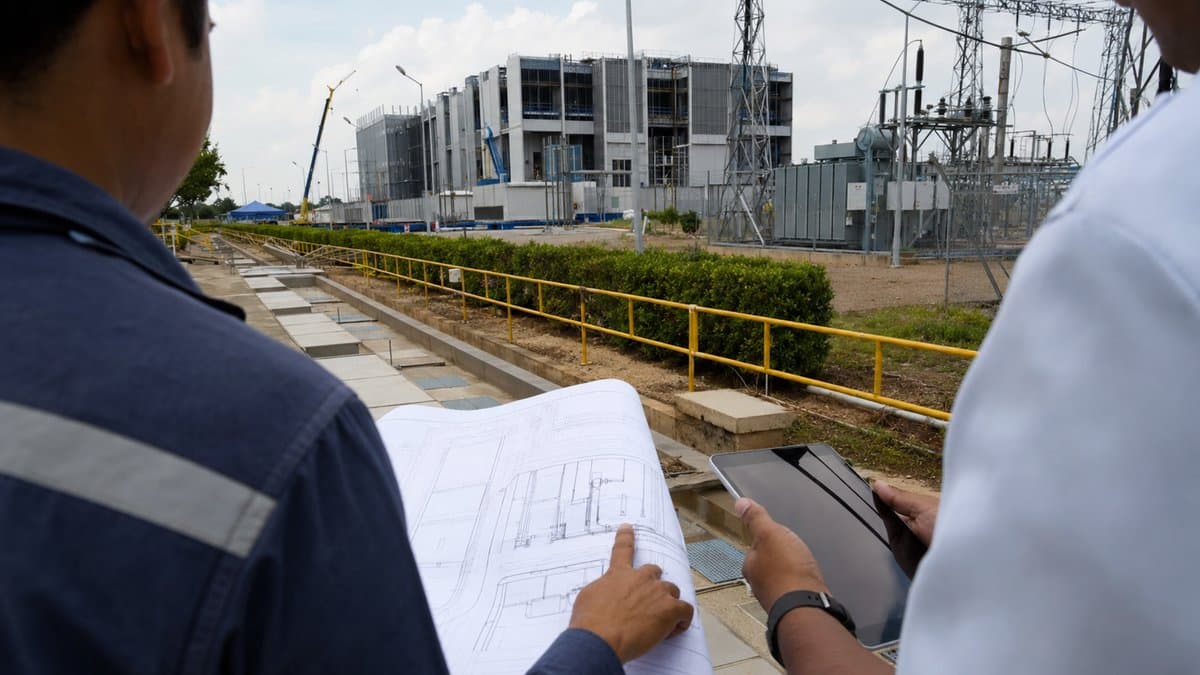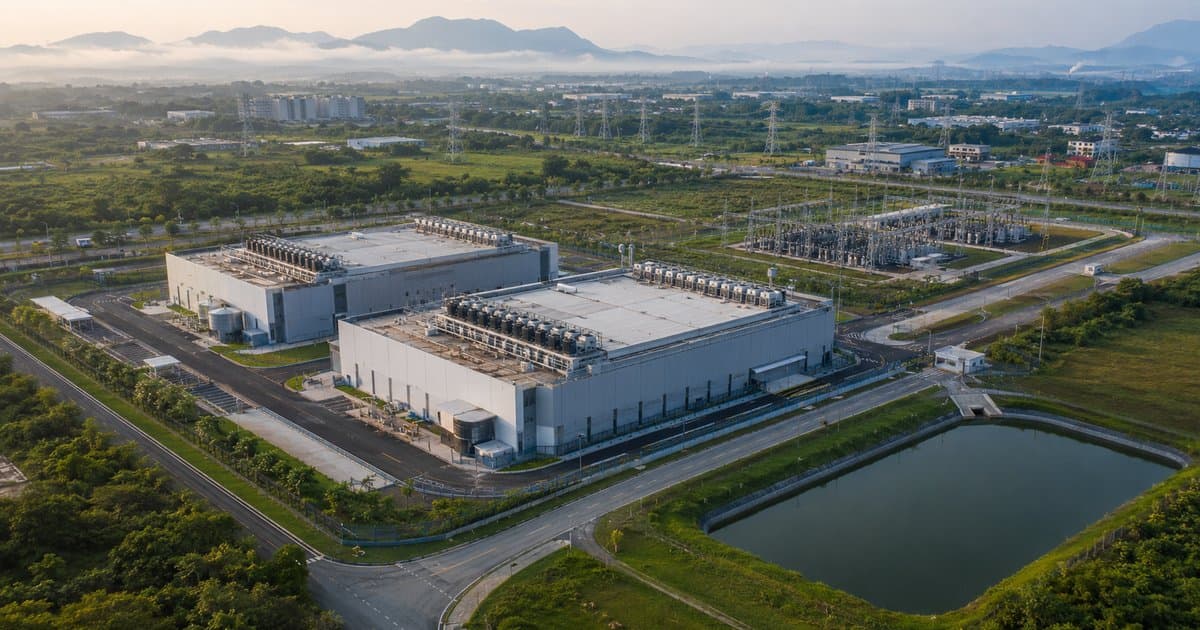
The short answer: industrial zoning, a large land area and nearby transmission lines do not by themselves make a Malaysian site suitable for a data centre. Before buying, leasing or marketing land as a data-centre opportunity, obtain site-specific evidence for electricity capacity and connection, water strategy, diverse fibre routes, planning and land-use compliance, flood and geotechnical risk, access, environmental constraints, security, and phased expansion. Until those matters are supported in writing, describe the property as “potentially suitable for data-centre assessment”, not “data-centre ready.”
Malaysia’s data-centre market creates a valuable opportunity for industrial landowners and developers, but the physical requirements are unusually demanding. A site can be excellent industrial property and still fail a data-centre brief because the required power cannot be delivered on the project timeline, the fibre routes share one vulnerable corridor, the cooling design conflicts with local water conditions, or the approved land use and building controls cannot accommodate the proposed campus.
The correct decision is therefore not based on one feature. It is based on a coordinated technical, planning, commercial and legal review before the transaction becomes unconditional.
What “data-centre ready” should mean
“Data-centre ready” is not a standard property category. In a responsible listing or investment memorandum, the description should identify what is verified, what is owner-declared and what remains subject to authority or utility approval.
A strong site dossier should answer four questions:
1. Can the proposed development legally be built and operated here?
2. Can the required utilities and connectivity be delivered in the required phases?
3. Can the site remain resilient during foreseeable disruptions?
4. Can the campus expand without redesigning its core infrastructure?
PLANMalaysia’s data-centre planning guidance covers developments above 1 MVA and addresses location, electricity, water, telecommunications, land category, zoning, planning controls and application procedures. The official circular adopting the guidance was issued on 17 October 2024. This makes early planning verification a core site-selection task, not a matter to postpone until after land purchase. (PLANMalaysia circular and planning guideline)
Before comparing sites, the operator or investor should prepare a written requirement brief. At minimum, define:
- initial and ultimate IT load;
- requested utility capacity and energisation dates by phase;
- redundancy philosophy for power and telecommunications;
- preferred cooling method and expected water profile;
- gross land, building, setback and utility-yard requirements;
- security perimeter and access control;
- construction sequencing;
- target operational date;
- sustainability commitments; and
- expansion options.
Without this brief, “suitable” has no measurable meaning. A 20-acre parcel may be too small for one design and adequate for another. A power connection that works for Phase 1 may not support the ultimate campus. The land should be tested against the project—not the other way around.
1. Land title, express conditions and planning use: Check the registered title, land category, express conditions, restrictions in interest, local-plan zoning and approved use. Industrial zoning is helpful, but it is not final confirmation that the specific data-centre development, scale, utility structures and ancillary installations will be approved.
The PLANMalaysia guideline indicates that data-centre planning must consider land category and conditions, permitted land-use zoning, plot ratio, plinth, building height, setbacks, open space, roads, utility reserves, parking and buffer zones. Where the proposed use differs from the express land condition, additional state approval may be required. Obtain written planning advice from the relevant local authority and qualified planning counsel for the actual proposal.
2. Grid connection—not just visible transmission infrastructure. Power is often the first gating item, but proximity to a transmission tower, main intake substation or industrial substation is not proof that capacity has been reserved for the property. The developer should submit a load profile and phasing plan, then obtain site-specific written feedback on the proposed connection arrangement, infrastructure scope, land or easement needs, cost responsibilities and programme.
PLANMalaysia advises consultation with TNB before land investment or purchase is finalised. TNB’s Green Lane Pathway, announced on 9 August 2023, created a dedicated route and one-stop channel for qualifying data-centre supply applications with high-voltage demand. However, every connection remains dependent on the project and network assessment; the pathway is not an automatic capacity guarantee. (TNB Green Lane announcement)
For existing power at a factory or industrial building, also read XPillar’s Factory Power Supply in Malaysia. A data-centre campus requires a much deeper study than reading the existing amp rating.
3. Space and rights for electrical infrastructure. Large electrical demand can require substations, switch rooms, transformers, cable routes, utility reserves, access for maintenance and clear safety separation. Ask whether these facilities fit inside the site after accounting for buildings, cooling equipment, generators, tanks, internal roads, stormwater systems, landscaping and expansion.
Confirm who will own, operate and maintain each asset. Review easements, wayleaves and rights of access. If power must cross third-party land, the route risk should be resolved before the project depends on it.
Where a private electrical installation requires licensing, Suruhanjaya Tenaga’s current licence guideline requires, among other items, valid land-title or tenancy evidence and plans endorsed by the appropriate competent person or Professional Engineer with Practising Certificate. The applicable licence and timing should be assessed for the actual design. (Energy Commission licence guideline)
4. Water availability and a credible cooling strategy. Do not ask only, “Is water available?” Establish expected water demand under normal and peak conditions, the proposed cooling design, source and connection, storage, treatment, discharge, reuse options, drought exposure and the effect of later expansion.
Malaysia’s Guideline for Sustainable Development of Data Centres asks new projects in Peninsular Malaysia to avoid water-stressed areas, using a Water Stress Index below 0.8, and recommends a design Water Usage Effectiveness of 2.2 m³/MWh or lower. It also encourages reclaimed or reused water. These are sustainability screening benchmarks, not proof that a local utility will approve a particular connection. (MIDA sustainable data-centre guideline)
Obtain written information from the relevant water provider and have the project engineer assess cooling alternatives. A marketing statement such as “water available nearby” is not adequate evidence.
5. Diverse fibre connectivity: A site needs more than a fibre line at the gate. Verify the carriers, available capacity, service lead time, entry points, physical route diversity, meet-me arrangement and whether apparently separate services converge at the same duct, bridge or exchange.
The objective is to remove single points of failure. Ask carriers for route drawings and written service proposals subject to confidentiality requirements. Two commercial quotations do not constitute route diversity if both use the same vulnerable physical path.
6. Flood, drainage, geotechnical and natural-hazard risk: Screen historic flooding, overland flow, river and coastal exposure, platform level, access-road flooding, drainage outfall, detention requirements, slope stability and soil conditions. The server halls may sit above a design flood level while the only access road, power route or fibre chamber remains exposed.
Malaysia’s Department of Irrigation and Drainage maintains Public Infobanjir and national hydrological datasets. These are useful initial references, but a transaction should rely on a site-specific flood and drainage assessment by qualified professionals, not a live warning map alone. (JPS Public Infobanjir; JPS hydrological data portal)
Geotechnical investigation should also confirm whether the site can support the structural loads, equipment yards and settlement tolerances of the proposed design. Filling or ground improvement can materially change cost and programme.
7. Road access, construction logistics and secure operations Assess heavy-equipment delivery routes, bridge and turning constraints, abnormal-load access, construction laydown space, emergency access and staff movement. The operating campus also needs a workable security perimeter, guardhouse approach, vehicle screening, fire-appliance circulation and separation between construction and live phases.
Test alternative routes during peak periods and heavy rain. A site beside an expressway can still be operationally weak if the final approach is congested, flood-prone or unsuitable for transformers and large cooling equipment.
8. Environmental, sustainability and expansion feasibility: Screen nearby sensitive receptors, environmentally sensitive areas, noise, generator emissions, scheduled-waste arrangements, water discharge, ecology and any required environmental approvals. The applicable assessment depends on the site, project scale and activities; it should not be assumed from the industrial label alone.
Also reserve physical and utility capacity for the ultimate campus. MIDA’s sustainable data-centre guideline uses Power Usage Effectiveness, Carbon Usage Effectiveness and Water Usage Effectiveness as key measures and promotes renewable or clean energy and water efficiency. These measures should be incorporated during concept design, not added after the land and layout have fixed the project’s options.
Evidence matrix for a data-centre land shortlist. Decision area: Minimum evidence to request. Do not accept as final proof. Land and planning Title search, express conditions, zoning extract, written planning advice, concept-plan review “It is industrial land” Electricity Load and phasing brief, utility correspondence, connection concept, route and substation land plan. Visible transmission lines or a nearby PMUWater and cooling Demand model, provider response, cooling basis, storage/reuse concept A nearby water main or owner estimateFibre Carrier responses, entry-point plan, physical route-diversity evidence “Multiple telcos cover the area” Flood and drainage Topographic survey, flood/drainage study, platform and access review A dry site visit or current warning mapGround conditions Desktop study followed by appropriate geotechnical investigation Neighbouring building performanceAccess and logistics Route survey, turning study, abnormal-load and emergency-access review Distance to the expressway onlySustainability PUE/WUE/CUE design assumptions and utility-resource strategy A general “green” descriptionExpansion Ultimate master plan, reserved utility corridors and phased connection strategy Vacant land without infrastructure planning
Apractical go/hold / reject screen. Use a staged decision so that unresolved risks remain visible.
Proceed to detailed due diligence when the title and planning path are credible, the project brief fits the usable site, and utilities are willing to assess the required capacity and timeline.
Hold or make the transaction conditional when a critical item appears solvable but lacks written confirmation—for example, a proposed power route, planning interpretation, water allocation or fibre-diversity plan. The agreement should allocate the investigation period, access rights, cost, approval conditions and consequences of failure. Legal wording must be prepared by the parties’ lawyers.
Reject or redesign the requirement when a non-remediable constraint prevents the proposed project: unacceptable hazard exposure, insufficient usable land after reserves and buffers, no credible utility programme, incompatible planning use, or a programme gap that cannot be recovered.
Red flags in a “data-centre land” listing
Exercise caution when:
-megawatt capacity is advertised without written, site-specific utility evidence;
-nearby transmission infrastructure is presented as reserved capacity;
-the usable acreage excludes substation, drainage, buffer or setback needs;
-fibre availability is stated without route diversity;
-water supply is stated without demand, cooling and expansion assumptions;
-the site is described as flood-free based only on owner experience;
-planning suitability is inferred solely from an industrial title;
-an approval timeline assumes every agency review will run in parallel;
-off-site routes cross third-party land without secured rights; or
-“ready” means only that a landowner is willing to sell.
The most defensible listing language separates evidence levels: verified document, written third-party indication, owner declaration, and not yet assessed.
An industrial-property advisor cannot replace the utility, authority or engineering team, but can improve the front end of the search. XPillar can help define the property brief, identify potential industrial sites, assemble owner-provided documents, distinguish verified facts from claims, arrange site access and coordinate questions for the buyer’s appointed professionals.
Browse [industrial properties on XPillar]( https://www.xpillar.com/properties/industrial ) or contact the team with the proposed land area, location, initial and ultimate load, target operational date, tenure preference and expansion plan. A useful shortlist begins with disclosed requirements and documented constraints.
2. Does a nearby TNB substation mean power is available?No. Location alone does not confirm available or reserved capacity, connection voltage, route, cost or delivery date. Submit the project’s initial and ultimate load profile and phasing plan for site-specific utility assessment before treating power as confirmed.
3. How much land does a data centre need? There is no universal acreage. The answer depends on IT load, building density, cooling, substations, generators, fuel or energy storage, setbacks, drainage, security, roads, construction sequencing and future phases. Compare gross land with the net usable master-plan area.
4. Why must water be checked if the data centre uses air cooling? Water may still be relevant to heat-rejection design, humidification, cleaning, fire systems, staff use, construction and future operating changes. The project engineer should quantify normal and peak demand and verify the local supply strategy rather than assume zero water dependence.
5. Is having two fibre providers enough? Not necessarily. Two providers can share the same duct, bridge, entry point or upstream exchange. Verify physical route diversity and building entry separation, not only the number of contracts.
6. What should be confirmed before paying a non-refundable deposit? Critical planning, power, water, fibre, hazard, access and title risks should be investigated early. If a key item remains unresolved, obtain legal advice on conditions precedent, investigation access, timelines, deposit treatment and termination rights before making an unconditional commitment.
ConclusionA credible Malaysian data-centre land decision is evidence-led. Begin with the operator’s initial and ultimate requirements, then test the site’s planning path, electricity, water, fibre, resilience, access, environmental constraints and expansion capacity as one integrated system.
Until utilities, authorities and qualified professionals have assessed the actual proposal, do not market an industrial parcel as data-centre ready. The better description is simple and accurate: a potential site, subject to documented technical and regulatory due diligence.
This article provides general industrial-property information only. It is not engineering, planning, utility, environmental, legal, tax or investment advice. Requirements vary by project, location, authority and design. Appoint appropriately qualified professionals and obtain written confirmation from the relevant authorities and service providers before making a commitment.
Authoritative sourcesPLANMalaysia — Circular adopting the Data Centre Planning Guideline, 17 October 2024
1. PLANMalaysia — Circular adopting the Data Centre Planning Guideline, 17 October 2024
2. PLANMalaysia — Data Centre Planning Guideline presentation
3. MIDA / MITI — Guideline for Sustainable Development of Data Centres, December 2024
4. MIDA — Sustainable Infrastructure, Local Impact
5. TNB — Green Lane Pathway and strategic offerings for data centres, 9 August 2023
6. Suruhanjaya Tenaga — Guidelines on Licence Application under the Electricity Supply Act 1990
7. JPS Malaysia — Public Infobanjir
8. JPS Malaysia — National Hydrological Data Portal