A warehouse that looks efficient on paper can fail the moment your trucks queue on a narrow access road or your power load falls short for production. That is why serious buyers and tenants evaluating industrial properties Selangor do not start with photos or headline pricing. They start with operational fit, location logic, and whether the asset supports the business five years from now, not just next quarter.
Selangor remains the core industrial market for businesses that need reach across the Klang Valley, Port Klang, and the wider peninsula. For manufacturers, distributors, e-commerce operators, and third-party logistics firms, the state offers a mix that is hard to replace - established industrial parks, deep labor access, mature road networks, and proximity to ports, airports, and dense consumer markets.
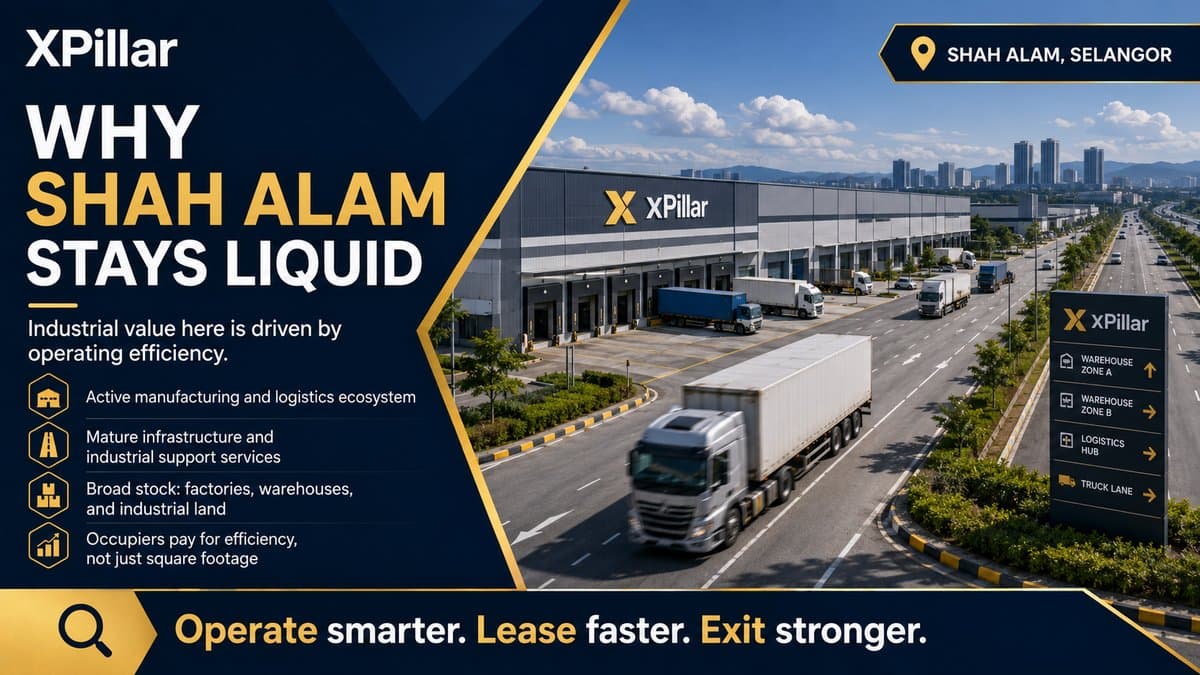
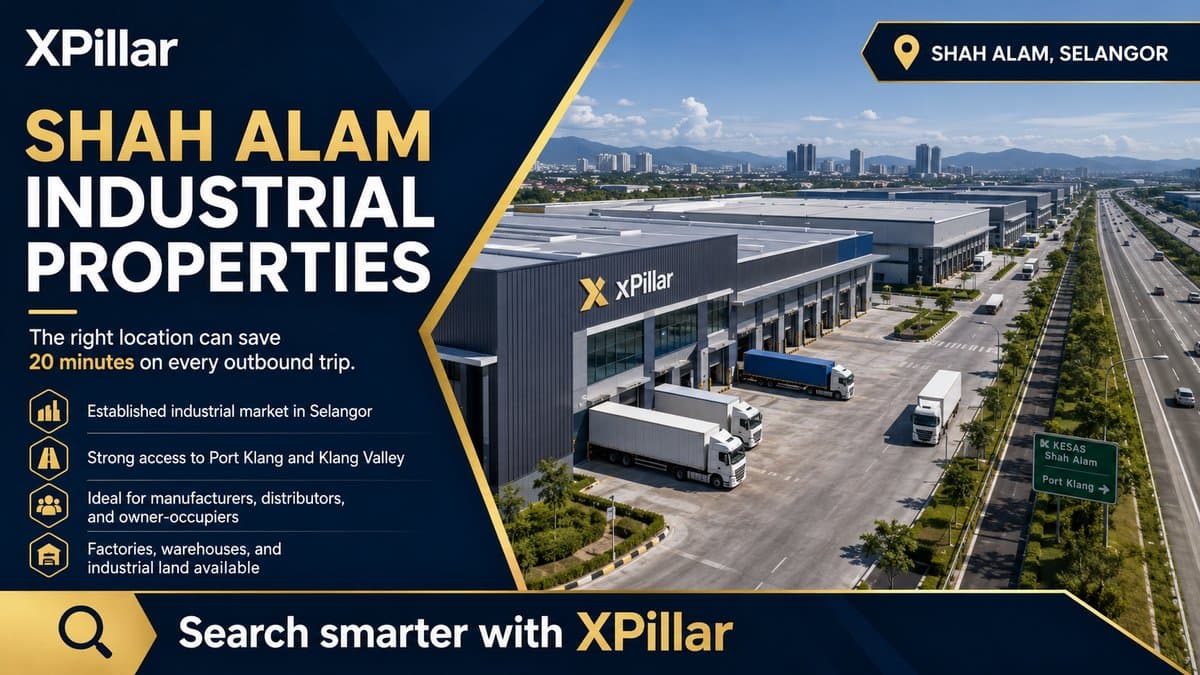
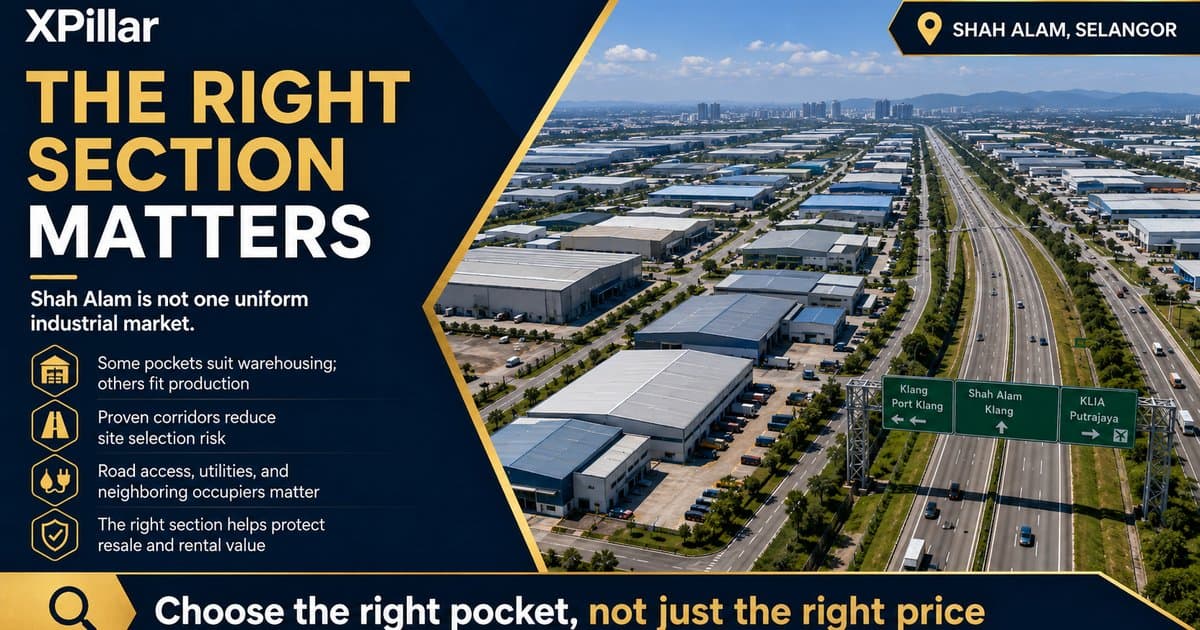
That does not mean every submarket behaves the same way. Shah Alam attracts occupiers that want established infrastructure and recognizable industrial addresses. Port Klang is closely tied to shipping, container movement, and logistics throughput. Subang Jaya and nearby corridors appeal to companies that need centrality but often face tighter supply and higher entry pricing. Puncak Alam and outer growth areas can offer larger plots and lower relative pricing, but the trade-off may be travel time, ecosystem maturity, or utility readiness.
For investors, this variation is exactly the point. Selangor is not one industrial market. It is a cluster of micro-markets, each with different tenant profiles, land economics, and rental expectations.
The right property type depends on what the site needs to do every day. A logistics operator typically prioritizes trailer access, loading bay configuration, ceiling height, yard depth, and highway connectivity. A manufacturer may care more about power supply, floor loading, production flow, worker access, and expansion capacity. A land buyer focused on future development will look harder at plot ratio, zoning, frontage, and surrounding industrial momentum.
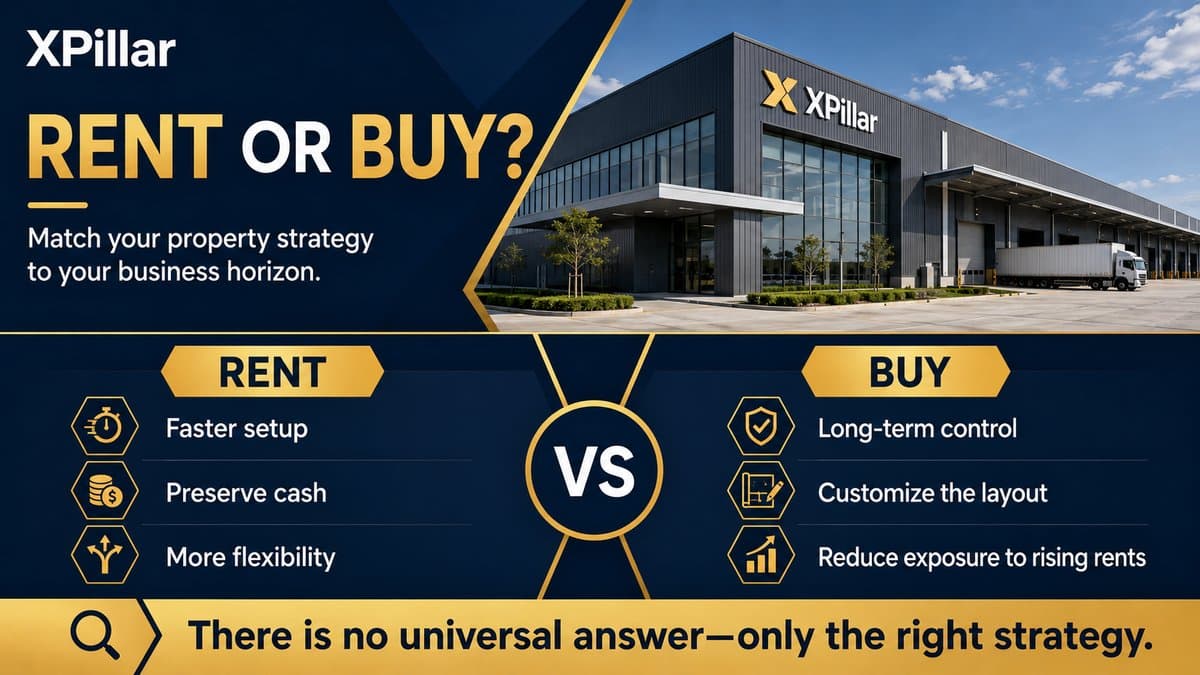
This is where many searches become inefficient. Buyers often search too broadly across factory, warehouse, and industrial land listings without separating immediate use from long-term strategy. A detached factory might suit an owner-occupier wanting branding, production control, and room for customization. A ready warehouse for rent may be better for a business expanding quickly without tying up capital. Industrial land can be compelling, but only if development timelines, approvals, and holding costs align with the business plan.
In practice, a lower psf price does not always mean a better deal. If retrofit costs are heavy, access is poor, or utility upgrades are required, the total occupancy cost can move sharply higher.
Factories are often the best fit when the operation combines office, production, storage, and staff movement on one site. Warehouses work best where throughput, racking, and transport efficiency are central. Industrial land makes more sense for buyers who need a tailored build, larger-scale yard usage, or a future redevelopment angle.
The distinction matters because pricing benchmarks, tenant demand, and exit options are different for each asset class. A warehouse near a major logistics corridor may lease faster than a specialized production building. A factory with strong power infrastructure may command better owner-occupier interest than a generic shell building in the same area.
Location should be evaluated by movement, not just by map pin. Ask how raw materials arrive, how finished goods leave, where staff are commuting from, and whether customers expect same-day or next-day delivery. A site that looks central can still underperform if local congestion adds time to every truck turn.
Access to major highways is usually non-negotiable, but local road conditions matter just as much. Wide turning radii, legal heavy vehicle access, and workable junctions are practical details that affect daily operations. In older industrial areas, building stock may be established but circulation can be tight. In newer corridors, roads may be better planned but nearby support services may still be catching up.
Labor access also deserves a realistic view. An industrial asset may be technically well located for freight but poorly positioned for workforce retention if commuting is difficult. For labor-intensive operators, this can become a hidden cost through turnover, absenteeism, or higher transport allowances.
Shah Alam remains a benchmark for mature industrial stock and broad occupier appeal. Port Klang continues to be a natural target for port-linked warehousing and distribution. Subang-side industrial pockets appeal to users who need central access and established commercial support. Puncak Alam and other growth corridors attract buyers seeking land banks, larger compounds, or better entry points on price.
There is no universal winner. The right corridor depends on whether your priority is logistics speed, customer proximity, labor pool, or future capital appreciation.
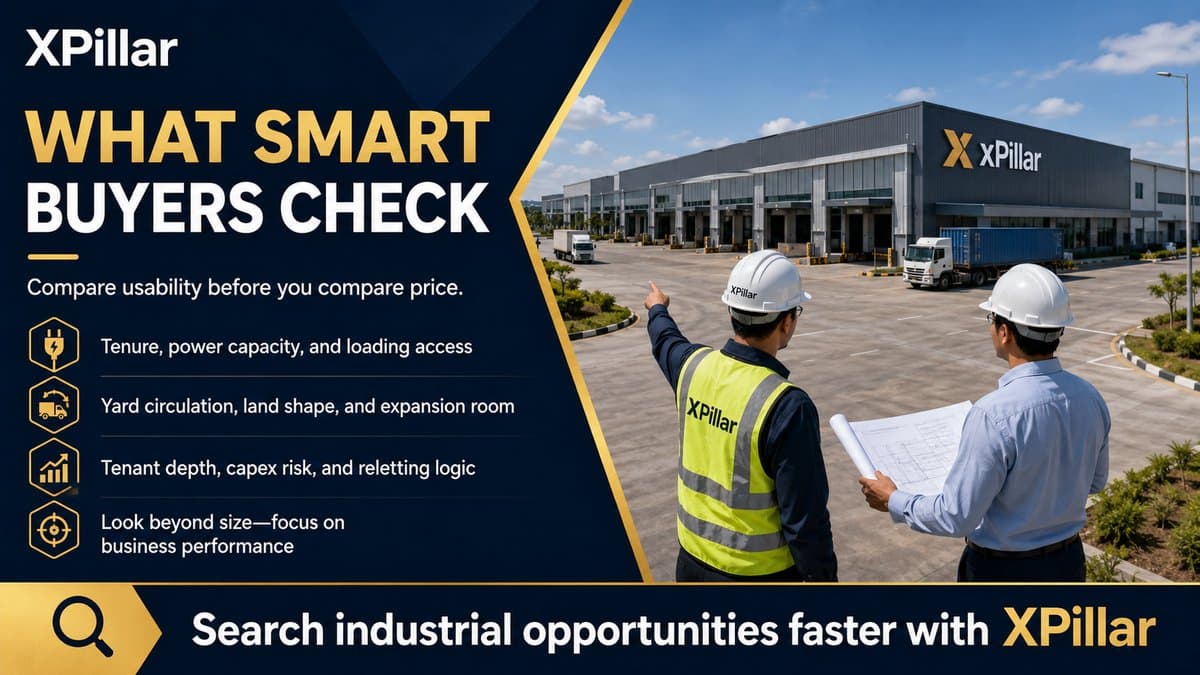
Industrial property decisions are lost or won in the details. Zoning must match actual intended use, not assumed use. A building that has functioned informally for one purpose may still face compliance issues if approvals do not align. Tenure also matters. Freehold can be attractive for long-term control and resale positioning, but leasehold assets may still make sense if pricing, location, and income profile are strong.
Utility capacity should be verified early. Power load, water supply, sewerage, internet readiness, and gas access can materially affect fit-out cost and speed to operation. For production-heavy users, underestimating electrical requirements is one of the more expensive mistakes in site selection.
Building condition is another area where surface impressions can mislead. Roof age, floor condition, drainage, loading platform usability, fire systems, and office-to-warehouse ratio all affect real value. A lower asking price may simply transfer deferred capital expenditure to the buyer or tenant.
If the asset is income-producing, review tenancy quality and lease structure with care. Rental yield only tells part of the story. Tenant covenant strength, remaining term, renewal probability, and reinstatement risk are just as important.
Industrial buyers often begin with headline asking price and psf comparisons, which is sensible up to a point. But industrial pricing in Selangor is heavily shaped by land component, tenure, building specification, loading design, and redevelopment potential. A simple psf comparison between two assets in different corridors can produce the wrong conclusion.
For example, a property with stronger frontage, heavier power capacity, and better truck access may justify a premium even if built-up age is older. Likewise, an industrial land parcel priced attractively may become less attractive once earthwork, infrastructure, and compliance timelines are added.
The same is true on the leasing side. Base rent must be weighed against fit-out obligations, maintenance exposure, deposit structure, and downtime risk. A tenant that needs to occupy quickly may prefer a more expensive but operationally ready building over a cheaper shell requiring months of adaptation.
The most efficient search process starts with a tight brief. Define whether the asset is for immediate occupation, income generation, redevelopment, or land banking. Set a realistic range for size, truck movement needs, tenure preference, and required infrastructure. Be specific about location, but not so narrow that you miss adjacent corridors with better value.
This is also where a specialized industrial search platform adds practical value. Instead of sorting through mixed property inventory, decision-makers can compare assets by transaction type, built-up size, land area, and industrial subtype more quickly. XPillar is built around that type of search behavior, which matters when the goal is to move from browsing to inquiry without wasting time on mismatched stock.
Speed is important, but discipline matters more. Good industrial assets can move quickly, especially when they combine clean documentation, clear pricing, and a known location. Still, rushing into a site with weak zoning alignment or costly infrastructure gaps usually creates problems that last longer than the negotiation period.
The best industrial property is rarely the one with the lowest entry price or the most polished photos. It is the one that supports your operating model, protects future flexibility, and makes sense against real market comparables in its corridor. In Selangor, where stock ranges from mature factories to expansion land and modern logistics facilities, that judgment requires precision.
If you are reviewing industrial properties Selangor, treat each listing as a business decision first and a real estate transaction second. The numbers matter, but so do truck paths, power load, labor access, and zoning clarity. The closer your search stays to those fundamentals, the better your next move will be.