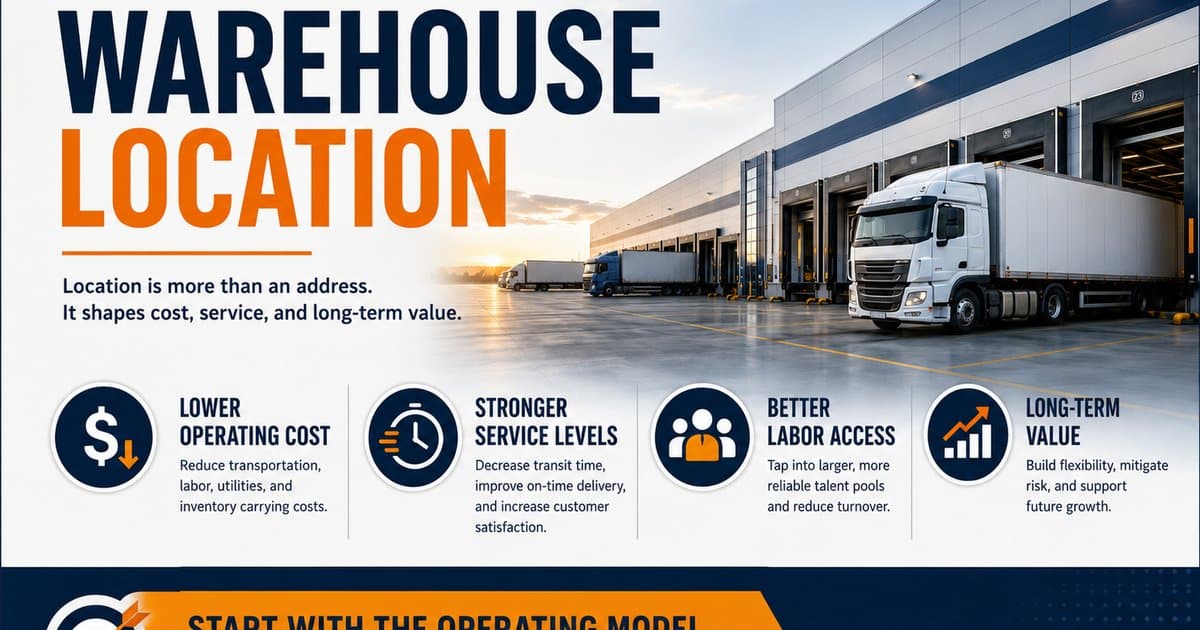
A warehouse can look right on paper and still become an operational drag once trucks start moving, staff start commuting, and customers start expecting tighter delivery windows. That is why knowing how to evaluate warehouse location matters long before you compare rental rates or built-up size. In industrial property, location is not a pin on a map. It is a cost structure, a service promise, and a risk profile.
For occupiers, investors, and developers, the best warehouse location is rarely the cheapest or the closest to a city center. It is the site that matches your freight flows, labor needs, compliance requirements, and expansion plan. In Malaysia, and especially across Selangor, Shah Alam, Port Klang, Subang Jaya, and other logistics corridors, small differences in access and zoning can produce large differences in throughput and long-term value.
The first mistake in site selection is evaluating the building before defining the business case. A logistics operator serving port cargo has a different location requirement than an e-commerce distributor, cold chain tenant, or light manufacturer. If your operation depends on container traffic, drayage efficiency, and port turnaround, proximity to Port Klang may carry more weight than headline rent. If you serve dense urban demand, faster access to population centers may matter more than deep industrial positioning.
Before reviewing listings, quantify what the warehouse must do. Look at inbound origins, outbound destinations, order cut-off times, shipment frequency, truck type, pallet turnover, and whether the site will support storage only or storage plus light assembly. This is the baseline for how to evaluate warehouse location in a way that reflects actual business performance instead of generic real estate preferences.
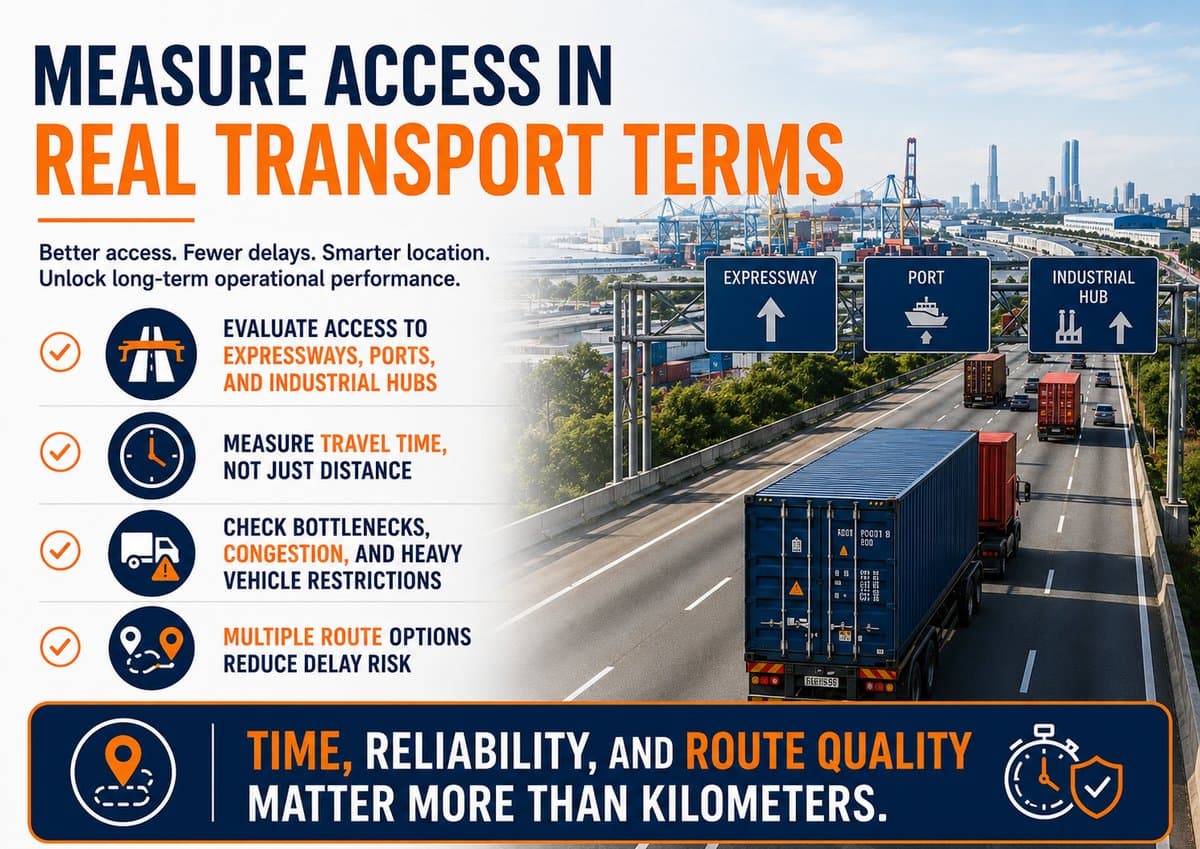
Road access is usually the most visible factor, but it should be tested more carefully than simple distance. A warehouse that sits near a major highway may still suffer from poor last-mile access, congestion at turning points, or restrictions for heavy vehicles. Time matters more than kilometers.
Assess connection quality to expressways, ports, industrial parks, and customer clusters. Ask how long a 20-foot or 40-foot container truck takes to enter and exit the site during peak periods. Review whether the route includes bottlenecks, flood-prone roads, school-zone congestion, or junctions that slow heavy vehicles. In some cases, a location slightly farther from a highway outperforms a closer site because ingress and egress are easier.
For regional distribution, access to multiple corridors can reduce risk. A warehouse dependent on one congested route may face recurring delivery delays. A site with alternative routes gives operators more flexibility during accidents, roadworks, or peak seasonal demand.
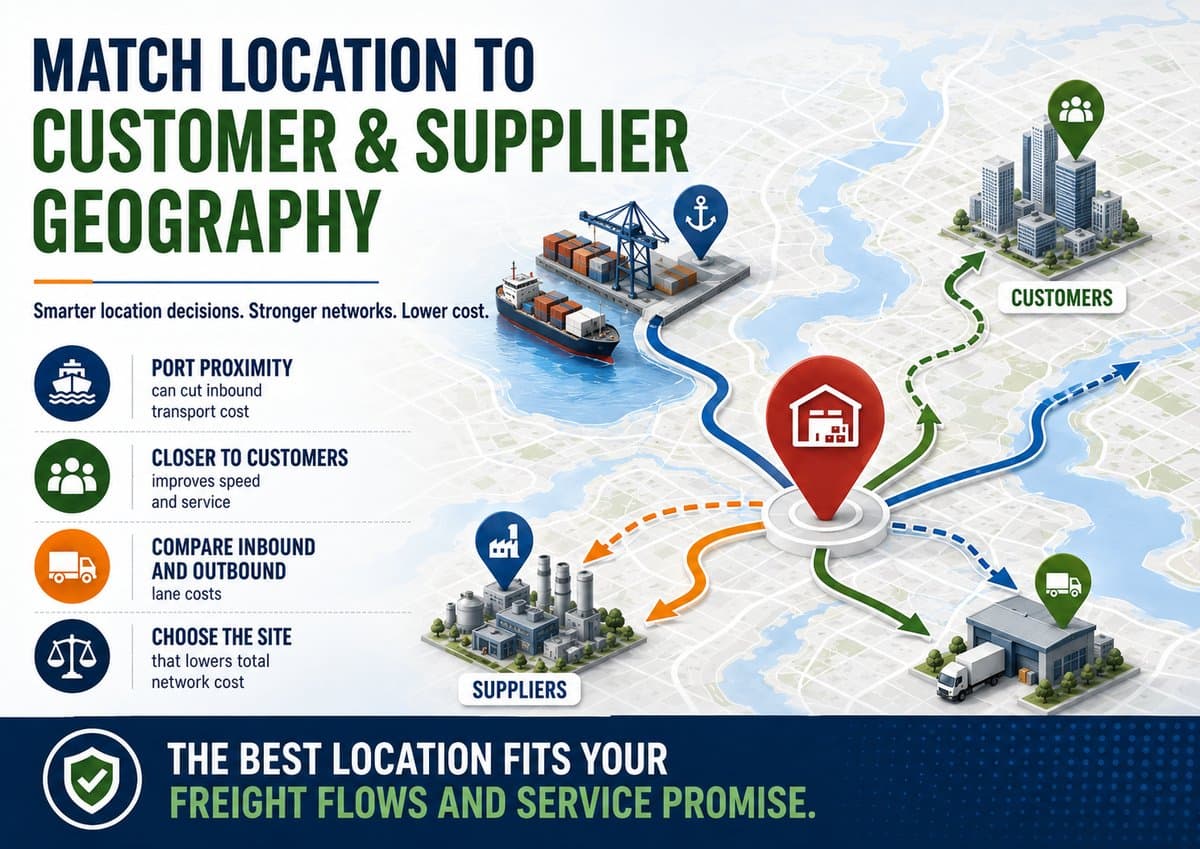
Warehouse performance depends on where goods come from and where they go next. If inbound supply is imported, port adjacency can reduce transport cost, dwell time, and scheduling complexity. If outbound fulfillment is domestic and time-sensitive, being closer to your customer base can protect service levels and reduce line-haul expense.
This is where trade-offs become clear. A port-side warehouse may improve inbound efficiency but raise outbound costs to inland customers. A more central Klang Valley location may improve final delivery reach but increase container haulage from port. There is no universal winner. The right answer depends on shipment mix, delivery promise, and transport spend by lane.
A useful test is to map your top customer zones and top supplier origins, then estimate transport cost and travel time from each candidate location. When one site consistently lowers total network cost, the location advantage is real. When the savings are marginal, other factors such as labor or tenure may decide the outcome.
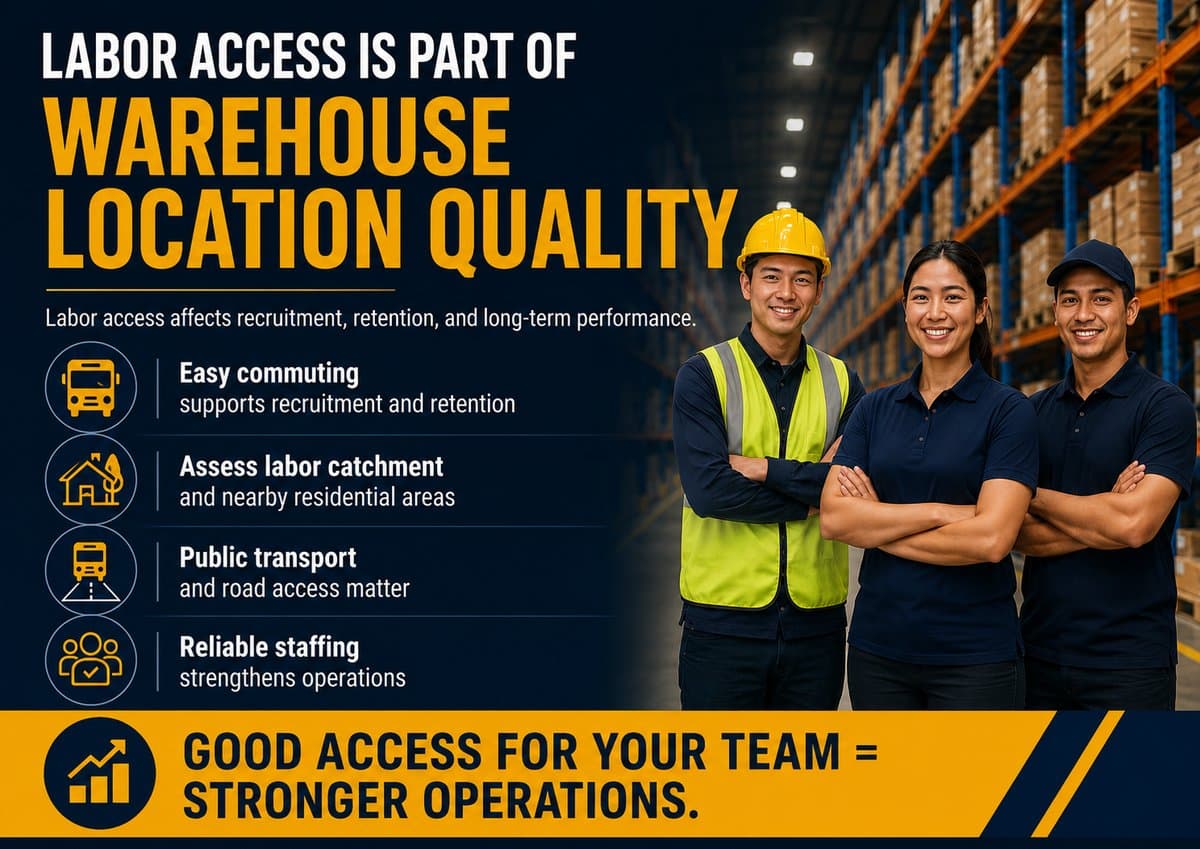
A technically strong site can still underperform if staffing is difficult. Warehouse operations depend on supervisors, forklift drivers, pickers, packers, maintenance teams, and security personnel. If the location is hard to reach by car or public transport, recruitment and retention may suffer.
Evaluate labor catchment around the site. Look at nearby residential areas, commuting patterns, and whether the surrounding industrial ecosystem already competes aggressively for similar workers. In established industrial zones, labor availability can be good, but wage pressure may be higher. In more peripheral locations, occupancy cost may improve, but labor depth may be thinner.
This matters even more for operations with multiple shifts or specialized handling requirements. A site that supports reliable staffing often creates more value than a lower-rent warehouse with chronic labor gaps.
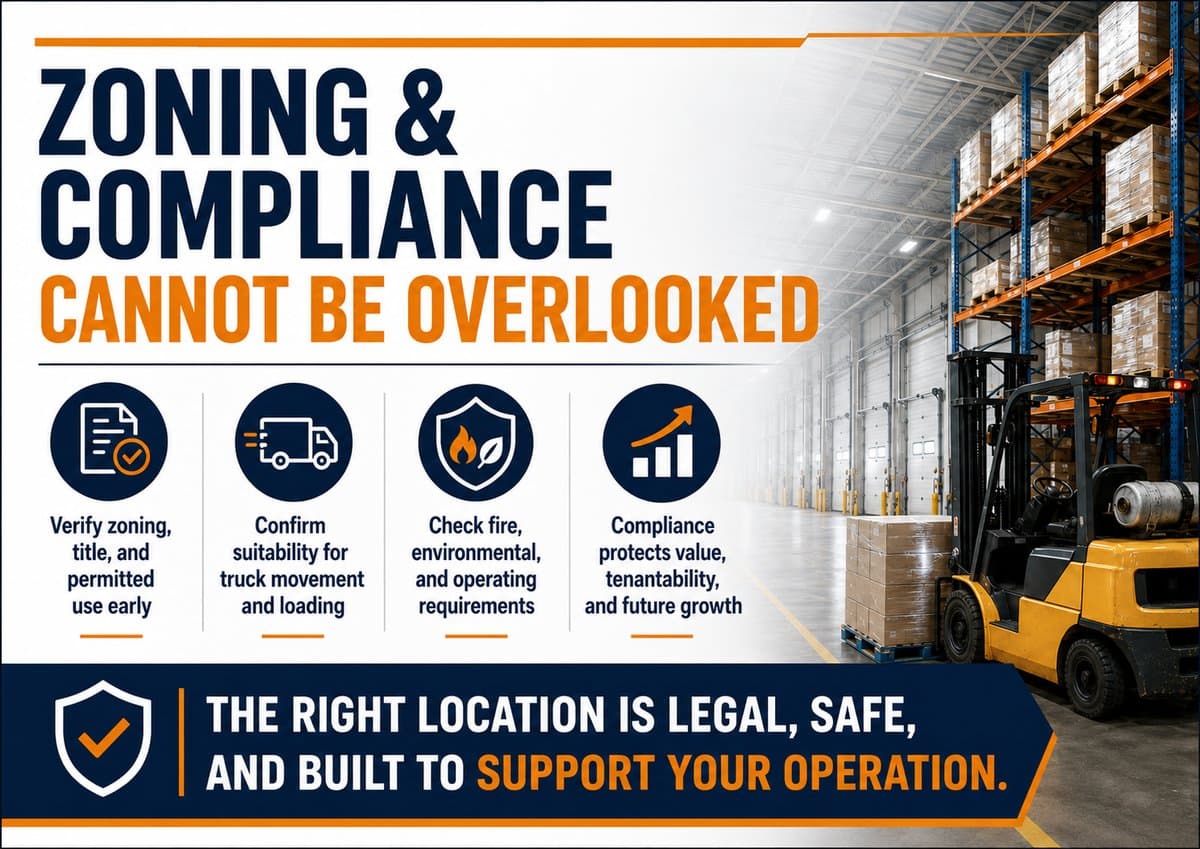
Many location decisions go wrong because legal suitability is treated as paperwork rather than a core screening item. A warehouse location must support the intended use, vehicle activity, loading profile, and any related processing. Industrial zoning, permitted use, local authority requirements, and fire compliance should be verified early.
If you plan to handle hazardous materials, food products, or temperature-controlled inventory, location screening becomes tighter. Nearby land use, environmental restrictions, and utility standards may affect whether the site works operationally and legally. For investors, compliance clarity also affects tenantability and exit liquidity.
In practice, this means asking direct questions upfront. Is the title and land use consistent with warehousing activity? Are there restrictions on truck movement or operating hours? Is the area established for logistics use, or is it transitional and potentially exposed to future conflict with neighboring uses?
Rent or purchase price is only one line item. A cheaper warehouse in a weaker location can produce higher total cost once transport inefficiency, labor challenges, utility limits, and operational delays are included. Site selection should compare total occupancy cost, not just face value.
Include haulage, fuel, tolls, staff transport, insurance, maintenance, security, and any fit-out required because of the location. A property with lower monthly rent but weak loading circulation, limited trailer parking, or poor road approach may become more expensive over time than a better-positioned site.
Investors should also view location through leasing resilience. Warehouses in established industrial corridors with strong access and clear zoning typically attract broader tenant demand. That can support occupancy and pricing power, especially in markets where logistics and light manufacturing users value immediate utility over speculative upside.
Warehouse location quality is shaped by surrounding infrastructure, not only the building itself. Power reliability, water supply, drainage, fiber connectivity, and road condition directly affect operations. In some industrial pockets, these factors vary more than expected even within the same district.
Flood risk deserves special attention. A warehouse in a low-lying or historically flood-affected area may face inventory exposure, service disruption, and higher insurance costs. Likewise, road conditions for heavy vehicle traffic should be checked in person. A site visit during business hours often reveals issues that listing photos and maps do not show.
This is where market-specific sourcing helps. Platforms like XPillar are useful because serious industrial searches are typically narrowed by exact corridor, property type, tenure, and built-up size rather than broad lifestyle filters.
A warehouse location should support the next phase of the business, not only current demand. If you expect higher throughput, more container movement, or a broader delivery radius within two to five years, today’s adequate site may become tomorrow’s bottleneck.
Assess whether the area has room for expansion, stronger industrial clustering, and long-term logistics relevance. Some locations perform well for a single tenant profile but have limited flexibility for future sale, reletting, or adaptation. Others sit in corridors where sustained industrial demand supports both operational continuity and asset value.
For owner-occupiers, this can justify paying more for a better-positioned site with stronger long-term utility. For investors, future fit affects tenant replacement risk and capital preservation.
Good site selection is evidence-based. Shortlist only after comparing transport time, customer reach, labor catchment, zoning clarity, infrastructure quality, and total cost across competing sites. Then visit the area more than once. A location can feel different at 10 a.m. than it does during truck peak hours or after heavy rain.
It also helps to pressure-test the site with your operations team, transport partners, and local property advisors. The goal is not to find a perfect warehouse location, because every site carries trade-offs. The goal is to find the location whose trade-offs you can manage without damaging service, margin, or expansion options.
The right warehouse location should make your operation easier six months after move-in, not just easier to justify during the deal stage. That is the standard worth using when the numbers are close.