A factory's advertised amp rating is not enough to confirm that it can support a buyer's operation. Before buying or renting an industrial property in Malaysia, verify the supply voltage, approved maximum demand, incoming capacity, switchboard and transformer ratings, historical electricity use, spare capacity and the feasibility of any TNB upgrade with a qualified electrical professional.
Electricity capacity can determine whether a factory is operationally suitable. Production machinery, cold rooms, compressors, furnaces, pumps, air-conditioning, automated systems and data equipment may create very different load profiles. A building that appears suitable by size and price can still become costly if its electrical infrastructure cannot support the intended activity.
TNB states that electricity distribution in Peninsular Malaysia includes 33 kV, 11 kV and 400/230 V systems, with 50 Hz supply frequency. The correct connection arrangement depends on the requested load, local network conditions and applicable technical requirements. Buyers should therefore treat a listing's amp figure as an initial screening detail—not final technical confirmation.
Ampere, or amp, measures electrical current. It does not by itself state how much usable power the factory can continuously support. The answer also depends on:
Two factories advertised as having the same amperage may not offer the same operational capacity. One may have meaningful spare capacity, while the other may already be operating close to its approved or physical limit.
| Advertised current | Approximate apparent power | Approximate active power at 0.85 power factor |
|---:|---:|---:|
| 100 A | 69 kVA | 59 kW |
| 200 A | 139 kVA | 118 kW |
| 400 A | 277 kVA | 236 kW |
| 600 A | 416 kVA | 353 kW |
| 1,000 A | 693 kVA | 589 kW |
These are mathematical estimates, not confirmation of usable site capacity. Actual availability must be verified against the approved supply, meter and maximum-demand records, protection settings, cable sizes, switchgear, transformer capacity and the intended equipment load profile.
Prepare an equipment schedule showing each machine's rated power, quantity, operating hours and whether machines run simultaneously. Include production machinery and supporting systems such as compressors, chillers, ventilation, lighting, pumps and office loads.
Motor-driven equipment may require extra attention because starting current can be materially higher than normal running current. Equipment such as welding machines, furnaces, variable-frequency drives and power-electronic systems may also affect connection and power-quality requirements.
Maximum demand is different from total monthly electricity consumption. It reflects the highest level of demand recorded or declared under the applicable supply arrangement. TNB's business guidance explains that maximum demand forms part of industrial electricity and connection considerations.
Ask for recent electricity bills and relevant TNB documents. Historical maximum demand helps reveal how heavily the existing occupier has used the supply, but it still does not prove how much capacity is available for a different production process.
Verify whether the premises receive low-voltage or medium-voltage supply and identify the actual metering arrangement. TNB's current system information lists 400/230 V low-voltage distribution and 11 kV and 33 kV distribution levels in Peninsular Malaysia.
The voltage level affects equipment design, connection requirements, switchgear, transformer arrangements, competent-person obligations and upgrade planning.
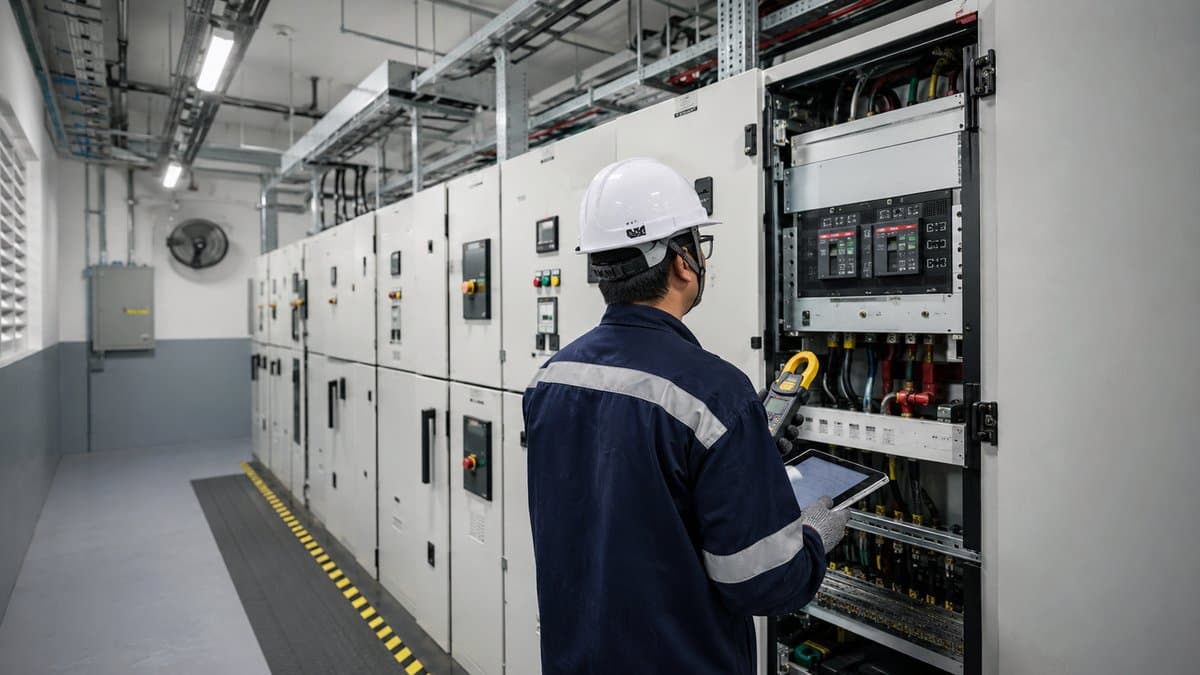
The main switchboard rating should not be assumed to equal the approved supply or available operating capacity. A qualified professional should inspect:
Marketing descriptions such as “600 amps” or “1,000 amps” should be supported by documents and physical inspection.
A transformer nameplate rating alone does not confirm that the user may draw the full amount from the network.
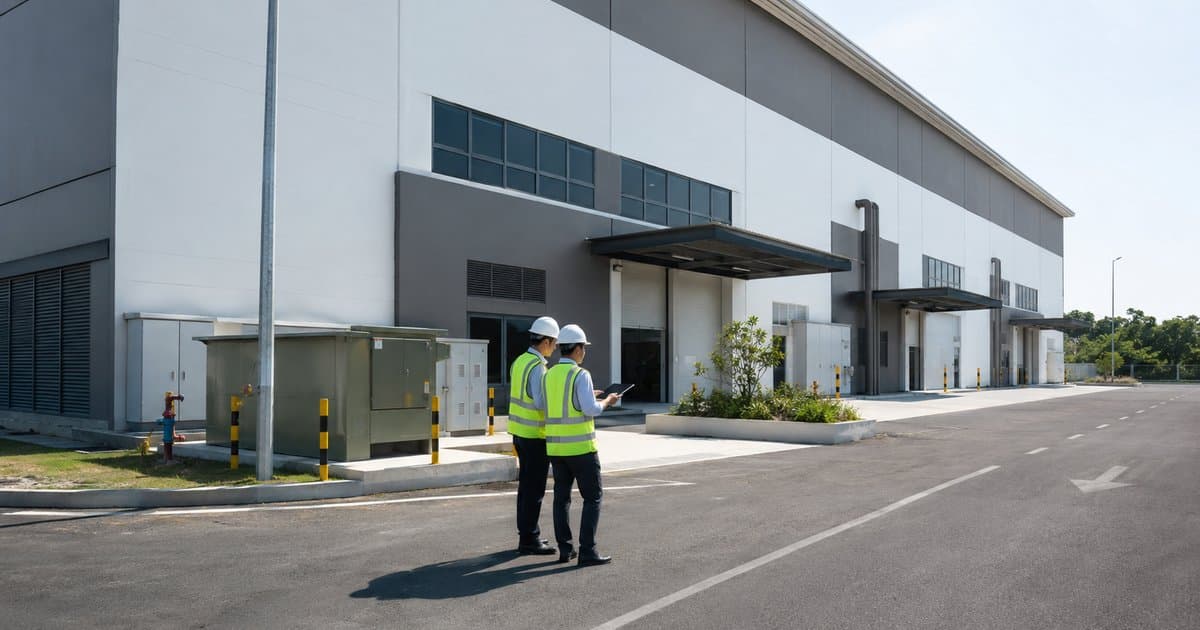
Do not assume that power can be upgraded simply because a substation or transmission line is visible nearby. TNB evaluates supply applications and connection infrastructure according to requested maximum demand, distance, network capability, design requirements and other site-specific conditions.
Connection charges may include maximum-demand-related charges, additional cable costs, special-request costs and other applicable items. TNB's published business guidance states that connection-charge components differ between low-voltage and medium-voltage consumers.
Before signing an unconditional agreement, obtain professional advice and, where appropriate, submit a formal supply or upgrade enquiry. Cost and timing should not be represented as confirmed until the relevant parties have issued written information.
The sale and purchase agreement, tenancy offer or lease should accurately state what electrical infrastructure is included and who bears the cost and risk of upgrades.
Legal wording should be prepared or reviewed by the parties' lawyers.
| Document or evidence | Why it matters |
| Recent TNB electricity bills | Shows account details and historical demand information |
| TNB supply or approval correspondence | Helps establish the approved arrangement |
| Current single-line diagram | Shows the electrical distribution design |
| Main switchboard and equipment nameplates | Supports physical rating verification |
| Transformer records, where applicable | Helps assess capacity, condition and responsibility |
| Maintenance and test records | May reveal defects or overdue servicing |
| Equipment load schedule | Allows comparison between required and available capacity |
| Professional inspection report | Identifies limitations and upgrade work |
| Written upgrade response or proposal | Clarifies feasibility, scope, cost assumptions and timing |
Documents should be checked for the correct property, account and current configuration. Old drawings may not reflect later alterations.
The safest description is “existing supply stated by owner, subject to verification” until documentation and inspection support the claim.
For more useful industrial-property matching, a high-quality listing should distinguish between verified information and owner-declared information. Relevant fields include:
This approach helps decision-makers shortlist properties more efficiently while reducing the risk of treating an unverified marketing figure as an engineering conclusion.
1. List every major machine and supporting load.
2. Estimate simultaneous operating demand with an electrical professional.
3. Obtain recent TNB bills and supply records.
4. Review the single-line diagram.
5. Inspect the incoming supply, meter, switchboard, cables and transformer.
6. Compare required demand against approved and physical capacity.
7. Check power quality and motor-starting requirements.
8. Obtain written information on upgrade feasibility where needed.
9. Confirm costs, responsibilities and timeline.
10. Reflect unresolved power conditions in the transaction documents.
Not necessarily. At 400 V three-phase, 1,000 A is approximately 693 kVA, or about 589 kW at a 0.85 power factor. Actual suitability depends on approved maximum demand, equipment load, motor starting, power factor, cable and switchgear capacity, transformer arrangement and network availability.
Review recent TNB bills and approval documents, examine the current single-line diagram, inspect the meter and electrical infrastructure, and engage a qualified electrical professional. Do not rely solely on a listing description or switchboard nameplate.
An upgrade may be possible, but it is site-specific. TNB must consider the requested demand, network capacity, distance, connection design and applicable requirements. Written assessment is required before feasibility, cost or timing is treated as confirmed.
Maximum demand relates to the highest demand level under the applicable metering and supply arrangement. It is not the same as the total kilowatt-hours consumed in a month and can affect connection planning and electricity charges.
For electricity-dependent operations, power should be investigated as early as possible. Where material uncertainty remains, obtain legal advice on appropriate due-diligence conditions before making an unconditional commitment.
Factory power supply should be treated as a technical due-diligence item, not merely a number in a property advertisement. The right process begins with the occupier's equipment load, verifies the property's approved and physical electrical capacity, and identifies any upgrade requirement before the buyer or tenant commits.
Explore industrial properties on XPillar and state your operational requirements—including machinery load, preferred location, floor area and occupation date—to begin a more accurate factory search.
*This article provides general property and technical information only. It is not electrical, engineering, legal or financial advice. Engage appropriately qualified professionals and obtain written confirmation from the relevant authorities and utility provider for the specific property and proposed use.*
1. Tenaga Nasional Berhad, Electricity Supply Application Handbook: https://www.tnb.com.my/esah
2. TNB / myTNB, Business Electricity System: https://www.mytnb.com.my/business/get-electricity/tnb-electricity-system
3. TNB, Connection Guidelines: https://www.tnb.com.my/esah/connection-guidelines
4. TNB / myTNB, Business Connection Charge: https://www.mytnb.com.my/business/get-electricity/connection-charge
5. Suruhanjaya Tenaga, Distribution Code for Peninsular Malaysia, Sabah & F.T. Labuan: https://st.gov.my/sites/default/files/2026-02/Distribution-Code-For-Peninsular-Malaysia-Sabah--F.T.-Labuan-Amendments-2017_V5.pdf
6. Suruhanjaya Tenaga, Distribution Connection Code: https://www.st.gov.my/sites/default/files/2026-02/4.0-Distribution-Connection-Code-%28DCC%29.pdf